
تصميم المنتزهات المائية: ما الذي يتغير عندما يكون موقعك ماءً وليس أرضًا؟
ما الذي يحدده تصميم المنتزه المائي قبل أن تختار أي زلاجة
هناك نوعان من الضجيج يحيطان بهذا المصطلح البحثي: قوالب الخرائط الإيزومترية، ولعبة المحاكاة. وكلاهما هوايتان جيدتان. لكن لا يتعلق الأمر بأي منهما فيما يلي. فما يلي يتعلق بالتصاميم التي يتم تنفيذها فعليًّا، بميزانية محددة، وملف ترخيص، ومقاول يتحمل مسؤولية العمل.
إذا نحينا العلامة التجارية جانبًا، فإن المنتزه المائي هو في الأساس مجموعة من المناطق. مجمع منزلقات. حوض أمواج أو نهر هادئ للضيوف الذين يبحثون عن الاستمتاع بوقتهم دون الحاجة إلى الإثارة. منطقة ألعاب مائية للأطفال، لأن الآباء يبقون لفترة أطول عندما يكون لدى أصغر أطفالهم مكان يذهبون إليه. أما الأماكن المظللة ومقاعد الجلوس ومنافذ الطعام والشراب، فيتم وضعها في الأماكن التي يتجول فيها الناس بالفعل، وليس في الأماكن التي خصصت لها المساحة في مخطط الموقع.
إن تنوع الألعاب لا يقل أهمية عن أي معلم جذب رئيسي. فالمنتزه الذي يُبنى فقط على أساس المنزلقات المثيرة يفقد اهتمام الأجداد والأطفال في سن الرابعة وكل من يرغب في قضاء اليوم بأكمله فيه. ويصف فريق التصميم في “وايت ووتر” الهدف بأنه «مزيج من الألعاب التي تلبي احتياجات أنواع مختلفة من الزوار»، حيث تحظى الألعاب الهادئة بنفس الأهمية التي تحظى بها الألعاب الشاهقة (وايت ووتر ويست).
وهنا يكمن الجزء الذي غالبًا ما تتجاهله تلك الأدلة. فالمنزلقات تحتاج إلى أبراج، والأبراج تحتاج إلى أساسات، وخطوط انتظار التذاكر تحتاج إلى سطح. أما مصدر ذلك “الشيء” — سواء كان من البر أو الماء — فيتم تحديده قبل تحديد مجموعة الألعاب. وهذا يحدد بشكل غير مباشر الميزانية، وإجراءات الحصول على التراخيص، ومدة الموسم، وما يمكنك إضافته في السنة الثالثة.
تأتي الركيزة قبل الشرائح.
ثلاث قواعد: الأرض، والعوامة القابلة للنفخ، والعوامة المعيارية الصلبة
هناك ثلاث طرق لتجهيز متنزه مائي بأرضية، وهي ليست مجرد أشكال مختلفة لنفس الفكرة. بل هي ثلاث شركات مختلفة تحمل الاسم نفسه.
أرض وحوض خرساني
هذا ما يتخيله معظم الناس: حديقة في الهواء الطلق على أرض منحدرة، ومياه محتجزة في حوض خرساني، ومنزلقات ترتفع من أساس هيكلي. وتتم توثيق مراحل التصميم بشكل جيد: دراسة الجدوى، والمخطط العام، وتقسيم المناطق، والبناء. أما التكاليف، فتنصب في الغالب على عناصر لا تراها أبدًا: الأرض، وأعمال تهيئة التضاريس، والمرافق العامة، ومحطة معالجة المياه.
عادةً ما يتم تشغيل متنزه سياحي قائم بذاته $30M–$200M+; ؛ تبدأ مساحة المنتزه المدمج مع الفندق عند حوالي $5M–$30M (فلويدرا). تُعد البنية التحتية للمياه البند الذي غالبًا ما يُهمل في التخطيط، لأن قدرات الترشيح والتطهير وإعادة التدوير يجب تحديدها في مرحلة المخطط الرئيسي، كما أن تكلفة تعديلها لاحقًا باهظة. وتقوم تقسيمات المناطق بالدور التجاري: فالمرافق الترفيهية المثيرة تجذب الزوار إلى الجزء الخلفي من الموقع، بينما تستقبلهم المطاعم ومحلات البيع بالتجزئة والمقاعد الفاخرة أثناء مرورهم.
المتنزهات العائمة القابلة للنفخ
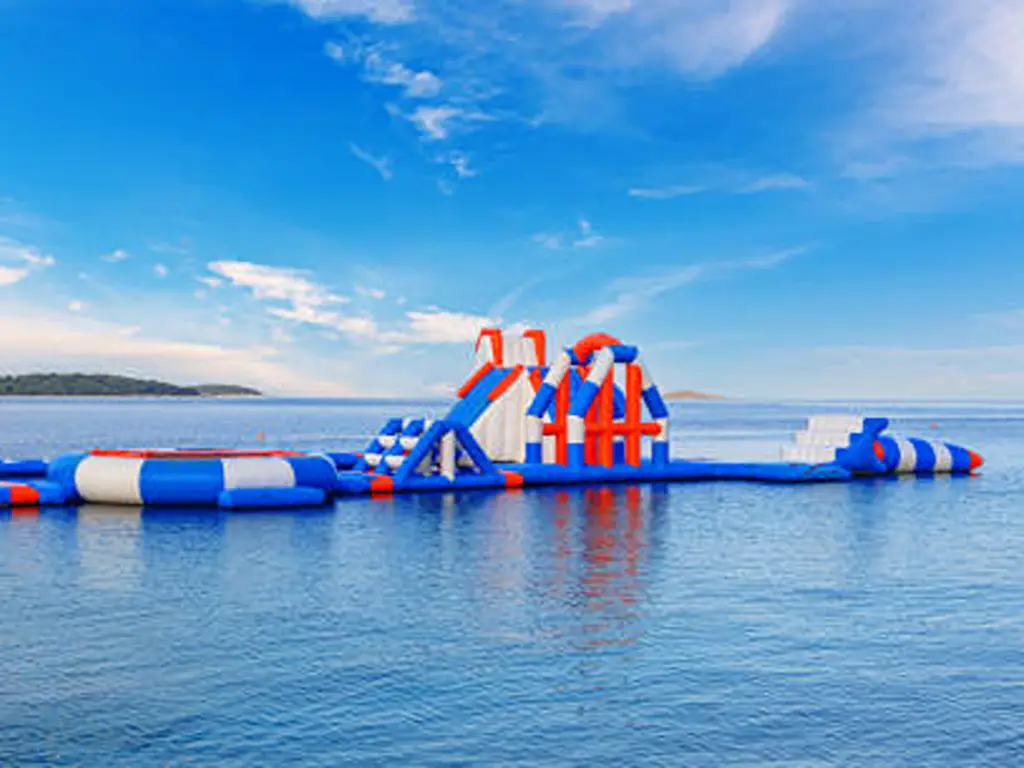
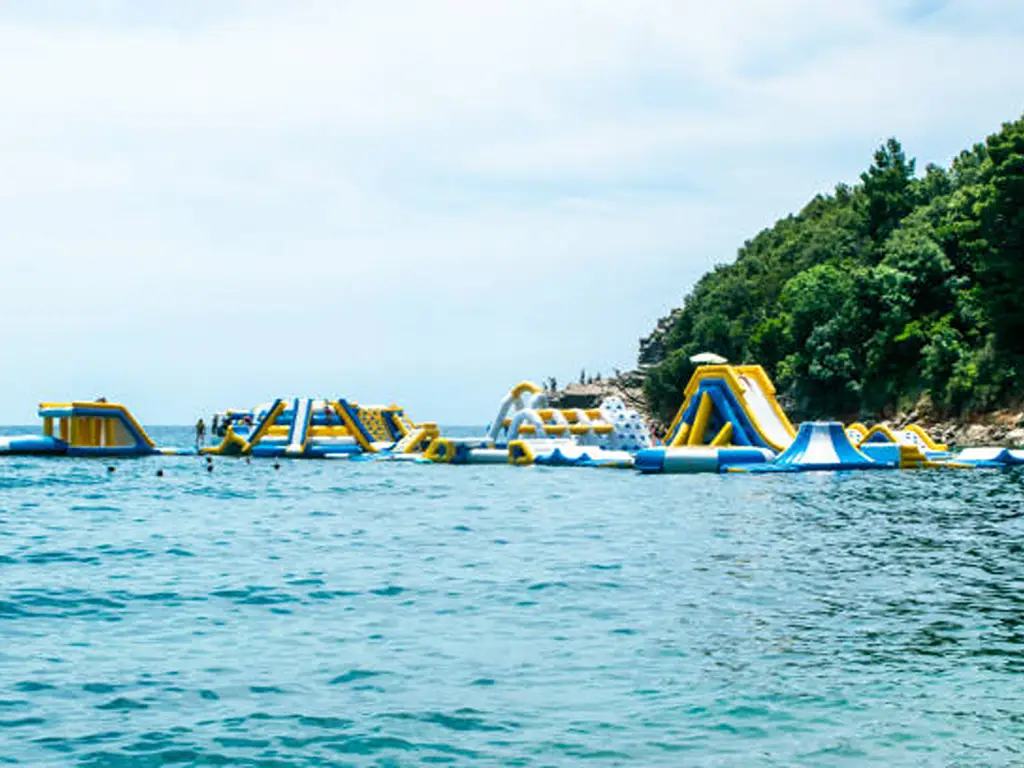
الخيار الثاني يضع المتنزه فوق الماء بدلاً من بجانبه. وتأتي قوة الطفو من وحدات قابلة للنفخ: مسارات الحواجز، والترامبولين، والأبراج، والمنزلقات، وجميعها مثبتة في مكانها. وجاذبيتها حقيقية. فهي خفيفة الوزن، وقابلة للإزالة، وقابلة للتوسع، وعادةً ما يُسمح بها كهيكل مؤقت وليس دائم. ولهذا السبب تتبناها المدن الساحلية والمخيمات الصيفية بهذه السرعة.
تتميز هذه المهنة بقصر مدة العمل واتباع إيقاع موسمي. يجب فحص المعدات للتأكد من عدم وجود ثقوب قبل كل يوم عمل، وتنظيفها وتجفيفها قبل التخزين، وتخزينها في مكان جاف خارج الموسم (الارتداد). ويحدد كتالوج الموزع أسعار الحزم الكاملة للمتنزهات ابتداءً من حوالي من $30,000 إلى $112,000, ، اعتمادًا على عدد العناصر التي تربطها معًا (CRS4Rec / Wibit). ويقدر البائعون في هذا القطاع العمر الافتراضي للمعدات بنحو خمس سنوات قبل أن تبدأ دورات الاستبدال (عند مناقشة).
المنصات العائمة المعيارية الصلبة
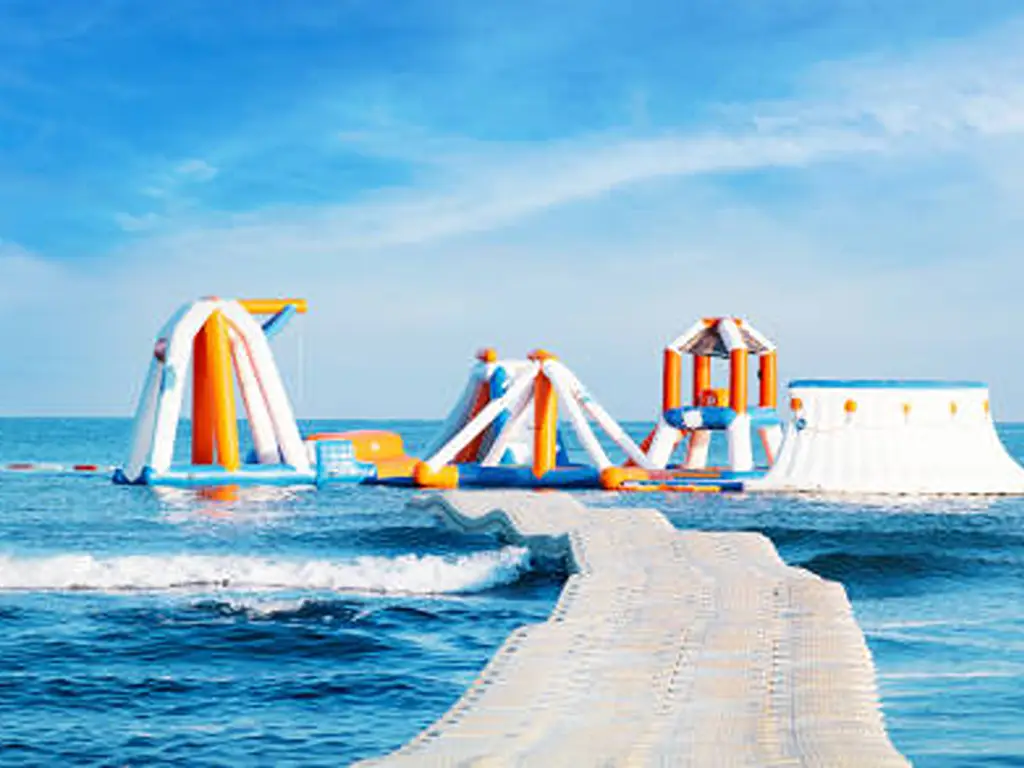
الخيار الثالث يطفو هو الآخر، لكن الطفو هنا هيكلي وليس هوائيًّا: وُحدات مجوفة مملوءة بالهواء ومثبتة ببعضها ببراغي لتشكل منصة تحمل الحمولة كسطح. وهذا الاختلاف ليس جماليًّا فحسب. فالمنصة الصلبة يمكنها البقاء في الماء على مدار السنة. وهي تتسع لممر ودرابزين، وتستوعب كابينة أو منضدة خدمة، ويمكن توسيعها في الموسم التالي بإضافة وحدات إلى حافتها.
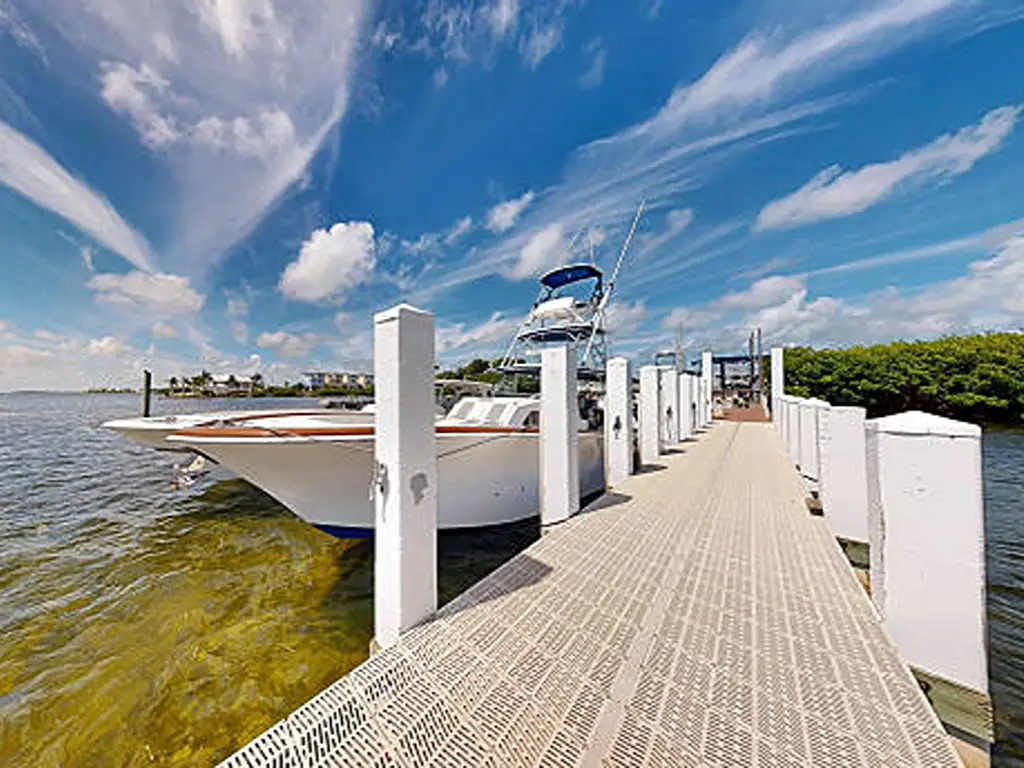
وهذا هو الاتجاه الذي تسير فيه الوجهات المطلة على المياه بهدوء. تصف زاوية “الوجهات المطلة على المياه” في مجلة “مارينا دوك إيج” قيام المشغلين بإضافة متنزهات عوائق عائمة وأبراج عائمة وكبائن عائمة كمصدر للدخل بالإضافة إلى رسوم المراسي. وتشير الزاوية إلى أن الهياكل التي تشكل أساسًا لهذه المرافق «يجب أن تكون مثبتة بإحكام مع قدرتها في الوقت نفسه على التكيف مع تقلبات مستويات المياه»، مما يستلزم أحيانًا استخدام «هياكل سفلية عائمة» بحد ذاتها (عمر حوض مارينا / MSA). هذه الجملة هي خلاصة المقال بأكمله. تعامل الصناعة الهيكل العائم كمدخل هندسي، في حين أن معظم المحتوى المكتوب للمشترين يعامله كعربة تسوق.
نظرة عامة على ثلاث ركائز
| الركيزة | المقاس القياسي | متى يتوقف عن العمل | ما يجب التأكد منه قبل اتخاذ القرار النهائي | دورة الحياة |
|---|---|---|---|---|
| الأرض + حوض خرساني | المنتزهات السياحية، الركائز الأساسية للمنتجعات، الإيرادات على مدار العام | لا توجد أراضٍ متاحة أو بأسعار معقولة؛ ولا توجد خدمات مرافق عامة | تكلفة الأرض، مخطط الموقع، تحديد حجم نظام الترشيح | 20–30 عامًا (المنشأة)؛ وتعد عمليات تحديث البنية التحتية للمياه هي الخطر الرئيسي |
| متنزه عائم قابل للنفخ | العمليات الموسمية في البحيرات أو المحاجر أو الشواطئ؛ انطلاق سريع وسهولة في النقل | تشغيل على مدار السنة؛ يتطلب ممرات ثابتة أو درابزينات أو هياكل حاملة | العمق الأدنى للمياه، نوع المرساة، التخزين خارج الموسم | حوالي 5 سنوات من العمر الافتراضي للمعدات قبل بدء دورات الاستبدال |
| منصة عائمة معيارية صلبة | مرافق البحيرات والخزانات، وتوسعات المنتجعات والمراسي، ومنطقة سطح ثابتة | موقع يتسم بوجود جليد متحرك بكثافة؛ ولا توجد خطة لترسيخ السفن تتناسب مع نطاق منسوب المياه | معدل الحمولة المسموح به للمنطقة، وقاعدة عرض الممر، ومسار التثبيت لتقلبات منسوب المياه في الموقع | 15–20 عامًا وفقًا للأرقام المنشورة |
المصدر: كتالوج CRS4Rec/Wibit؛ Fluidra؛ Bouncia؛ Marina Dock Age؛ hiseadock.com/faq
لا يزال تقسيم المناطق وتنويع الألعاب أمراً مهماً في الألعاب المائية. الفرق هو أنك لم تعد تقوم بتشكيل التضاريس، بل تقوم بترتيب الوحدات على سطح متحرك.
عندما يكون الموقع عبارة عن مسطح مائي: العمق، والتثبيت، والسعة
بمجرد أن يصبح الموقع مائيًّا، هناك ثلاثة أسئلة تحدد كل شيء آخر، ولكل سؤال إجابة مختلفة تبعًا لمن تسأله.
العمق أولاً، وهنا لا تتطابق الأرقام المنشورة. يحدد أحد أدلة الإعداد هذا الحد بـ 2 متر كحد أدنى (خدمات «ووتر واريور»)؛ ويشير آخر إلى 2.4 م (الارتداد)؛ بينما يطلب تقرير ثالث مساحة تتراوح بين 2.5 و4 أمتار للمعالم الترفيهية ذات السعة الاستيعابية العالية مثل الزلاقات الكبيرة ومنصات القفز (AquaPlayParks)؛ ويحدد أكبر مورد للمطاط القابل للنفخ أن الارتفاع يتراوح بين 2 و3.5 متر حتى عند انخفاض المد (ويبيت سبورتس)؛ ويتراوح دليل المشغل الواحد بين 2.5 و5 أمتار (الارتداد). خمسة مصادر، خمسة أرقام، ولا يوجد أي خطأ في أي منها.
أعمق عمق للمياه المنشور حسب المصدر
| المصدر | الشكل | ما يبدو أنه يحكم |
|---|---|---|
| خدمات «ووتر واريور» | 2.0 متر على الأقل | نظام قابل للنفخ عام |
| بونسيا (مرشد بحيرة) | 2.4 متر كحد أدنى | مسار عقبات قابل للنفخ على ضفاف بحيرة |
| AquaPlayParks | 2.5–4 أمتار | الألعاب ذات السعة الكبيرة (المنزلقات الكبيرة، وألعاب القفز في الأكياس) |
| ويبيت سبورتس | 2–3.5 م حتى عند انخفاض المد | متنزه كبير قابل للنفخ، موقع مقاوم لتأثيرات المد والجزر |
| Bouncia (دليل من 23 خطوة) | 2.5–5 أمتار | تحديد مواقع المتنزهات العائمة التجارية |
المصدر: Water Warrior Services؛ Bouncia؛ AquaPlayParks 2026؛ Wibit Sports؛ دليل Bouncia المكون من 23 خطوة
والسبب في ذلك هو أن العمق ليس خاصية من خصائص البحيرة. بل هو مجموع شرطين. فوق السطح توجد المسافة الحرة التي يتطلبها النشاط، ويحتاج القفز أو الغوص إلى مساحة مائية أسفل السطح أكبر بكثير مما يتطلبه ممر المشاة. أما أسفل السطح فتوجد المساحة التي يحتاجها نظام التثبيت للحفاظ على الموقع. اسأل عن متطلبات العمق من أجل قبل أن تقارن العروض. وإلا فإنك تقارن «مساحة القفز» بـ«بدل الإرساء».
ثانياً، مستوى المياه: حالة الحمل التي لا يخطط لها أحد. تدور المناقشات المتعلقة بتصميم المناطق الساحلية حول المد والجزر، لكن البحيرات والخزانات تتحرك لمسافات أبعد، وفقًا لجدول زمني تحدده عمليات جهات أخرى. وتتباين الأرقام المنشورة بشأن انخفاض منسوب المياه تباينًا كبيرًا. فبحيرة خاضعة للتنظيم في وايومنغ تتحرك بمقدار 3–4 أمتار سنويًا (جامعة وايومنغ). يبلغ متوسط ارتفاع منسوب المياه في خزان نام نغوم في لاوس حوالي 10 أمتار، مع ارتفاع أقصى يبلغ 16 متراً. أما منسوب المياه في خزان «الثلاثة خوانق» فيتراوح بين 15 و30 متراً على مدار العام (بروب إنترناشونال). في وقت سابق من هذا العام، سجل خزان في كازاخستان تقلبات خلال اليوم الواحد بلغت حوالي 1 متر نتيجة لجدولة توليد الطاقة الكهرومائية (MDPI).
بالنسبة لمرفق عائم، فإن هذه المسألة ليست مجرد ملاحظة هامشية. فقد يكون مرسى يبدو سليمًا عند بدء التشغيل، لكنه يصبح مترهلًا عند انخفاض منسوب المياه ويتعرض لحمل صدمي عند ارتفاعه. فالهيكل لا يكترث بأن تغير المنسوب كان مقررًا منذ أشهر. لذا، تأكد من النطاق السنوي للموقع وأقصى تقلب قصير المدى فيه قبل أن يحدد أي شخص سعر المرسى.
قبل أن يحدد أي شخص سعر مرساة ما
النطاق السنوي لمستوى المياه في موقعك
أسوأ تقلب على المدى القصير: يوم واحد، أو دورة عاصفة
كلاهما قياسات مأخوذة من الموقع، وليستا متوسطًا للبحيرة. ولا يرد أي منهما في ورقة بيانات المعدات.
ثالثًا، السعة. تحتاج إلى رقمين، وليس رقمًا واحدًا. يتمتع أي منتزه بسعة استيعابية داخلية، أي عدد الأشخاص الذين يمكن أن يستوعبهم في لحظة معينة، بالإضافة إلى عدد الزوار اليومي، الذي يبلغ حوالي من 1.2 إلى 1.4 ضعف العدد داخل المنتزه مع ذهاب وإياب الزوار (ADG). On water, the in-park figure is limited by more than equipment count. It is limited by the area of floating deck, the width of the routes people walk, and the number of access points.
Specifying a Floating Platform: Load Ratings, Walkways, Connections
Load Ratings: Area Load, Not Point Load
Floating decks are specified by area load: weight per square meter or per square foot, spread across the surface. Public guidance and code practice put typical deck live loads across a range. The low end is 20 psf for private floating docks. From there it runs through 25 psf in US military design guidance and 30 psf for public floating docks, up to 50 رطلًا لكل قدم مربع for commercial docks with landings and ramps (NOAA; MIL-HDBK-1025/5; Fort Worth Code §7-62; USCG pier specification).
Notably, every one of those documents pairs the uniform area load with a separate concentrated-load check. That check is usually 300 lb on any 2 ft × 2 ft area, or a 400–500 lb point load anywhere on the deck. Those checks come with freeboard and tilt limits, so the flotation is not pushed under.
That pairing is the most useful habit you can copy. Area load tells you whether the platform carries a crowd; the concentrated check tells you whether it carries a tower leg. On modular floating cubes, published capacity depends on model and height and runs 200, 220, 300, 350, and 420 kgs/m². That converts to roughly 41 to 86 psf, spanning the range above (our floating dock cube range). Those are area figures.
So when a structure lands on the platform, whether that is a climbing tower, a slide transfer step, a service counter, or a mooring post, that is a different question. Put it in writing to your supplier rather than deriving it from the area number. Ask for the point-load allowance, the edge-distance rule, and the connection detail. If a vendor cannot answer, you have learned something about the vendor.
Three things to get in writing
- The point-load allowance
- The edge-distance rule
- The connection detail
Walkways, Railings, and Access
The walking surface is where a floating amenity succeeds or fails in daily use, and it is specified in whole modules rather than in inches. The published rule of thumb is that an available walking platform must be at least three cubes wide. On a 500 mm module grid, that is 1.5 m (hiseadock.com/faq). Below that, the platform stops behaving as a walking surface and starts behaving as a balance beam.
For comparison, land-side accessible routes are regulated at 36 in (0.91 m) minimum clear width under US accessibility standards. That is a different number answering a different question, since it governs a pedestrian route rather than the stability of a floating deck. Both can be true at once; they are not interchangeable.
Railings follow the same logic. Vertical posts and side balusters turn a platform edge into a supervised boundary, and they are the reason a floating amenity can host children and evening events. Plan access points deliberately: one boarding edge, one service edge, and a clear path from land.
Send us the water area and what has to stand on it, and we will come back with the module layout and the area-load rating that fit.
Send us your water areaConnections and Anchoring
Modules join through reserved pin and bolt holes at defined corners, with different fastener sets for single-layer and double-layer connections. That corner logic is worth understanding. It decides how a future extension attaches, and it means a platform’s strength is a lattice property rather than a property of any single cube.
Anchoring is where the site re-enters the design. Published paths include pipes, deadweight anchors, piling brackets, and stiff arms (hiseadock.com/faq). The choice should be dictated by the water-level range you established earlier, not by price. A pile fixes the platform vertically and lets it ride; a deadweight holds position on the bed; a stiff arm ties it to a shore structure. Choose the mechanism that tolerates the site’s worst-case swing.
Hisea Dock builds that layer: the floating platform, its connections, and its anchoring options. We publish specifications rather than adjectives. Those include the area-load ratings for our floating dock cubes, the four anchoring paths, and the module grid behind the three-cube walking rule. In Ningguo, Anhui, that layer took the form of a 1,850 m² floating water park platform, built from modular pontoons with aluminium keels and wood-plastic deck panels, fitted with pontoon railings and safety fittings (Hisea Dock case study). The rides on top came from specialists. The surface that holds them is ours.
Specification checklist for a water-based amenity
- Area load rating, with the model and height it applies to.
- Point-load allowance for any structure landing on the deck.
- Walking platform width in modules, not inches.
- Anchoring path matched to the site’s annual water-level range and worst short-term swing.
- Railing and access-point positions.
- Extension logic: how the next phase bolts to the corner pattern.
- Off-season plan: leave in place or remove.
What Goes Wrong on Water, and What to Inspect
Failure on water is rarely dramatic. It is cumulative, and it usually traces back to something that was not specified.
Biological growth is the constant. In saline water, barnacle build-up on undersides is common enough that operator guides advise scheduling divers roughly monthly to clear it with non-sharp tools. The wrong tool scars the surface it is protecting (الارتداد). If it is your water body, this is a recurring line item, not a one-off.
Punctures belong to the inflatable category and are managed by daily inspection rather than by engineering. Water level belongs to everyone: every structure moored in a lake with a seasonal drawdown is loaded and unloaded once a year whether anyone planned for it or not.
Winter is where the two floating approaches separate most sharply. Inflatable equipment is cleaned, dried, and stored off-season. A rigid modular platform can be left in, and the published guidance is specific about the boundary. The system is designed to be left in the ice, and the module shape lets the platform rise on top of it as it forms. What it is لا rated for is moving ice. “Large blocks of heavy flow ice moving around” will damage a stationary dock, and that risk is a property of the water body, not the platform (hiseadock.com/faq).
One honest gap explains a lot of this: no single standard covers the class of structure. The standard practice for commercial inflatable amusement devices, ASTM F2374, states that devices “designed primarily as floating devices to be installed in or on bodies of water” are outside its scope (ASTM F2374-24 (ANSI Webstore)). The standard that does cover floating leisure articles, ISO 25649, carves out devices made from rigid materials and devices held in shape by permanent air flow (ISO 25649-1:2024). A rigid modular platform falls outside both. That is why the documents that govern its deck are structural ones, like the NOAA guidance and the USCG specification cited above, and why no universal inspection criteria exist to inherit. The practical move is to ask your supplier for the inspection points that matter on their product, and write them into the operating plan before opening day.
The number that decides your operating model
Inflatable aqua park equipment
~5 yrs
Cycles at around 5 years of useful life, with off-season removal and storage every one of those years.
منصة عائمة معيارية صلبة
15–20 yrs
Published at 15–20 years, and can be left in the water, subject to the ice boundary above.
Same search, same phrase, two different asset classes.
Source: Quora vendor discussion; hiseadock.com/faq
The Operator’s Math: Asset or Consumable
If you operate a waterfront property, the three substrates are not three price points. They are three relationships with your capital.
Equipment is a consumable rhythm. Inflatable elements are replaced on a multi-year cycle, and the wider water park sector has a related problem: rides get boring, and operators are pushed to refresh attractions every few years to defend attendance. The facility around them is planned for decades (فلويدرا). Those two clocks were never meant to run together, and on a floating amenity you can choose which one your platform belongs to.
For a resort, lakeside scenic area, or marina, the platform is the part that behaves like a building. It stays, it can be extended, and it carries the walkways, cabanas, and service points that generate revenue beyond the ticket. Premium cabana seating is reported to produce 3–5 times the revenue per guest of standard seating. Those are exactly the elements that need a fixed, load-rated deck under them rather than an inflatable mattress.
Which is why the recommendation for this category is unusually simple. Put the platform and its anchoring in your concept-phase budget as a line of its own, not inside an equipment purchase order. Ask for its area-load rating, its point-load allowance, and the anchoring path that matches your water-level range. Then join the two clocks back together at the moment they belong: the equipment renews on its own cycle, while the platform stays and keeps compounding.
Tell us about your water area, and we will tell you what the platform under it needs to be: hiseadock.com/contact-us
Get a platform spec for your water area
A module layout, an area-load rating, and the anchoring path for your water-level range — prepared against your site, not a catalogue page.
Request a platform specالمراجع
- WhiteWater West. “How to Create a Successful Water Park.” https://www.whitewaterwest.com/resource/how-to-create-a-successful-water-park/
- Fluidra. “Water Theme Park Design.” https://www.fluidra.com/commercial-solutions/inspiration/blog/water-theme-park-design/
- Bouncia. “Start a Floating Water Park in 23 Steps.” https://bounciasports.com/start-floating-water-park-in-23-steps/
- CRS4Rec / Wibit. “Aqua Park Inflatables.” https://crs4rec.com/product-category/water-based-fun/aqua-park-inflatables/
- Quora. “How Much Do I Need to Start a Water Park?” https://www.quora.com/How-much-do-I-need-to-start-a-water-park
- Marina Dock Age / MSA Professional Services. “Fun-ding Your Marina: How to Turn Your Waterfront into a Can’t-Miss Destination.” https://www.msa-ps.com/fun-ding-your-marina-how-to-turn-your-waterfront-into-a-cant-miss-destination/
- Water Warrior Services. “Inflate a Mobile Floating Water Park.” https://waterwarriorservices.com/inflate-a-mobile-floating-water-park/
- Bouncia. “Inflatable Water Park for Lake.” https://bounciasports.com/inflatable-water-park-for-lake/
- Aqua Play Parks. “The Ultimate Checklist to Buy Commercial Water Park Equipment in 2026.” https://blog.aquaplayparks.com/the-ultimate-checklist-to-buy-commercial-water-park-equipment-in-2026/
- Wibit Sports. “Wibit Sports.” https://www.facebook.com/wibitsports/
- University of Wyoming. “Published Water-Level Data.” https://journals.uwyo.edu/index.php/uwnpsrc/article/view/2995
- Probe International. “Three Gorges Reservoir Environmental Material.” http://probeinternational.org/library/wp-content/uploads/2012/04/vol820Enviro20part201.pdf
- MDPI. “Sustainability, 16(23), 10348.” https://www.mdpi.com/2071-1050/16/23/10348
- Aquatic Design Group. “An Inside Look into the Real Cost of Building a Waterpark.” https://www.aquaticgroup.com/news/123/An-Inside-Look-into-the-Real-Cost-of-Building-a-Waterpark/
- الإدارة الوطنية للمحيطات والغلاف الجوي. «إرشادات تصميم الأرصفة العائمة». https://repository.library.noaa.gov/view/noaa/35452/noaa_35452_DS1.pdf
- U.S. Department of Defense. “MIL-HDBK-1025/5.” https://www.ufgscriteria.tpub.com/4_152_07/4_152_070040.htm
- City of Fort Worth. “Code §7-62.” https://codelibrary.amlegal.com/codes/ftworth/latest/ftworth_tx/0-0-0-8141
- U.S. Coast Guard. “Pier Replacement Specification.” https://www.dhs.gov/sites/default/files/2025-09/25_0827_cpo_USCG-Contract-70Z0G124CSLIS0004-Pier-Replacement.pdf
- ASTM International. “ASTM F2374-24.” https://webstore.ansi.org/standards/astm/ASTMF237424
- International Organization for Standardization. “ISO 25649-1:2024.” https://www.iso.org/es/sites/isoorg/contents/data/standard/07/96/79651.html?browse=ics
- Hisea Dock. «المنتجات». https://www.hiseadock.com/products/
- Hisea Dock. «الأسئلة الشائعة». https://www.hiseadock.com/faq/
- Hisea Dock. «مكعبات الرصيف العائم القابلة للتركيب». https://www.hiseadock.com/modular-floating-dock-cubes/
- Hisea Dock. “Floating Water Park Project in Ningguo City, Anhui Province.” https://www.hiseadock.com/case/case-study-the-floating-water-park-project-in-ningguo-city-anhui-province/
- Hisea Dock. «اتصل بنا». https://www.hiseadock.com/contact-us/
- مرسى هيسيا. «مرسى هيسيا». https://www.hiseadock.com/

 English
  Thai
Thai  Spanish
  French
  German
  Dutch
Dutch  Italian
  Arabic
  Indonesian
  Portuguese
  Turkish