
Tipi di piccole imbarcazioni per i laghi: trova quella più adatta alla tua zona lacustre
Scegliere una piccola imbarcazione per il proprio lago non è come scegliere un’auto: non è possibile provare una dozzina di modelli in un pomeriggio, e la scelta “giusta” dipende tanto dal lago quanto dallo stile di vita di ciascuno. Una barca perfetta per un laghetto da pesca di 50 acri potrebbe rivelarsi del tutto inadatta per un lago ricreativo di 5.000 acri con onde che si infrangono nel pomeriggio. Ed ecco cosa la maggior parte delle guide all’acquisto non vi dirà: la barca è solo metà dell’equazione. Dove la terrete — e come la ormigerete — è altrettanto importante.
Questa guida ti illustra le tipologie più diffuse di piccole imbarcazioni da lago, suddivise in base all’uso che ne farai effettivamente. Alla fine, tratteremo le questioni relative all’ormeggio e al budget che la maggior parte di chi acquista per la prima volta tende a trascurare, finché non è troppo tardi.
Supponiamo che tu possieda una proprietà in riva a un lago interno di 200 acri e che tu voglia pescare il sabato mattina e portare la famiglia a nuotare la domenica pomeriggio. Questo profilo indica una barca da pesca in alluminio da 16–20 piedi o un piccolo pontone: stabile, facile da trasportare su rimorchio, abbastanza bassa da navigare nel tuo lago e versatile per diverse attività. Tieni a mente questo scenario mentre esaminiamo le opzioni disponibili.
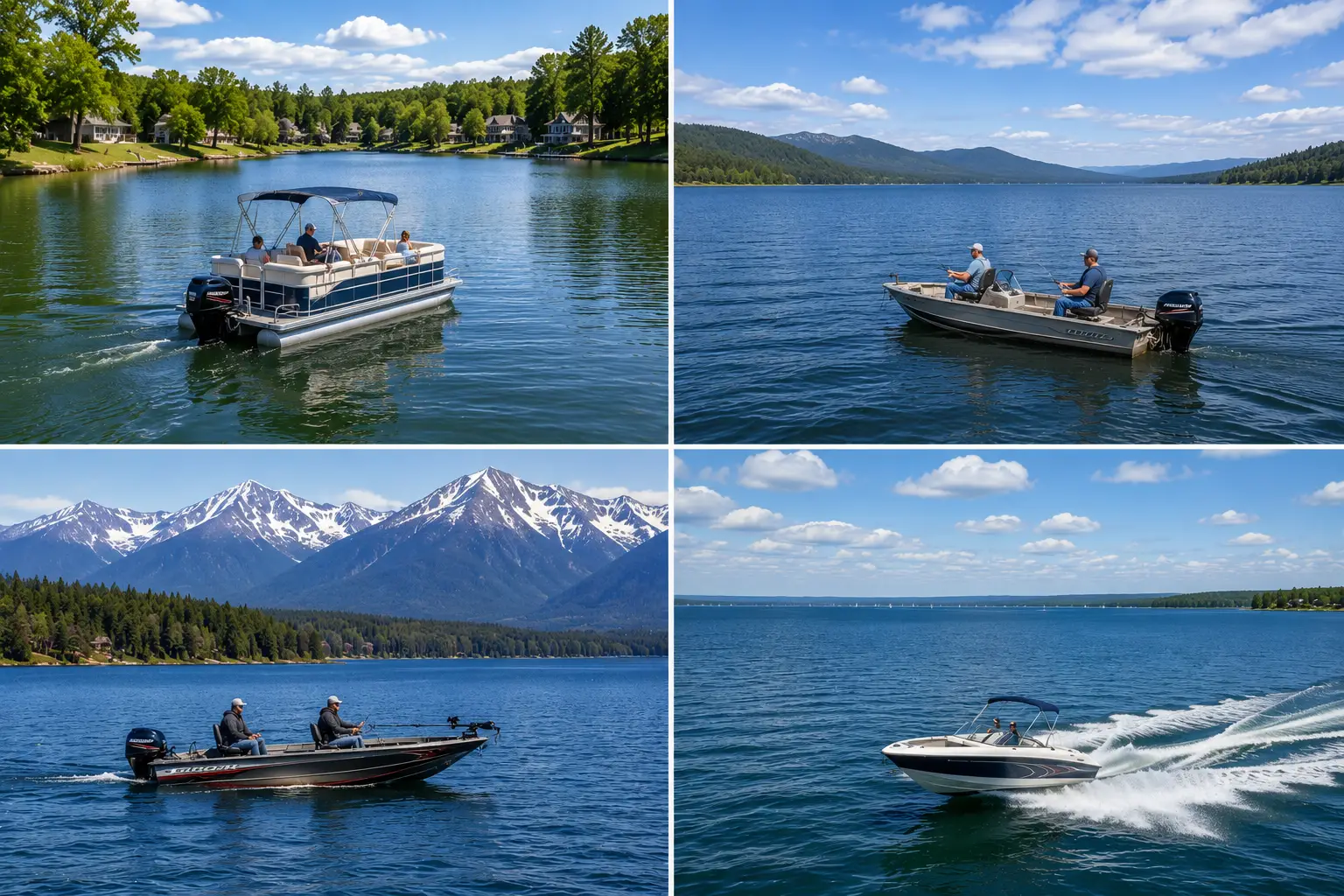
Imbarcazioni da crociera per famiglie e imbarcazioni per attività sociali
Se la tua idea di giornata perfetta sul lago prevede più persone che pesci, allora rientri nella categoria delle imbarcazioni da crociera per famiglie. Questi tre tipi di imbarcazioni privilegiano lo spazio, il comfort e la disposizione degli interni pensata per la socializzazione rispetto alla velocità o alle caratteristiche specifiche per la pesca. Prima di approfondire ciascuna di esse, ecco alcuni spunti per orientare la tua scelta: Il pontone ottimizza lo spazio e la stabilità, il deck boat aggiunge prestazioni all’equazione dello spazio, mentre il bowrider privilegia la versatilità con un tocco più sportivo. La tua scelta dipende da cosa ritieni più importante: la capienza per rilassarsi, la velocità o la versatilità complessiva.
Barche a pontone
Il pontone è la terrazza galleggiante del mondo dei laghi — e questo è un complimento. Costruite su due (o tre, nel caso dei tritoon) tubi in alluminio, queste imbarcazioni offrono un enorme ponte piatto in grado di ospitare da 8 a 14 persone senza che nessuno si senta a disagio. La maggior parte dei modelli ha una lunghezza compresa tra i 15 e i 30 piedi, con i pontoni standard che hanno un pescaggio di soli 24 pollici circa — abbastanza basso da consentire la navigazione in quasi tutti i laghi.
Le imbarcazioni pontone sono ideali per le gite in famiglia, il nuoto, la pesca ricreativa e i momenti di svago in tutta tranquillità. È possibile equipaggiarle con qualsiasi cosa, da un semplice tettuccio Bimini e panche a sedili integrati fino a bar completi, scivoli d’acqua e impianti audio di alta qualità. La propulsione è solitamente assicurata da un unico motore fuoribordo con potenza compresa tra 90 e 300 HP; le configurazioni a tre pontoni offrono una velocità sufficiente per il tubing leggero.
Il compromesso: i pontoni non sono veloci (la maggior parte viaggia a una velocità di crociera compresa tra 18 e 25 mph), non affrontano le acque agitate bene come le imbarcazioni con scafo a V e richiedono uno spazio di rimessaggio considerevole, sia in acqua che a terra. Ma per una famiglia che privilegia il comfort rispetto all’adrenalina, un pontone è difficile da battere. I pontoni nuovi costano all’incirca da $18.000 a $60.000 a seconda delle dimensioni e degli allestimenti, con marchi come Bennington, Sun Tracker e Avalon che dominano il mercato.
Barche con ponte
Se un pontone vi sembra troppo lento ma desiderate comunque una capienza generosa, un deck boat rappresenta una via di mezzo. Consideratelo come un pontone più sportivo: le prestazioni di uno scafo a V con un layout di coperta aperto e pensato per la socializzazione. La maggior parte dei deck boat misura dai 18 ai 26 piedi e può ospitare da 8 a 12 persone, con velocità massime comprese tra i 35 e i 45 mph se abbinati a un motore entrofuoribordo o fuoribordo da 150–300 HP.
Il vantaggio principale rispetto a un pontone è la manovrabilità: lo scafo a V fende le onde in modo più netto, rendendo le barche a ponte una scelta migliore per i laghi più grandi, dove nel pomeriggio i venti si intensificano. È possibile trainare comodamente chi fa tubing o wakeboard, e la zona salotto a prua crea uno spazio sociale naturale che i pontoni ottengono grazie alla semplice superficie disponibile piuttosto che al design.
Il compromesso: le barche con ponte hanno uno spazio complessivo sul ponte inferiore rispetto a un pontone di dimensioni simili, e il vano motore (in genere un motore entrofuoribordo) occupa parte del volume interno. I nuovi modelli di Hurricane, Tahoe e Starcraft hanno un prezzo compreso tra $25.000 e $70.000.
Bowrider
Il bowrider è il coltellino svizzero delle imbarcazioni da lago — e, non a caso, il tipo di imbarcazione da diporto più popolare in America. La sua caratteristica distintiva è la zona salotto aperta a prua, che trasforma quello che sarebbe un ponte di prua appuntito in uno spazio sociale fruibile. Le dimensioni tipiche vanno dai 17 ai 30 piedi, anche se i modelli da 18 a 22 piedi rappresentano la scelta ideale per la maggior parte dei diportisti lacustri.
I bowrider sono adatti praticamente a tutto: crociere, sci nautico, wakeboard, tubing, gite al tramonto e pesca ricreativa, basta aggiungere qualche portacanna. Un bowrider da 20 piedi con motore entrofuoribordo da 200 HP raggiunge una velocità massima di 45 mph, traina uno sciatore senza sforzo e può ospitare da 8 a 10 persone. Gli scafi a V profonda affrontano con sicurezza il mare mosso dei laghi e la posizione del timone offre un’ottima visibilità per gli sport di traino.
Il compromesso: i bowrider sono più costosi per piede di spazio utilizzabile rispetto ai pontoni o alle deck boat, e la zona salotto a prua diventa inutilizzabile in condizioni di mare mosso. I bowrider più piccoli (meno di 19 piedi) possono risultare angusti con più di sei adulti a bordo. I nuovi modelli di Sea Ray, Chaparral, Regal e Four Winns costano in genere tra $30.000 e $80.000+.
Barche da pesca per i pescatori del lago
Se la pesca è l’attività principale e tutto il resto è un di più, allora rientri nella categoria dei pescatori. Le tre imbarcazioni riportate di seguito rappresentano una scala che va dalla semplicità del livello base alle prestazioni da competizione. La tua scelta dipende da una sola domanda: Quanto ti dedichi seriamente alla pesca e in che tipo di lago?
Jon Boats
La jon boat è l’imbarcazione più semplice che si possa trovare in acqua. A fondo piatto, in alluminio, con entrambe le estremità squadrate: è essenzialmente una piattaforma galleggiante dotata di panche e di un piccolo fuoribordo. Le dimensioni variano dai 10 ai 20 piedi, con un peso dello scafo che può arrivare fino a sole 150 libbre per un modello da 14 piedi, che due persone possono sollevare e caricare sul pianale di un furgone o sul portapacchi.
Le barche Jon sono ideali nelle acque basse e calme. Con un pescaggio di soli 4–8 pollici, arrivano dove le imbarcazioni più profonde non possono arrivare: nelle insenature più nascoste, ai margini delle alghe e tra i campi di ceppi dove si nascondono i persici. Una barca Jon da 14 piedi con un fuoribordo da 15 HP può portare due pescatori ovunque su un piccolo lago per meno di $5.000 in totale, nuova di zecca. Aggiungete un motore elettrico da traina, un paio di sedili girevoli e un ecoscandaglio di base, e avrete un'attrezzatura da pesca professionale per meno di $7.000.
Il compromesso è evidente: nessuna comodità, nessuna protezione dalle intemperie e sicuramente non è un’imbarcazione adatta alle acque agitate o a più di due o tre persone. Ma per un appassionato di pesca sui piccoli laghi con un budget limitato, non c’è niente di meglio in termini di rapporto qualità-prezzo. Tra le marche più rinomate figurano Lowe, Alumacraft e Tracker.
Barche da pesca in alluminio
Passando da una barca a fondo piatto alla categoria delle barche da pesca in alluminio, si ottengono scafi più profondi, una maggiore potenza e caratteristiche molto più specifiche per la pesca. Queste imbarcazioni utilizzano in genere uno scafo in alluminio a V modificata o a V profonda, che gestisce le onde molto meglio rispetto a una barca a fondo piatto, pur rimanendo abbastanza leggera da poter essere trainata da un SUV di medie dimensioni.
Una barca da pesca in alluminio di 16 piedi è la scelta ideale per la pesca in acque dolci. Avrete a disposizione un ponte di lancio a prua e a poppa, una vasca per mantenere fresche le vostre catture, vani porta-canne e una larghezza sufficiente affinché due pescatori possano lanciare senza aggrovigliarsi. La potenza varia in genere dai 40 ai 90 HP, con velocità comprese tra 25 e 35 mph — abbastanza veloci da coprire efficacemente un lago di medie dimensioni. Il pescaggio è di circa 12–18 pollici, comunque abbastanza basso per la maggior parte delle situazioni in acqua dolce.
Queste imbarcazioni costano più delle jon boat, ma offrono prestazioni nettamente superiori. I nuovi modelli di Lund, Crestliner e Alumacraft hanno un prezzo compreso tra $10.000 e $30.000, motore e rimorchio inclusi. Rappresentano la scelta più pratica per un appassionato di pesca d’acqua dolce che pesca regolarmente, ma non ha bisogno di velocità da competizione.
Barche da pesca al persico
In cima alla classifica della pesca d'acqua dolce c'è la barca da bass: in vetroresina, ribassata e costruita con un unico scopo: portarti rapidamente sul posto di pesca e mantenerti lì in modo efficiente. Queste imbarcazioni sono le auto sportive del mondo della pesca, con scafi a V modificata dalle linee slanciate, alimentati da potenti motori fuoribordo (da 150 a 300 HP) che raggiungono velocità comprese tra 60 e 75 mph.
Una moderna barca da pesca al bass di 20 piedi è un vero e proprio laboratorio galleggiante. È dotata di un’enorme piattaforma di lancio a prua, di un ponte secondario a poppa, di numerose vasche per il pescato con pompe di ricircolo, di un motore elettrico di traina montato a prua con ancoraggio GPS e di ecoscandagli montati sulla console con sonar a immagini laterali. Tutto è ottimizzato per il pescatore: i vani portaoggetti sono impermeabili, i sedili sono posizionati in modo da consentire di lanciare l’amo per l’intera giornata e il profilo ribassato riduce la resistenza al vento.
I compromessi sono notevoli: le barche da pesca al persico sono costose (da $25.000 a $80.000+), hanno un unico scopo (sono pessime per le gite in famiglia) e il loro basso bordo libero le rende instabili in acque agitate. Richiedono inoltre un veicolo da traino potente e uno spazio di stivaggio considerevole. Ma se la pesca al persico è la tua passione e il tuo lago ha una superficie di almeno qualche centinaio di acri, non c’è niente di paragonabile. Tra i marchi leader figurano Ranger, Nitro, Skeeter e Bass Cat.
Imbarcazioni compatte e a propulsione manuale: kayak, canoe, gommoni e imbarcazioni gonfiabili
Non tutte le imbarcazioni da lago hanno bisogno di un motore. Per chi ama esplorare in solitaria, per i principianti attenti al budget e per chiunque preferisca la semplicità alla velocità, le imbarcazioni a propulsione manuale e ultracompatte offrono un tipo diverso di libertà: niente carburante, niente immatricolazione (nella maggior parte degli Stati), niente rimorchio e niente problemi di rimessaggio.
| Tipo | Dimensioni tipiche | Propulsione | Passeggeri | Il migliore per | Prezzo approssimativo |
|---|---|---|---|---|---|
| Kayak | da 8 a 16 piedi | A remi o in bicicletta | 1–2 | Pesca in solitaria, esplorazioni, attività fisica | Da uno a tremila a cinquemila |
| Canoa | 10–17 piedi | Pagaia | 2–3 | Gite tranquille in canoa, escursioni in famiglia, laghi sperduti | Da uno a quattromila, da cinquecento a tremila |
| Gommone | da 6 a 15 piedi | Remi, vela o piccolo motore fuoribordo | 2–4 | Gite brevi e tranquille, imparare a navigare | da $1.000 a $8.000 |
| Gommone | da 6 a 22 piedi | A remi o con motore fuoribordo | 2–6 | Portabilità, utenti con spazio di archiviazione limitato, uso occasionale | Da uno a quattromila, da cinquecento a trentamila |
| PWC (moto d’acqua) | 8–12 piedi | Propulsione a reazione | 1–3 | Giri adrenalinici, esplorazioni in solitaria, traino leggero | da $6.000 a $20.000 |
Ciò che manca a queste imbarcazioni in termini di velocità e capacità di trasporto passeggeri, lo compensano in termini di accessibilità. Un kayak da pesca con propulsione a pedali può essere caricato su un portapacchi da una sola persona, messo in acqua da qualsiasi riva e riposto in un angolo del garage. Un gommone di qualità si ripone in un borsone, rendendolo l’unica opzione per chi vive in appartamento o non dispone di uno spazio dedicato al rimessaggio. Meritano una menzione anche le piccole barche a vela come il classico Sunfish o il moderno Fulcrum Rocket, per chi è attratto dalla navigazione lacustre a vela — un ambito di nicchia ma profondamente gratificante della vita in barca.
La barca è solo metà del quadro. Prima di scegliere un modello, assicurati di sapere come la ormeggerai: qualche minuto di pianificazione ora ti farà risparmiare migliaia in futuro.
Scopri le soluzioni DockScegliere il molo giusto per la propria imbarcazione
Ecco l’aspetto che la maggior parte delle guide all’acquisto di barche tralascia completamente — ed è proprio l’errore che costa migliaia ai nuovi proprietari di barche. La barca che scegli determina direttamente il tipo di pontile di cui hai bisogno. Se acquisti il pontile sbagliato (o non ne acquisti affatto), rischierai di danneggiare la tua barca, di limitare il tuo accesso al lago o di dover sostenere in seguito i costi di una costosa ristrutturazione.
Un buon modo per pensarla: la tua barca è il veicolo e il tuo molo è il garage. Non compreresti mai un'auto senza sapere dove parcheggiarla. La stessa logica vale anche in questo caso — solo che, su un lago, il “garage” deve resistere all’acqua in movimento, alle variazioni stagionali del livello dell’acqua, al ghiaccio e alle intemperie.
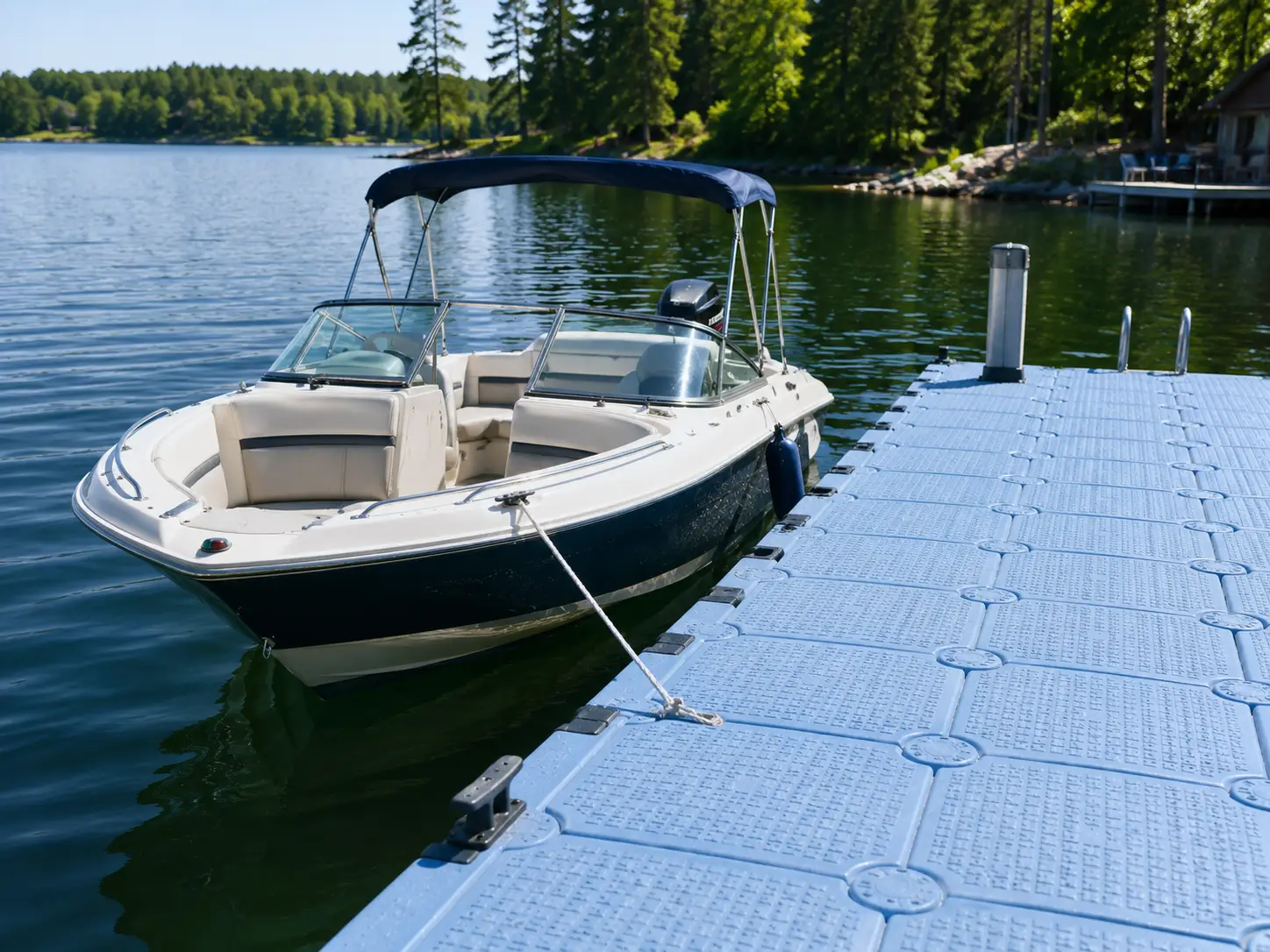
Panoramica sui tipi di pontili lacustri
Esistono tre modi fondamentali per tenere una barca nella propria proprietà in riva al lago:
Banchine fisse rappresentano la scelta tradizionale: pali conficcati nel fondo del lago che sostengono una piattaforma fissa in legno o in materiale composito. Sono robusti e durevoli, ma presentano notevoli svantaggi: sono costosi da installare (da $3.000 a $15.000 per un tipico pontile residenziale), richiedono permessi e talvolta attrezzature professionali per la palificazione e, cosa fondamentale, non si muovono. Se il livello dell’acqua del lago scende di 3 piedi alla fine dell’estate, il pontile fisso si ritroverà a 3 piedi sopra il livello dell’acqua. Se il ghiaccio sposta i pali durante l’inverno, si dovranno affrontare costose riparazioni.
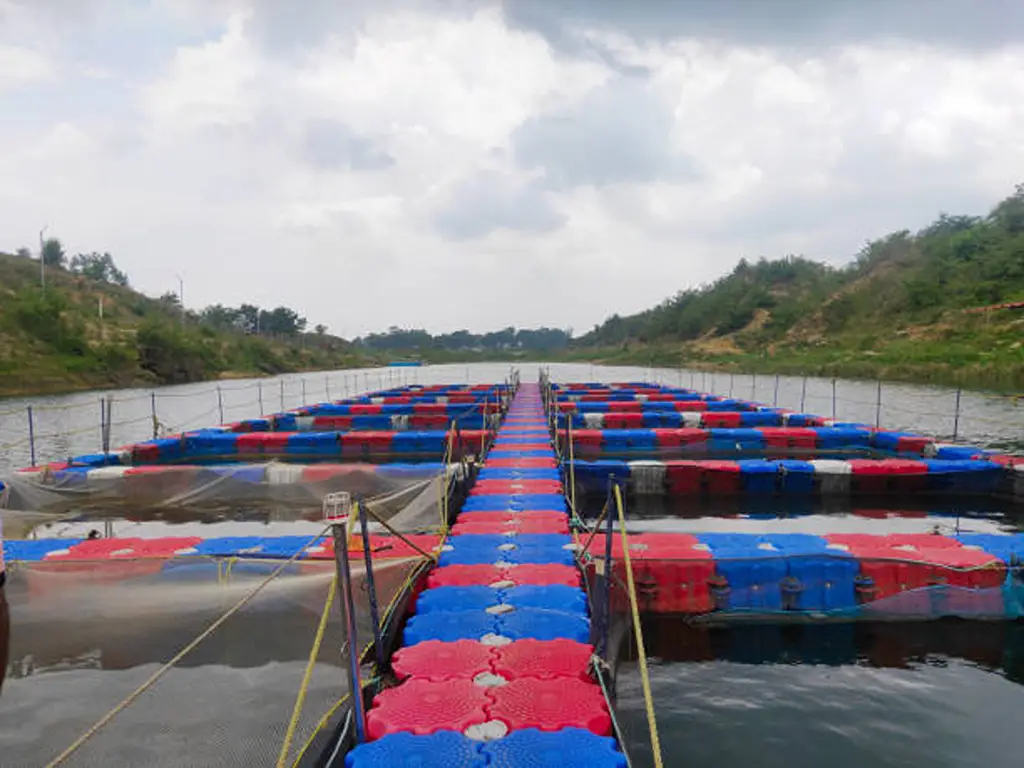
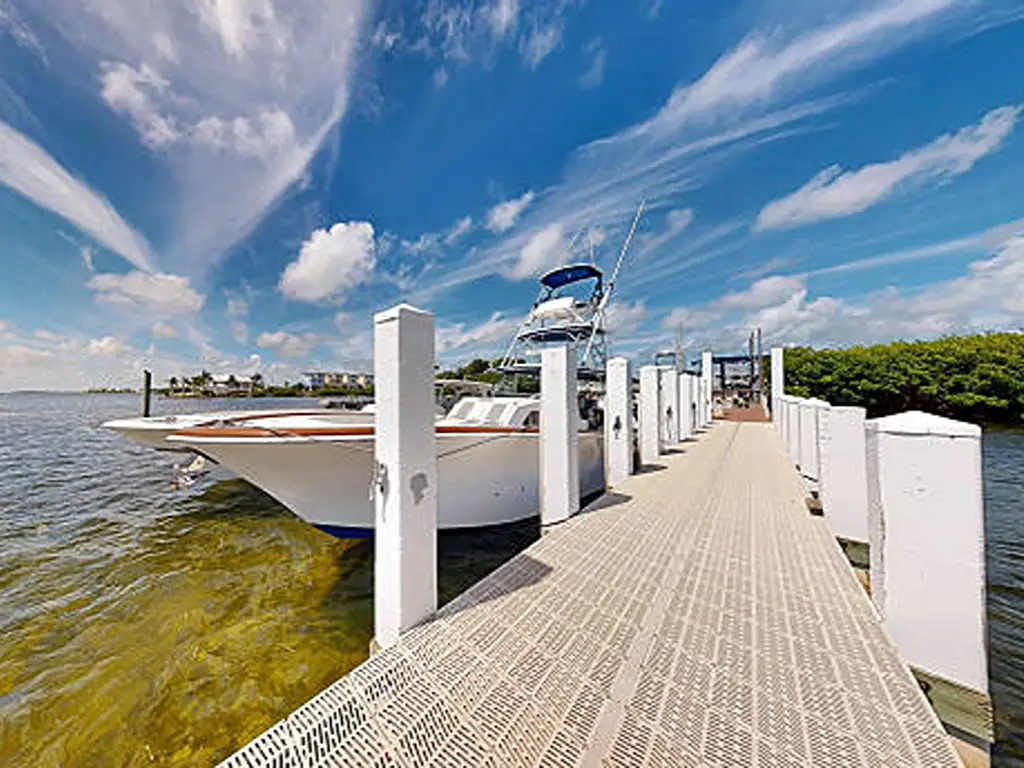
Banchine galleggianti risolvono il principale punto debole dei pontili fissi, sollevandosi e abbassandosi in base al livello dell’acqua. Realizzati con cubi galleggianti modulari (in genere in plastica HDPE) collegati tra loro a formare una piattaforma stabile, i pontili galleggianti funzionano su laghi di qualsiasi profondità e si adattano automaticamente alle variazioni stagionali del livello dell’acqua. La maggior parte dei pontili galleggianti residenziali costa tra $1.500 e $8.000 per un’installazione completa, e molti sistemi sono progettati per il montaggio fai-da-te: due persone possono costruire un pontile funzionante in un fine settimana senza ricorrere a un’installazione professionale. La natura modulare consente inoltre di riconfigurare o ampliare il pontile man mano che le esigenze cambiano.
Sollevatori per barche rappresentano l’opzione di fascia alta: piattaforme meccaniche o idrauliche che sollevano fisicamente la barca fuori dall’acqua. Prevengono la formazione di incrostazioni sullo scafo, eliminano i danni causati dalle onde in banchina e proteggono il vostro investimento. Ma sono costose (da $5.000 a $20.000+), richiedono l’allacciamento elettrico al molo e sono eccessive per la maggior parte dei proprietari di piccole imbarcazioni. Sono la soluzione più indicata per imbarcazioni in vetroresina di alto valore rimessate stagionalmente in un unico luogo.
Quale pontile per quale imbarcazione
Imbarcazioni diverse hanno esigenze di ormeggio molto diverse tra loro. Ecco come funziona l’abbinamento:
| Tipo di barca | Dock consigliato | Perché | Budget approssimativo per il molo |
|---|---|---|---|
| Barca a pontone | Pontile galleggiante (piattaforma ampia) | Un pescaggio ridotto comporta che i moli fissi risultino troppo alti in caso di bassa marea; i pontili galleggianti necessitano di un'area di imbarco ampia e stabile | da $2.500 a $6.000 |
| Barca con ponte / Bowrider | Pontile galleggiante o ascensore per barche | Lo scafo in vetroresina è protetto; il pontile galleggiante è utilizzabile se l’acqua è calma | da $2.000 a $8.000 |
| Jon Boat | Non è necessario alcun pontile oppure è sufficiente un piccolo pontile galleggiante | Abbastanza leggero da poter essere trascinato a riva; dotato di una piccola sezione galleggiante per maggiore praticità | $0–$1.500 |
| Barca da pesca in alluminio | Piccolo pontile galleggiante o pontile a rulli | L'alluminio è resistente alla corrosione, ma è comunque preferibile tenerlo fuori dall'acqua | da $1.500 a $4.000 |
| Barca da pesca al bass | Pontile galleggiante su cui è possibile salire con l'auto o elevatore | Scafo in vetroresina + valore elevato = merita di essere protetto; l’esposizione prolungata all’acqua provoca la formazione di bolle sul gelcoat | da $4.000 a $12.000 |
| Kayak / Canoa | Piattaforma sulla riva o piccolo pontile per l’imbarco | Non serve un molo; una piccola piattaforma galleggiante è un optional gradito | da uno a quattromilaottocento |
| PWC / Moto d'acqua | Piattaforma di attracco per moto d'acqua con accesso in auto (sistema V-float) | Grazie a speciali piattaforme di accesso è possibile salire in moto e parcheggiare senza bagnarsi | $800–$2.500 |
Due combinazioni meritano un’attenzione particolare perché sono le configurazioni più comuni in riva al lago:
Pontone + pontile galleggiante è la soluzione più versatile per la vita in famiglia sul lago. Il pescaggio di 24 pollici del pontone si abbina perfettamente a una piattaforma galleggiante che si adatta al livello dell’acqua del vostro lago. Potete dimensionare le sezioni del pontile in base alla larghezza del vostro pontone, aggiungere bitte esattamente dove ne avete bisogno e ampliare la struttura in un secondo momento, qualora decideste di passare a un’imbarcazione più grande.
Barca da pesca in vetroresina + pontile galleggiante con accesso per auto È una misura preventiva. Una barca da pesca da $40.000 lasciata in acqua per sei mesi svilupperà delle bolle osmotiche nel gelcoat — minuscole bolle che richiedono un intervento di riparazione professionale dal costo compreso tra $2.000 e $5.000. Un pontile galleggiante modulare su cui è possibile salire con l’imbarcazione costa molto meno di quella riparazione e mantiene lo scafo completamente asciutto quando non viene utilizzato. L’imbarcazione sale su rulli o supporti in HDPE e la piattaforma galleggiante si adatta automaticamente al livello dell’acqua.
Per i proprietari di piccole imbarcazioni alla ricerca di una soluzione versatile e che richieda poca manutenzione, i sistemi modulari di pontili galleggianti in HDPE rappresentano un’interessante via di mezzo. Aziende come Hisea Dock producono cubi in plastica ad incastro con superfici antiscivolo e linguette di collegamento rinforzate da 19 mm: il tipo di pontile che si può assemblare senza attrezzi, riconfigurare al variare della propria flotta e lasciare in acqua tutto l’anno senza preoccuparsi di marciume, ruggine o incrostazioni marine. I loro cubi sono stati testati da enti indipendenti per resistere a oltre 14.000 Newton di forza di trazione diagonale e sono coperti da una garanzia di sostituzione di 5 anni. Per i proprietari di imbarcazioni che apprezzano la flessibilità e non vogliono impegnarsi in una struttura permanente, vale la pena prendere in considerazione questa soluzione.
Una gestione intelligente del budget: quanto costa davvero la tua configurazione completa
Acquistare una barca è come adottare un cane di grossa taglia: il prezzo di acquisto è solo l’inizio. Ecco come si presenta un budget realistico per il primo anno in tre scenari tipici relativi alle abitazioni in riva al lago:
Il pescatore minimalista. Una barca a fondo piatto da 14 piedi con un fuoribordo da 15 HP, un rimorchio zincato usato e senza attracco (va tirata a riva): da $4.000 a $7.000 per la barca e il rimorchio. Costi annuali: immatricolazione (da $25 a $100 a seconda dello stato), assicurazione di responsabilità civile (da $150 a $300), manutenzione di base (da $200 a $400) e carburante (minimo — forse $100 per una stagione di utilizzo nei fine settimana). Totale primo anno: meno di $8.000. Riponila nel tuo garage o sotto un telone e i costi ricorrenti rimarranno inferiori a $1.000 all’anno.
Il diportista pratico. Una barca da pesca in alluminio da 16 piedi o un piccolo pontone da 20 piedi con rimorchio, un pontile galleggiante modulare e accessori di base: $20.000–$35.000 tutto compreso. Costi annuali: assicurazione ($400–$800), immatricolazione ($50–$150), rimessaggio invernale (da $500 a $1.500 negli stati del nord, gratuito se si dispone di un garage o di un fienile), manutenzione (da $500 a $1.000) e carburante (da $300 a $800). Totale primo anno: da $25.000 a $40.000. Costo annuale ricorrente: da $2.000 a $4.000.
La Comfort Cruiser. Un bowrider da 22 piedi o un tritoon da 24 piedi con un rimorchio a doppio asse, un pontile galleggiante di qualità o un sollevatore per barche, l’elettronica completa e l’attrezzatura per gli sport acquatici: da $50.000 a $90.000, tutto compreso. I costi annuali variano di conseguenza: l’assicurazione costa da $800 a $1.500, il rimessaggio può arrivare a $2.500 per strutture al coperto e riscaldate nei climi freddi, e un motore da 250 HP consumerà da $1.000 a $2.000 di carburante nel corso di una stagione. Totale primo anno: da $60.000 a $100.000. Costi ricorrenti: da $5.000 a $8.000 all’anno.
La mossa finanziaria più intelligente è anticipare la pianificazione. Decidi quale barca acquistare E quale posto barca scegliere prima di spendere anche solo una parte del budget — perché una volta che ti sei deciso per uno dei due, le opzioni per l’altro si riducono notevolmente. Qualche ora di ricerca iniziale può evitarti il classico errore di chi acquista per la prima volta: una bellissima barca parcheggiata su un rimorchio nel vialetto di casa perché non c’è un posto dove metterla in acqua.
Raccontaci della tua barca e del tuo lago, e progetteremo un pontile galleggiante modulare su misura per te, fino all’ultimo cubo.
Che tu stia attrezzando una barca a fondo piatto per una battuta di pesca nel fine settimana o ormeggiando un pontone per le vacanze estive in famiglia, l’imbarcazione giusta è quella che si adatta al tuo lago, al tuo stile di vita e al tuo budget effettivo — prezzo di acquisto, posto barca, rimessaggio e tutto il resto. Se questi tre aspetti sono quelli giusti, tutto il resto sono solo dettagli.

 English
  Thai
Thai  Spanish
  French
  German
  Dutch
Dutch  Italian
  Arabic
  Indonesian
  Portuguese
  Turkish