
Einführung
The world is experiencing a major change in the waterfront landscape as we head to 2026. Owners of property, operators of resorts and industries are no longer seeking platforms on the water, but are seeking robust, modular and sustainable aquatic infrastructure. You are running a high-end yacht club, a remote aquaculture facility, or a private lakefront retreat, and the type of docking system you use determines the safety of your vessels and the durability of your investment.
The choice of a dock in the contemporary world demands an escape of the old-fashioned fixed thinking. It needs knowledge of material science, environmental impact, and the total cost of ownership (TCO). This guide is an analytical tool that can be used to navigate the intricacies of modern floating dock systems.

What is the Reason to Use a Floating Pontoon Dock?
A floating dock is a floating platform that is made of units of buoyancy, usually high-density polyethylene (HDPE) cubes, which are placed directly on the surface of the water. Whereas a conventional fixed dock is a fixed structure that is anchored by pilings that are drilled deep into the seabed, a floating dock is a movable system that is raised and lowered with the tides and water levels.
In order to comprehend the engineering rationale of choosing a floating system, we need to look at the performance of the floating system in comparison to the traditional fixed structures in terms of important operational parameters.
| Merkmal | Schwimmendes Ponton-Dock | Fixed Pier/Dock |
| Wasserstandsanpassung | Automatic adjustment to tides and floods. | Static; can be submerged or too high. |
| Initial Installation Cost | Lower; requires less heavy machinery. | Higher; requires pile driving and underwater work. |
| Installationsgeschwindigkeit | Fast; modular DIY assembly. | Slow; often takes weeks or months. |
| Wartung | Minimal (corrosion-resistant). | High (wood rot, steel rust, or concrete cracking). |
| Auswirkungen auf die Umwelt | Low; allows water flow and light penetration. | High; disrupts seabed and local ecology. |
| Durability (Service Life) | 15–30 years (HDPE specific). | 10–20 years (depending on wood/steel). |
According to the empirical analysis of the traditional infrastructure, floating dock systems have a number of unique benefits in the context of the modern maritime use:
- Automatic Water Level Adaptation: Floating docks are self-adjusting to tides and floods to maintain a constant freeboard, making boarding of vessels safe and easy by removing the height differences that are typical of fixed structures.
- Excellent Installation Efficiency: The modular design eliminates the heavy pile-driving equipment and specialized underwater workforce, which means that the construction process is much simpler and less expensive, and the deployment can be achieved much faster.
- Increased Strength and longevity: Constructed of HDPE that is resistant to rot and rust, these systems have a service life that is 50 times longer than wood or steel systems with minimal maintenance.
Also, the modular design of these docks offers the ultimate portability and scalability in the future, and the eco-friendly design reduces the cost of operation and frequently results in quicker regulatory permitting.
Comparison of HDPE, Aluminum and Concrete
The selection of the material to be used in a floating dock is a trade-off between hydraulic engineering and cost-effectiveness. The material determines the interaction of the dock with the wave energy, its load-bearing buoyancy and its overall cost of life.
In-Depth Material Analysis
It is important to know the particular characteristics of each substrate to be able to match the material with your environment.
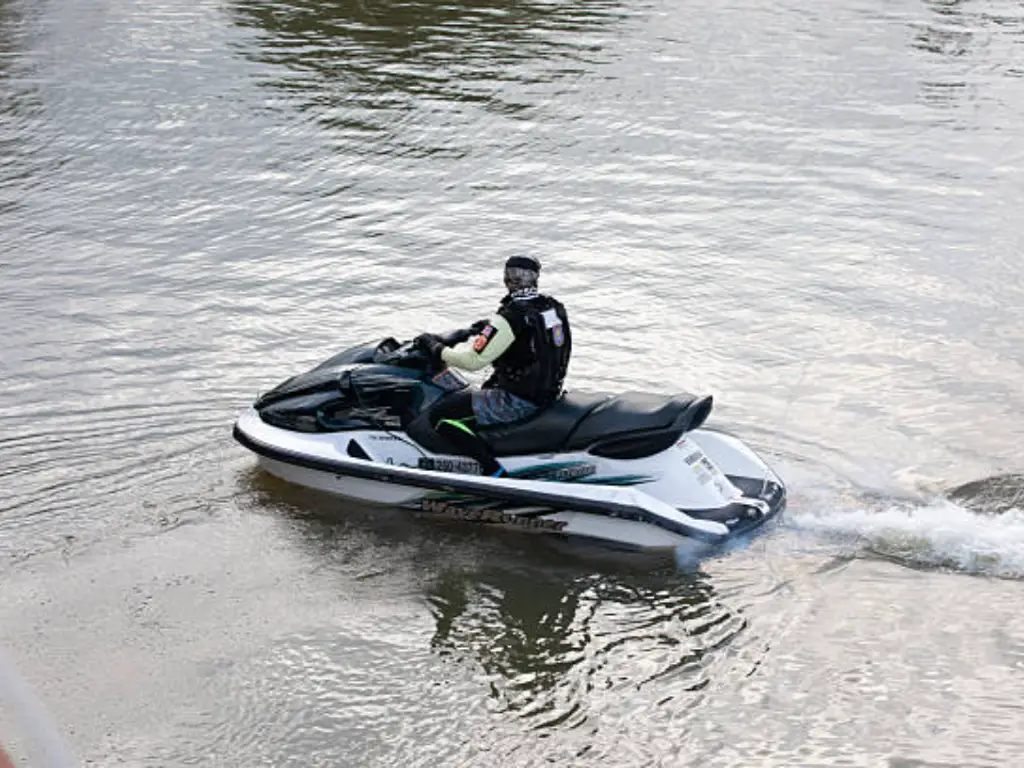
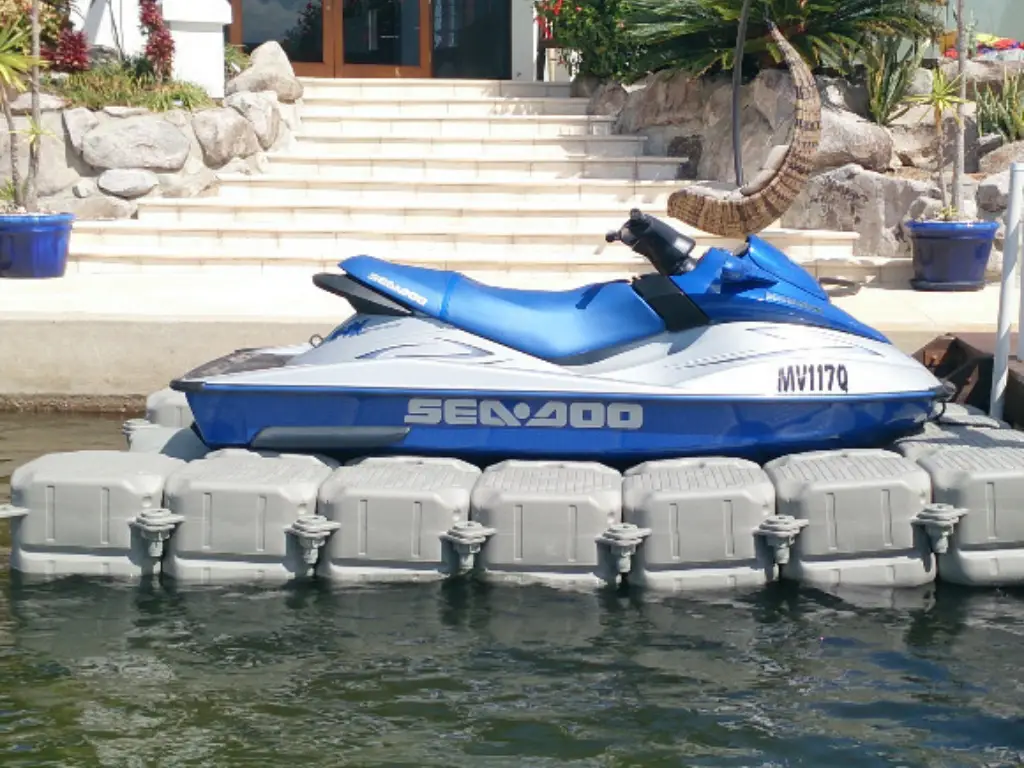
- HDPE (High-Density Polyethylene): HDPE is the leader in the industry in terms of modularity because it has a special elastic modulus and is completely chemically inert. These modular cubes are designed to absorb impact energy by flexing and returning to their original shape unlike rigid materials, which offer a soft docking experience that cushions the hulls of smaller vessels. Since HDPE is 100 percent recyclable and does not release chemicals into the water, it is often used in the environmentally sensitive areas. These systems are especially useful in PWC ports, floating resorts, and temporary work platforms where the main benefit is a lightweight and flexible assembly.
- Marine-Grade Aluminum: Marine-grade aluminum, which is usually based on 6061-T6 or 5052 alloys, offers a high-end structural framework to permanent dock systems. It has a remarkable strength to weight ratio that enables it to have longer spans and a contemporary and clean look that suits luxury residential homes and yacht clubs. These frames are typically combined with sacrificial anodes to achieve maximum life in saltwater or anodized to prevent galvanic corrosion. This renders aluminum a strong, mid-weight option to individuals who desire the stability of a fixed frame without the excessive weight of concrete.
- Concrete Pontoons: Concrete pontoons are the giants of the marine sector and are made of a shell of fiber-reinforced concrete on top of an EPS (expanded polystyrene) core. Their chief merit is unsurpassed stability; their great weight gives the dock the sensation of being a natural continuation of the land and enables it to serve as a natural wave breaker or breakwater. Although concrete is the most expensive to install and needs heavy engineering and cranes to install, it has the longest life span, which is usually more than 50 years. It is the only possible solution to commercial ferry terminals and large harbors that are subjected to regular, high-frequency wave energy.
Table of Detailed Material Comparison
| Metric | HDPE (Modular Cubes) | Marine-Grade Aluminum | Concrete Floats |
| Gewicht | Ultra-Light | Mäßig | Extremely Heavy |
| Impact Resistance | Superior (Absorbs & returns) | Moderate (Prone to dents) | Low (Cracks/Spalls) |
| Corrosion Resistance | Absolute (Salt/Acid immune) | High (Requires treatment) | Moderate (Internal rebar risk) |
| Wave Rating | Up to 1.5 ft (0.5m) | 1.5 ft – 3.0 ft | 3.0 ft+ (Wave Attenuator) |
| Anti-Slip Rating | Integrated Molded Texture | Depends on Decking (WPC/Wood) | Brushed Concrete (Excellent) |
| Light Penetration | High (Via modular gaps) | High (If using grated panels) | Zero (Opaque) |
| Einrichtung | DIY Friendly | Professional Required | Heavy Engineering Only |
| Lifespan | 15–20 Years | 20–30 Years | 30–50 Years |
Strategic Selection: Designing Your Material
To choose a perfect material, a clinical evaluation must go beyond aesthetics to consider site-specific hydrodynamic energy and operational objectives. Mass is required in high-energy conditions where the wave action is an unavoidable factor; the displacement and inertia of concrete are frequently obligatory to maintain the structural stability and safety. On the other hand, in sheltered lagoons or still lakefronts, the emphasis is on the working agility of HDPE modular cubes. These systems are still the best option when it comes to projects that need DIY installation or a layout that needs to be restructured as the requirements of the waterfront change.
The decision should also be in line with the type of vessel and the legal environment in the area. The soft-impact properties of HDPE are also advantageous to lightweight PWCs and jet skis, as the material reduces the hull abrasion during docking. At the same time, the substrate can be determined by environmental compliance. In some jurisdictions such as the Mediterranean or North America, the use of opaque concrete may be limited by stringent light penetration laws aimed at protecting sub-aquatic plants. The only way out in such situations is the modular gaps of an HDPE system or the open-grated structure of the aluminum frames, which is the only way to go legally. Lastly, safety is an uncompromising element; either the integrated raised patterns of molded HDPE of wet traction or a certain R-rated decking of aluminum frames to guarantee a stable slip resistance.
Select the Right Floating Pontoon Dock to You depending on the Important Parameters
The sustainability of your waterfront installation will be determined by the engineering parameters that control the way a dock functions in the real-life mechanical and environmental conditions. To find the right system to fit the physical requirements of your shoreline, it is necessary to navigate these technical specifications.
- Optimization of Buoyancy and Load Capacity: The main parameter of any floating system is the stability of the system at both dynamic and still conditions. In case of specifications, make sure that the material, which is high-quality HDPE cubes, is capable of supporting a minimum load of 350kg/m 2. It is however important to note the difference between the static load (the weight of the dock when not in operation) and the dynamic load which takes into consideration the kinetic energy of people jumping or a vessel hitting the fenders during docking. A dock that lacks sufficient buoyancy will sink under these temporary forces, posing safety risks and causing structural fatigue. Selecting a load capacity that is greater than your maximum expected weight will make sure that the dock does not tip out of the horizontal plane even when there is high traffic.
- Choosing the Right Freeboard Height: The most significant aspect of operational accessibility is the freeboard height, which is the distance between the water and the dock deck. The decision you make should be in line with the height of the gunwale of the vessels you are going to moor. In low profile sports like rowing, kayaking or swimming, the freeboard required is low at about 250mm to enable low-angle boarding. On the other hand, a larger freeboard of 500mm or above is needed in large motor yachts or commercial vessels. When the freeboard does not match, the difference in height between the vessel and the dock poses a serious tripping risk and makes boarding hard or hazardous, particularly in tidal water.
- UV Resistance and Material Longevity: UV radiation in the marine environment is as destructive as the water itself. In choosing a plastic or composite dock, the use of “Anti-UV” additives is a must. In the absence of these chemical stabilizers, the high-density polymers will experience photo-oxidation, resulting in chalking (a white, powdery residue) and extreme brittle nature. In areas with high sun exposure, a dock that is not well protected against UV rays will not last more than three years. You must insist on technical assurance of UV-stabilized resins to guarantee that the material has its color fastness and molecular flexibility to last 15-20 years.
- Testing Connection Strength and Structural Integrity: The connection points, or “lugs,” serve as the ligaments of the whole floating system; when they break, the whole system can unzip in a storm or high tide. These corner ears are where most structural failures take place as the cubes or frames interlock. To ensure the highest level of durability, it is better to focus on the lugs that are thickened at least to 19mm and have high tensile strength ratings. These points of connection should be strong enough to resist the continuous shear forces caused by the oscillation of waves and tidal movements. When the lugs are thin or not molded well, the stress concentrations will ultimately result in shearing off of the pins, which will result in a disastrous loss of structural integrity of the dock.
Selecting a Floating Pontoon Dock to Your Industry-Specific Uses
The usefulness of a floating pontoon dock is much more than a mere walking surface; the design must be a direct reaction to the operational and environmental demands of the particular site. In order to achieve the highest level of safety and ROI, it is essential to choose a configuration, i.e. the height of the freeboard to the strength of the connection, that is perfectly suited to the purpose of the platform.
- Private Leisure (Residential Yachts, PWC, and Swimming): In residential lakefronts or private villas, ease of access and hull protection are the priorities. In selecting a dock to moor a private yacht or as a swimming platform, ensure that the dock has high traction, anti-slip surfaces that are barefoot-friendly and low thermal conductivity to ensure that it does not get hot in direct sunlight. In the case of personal watercraft, a drive-on entry that is V-shaped or U-shaped is the best option because it will raise the vessel entirely out of the water to avoid hull osmosis and biofouling. A minimum width of 1.5 to 2 meters is required to have a stable center of gravity to ensure that the platform does not collapse when a number of people are on one side.
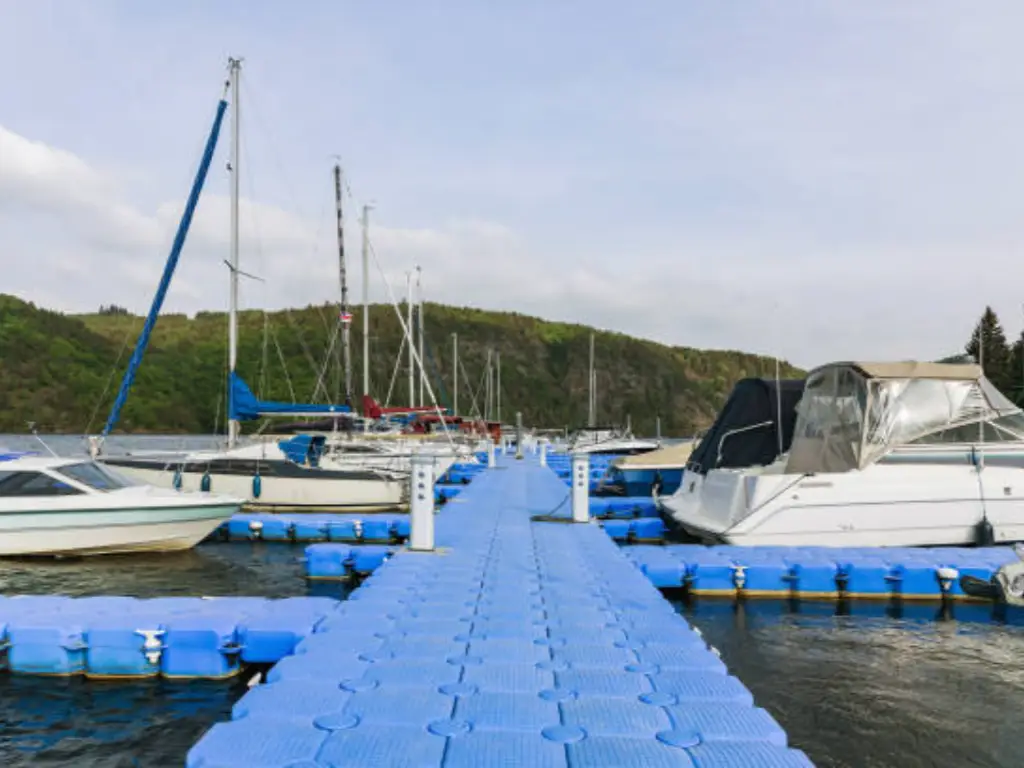
- Commercial Use (Marinas, Floating Restaurants and Resorts): Commercial settings demand high load-bearing capacities to handle the constant human traffic and heavy machinery. When the project is an extension of the seating area of a restaurant or a resort walkway, a double-layer HDPE system is necessary to allow high static loads without reducing the freeboard height. Connection systems that use rubber bushings to remove the squeaking noise produced by the wave oscillation should be sought in high-end resort environments. Moreover, commercial operators should make sure that the structure has the capability of supporting articulated gangways with safety handrails and that it meets the requirements of the Light Penetration laws to safeguard the local underwater ecosystem.
- Industrial and Public Infrastructure (Ferry Terminals and Construction): Docks that are utilized by the general population or as industrial work platforms need to be designed with the highest level of durability. In the case of ferry terminals or floating bridges, the structure should be able to resist large lateral forces caused by berthing of vessels and high frequency foot traffic. When the dock is used as a construction equipment platform, e.g. scaffolding or small cranes, it is important to estimate the total load with a minimum safety factor of 2.0x. Such stressful situations demand strengthened 19mm thickened lugs and heavy-duty piling to avoid structural zipping during storm surges or high velocity currents.
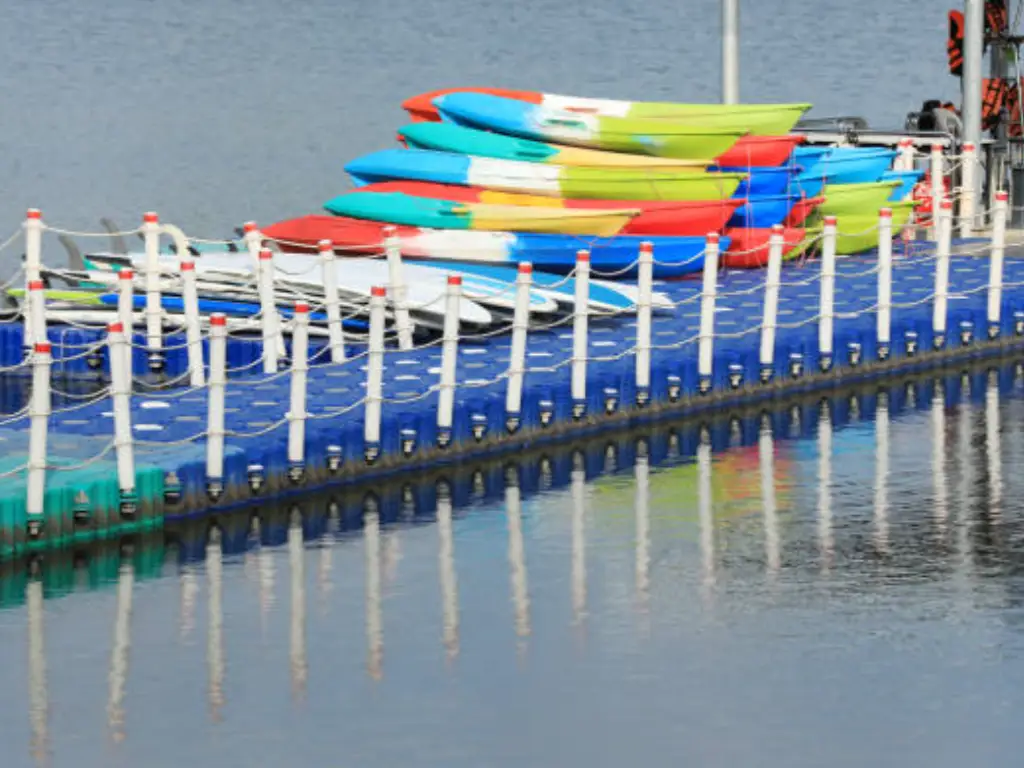
- Water Sports (Kayak/SUP Launches and Pontoon Berths): Water sports facilities must be designed with a low-profile design to allow safe access to and exit out of the water. In the case of kayaks and stand-up paddleboards (SUP), a dock with a low freeboard of about 250mm is the professional standard, as it makes the surface nearer to the water line and reduces the risk of capsizing during boarding. In the case of pontoon boats, the berth has to be designed broader than a normal finger dock to allow the displacement of two hulls. To increase stability when boarding laterally, give preference to modular systems with stability grooves on the underside, which form a suction effect on the water to reduce rolling movements as the paddler steps onto the edge.

Frequent Issues and Remedies in the Process of Buying and Installing Floating Docks
The deployment of a floating pontoon dock successfully needs to consider the environmental variables that may jeopardize the life of the structure or the safety of the users. The most common issues during the procurement and installation stages have technical solutions as listed below.
- Grounding Abrasion mitigation in Low water conditions: In tidal waters or lakes with varying water levels, docks can often be in contact with the seabed. Although HDPE is inherently tough, repeated grounding on sharp aggregate or jagged rocks may cause local puncture or thinning of the bottom wall of the cube. To address this, we suggest that sacrificial HDPE wear-strips or “skid plates” be installed on the bottom of the modules. These strips serve as a buffer, which absorbs the abrasive force of the seabed and can be replaced easily after several seasons, which in effect maintains the structural integrity of the main floatation units.
- Removing Structural Friction and Acoustic Noise: In high-energy water, the continuous movement of a modular dock may produce a continuous squeaking noise due to friction between the connecting pins and the lugs. The answer to this is in the precision-engineered fastening to create a silent, high-quality environment, which is a requirement of resorts and private homes. The vibration is dampened by using high density rubber spacers or gaskets between the lugs and the plastic-on-plastic friction is removed. Also, it is important to make sure that the connection pins are tightened with a threaded system that is torque consistent to avoid the micro-movements that cause noise.
- Geometric Design to Improve Walking Stability: It is a frequent complaint of narrow floating walkways that they roll or pitch when one walks along the edge. The water-plane area and the moment of inertia of the dock are directly proportional to stability. Rather than just adding weight, the best solution is to change the geometry of the dock. The lateral resistance to rolling is greatly enhanced by the addition of a T-head or L-shaped section at the terminal end. This broader footprint forms a firmer platform that moves water more efficiently, giving a firm, terrestrial sensation to the foot.
- Energy Absorption to protect against heavy waves: Standard boat fenders fail to work in open water where heavy surge may make a vessel over-ride the edge of the dock. In high-wave installations, we suggest continuous D-profile fenders built in, and encircling the full perimeter of the dock. These cushions are built in, unlike individual hanging fenders, which offer a constant point of contact, irrespective of the movement of the boat. They must be made of non-marking EVA foam or UV-stabilized PVC so that they can absorb kinetic energy without passing the stress directly to the connection lugs of the dock.
- Multi-Vessel Accessibility Resolution with Hybrid Freeboards: One of the most challenging engineering problems is to fit a large motor yacht and a fleet of kayaks on the same dock, with such large differences in draft requirements. A typical 500mm freeboard is ideal in boarding a yacht but hazardous and challenging in kayak entry. The answer is a Stepped Modular Design. With 250mm low profile cubes to use as a dedicated launch zone and 500mm standard cubes to use as the mooring area, you have a smooth, multi-level transition. This enables everyone to board at the height of the gunwale of their vessel in one unified structure.
- Structural Integrity Protection against Ice and Freezing: In areas where water bodies freeze, the crushing force of growing ice on the sides of the docks may shatter the conventional rigid docks. Modular HDPE docks have a special benefit of Vertical Displacement. The tapered shape and the natural flexibility of the polymer cause the ice pressure to squeeze the dock upwards in fact. The dock, like a seed squeezed out of a grape, does not get crushed by the ice, but pops on its surface. To enhance this effect, the dock must be fitted with a smooth perimeter so that there are no sticking edges that the ice can hold on to and the whole system will rest safely on the frozen surface until the spring thaw.
Why Hisea Dock is the Reliable International Partner of High-performance Floating Systems?
Hisea Dock builds upon almost 20 years of manufacturing superiority to provide floating systems designed to survive the structure. We start with professional consulting, which is a service to assist clients in selecting the most appropriate floating dock system and to make sure that every configuration is clinically adjusted to the particular conditions of the site and the purposes of its use.
Our technical core is based on new generation HDPE impregnated with new UV inhibitors, which gives our system an impact-resistant, maintenance-free substrate with a life cycle that is 20-30 percent longer than conventional ones. The structural integrity is attained by continuous, one-piece molding and marine grade threaded seals that ensure a permanent, airtight buoyancy chamber. These systems are highly stable and can carry heavy loads of between 220-420kg/m 2 depending on the application.
In high-energy conditions, 19mm reinforced lugs and stability grooves guarantee structural alignment during typhoons, a strength that has been tested to 14,389 N with diagonal tensile tests and has a 5-year warranty and industry-leading lead times. Standard orders are delivered in 7-10 days, and custom projects are completed in 10-15 days, which offers a fast and dependable route between design and deployment.
Technical Selection Criteria: Selecting the Best Anchoring System to Use in Floating Docks
The anchoring system should be designed to support the lateral wind loads and tidal changes without affecting the structure of the dock to make the waterfront project stable. The choice of the appropriate method is based on the composition of your seabed, the depth of water, and the environmental laws.
- Fixed Piling Systems to achieve the greatest stability: Piling is the safest anchoring technique, which involves the use of steel, concrete, or wood columns that are pushed into the seabed to achieve a fixed vertical axis. The dock is mounted on rollers or hoops, so that it slides up and down with the tide, but is not easily moved sideways by the heavy sideways action of the wind and the impact of the vessels. This system is mostly used in high traffic marinas and commercial ports where structural alignment is of paramount importance. Although it is the most secure, it needs special barge-mounted equipment to install, and is therefore the most capital-intensive.
- Deep Water Gravity-Based Deadman Anchors: In deep water where pilings are not possible, or in rocky seabed where penetration is not possible, the usual solution is gravity-based deadman anchors. They are huge concrete blocks that are laid on the seabed and attached to the dock using heavy-duty galvanized chains or cables. The weight of the block and tension of the chain are used to keep the dock in place in the system. Although this is very effective in deep water applications, the movement of the chain can lead to seabed scouring, which may be a problem in ecologically sensitive regions.
- Elastic Mooring Systems to meet Environmental Compliance: Seaflex is the most technologically advanced elastic mooring system that is used in sensitive marine environments like seagrass beds. These systems have high-strength elastic cables instead of heavy chains dragging on the floor, and they are kept at a constant tension at all tidal levels. This offers better wave dampening as it absorbs energy gradually and not suddenly. Since the cables do not touch the seabed, they cause no environmental harm and are therefore the most suitable in achieving stringent regulatory requirements of zero-impact anchoring solutions, as well as offering a low-maintenance and silent anchoring solution.
Necessary Accessories: Maximizing Functionality and Safety
In order to upgrade a simple platform to a high performance marine facility, it is important to choose the appropriate accessories. The following is the way to select components that will be long-lasting and safe:
- High-Load Mooring Hardware: Use 316 marine grade stainless steel or reinforced nylon to avoid corrosion. Make sure that cleats are designed to be attached to the internal structural frame of the dock, rather than the surface, to resist large shear forces caused by the wind and tides.
- Impact-Absorbing Fenders: Use EVA foam or UV-stabilized PVC bumpers instead of regular rubber. Seek non-marking materials that have high energy-absorption profiles to ensure that the hulls of vessels are not damaged during docking in turbulent environments.
- Articulated Gangways: Select marine grade aluminum due to its high strength-weight ratio. It should have a pivot-hinge and roller system to allow it to move with the tidal changes without any problems, anti-slip decking and inbuilt handrails to ensure the safety of the passengers.
- Solar Navigation and Safety Lighting: Use IP68 waterproof LED lights with monocrystalline solar panels to ensure a steady charge. The key selection criteria are 360-degree visibility to meet the navigation requirements and automatic dusk-dawn sensors to increase the safety during the night.
Installation of Floating Docks: Techniques and Appropriateness
The implementation of a floating dock system is characterized by the material and the environmental conditions of the location. The following is a step-by-step examination of the installation processes of the three most common types of docks and the reasoning behind the decision to go with a DIY solution or hire a professional.
HDPE Modular Docks: The Plug-and-Play Approach
These docks are constructed by placing modular cubes on a flat shoreline and attaching the interlocking corners with high-strength pins with the help of a torque wrench. Due to the lightness of the material and its high buoyancy, the finished platform is merely slipped in the water and towed into place.
This is the best candidate to install on DIY in tranquil lakes or ponds where the owners can save 30-50 percent of the expenses by removing contractor charges. Nevertheless, large-scale commercial marinas or projects that involve integrated power and water lines are suggested to be assisted by professionals because such projects need special anchoring and adherence to maritime safety standards.
Aluminum Frame Docks: The Structural Assembly Approach
This is done by bolting an aluminum frame, connecting flotation tubs to the bottom and completing the top with timber or composite decking. These sections are heavy and are normally transported into the water using mechanical rollers or a small crane.
Aluminum docks are a versatile option. A DIY solution can be done to typical residential kits in secure waterways provided that you possess a small crew with simple building knowledge. Professional installation is however preferred in larger configurations or high wave action sites. Experts make sure that the heavy frames are launched safely and that the anchoring system is able to withstand the additional structural tension.

Concrete Floating Docks: The “Industrial Deployment” Approach
Concrete docks are precast concrete docks that are transported by barge or heavy truck. The process of installation is an entirely industrial process, which involves heavy-duty cranes to carry units to the water and tugboats to complete positioning and anchoring.
This material is professional installation only because of the huge weight of the components. A DIYer cannot handle blocks that are several tons in weight without special equipment and professional diving crews. These docks are staffed with professionals to make sure that they can withstand the open-sea surges and heavy commercial traffic where structural stability over time is not a compromise.
Floating Docks Cost Accounting and Analysis
In order to make a good maritime investment, you need to consider the Total Cost of Ownership (TCO) in 10 years and not the initial cost of purchase. Although a modular HDPE system, a high-quality aluminum frame, and a heavy concrete float have various structural advantages, their financial characteristics vary widely when you consider the hidden costs of heavy engineering, special logistics, and maintenance costs.
In order to give a clear financial outlook, the table below compares a typical 20m 2 (around 215 sq. ft.) project with a 10-year operating period:
| Cost Category | Modular HDPE (DIY) | Marine-Grade Aluminum | Concrete Floats |
| Material Cost (Initial) | $8,000 – $10,000 | $12,000 – $18,000 | $20,000 – $35,000 |
| Installation / Labor Fee | $0 (DIY Assembly) | $4,000 – $7,000 (Pro) | $15,000 – $25,000 (Heavy Engineering) |
| Logistics / Transport | Optimized (Standard Container) | High (Oversized Frames) | Extreme (Barges/Heavy Crane) |
| Annual Maintenance (10 yrs) | $500 (Routine Cleaning) | $3,000 – $6,000 (Decking/Treatment) | $5,000 – $12,000 (Rebar/Spalling) |
| Major Repair / Replacement | $0 (15–20 Year Lifespan) | $2,000 (Decking/Fittings) | $5,000+ (Structural Cracking) |
| Total 10-Year TCO | ~$9,000 – $11,000 | ~$21,000 – $33,000 | ~$45,000 – $77,000+ |
The financial data shows that there is a dramatic difference between lightweight modular systems and heavy permanent structures. The main cause of this difference is the Capital Expenditure (CAPEX) associated with deployment. Aluminum and concrete are very durable, but they need heavy engineering to be installed. In the case of concrete docks, the mobilization cost (contracting barge-mounted cranes and commercial dive teams) can be as high as or higher than the cost of the materials. Modular HDPE defies this reasoning; with an interlocking design that is easy to assemble, the owner will be able to do away with the most costly element of maritime construction: professional work.
The final landed cost is also determined by logistical efficiency. Aluminum and concrete systems are rigid and oversized by nature, and need costly flatbed trucking or specialized ocean transportation that is not easily containerized. Conversely, modular HDPE cubes are made with the highest volumetric density. A 40ft HQ container can fit enough units to construct a large marina, which would greatly reduce the shipping cost per square meter than assembled aluminum frames or huge concrete blocks. This renders HDPE the most affordable option when it comes to remote areas or overseas projects where transportation costs tend to eat up the budget.
Lastly, the Operational Expenditure (OPEX) defines the ROI in the long-term. Aluminum docks, although resistant to corrosion, may have wood or WPC decking, which needs to be replaced periodically and structural inspections of the joints of the frame. Although concrete has a 50-year potential, it is a maintenance liability in saltwater; when internal rebar starts to oxidize, it leads to external spalling which is extremely costly to fix. HDPE is a zero-maintenance asset. It is chemically inert and UV-stabilized, that is, it avoids the maintenance tax of painting, sealing or structural reinforcement. The HDPE system breaks even in less than 3 years to most project owners, and offers 10 years or more of service with almost no extra financial investment.
Long-Term Performance by Proper Maintenance and Winterization
Despite the fact that HDPE is extremely durable, it needs special seasonal maintenance to last 20 years. Barnacle and algae biofouling may accumulate to 20kg/m 2 of submerged weight in saltwater or nutrient-rich environments, slowly decreasing the freeboard of the system. In response, it is suggested to use a high-pressure wash (1,5002,000 PSI) every 24 to 36 months; the modular design can easily be flipped or tilted to reach the bottom part of the structure and clean it thoroughly.
In the case of winterization, it is crucial to differentiate between the freezing of the statical and the ice shove. Although the tapered shape of the dock enables it to naturally rise and settle on the still ice without any danger, the ice sheets that move due to the wind or currents can cut through the strongest anchoring systems. The most safe thing to do in a place where the ice may be dynamic and shove the shore ramp is to unhook the shore ramp and pull the dock away to a safe cove or drag it ashore with a boat trailer.
Lastly, a short-term mechanical inspection once a year with a special torque wrench is done to make sure that all connecting pins are in their 90-degree position. Before the winter freeze, it is also important to adjust the anchoring system: by loosening the chains a little, the dock will rise with the growing ice layer, and the tremendous vertical pressure of the freezing water will not be able to pluck anchors out of the seabed. With these technical checks as a regular practice every year, you will have a platform that is a safe, high-performance asset over decades.
Trends in Future Development of Floating Pontoon Docks
In the future, the development of floating pontoon docks is shifting to more than just floatation to intelligent infrastructure. The next generation of systems is incorporating sensors with IoT capabilities directly into connection pins to measure real-time structural stress and local water quality. This digital overlay is being combined with energy-independent designs, including photovoltaic-built walkways that transform the surface of the dock into a solar power source to power safety lights and charge vessels, and make remote waterfront installations entirely self-sufficient.
In addition to technology, the industry is also adopting biophilic design by designing the underside of modules with micro-textures that serve as artificial reefs, which support shellfish and local marine life with essential habitats. This environmental dedication will result in a closed-loop circular economy; instead of being disposed of at the end of their 20-year service life, modular HDPE components are becoming a part of the buy-back programs where they are pelletized and re-manufactured into new maritime products. This makes floating infrastructure not only a useful resource, but a sustainable, zero-waste component of the world maritime ecosystem.

Schlussfolgerung
The challenges of waterfront development in 2026 demand a middle ground between technical physics and economic rationality. With the focus on high-grade HDPE and modular flexibility, the property owners will be able to obtain a flexible, durable, and environmentally-compliant asset that will be able to adjust to the changing tides of the environment and the market.
Finally, the most desirable docking system is the one that reduces the maintenance in the long term and enhances the functional safety. With the relationship between land and water becoming more dynamic, the strength of a floating, modular structure provides the surest base of a safe and valuable waterfront experience over decades to come.

 English
  Thai
Thai  Spanish
  French
  German
  Dutch
Dutch  Italian