
Ein umfassender technischer Leitfaden zur Nutzlastmathematik, zur Materialauswahl und zum Schutz Ihrer Investitionen in den Wasserbau.
Der Bau einer maritimen Struktur ist eine Übung im Umgang mit Umweltfeindlichkeit. Ganz gleich, ob Sie einen kommerziellen Hochleistungshafen ausstatten oder ein Wohngebäude bauen Boot schwimmt Docksbleibt die zugrunde liegende Physik brutal unversöhnlich. Ein schönes, fachmännisch gefertigtes Holz- oder Aluminiumdeck bedeutet absolut nichts, wenn das Fundament unter der Wasserlinie wissenschaftlich fehlerhaft oder strukturell beeinträchtigt ist.
In der Welt des Hafenbaus wird der Spielraum für Fehler in Zentimetern Tiefgang und Pfund Nutzlast gemessen. Fehleinschätzungen beim Auftrieb führen nicht nur zu nassen Füßen, sondern auch zu katastrophalem strukturellem Versagen, gerissenen Rahmen und massiver finanzieller Haftung. Bevor Sie sich auf die Suche nach Schwimmsteg Schwimmer zu verkaufen Wenn Sie sich im Internet umsehen und die billigsten und größten Kunststoffwannen in Ihren Einkaufswagen legen, müssen Sie unbedingt verstehen, dass die Auswahl eines Pontons eine strenge technische Disziplin ist und kein allgemeiner Hardwarekauf.
In diesem umfassenden technischen Leitfaden entfernen wir den Marketingjargon und tauchen tief in die Kernmechanik von Pontonmaterialien, die kritischen Unterschiede bei Innenfüllungen und die präzisen Formeln ein, die zur Berechnung von Eigen- und Nutzlasten erforderlich sind. Wir gehen auch auf fortschrittliche Layout-Strategien und Spezifikationen für Befestigungselemente ein und zeigen, wie B2B-Beschaffungsmanager exorbitante Frachtkosten optimieren können.
Die Kernmechanik und die Entwicklung von Schwimmdock-Pontons
Das Grundprinzip einer schwimmenden Plattform beruht auf dem archimedischen Prinzip: Die nach oben gerichtete Auftriebskraft, die auf einen in eine Flüssigkeit eingetauchten Körper wirkt, ist gleich dem Gewicht der Flüssigkeit, die der Körper verdrängt. Einfacher ausgedrückt: Ihr Schwimmsteg muss so viel Wasser verdrängen, dass er das Gewicht der Plattform selbst sowie der darauf befindlichen Personen und Geräte ausgleicht, ohne vollständig unterzugehen.
Die Wasserverdrängung ist jedoch nur die halbe Miete. Die Außenhülle Ihres Pontons dient als Panzer, der Ihren Auftrieb schützt. Sie muss der unerbittlichen UV-Strahlung, den zermalmenden Kräften von gefrierendem Eis, versehentlichen Stößen von Bootsrümpfen und dem Nagen von Wasserlebewesen standhalten.
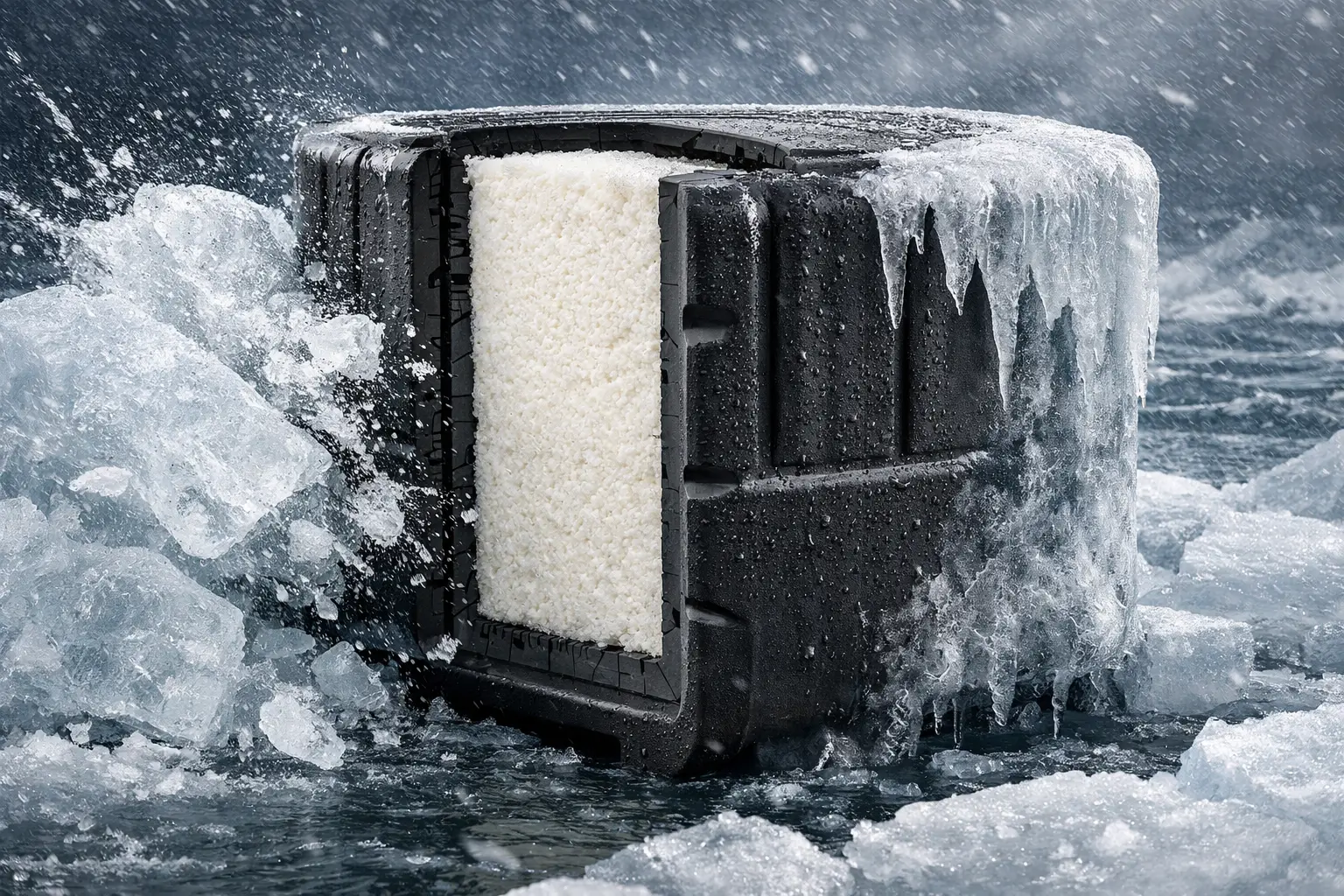
Herkömmliche Schalen vs. HDPE mit hohem Molekulargewicht
In der Vergangenheit wurden Pontons der Einstiegsklasse aus Standardkunststoffen oder Glasfasern hergestellt. Standardkunststoffe sind zwar anfangs kostengünstig, haben aber einen entscheidenden Nachteil: Ihre Molekülketten sind relativ kurz. Wenn sie einer kontinuierlichen Biegung durch die Gezeiten oder einem plötzlichen Temperaturabfall ausgesetzt sind, brechen diese kurzen Ketten auseinander, was zu Mikrobrüchen, Sprödigkeit und schließlich zu einem katastrophalen Bruch der Hülle führt.
Die moderne Schiffstechnik hat sich vollständig auf Hochmolekulares Polyethylen hoher Dichte (HMW-HDPE) für hochwertige Schiffsanwendungen. HMW-HDPE besitzt unglaublich lange Polymerketten, die dem Material ein intrinsisches "Gedächtnis" verleihen. Wenn das Kielwasser eines schnell fahrenden Bootes eine schwimmende Struktur gegen einen Pfahl stößt, biegt sich HMW-HDPE, um die kinetische Energie zu absorbieren, und kehrt sofort in seine ursprüngliche Form zurück, ohne zu zerbrechen.
| Leistungsmetrik | Traditionelle Kunststoffe / PVC | Hochmolekulares HDPE (HMW-HDPE) |
|---|---|---|
| Temperaturtoleranz | 0∞C bis 40∞C (Neigung zu Rissen im Winter) | -60∞C bis 80∞C (extrem witterungsbeständig) |
| Schlagzähigkeit | Gering bis mäßig (Zerbricht bei plötzlicher Krafteinwirkung) | Außergewöhnlich (hohe kinetische Energieabsorption) |
| Lebensdauer und Wartung | 3-5 Jahre (häufiges Patchen erforderlich) | 15-20 Jahre (Praktisch wartungsfrei) |
| Umweltfreundlichkeit | Oft nicht wiederverwertbar, zerfällt in Mikroplastik | 100% Recycelbar, minimaler ökologischer Fußabdruck |
Die Wahl des richtigen Schwimmkörper für ein Schwimmdock bedeutet, nicht nur auf die Oberflächenfarbe zu achten, sondern auch auf das Materialdatenblatt. Die überragende Witterungsbeständigkeit von HMW-HDPE sorgt dafür, dass die strukturelle Integrität Ihres Projekts unangetastet bleibt, egal ob es in eiskalten Seen oder an heißen Küsten liegt.
Fortschrittliches Blasformen und Scherfestigkeit
Selbst das beste HMW-HDPE-Harz ist nutzlos, wenn der Herstellungsprozess strukturelle Schwachstellen verursacht. Viele minderwertige Schwimmer auf dem Markt verwenden Formtechniken, die zu einer ungleichmäßigen Wandstärke führen - dick am Boden, aber hauchdünn an den kritischen Ecken und Montageflanschen.
Der wahre Belastungspunkt eines Pontons ist nicht der Boden, sondern die Befestigungspunkte (die "Ohren" oder Flansche), an denen der Schwimmer mit dem starren Holz- oder Aluminiumrahmen verbunden ist. Wenn Wellen anrollen, versuchen massive Scherkräfte und Aufwärtsbewegungen, die Kunststoffflansche von den Bolzen zu lösen.
Technische Details: Um diese Bedrohung zu neutralisieren, verstärken fortschrittliche Hersteller, die groß angelegte Blasformtechniken anwenden, diese Verbindungsdetails gezielt. So verfügen Schwimmer der Spitzenklasse beispielsweise über Befestigungsösen mit einer schwindelerregenden 19mm Dicke. Dabei geht es nicht um die Gesamtgewichtskapazität des Docks, sondern eher um extreme Scherfestigkeit. Ein 19 mm dicker Flansch sorgt dafür, dass der Kunststoff bei starken Auftriebskräften durch die Gezeiten nicht reißt oder sich verzieht und die Verbindung zwischen dem Schwimmer und dem Rahmen felsenfest bleibt.
Analyse von Ponton-Füllungen: Ummantelter EPS-Schaum vs. Hohlkerne
Sobald Sie eine undurchdringliche Hülle gesichert haben, müssen Sie sich mit dem Innenleben befassen. Viele Heimwerker und preisbewusste Bauunternehmer machen die teuersten Fehler, wenn es um die Frage geht, ob ein Hohlkörper oder ein mit Schaumstoff gefüllter Schwimmkörper verwendet werden soll.
Luftgefüllte Hohlpontons und die Schwachstellenfalle
Hohlkörperschwimmer nutzen die in der Kunststoffschale eingeschlossene Luft, um Auftrieb zu erzeugen. Sie sind leicht und billig in der Herstellung. Sich jedoch ausschließlich auf Luft zu verlassen, ist ein technisches Wagnis. Der Hauptfeind von Hohlkörperschwimmern ist der "Kondensationseffekt". Bei schwankenden Umgebungstemperaturen bildet sich im Inneren des versiegelten Fasses Kondenswasser. Über mehrere Saisons hinweg schwappt dieses angesammelte Wasser umher, verringert den Auftrieb und stört das Gleichgewicht Ihres Stegs.
Außerdem ist ein luftgefüllter Schwimmer eine einzige Schwachstelle. Wenn ein Stück Treibholz oder eine verirrte Schiffsschraube die dünne Hülle durchstößt, nimmt sie Wasser auf und sinkt innerhalb von Minuten, wobei ein Teil des teuren Stegrahmens mitgerissen wird.
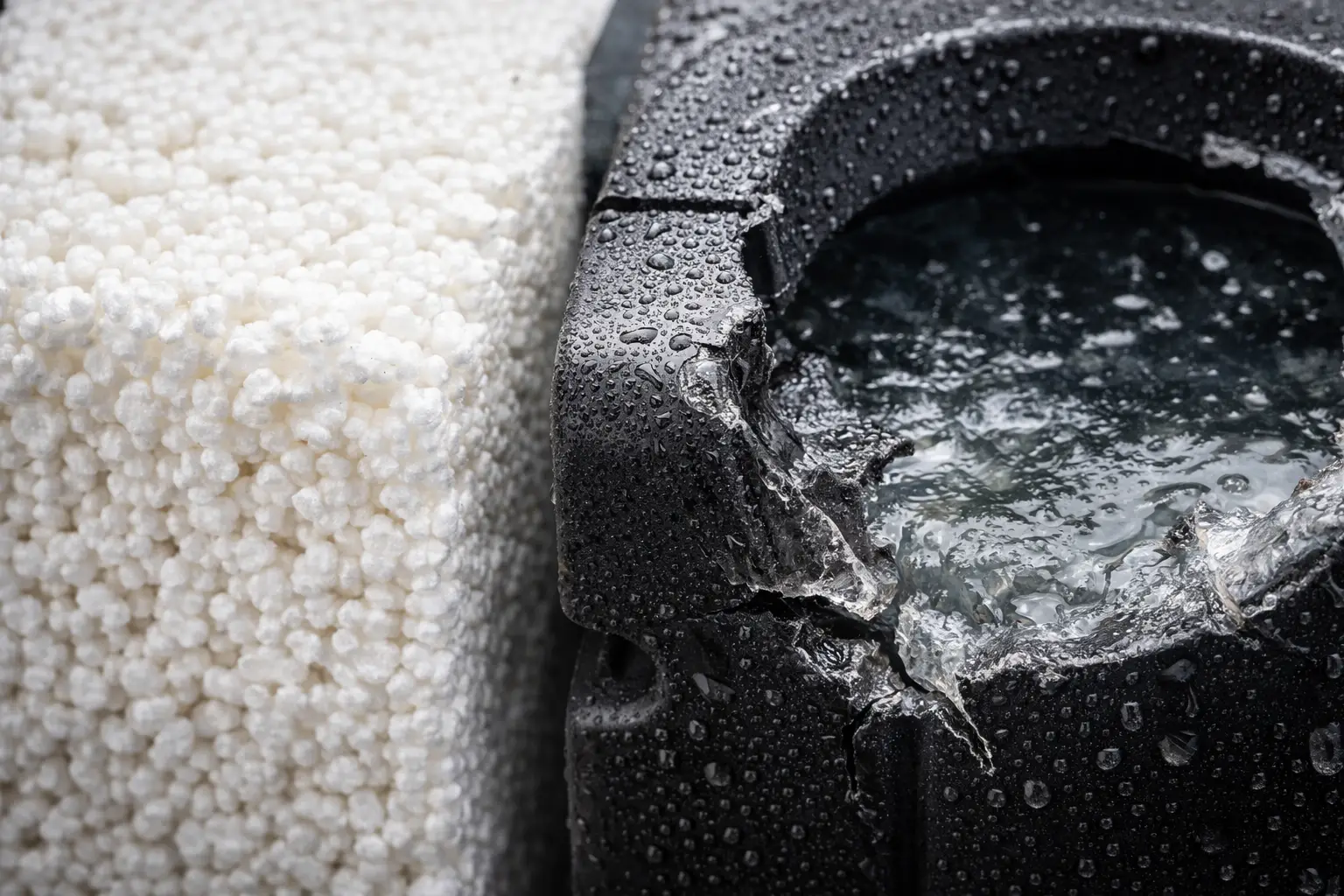
Mit EPS-Schaum gefüllte ummantelte Schwimmer als Industriestandard
Um das Risiko eines plötzlichen Sinkens auszuschließen, schreiben professionelle Schiffsingenieure die Verwendung von mit EPS-Schaum (expandiertes Polystyrol) gefüllten Schwimmern vor. Der geschlossenzellige Schaumstoff mit hoher Dichte wird in die HMW-HDPE-Schale eingespritzt, wodurch die Luft vollständig verdrängt wird.
Die "geschlossene Zellstruktur" dieses Schaums ist der entscheidende Vorteil. Er ist in hohem Maße hydrophob. Selbst wenn die äußere Schale bei einem Aufprall mit hoher Geschwindigkeit einen katastrophalen Schaden erleidet, wird die innere Schaumstoffmatrix kein Wasser aufnehmen. Der Schwimmer behält mehr als 95% seines ursprünglichen Auftriebs und ist damit ein unsinkbarer Failsafe.
Die Auftriebsformel: Präzise Berechnung von Eigen- und Nutzlasten
Die häufigste und kritischste Frage, die uns gestellt wird, ist: “Wie viele Dockschwimmer brauche ich??”
Schätzungen sind hier gefährlich. Um das perfekte Gleichgewicht zu erreichen, müssen Sie die Auftriebsformel beherrschen, indem Sie zwei verschiedene Messgrößen korrekt zusammenfassen: Totlast und Lebendlast, und dann die Überprüfung Ihrer Ergebnisse anhand der 50%-Tauchregel.
Interaktiver Dock-Auftriebskalkulator
Geben Sie die Abmessungen Ihres Holzdocks (in Fuß) ein, um sofort eine Schätzung der benötigten Nutzlast vorzunehmen.
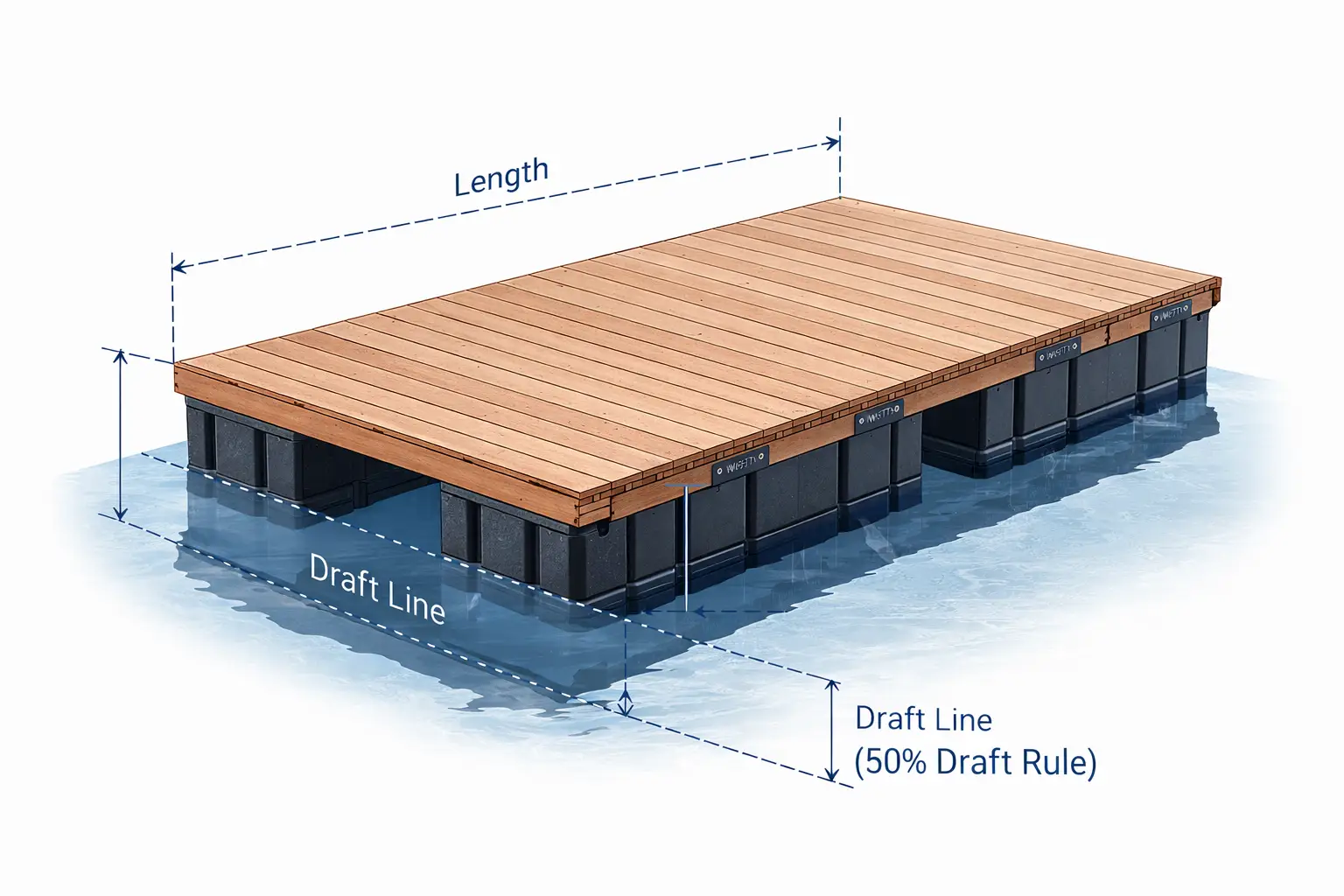
Schritt 1: Quantifizierung der Eigenlast (Stückliste)
Das Eigengewicht ist das gesamte, dauerhafte Gewicht Ihrer Stegmaterialien, bevor eine einzige Person den Steg betritt. Ein häufiger fataler Fehler besteht darin, das Holz zu berechnen, aber das Ruhegewicht der Gangway zu vergessen - die häufigste Ursache für örtliches Versinken. Schauen wir uns die vollständige MECE-Materialliste (Mutually Exclusive, Collectively Exhaustive) für eine standardmäßige 10′ x 10′ (100 sq. ft.) Holzplattform an.
| Komponente | Anzahl / Spezifikationen für 10×10′ Dock | Geschätztes Gewicht (lbs) |
|---|---|---|
| Decking Bretter | 20 Stücke von 5/4″ x 6″ x 10′ (behandelte Kiefer) | ~ 400 lbs |
| Strukturelle Balken und Rahmen | 11 Stücke von 2″ x 8″ x 10′ (16″ On-Center) | ~ 480 lbs |
| Befestigungselemente und Hardware | Sechskantbolzen, Eckwinkel, Schrauben | ~ 45 lbs |
| Zubehör & Gangway Ruhegewicht | Gangway-Scharnierlippe, Klampen, Stoßstangen, Leitern | ~ 150 lbs |
| Totales Eigengewicht | Leeres Dock Gewicht | ~ 1.075 lbs |
Schritt 2: Hinzufügen der Nutzlast
Die Nutzlast ist das variable Gewicht von Personen, Kühlboxen, Ausrüstung und Umweltfaktoren. Nach den Richtlinien der American Society of Civil Engineers (ASCE) müssen schwimmende Strukturen für Wohngebäude eine Nutzlast von mindestens 30 Pfund pro Quadratfuß (psf).
Für unser 100 Quadratfuß großes Dock: 100 Quadratfuß × 30 psf = 3.000 lbs Lebendige Last.
Erforderlicher Gesamtauftrieb = Totlast (1.075 lbs) + Nutzlast (3.000 lbs) = 4.075 lbs.
Sie müssen mindestens 4.075 lbs Gesamtauftrieb für den Ponton installieren, um zu verhindern, dass das Deck bei voller Beladung vollständig untergeht.
Schritt 3: Die 50% Submersion Rule Verification
Die Installation von genau 4.075 Pfund garantiert, dass das Dock nicht sinkt, aber wie sieht es aus, wenn es leer ist? Um einen stabilen, hoch aufragenden Freibord zu gewährleisten, muss Ihr Die Totlast sollte die Schwimmer nie mehr als 50% ihres Volumens überfluten..
- Installierter Auftrieb: 4.075 lbs.
- 50% des installierten Auftriebs: 2.037,5 lbs.
- Unser Eigengewicht (1.075 lbs) liegt deutlich unter dem Grenzwert von 2.037,5 lbs.
Crucial Übergewicht Failsafe: Wenn Sie Ihren Rahmen aus dichten Harthölzern (wie Ipe) oder schwerem Stahl bauen, kann Ihre Totlast die 50%-Marke überschreiten, selbst wenn Ihre Berechnung der Nutzlast korrekt ist. In diesem Fall müssen Sie die Dichte Ihres Pontons zwangsweise erhöhen (mehr Schwimmer hinzufügen), um den leeren Freibord wiederherzustellen, da Ihr Dock sonst ständig in kleinen Wellen überflutet wird.
Pontonplatzierung und Maßangaben
Strategisches Layout für Anti-Dreh-Moment
Die Kenntnis des benötigten Gesamtauftriebs ist eine Sache, die richtige Platzierung der Schwimmer eine andere. Sie sollten die Schwimmer niemals direkt in der Mitte des Rahmens anordnen. So wird die Stabilität maximiert und ein starkes "Anti-Kipp-Moment" erzeugt (damit das Deck nicht kippt, wenn alle auf einer Seite stehen), die Pontons müssen vorrangig entlang des äußeren Umfangs und stark konzentriert in den Ecken eingesetzt werden. Sobald der Rand abgestützt ist, können zusätzliche Schwimmer gleichmäßig entlang der Innenstringer verteilt werden, um ein Durchhängen der Terrassendielen zu verhindern.
Die Reverse-Engineering-Tiefenformel
Um die Lücke zwischen der theoretischen Mathematik und der Beschaffung zu schließen, müssen Sie die gewünschte Deckhöhe zurückrechnen, um die richtigen Schwimmerabmessungen auszuwählen. Verwenden Sie diese Formel, bevor Sie in einen Katalog schauen:
Schnellauswahl-Referenz (für Standard-Holzdocks)
| Konfiguration / Anwendung | Empfohlene Schwimmtiefe | Geschätzter leerer Freibord |
|---|---|---|
| Low-Profile (Ruderschalen, Kajakstarts) | 8″ (200-250 lbs Kapazität) | ~ 9″ bis 10″. |
| Standard 10×10 Holzdock (Pontonboote) | 12″ (350-400 lbs Kapazität) | ~ 13″ bis 14″. |
| Heavy Duty (Schiffe mit tiefem V-Rumpf, Marinas) | 16″ (480-550 lbs Kapazität) | ~ 17″ bis 18″. |
Strukturelle Befestigungsarten für Holz- und Aluminiumrahmen
Ein hochwertiger HMW-HDPE-Schwimmkörper kann durch eine unsachgemäße Verlegung ruiniert werden. Die Methode, mit der Sie die Schwimmer an Ihren Balken befestigen, entscheidet darüber, ob Ihre Terrasse 20 Jahre lang hält oder beim ersten Sturm zerbricht.
Flanschbefestigung: Sechskantschrauben mit überdimensionierten Unterlegscheiben
Bei der Verwendung des umlaufenden Flansches gilt die goldene Regel, dass die nach oben gerichtete Reißkraft verteilt werden muss. Die Industrienormen schreiben die Verwendung von 3/8″ oder 1/2″ Sechskantschrauben gepaart mit übergroßen Unterlegscheiben. Sie müssen diese massiven Unterlegscheiben auf der Unterseite des Kunststoffflansches anbringen, bevor Sie die Kontermutter einschrauben. Die übergroße Unterlegscheibe verteilt die schiere Belastung auf eine große Fläche des Kunststoffflansches und verhindert so ein Ausreißen.
⚠ Warnung vor galvanischer Korrosion: Mischen Sie niemals Metallarten auf Ihrer Unterkonstruktion. Wenn Sie Schrauben aus rostfreiem Stahl mit feuerverzinkten Halterungen verwenden, lösen Sie in einer feuchten Meeresumgebung eine schwere galvanische Reaktion aus, die das schwächere Metall schnell korrodieren und zerstören lässt.insbesondere in Salzwasserumgebungen, wo die Leitfähigkeit die Reaktionsgeschwindigkeit beschleunigt. Entscheiden Sie sich für ein Metallsystem (feuerverzinkt ist Standard) und halten Sie sich bei allen Verbindungselementen strikt daran.
Ausführungen mit flacher Oberseite und eingegossenen Schlitzen
Bei hochwertigen Aluminiumplattformen bevorzugen die Konstrukteure flache Schwimmer mit eingegossenen Nuten. Anstatt zu bohren, gleitet das Aluminium-Trackingsystem nahtlos in die integrierten Nuten auf der Oberseite des Pontons. Dieser Ansatz sorgt für extreme Steifigkeit und macht das Bohren von unten nach oben überflüssig, was die Montage und Demontage unglaublich einfach macht.
Frachtoptimierung und Zuverlässigkeit der B2B-Lieferkette
Für Schifffahrtsunternehmen und internationale Vertriebshändler sind die wahren Kosten der Dockschwimmer ist selten nur der Aufkleberpreis - es ist die Logistik. Schwimmer sind von Natur aus voluminös. Der Versand dieser Artikel per LTL (Less-than-Truckload) oder Seefracht kann den ROI Ihres Projekts zunichte machen, wenn es dem Hersteller an Einfallsreichtum bei der Verpackung mangelt.
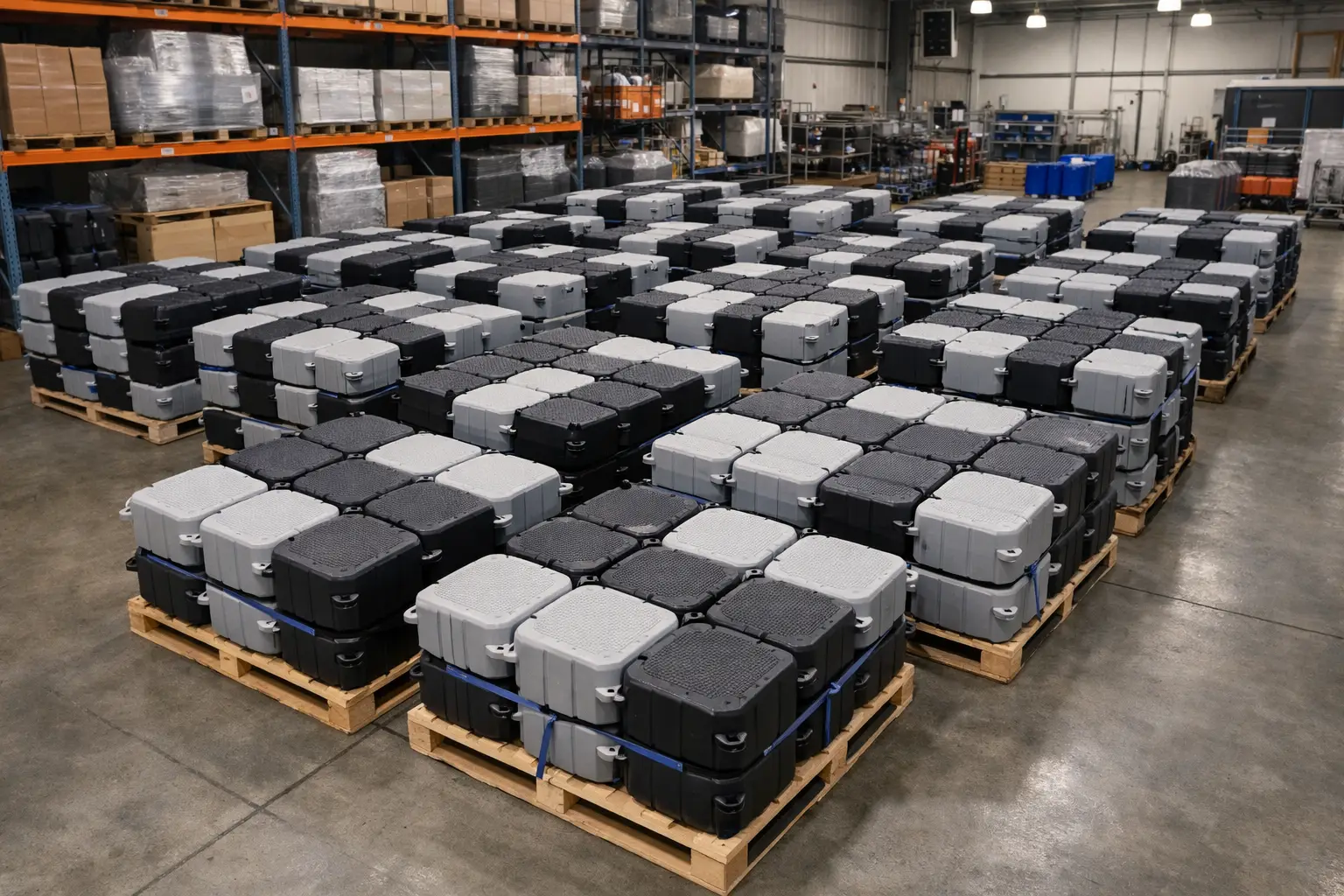
Die Container-Volumenfalle: Durch den Kauf von Standardbehältern können Sie vielleicht ein paar Dollar pro Einheit sparen, aber die Standardstapelung ist bekanntermaßen ineffizient. Ein standardmäßiger 40HQ-Container fasst vielleicht nur ~350 lose, unregelmäßig geformte Floats. Die weltweit führenden Hersteller haben jedoch proprietäre, ineinander greifende Designs entwickelt, bei denen 4 Floats perfekt zusammenpassen und eine standardisierte, quadratische Paletteneinheit bilden. Mit dieser strukturellen Verpackung kann ein 40HQ-Container bis zu 560 Stück aufnehmen.ein massiver Anstieg der Volumennutzung um 60%Dadurch sinken die Seefrachtkosten pro Einheit drastisch.
Neben der Verpackung ist die Stabilität der Lieferkette von größter Bedeutung. Eine verspätete Lieferung bedeutet untätige Bautrupps und gebrochene Verträge. Bei der Beschaffung Ihres Lagerbestands müssen Sie die fortschrittlichen Blasformfähigkeiten des Lieferanten, seine tägliche Produktionskapazität und seine Fähigkeit, umfassende Garantien zu bieten, bewerten. Eine zuverlässige Lieferkette verwandelt einen einfachen Hardwarekauf in einen langfristigen Geschäftsvorteil.
Navigieren durch USACE-Vorschriften und Einhaltung von Umweltauflagen
Die Missachtung von Umweltvorschriften birgt massive rechtliche Risiken. Behörden wie das U.S. Army Corps of Engineers (USACE) und die EPA haben die Verwendung von freiliegenden, unverkapselten Styroporblöcken in Gewässern streng verboten. Ungeschützter Schaumstoff gibt Mikroplastik in das Ökosystem ab - ein Verstoß, der zu hohen Geldstrafen führt.
Durch die Verwendung von umweltfreundlichem Material wie HMW-HDPE, mit dem 100% den EPS-Schaum einkapselt, stellen Sie die Einhaltung der Vorschriften sicher. HDPE ist nicht nur äußerst langlebig, sondern auch vollständig recycelbar. Langlebige Schwimmer reduzieren die Häufigkeit des Austauschs, was den Bedarf an Ressourcen senkt und sicherstellt, dass Ihr Schiffsprojekt die strengen Umweltgesetze erfüllt.
Schlussfolgerung: Ein Erbe am Wasser aufbauen
Beim Bau von Hafenanlagen gibt es keine Abkürzungen. Stellen Sie bei der Vorbereitung Ihres Projekts sicher, dass Sie die tatsächliche Eigenlast (einschließlich Zubehör) berechnen, die 50%-Tauchsicherheit überprüfen, galvanische Korrosion strikt vermeiden und vollständig gekapselten EPS-Schaum von Lieferanten verlangen, die sich auf Frachtoptimierung verstehen.
Das Fundament Ihrer Terrasse bestimmt die Sicherheit aller, die darauf gehen. Wenn Sie kompromisslose Qualität, Präzisionstechnik und eine Lieferkette benötigen, die mit Ihrem B2B-Bedarf mitwachsen kann, brauchen Sie einen Hersteller, der weltweites Vertrauen genießt.
Sind Sie bereit, ein Dock zu bauen, das eine ganze Generation überdauert?
Dies ist der Ort, an dem Hiseadock tritt ein. Mit einer über 5.000 Quadratmeter großen, modernen Anlage, 4 fortschrittlichen Blasformanlagen und 16 Jahren Erfahrung produzieren wir täglich 1.120 hochwertige Schwimmkörper. Mit ISO-, CE- und SGS-Zertifizierungen, weltweiten Vorlaufzeiten von 3-10 Tagen und einer branchenführenden 5-Jahres-Garantie liefern wir nicht nur Hardware, sondern sorgen auch für Erfolg.
Wenden Sie sich an Hiseadock, um maßgeschneiderte Lösungen aus einer Hand zu erhalten - von der präzisen Formenentwicklung bis zur garantierten weltweiten Lieferung. MOQ beginnt bei nur 40 Stück.

 English
  Thai
Thai  Spanish
  French
  German
  Dutch
Dutch  Italian
  Arabic
  Indonesian
  Portuguese
  Turkish