
Un desglose basado en datos de la inversión inicial frente al valor de los activos a largo plazo en 2026.
Si está planificando un proyecto de obras hidráulicas, es probable que se haya encontrado con un muro de presupuestos vagos. Al preguntar "¿cuánto cuesta un dique flotante?", la mayoría de los concesionarios sólo cotizan la estructura metálica desnuda. Esta guía desmonta la precios de los diques flotantes de aluminio pieza por pieza, revelando las matemáticas ocultas que los traficantes rara vez discuten.
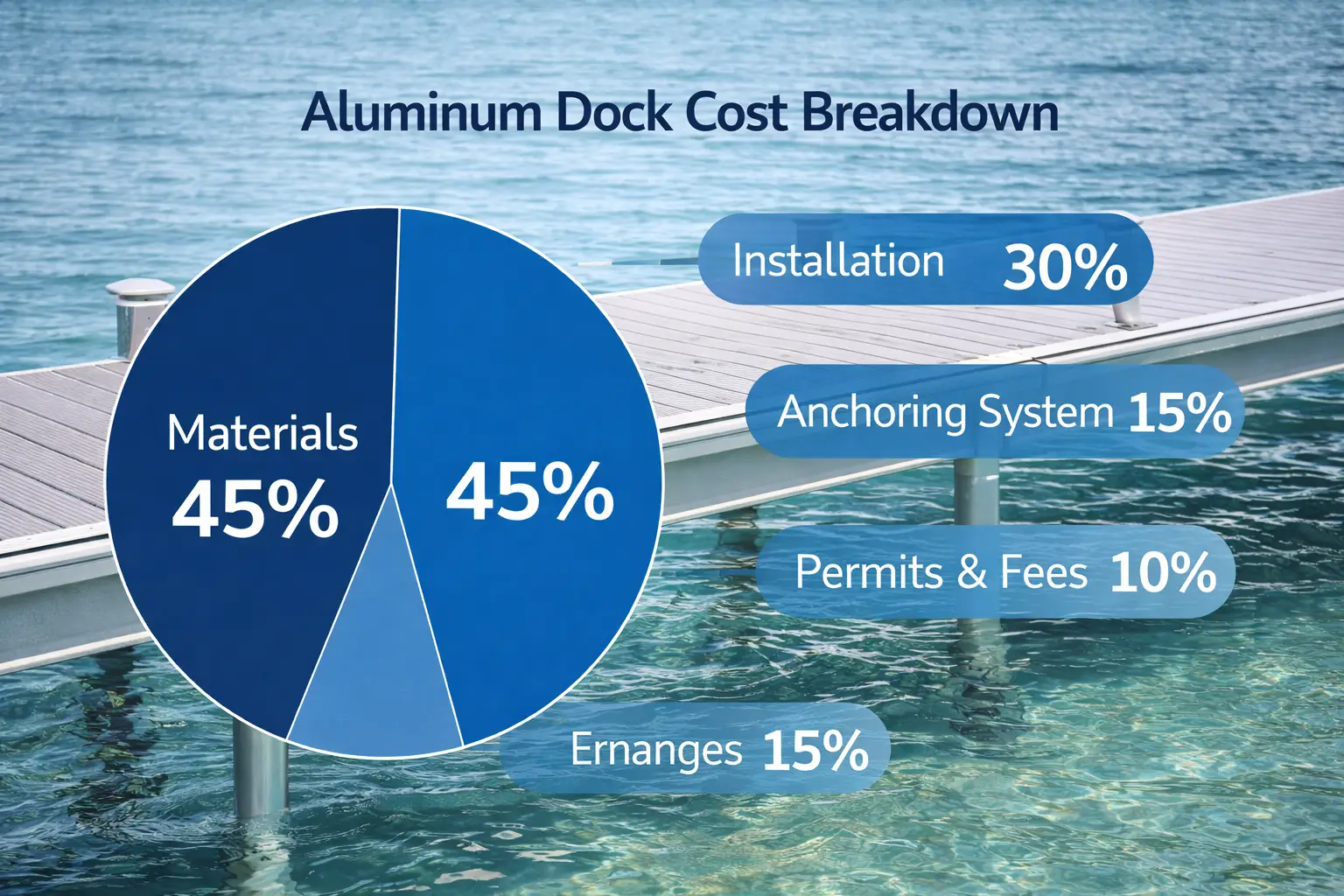
El verdadero coste por pie cuadrado de los muelles flotantes de aluminio
En 2026, la precios de los diques flotantes de aluminio oscilan entre $35 y $65+ por pie cuadrado. Esto cubre el marco de aluminio para muelle flotante (normalmente 6061-T6 de calidad marina) y flotabilidad interna. Sin embargo, esto es sólo el "chasis". Su factura final vendrá dictada por la elección de la cubierta y los herrajes de anclaje.
Además, la parte del pastel correspondiente a la "logística 10%" suele omitirse en los presupuestos iniciales. El envío de estructuras metálicas de 20 pies totalmente ensambladas o parcialmente soldadas suele requerir un transporte especializado de carga parcial (LTL) o sobredimensionado. Dependiendo de la distancia a la que se encuentre del fabricante, este obstáculo logístico puede suponerle fácilmente entre $1.200 y $2.500 en su factura, antes incluso de que el muelle toque el agua.
Estimaciones de precios por tamaños y diseños de muelle populares
Tanto si necesita kits de muelle flotante de aluminio o un diseño de puerto deportivo comercial, la configuración define su línea de base. Para embarcaciones más grandes, la integridad estructural del diseño no es negociable.
Recto y sencillo: Las plataformas de 8×10 a 10×20
Ideal para nadar en privado o como muelle flotante de aluminio para barcos para botar kayaks. Una plataforma de 8×10 cuesta aproximadamente $2.800 (armazón + flotadores), pero requiere un anclaje cuidadoso para mantener la estabilidad durante la acción de las olas.
Diseños complejos: Deslizamientos en U y en F
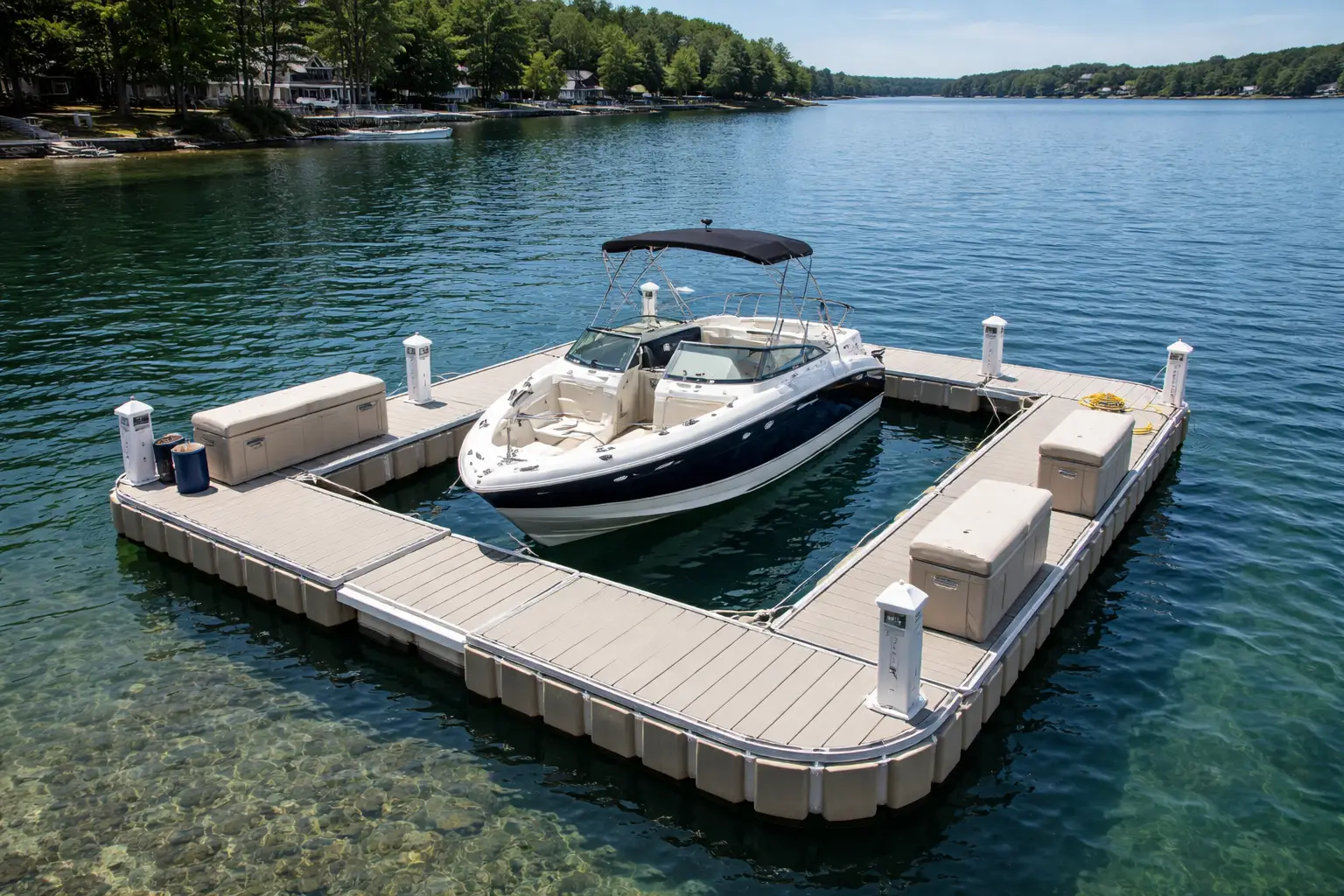
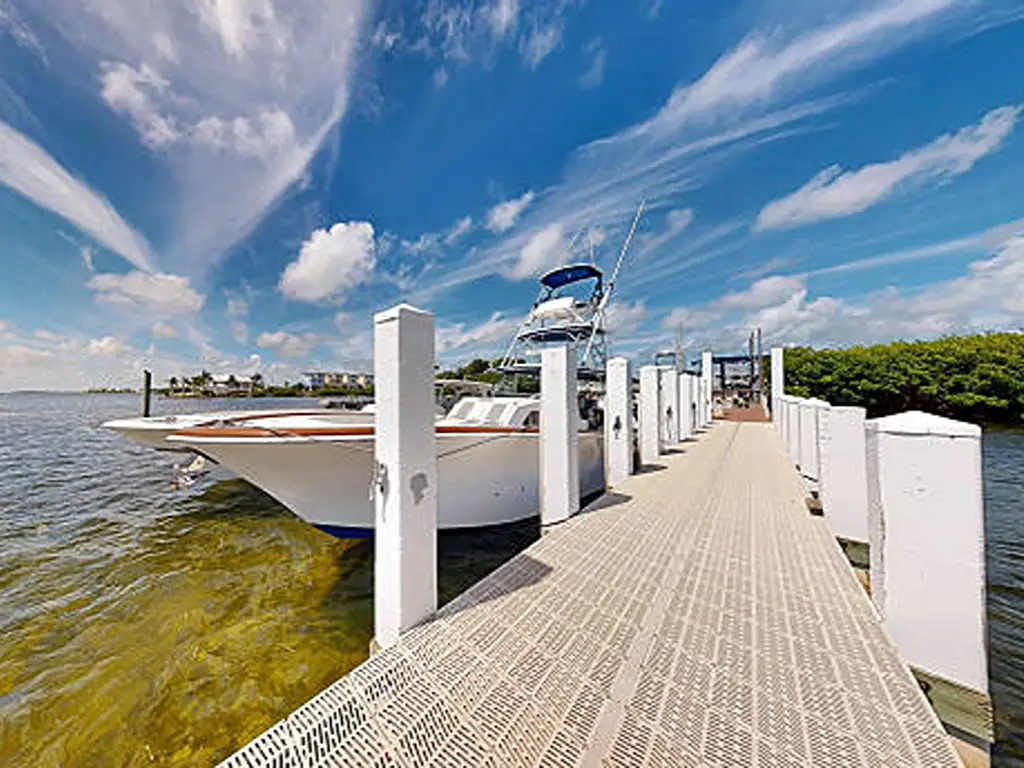
Al navegar venta de muelles de aluminioLos propietarios de embarcaciones de gran valor suelen buscar configuraciones en forma de U o de F. Para los propietarios de embarcaciones de crucero con camarote o pontones de 24 pies, la configuración en U es el estándar de oro. El presupuesto inicial oscila entre $18.000 y $25.000 si se tienen en cuenta los soportes reforzados de las esquinas y los parachoques marinos para proteger el casco de los esfuerzos de torsión.
El factor que más influye en el precio: Cómo elegir el material del entarimado
La elección del entarimado es la variable más muelles flotantes de aluminio para barcos precios. Mientras que el cedro añade aproximadamente $6/pie cuadrado, los suelos de PVC de gama alta pueden elevar el coste total hasta la marca de $70/pie cuadrado.
Análisis del coste total de propiedad a 15 años: El "precio de etiqueta" frente a la realidad
La mayoría de los compradores se detienen en el precio de compra, pero el coste real de un muelle es su Coste Total de Propiedad (CTP) a 15 años. El aluminio suele considerarse la mejor opción, mientras que la madera es la más económica.
| Elemento de coste (vida útil de 15 años) | Madera tratada a presión | Aluminio + Composite | Hiseadock (HMWHDPE) |
|---|---|---|---|
| Coste inicial (10'x20′) | $3,500 | $12,000 | $6,500 |
| Mantenimiento (tinción/sellado) | $2.400 (Cada 2 años) | $0 | $0 |
| Sustitución de componentes | $1,800 (Tablones/accesorios podridos) | $400 (Guardabarros/Cubiertas) | $100 (Clavijas de conexión) |
| Inversión total a 15 años | $7.700 + Mano de obra alta | $12,400 | $6,600 |
2026 Market Pulse: Los precios reflejan las fluctuaciones del aluminio de grado marino 6061-T6 y los índices actuales de flete LTL.
Aunque el aluminio ofrece una magnífica rentabilidad en comparación con la madera, su elevado precio de entrada sigue siendo un obstáculo. Por eso flotadores de muelle fabricados con HDPE de alto peso molecular se han convertido en la "alternativa comercial" de alto rendimiento.
Reposicionar la mejor alternativa: HDPE de grado técnico
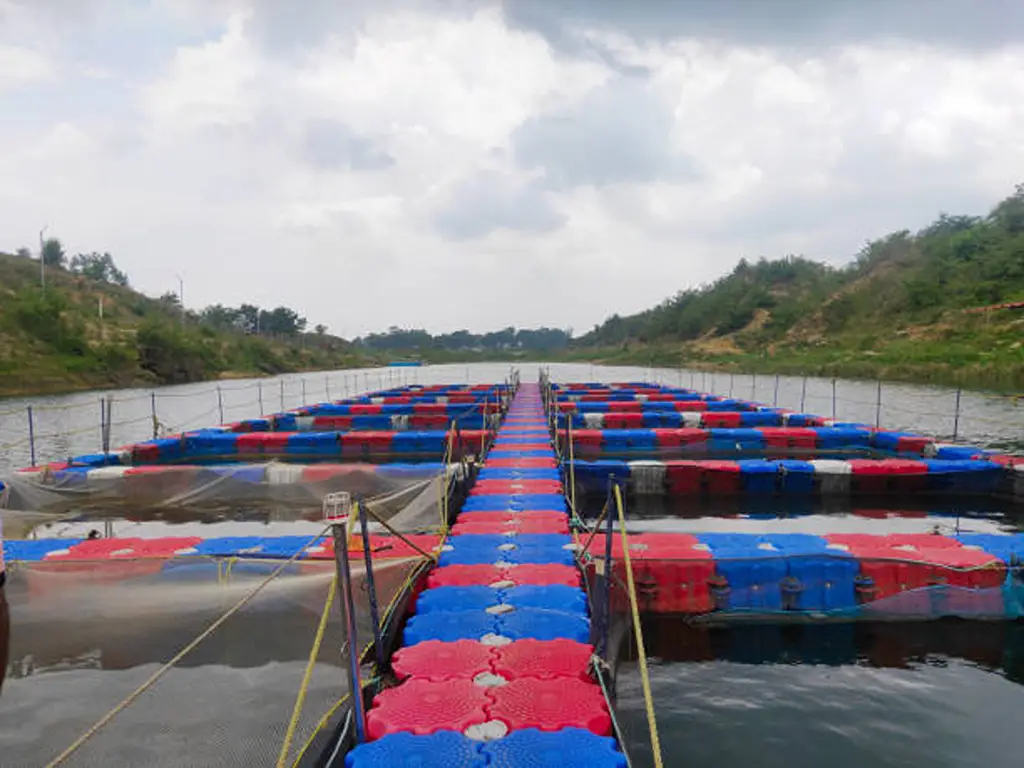
Es importante ser objetivo: Para superyates de más de 60 pies o puertos industriales de mucho tráfico, muelle flotante de aluminio son a menudo insustituibles debido a su gran masa. Sin embargo, para uso residencial, embarcaderos de tamaño medio y lagos ecológicamente sensibles, los sistemas modulares de HDPE son la alternativa "Asset-Grade" más inteligente.
El Hiseadock Standard: Construido para el Ártico y el Trópico
A diferencia de los flotadores de plástico genéricos, Hiseadock utiliza HMWHDPE que ha superado rigurosas pruebas de congelación-descongelación a -30∞C, lo que garantiza que los bloques no se agrieten ni siquiera cuando están envueltos en hielo sólido. Además, dado que el HDPE es químicamente inerte, a menudo obtiene los permisos de la línea de costa (aprobaciones DNR/EPA) mucho más rápido que las estructuras que requieren el hincado de pilotes de fuerte impacto.
Instalación realista: Bricolaje frente a profesionales
El aluminio requiere grúas o barcazas para su despliegue seguro. En cambio, los flotadores modulares de HDPE eliminan la necesidad de maquinaria pesada de elevación. Aunque un equipo de 2 personas puede montar una plataforma de plástico estándar en una tarde, hay que prever un anclaje adecuado.
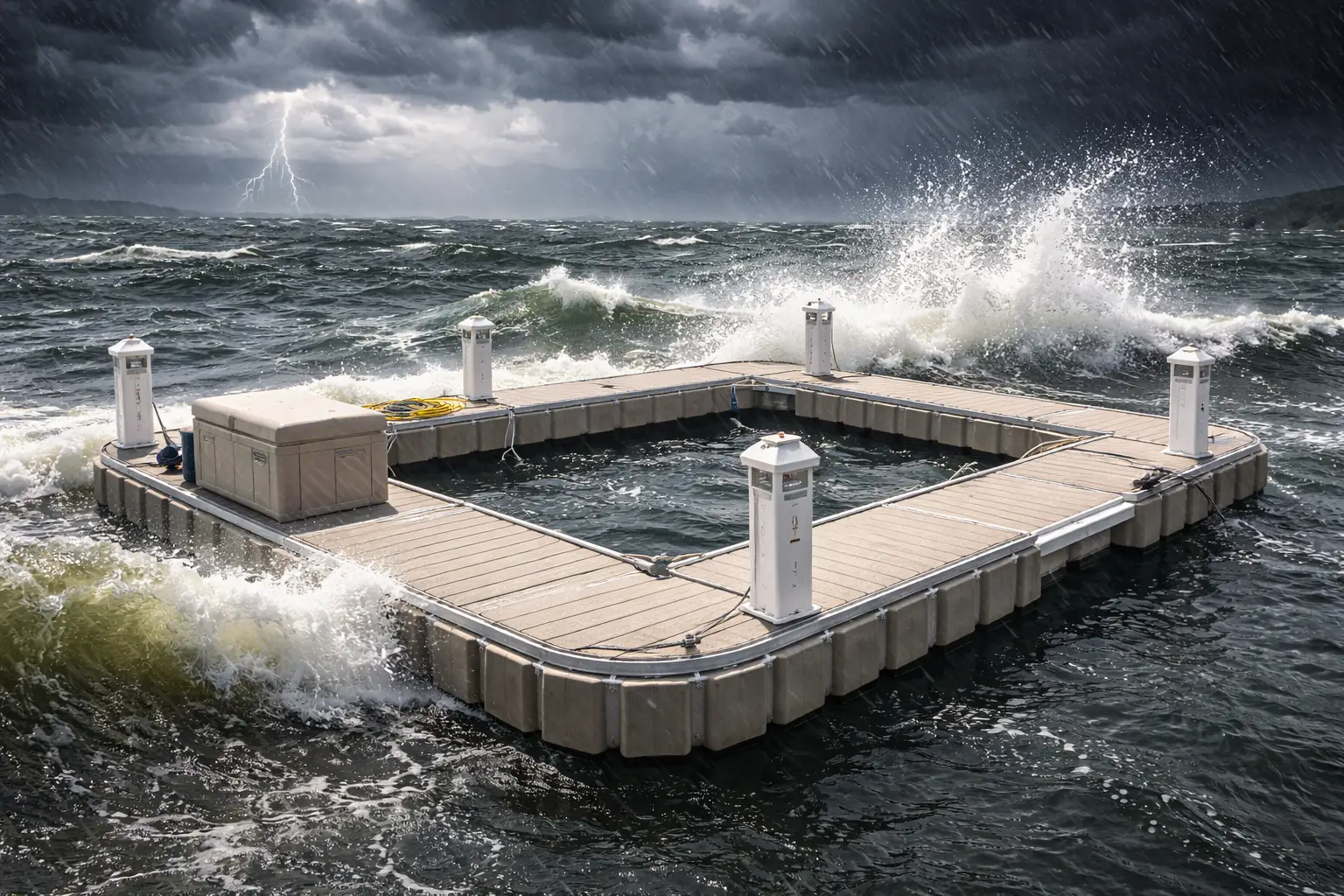
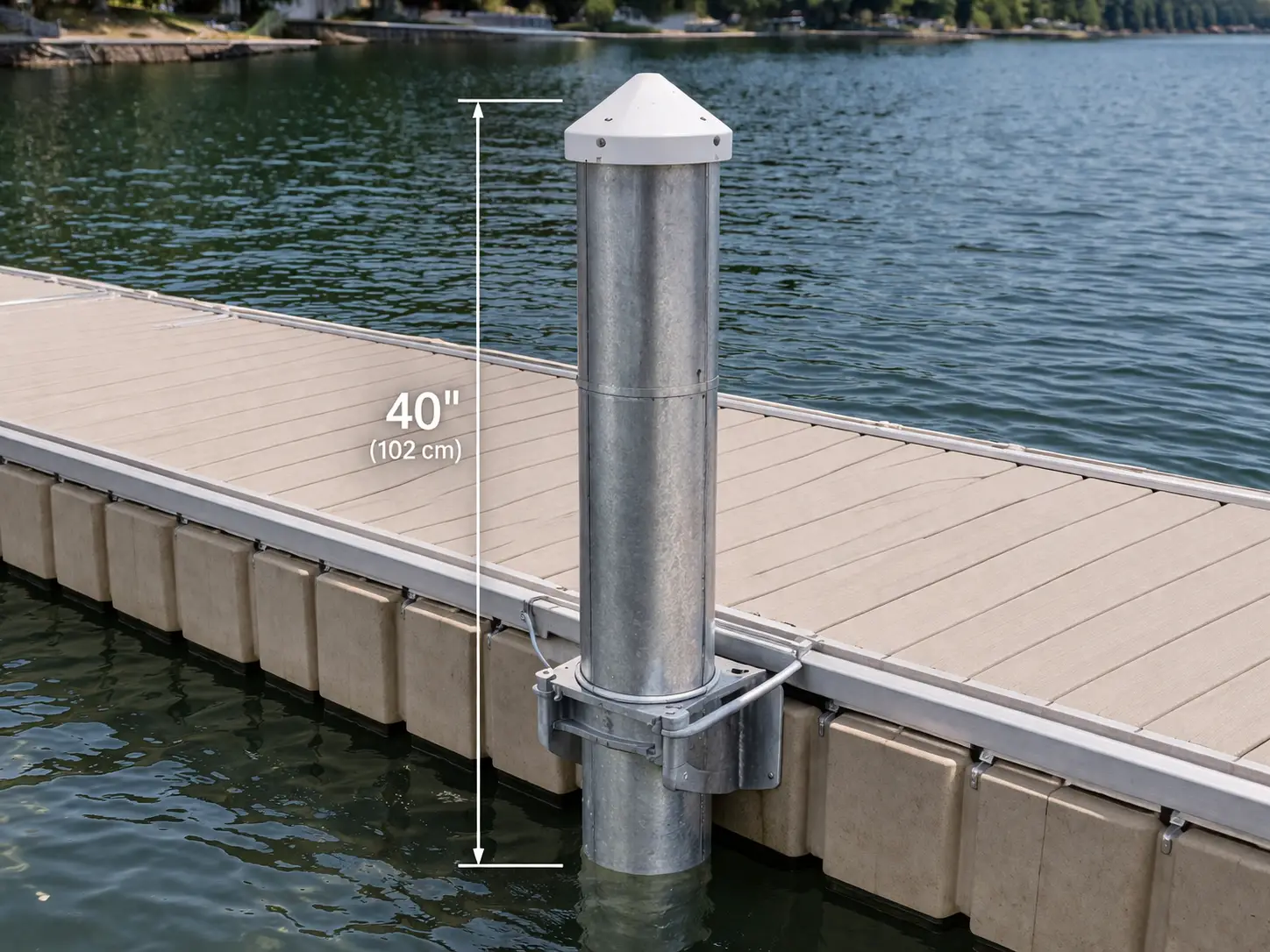
La realidad del anclaje: Prevea un gasto adicional de $800 a $1.500 en pilotes de acero galvanizado Schedule 40 de alta resistencia o sistemas de cadena de peso muerto. Hiseadock proporciona planos de anclaje diseñados en 3D con cada proyecto para garantizar que su inversión no se desvíe durante una tormenta.
Actualícese a un frente de agua de estándar comercial que equilibra el retorno de la inversión a largo plazo con la excelencia en ingeniería. Obtenga hoy mismo un diseño CAD profesional y un presupuesto específico para su proyecto.
Consulte a nuestro equipo de ingeniería navalEspecificaciones esenciales que debe verificar antes de solicitar un presupuesto
- Resistencia térmica: ¿Se ha comprobado la resistencia del material a los impactos bajo cero (especialmente en los inviernos norteamericanos)?
- Fuerza de conexión: ¿Tienen las orejas de conexión un grosor mínimo de 19 mm para evitar el cizallamiento de la marea?
- Facilidad de permisos: ¿Está certificado el material como no lixiviable para los ecosistemas acuáticos sensibles?
- Lógica de anclaje: ¿Proporciona el distribuidor un plan de anclaje específico para el emplazamiento basado en las normas de galvanizado Schedule 40?
Preguntas frecuentes: Encuentre su pareja perfecta
¿Todavía se pregunta si un muelle modular de HDPE es la inversión adecuada para sus necesidades específicas? He aquí las respuestas a las preguntas más habituales que recibimos de distintos tipos de compradores.

 English
  Thai
Thai  Spanish
  French
  German
  Dutch
Dutch  Italian
  Arabic
  Indonesian
  Portuguese
  Turkish