Introducción
Purchasing waterfront property is not just a real estate purchase, but it is the acquisition of a specific waterfront lifestyle. Nevertheless, such a way of life is anchored to the infrastructure that links the land to the water. The decision to have a floating dock system or a fixed structure is not merely a question of taste, but a complicated engineering and financial choice that informed decision determines whether your shoreline will be useful over the next few decades.
In this discussion, we shall break down the mechanical, fiscal and regulatory subtleties of each dock type to find out which one is the best choice for your particular body of water.
What is A Floating Dock?
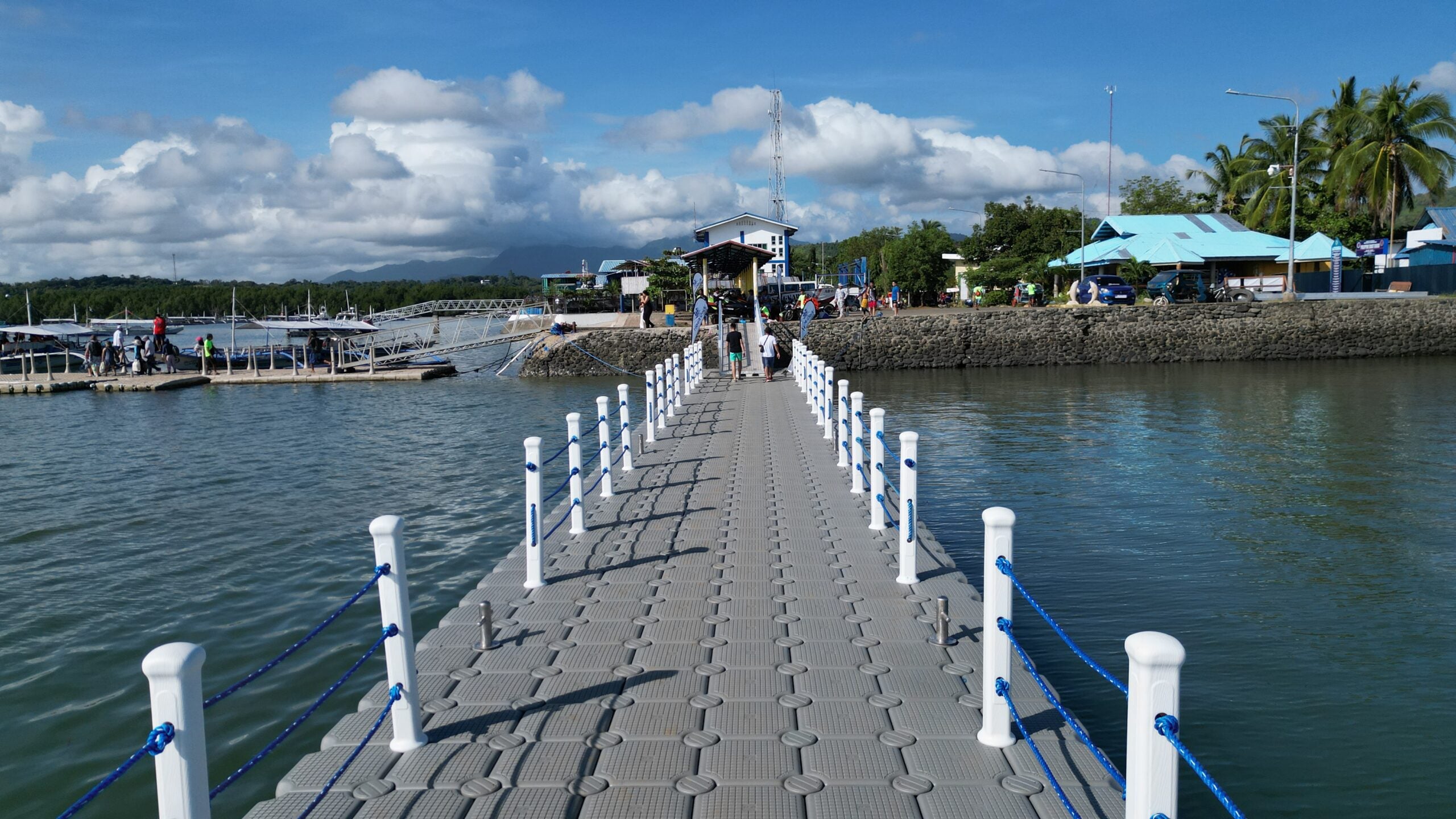
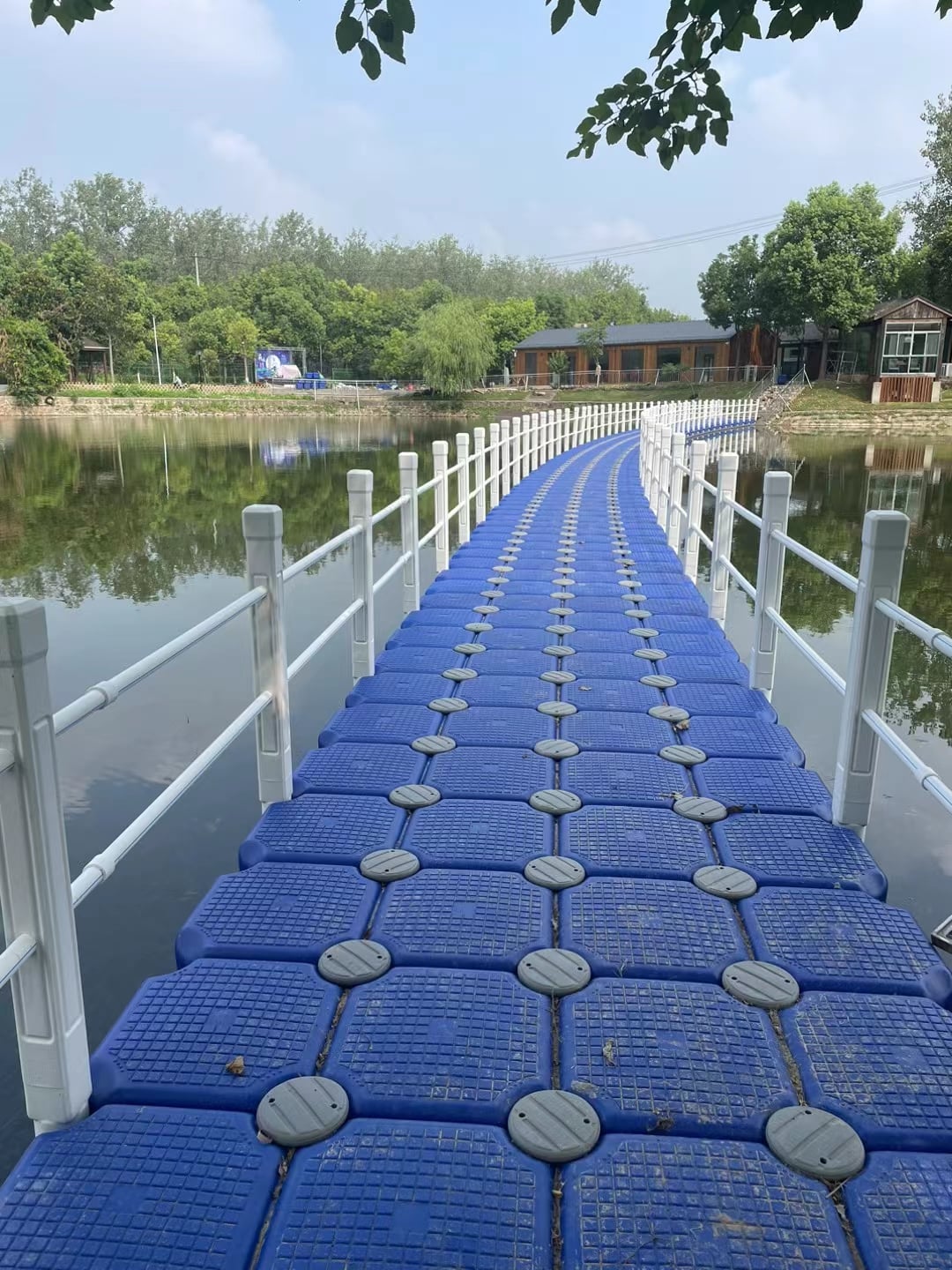
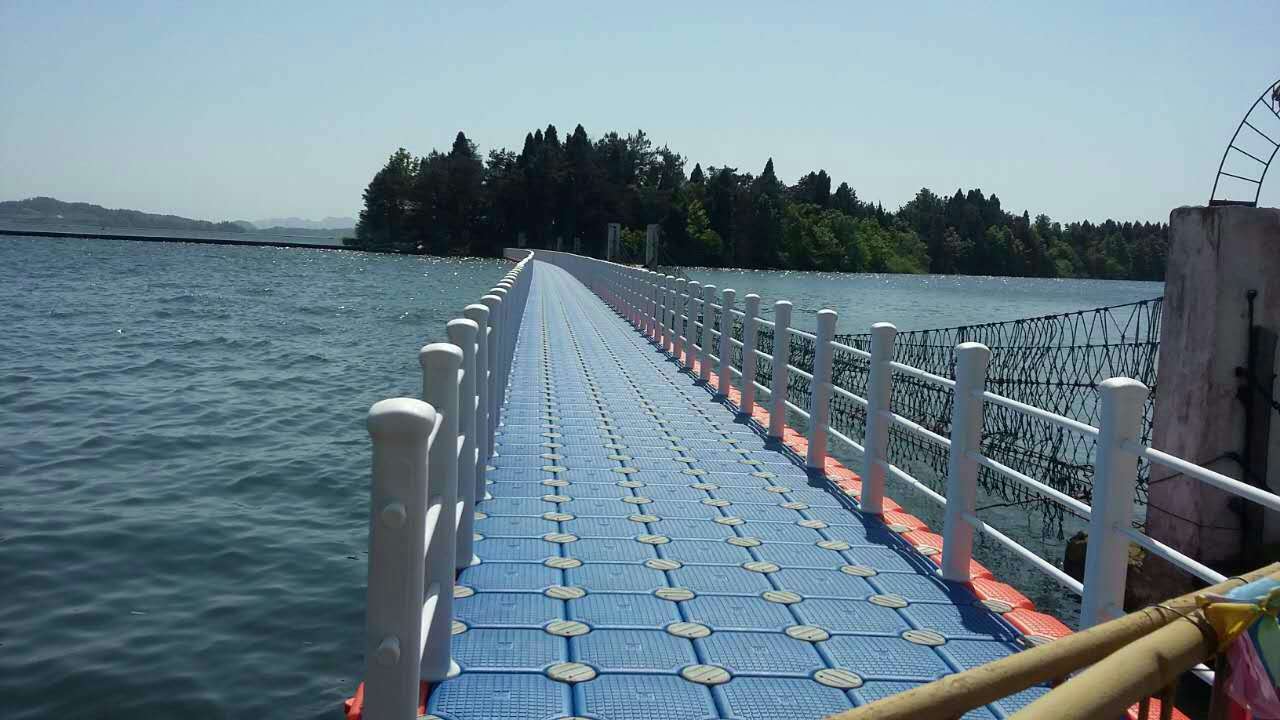
A floating dock is a flexible, self-adjusting dock system placed directly on the water’s surface, which is held by airtight modular floats or pontoons, allowing it to remain at the top of the water regardless of depth. The whole system works on the principle of hydrostatic displacement, which makes the whole system move up and down in perfect harmony with the tides and the changing water levels. This gives a uniform freeboard, or height of the deck above the water, which gives safe and easy access to vessels at any time. The modern floating docks are typically designed using high-strength HDPE and are described as being modular in nature and having minimal environmental impact, thus making them the best option when deep-water installation is required or when there is a large variation in water level and permanent structures are not feasible.

What is A Fixed Dock?
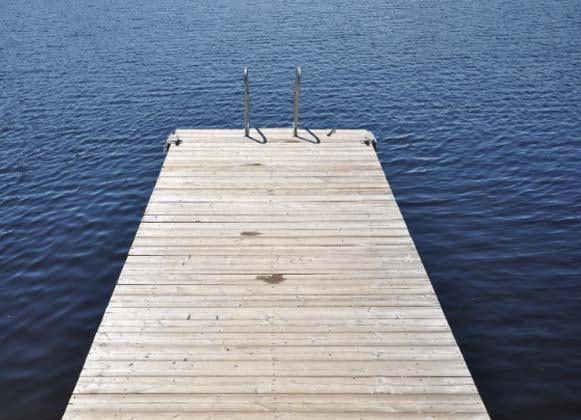
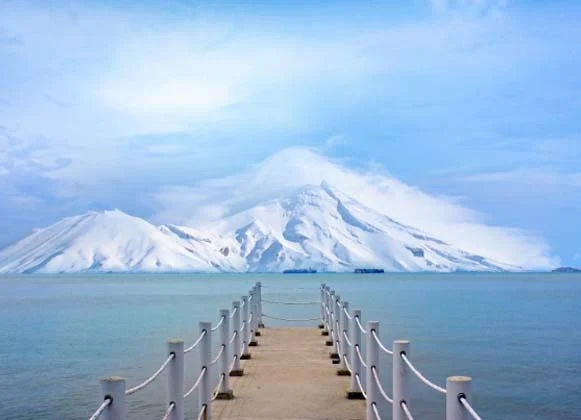
A fixed dock, or permanent dock, or stationary dock, is a hard surface mounted on heavy pilings driven deep into the underlying ground. Its engineering philosophy focuses on structural mass and stability, in which the weight of the dock and all external loads are passed directly through the pilings to the lakebed or seabed. Since the deck height is fixed at a constant height when building, it provides a very stable, terrestrial feel with no foot movement. Although this offers better durability in heavy-load applications, the accessibility of the dock will remain constant, i.e. its connection with the water surface will be entirely reliant on the conditions of the environment and the regularity of the tide.

Floating Dock vs. Fixed Dock: A Comparative Analysis
In order to make a good selection, it is necessary to go beyond the superficial observations and analyze these structures in the whole lifecycle of ownership.
Quick Comparison Table
| Dimensión de comparación | Floating Dock (Modular HDPE) | Fixed Dock (Piling Supported) |
| Water Level Adaptability | Perfect; automatically stays level with boat deck. | Poor; can be submerged or too high to access. |
| Stability & Experience | Good; flexible energy dissipation; closer to water. | Excellent; motionless; feels like solid ground. |
| Weather & Ice Resilience | High; undulates with surges; floats atop ice. | Low; rigid structure snaps under surge or ice heaving. |
| Installation Complexity | Simple; modular “LEGO-like” assembly; no heavy gear. | High; requires barge-mounted pile drivers and divers. |
| Mantenimiento | Minimal: Chemically inert; requires only periodic rinsing. | High: Requires annual staining, washing, and board replacement. |
| Durability & Lifespan | 30+ Years: Resistant to UV, salt, rot, and marine borers. | 15–25 Years: Highly dependent on the frequency of maintenance. |
| Impacto medioambiental | Low; negligible disturbance to the waterbed. | High; piling driving disrupts benthic ecosystems. |
| Regulatory Permits | Usually easier; classified as a temporary structure. | Difficult; rigorous “permanent building” codes. |
| Spatial Flexibility | Excellent; modular units can be reshaped or expanded. | Poor; permanent footprint; costly to modify. |
| Initial & Long-term Cost | Lower initial cost; high resale value as an asset. | High initial investment; value tied to real estate. |
Flexibility to Water Level Changes
The greatest benefit of a floating system is that it is naturally synchronic with the water. A fixed dock may be a liability in areas where there is a high tide, seasonal flooding or water levels controlled by a dam. In high-water situations, a fixed dock can be completely submerged, making it useless and subject to structural damage due to upward hydrostatic pressure. On the other hand, when there is a drought, the decline between the deck and the boat can be very dangerous.
A floating dock removes this difference. Since it is always at the same level as the deck of the boat, it is always easy and safe to board. Moreover, this flexibility safeguards your ship. Mooring lines should be slack on a fixed dock to allow the rising tide to cause the boat to toss and bang against the pilings. The boat and the dock are in motion on a floating dock, which can be moored more closely and securely.
User Experience and Stability
A fixed dock offers a sense of complete stillness that is perfect when it comes to large crowds or people who are prone to motion sickness. It is a stationary continuation of the land by being anchored directly into the subaqueous terrain.
On the other hand, the instability of the past has been defeated by modern modular HDPE systems, which are reinforced with interlocking connectors and wide-footprint designs that provide a secure and unified surface. The real worth of this design is seen in the dynamic conditions; a fixed structure that is rigid has to take the full force of the wakes and waves, which may cause structural fatigue, but a floating dock is flexible by nature and thus it is able to absorb the energy by moving with the water. This natural strength serves as a better protection against structural damages during storms or high traffic.
Ice Resilience and Extreme Weather
In the north, the silent killer of fixed docks is ice heaving. The ice grows around pilings and as it gets bigger, it puts enormous pressure upwards, literally lifting the posts out of the ground. Many fixed dock owners have to perform an expensive yearly ritual of repairing the “popped” pilings.
Floating docks, particularly HDPE docks, are constructed to withstand these conditions. Their tapered or rounded bottoms enable them to pop up and sit on top of the ice instead of being trampled by it. A fixed dock is used as a dam in case of a hurricane or a severe storm surge, which traps the entire power of the water until it breaks. A floating dock is a modular floating shield, which is undulating with the surge and absorbing energy. In case the circumstances are really disastrous, even modular docks can be dismantled and transported to dry land within several hours.
Installation Complexity
The installation of a fixed dock is an industrial task. It involves barge-mounted pile drivers, specialized divers and considerable access to the site. When you are on a remote shore or the water is deep, the expense of hauling in this equipment can be prohibitive.
Floating docks are a paradigm shift in installation. A modular system is a high-performance puzzle in essence. A typical residential dock can be assembled by two individuals without the assistance of a professional. The components are lightweight prior to assembly and hence can be taken to places where heavy machinery cannot access.
Maintenance Requirements and Durability
The marine environment is also hostile to construction materials, which is always a challenge to the structural longevity. Conventional fixed docks are very prone to decay and are usually made of timber or steel. Wood will always rot and marine borers will attack it, and steel will oxidize and corrode in salt water. These systems must be maintained strictly on an annual basis, with power washing, chemical staining, and replacement of warped or splintered boards being common.
Conversely, floating docks made of High-Density Polyethylene (HDPE) are chemically neutral, which provides a practically maintenance-free alternative. HDPE is not reactive to saltwater, acids or extreme UV radiation, so the structure will not deteriorate by chipping paint or internal rot. The shift of heavy-duty repair to a mere periodic rinse will greatly increase the service life of the dock and also save on labor expenses in the long run.
Pro Tip: Floating Dock Annual Maintenance Checklist.
- Check Fasteners: Check that all pins and nuts are tight.
- Check Anchors: Check that cables or stiff arms are not frayed.
- Clean Surface: Cleanse algae or bird droppings to ensure slip resistance.
- Bumper Check: Check that edge protectors are in place to cushion the hull of your boat.
Waterbed Conditions and Environmental Impact
When you have solid rock as your waterbed, then drilling a piling to install a fixed dock is a nightmare in terms of finances because it involves underwater drilling. When the bed is 20 feet of soft “muck” you might require very long and costly pilings to locate firm ground.
Floating docks are not sensitive to the floor composition. They are concerned with the superficial. Moreover, ecologically, fixed docks disorient the benthic environment (the bottom-dwelling life). Floating structures are becoming popular among many environmental agencies since they do not need the seabed to be permanently destroyed and thus the process of permitting them is much faster.
Regulatory Permits and Approvals
The dock permitting process is highly dependent on the classification of the dock as a permanent improvement or a temporary installation. Permanent structures are almost universally considered to be fixed docks, which involve the driving of pilings into the subaqueous land. This classification initiates a strict regulatory procedure, which may include environmental agencies such as the EPA or local port authorities to assess the effect on the seabed and the ecosystems living in it.
On the other hand, modular floating systems are often classified as removable or temporary structures. Their ecological footprint is minimal because they do not need dredging or piling, and this can lead to a quicker and less complicated approval process. Floating docks are the sole legal way to access water in a restricted natural environment in most jurisdictions where the waterbed is strictly taboo to construction.
Local Shoreline Management Regulations should be consulted before you start your project. When your property is located in an environmentally sensitive area, the removable aspect of a floating system can be the only way to go in order to comply with the law.
Flexibility and Reconfigurability in Space
A fixed dock is a final decision. You have to start a new construction project to alter its shape or make it longer.
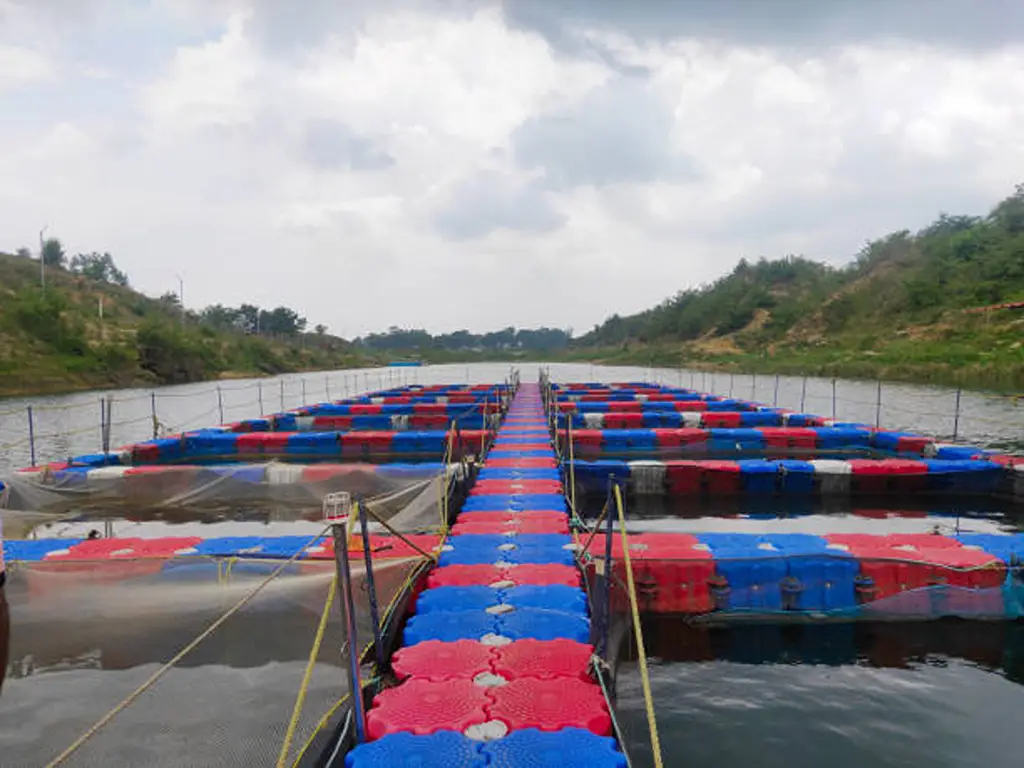
A floating dock in the form of a module provides the ease of building Lego bricks. When you buy a bigger boat next year, you just buy more modules and attach them to the one you have already. In case you feel like having an L shape rather than a straight line, you unpin the modules and relocate them. This is a crucial value proposition of future-proofing growing families or changing businesses.
Long-term vs. Initial Comprehensive Cost Comparison
To make a wise financial analysis of the ownership of docks, one must draw a line between Capital Expenditure (CapEx) and Operating Expenditure (OpEx).
- First Cost (CapEx): A fixed dock is very expensive with a large share of the cost being on specialized labor and heavy machinery. The entry price is high and non-transparent due to mobilization of barge-mounted pile drivers and divers. Floating docks have a clear cost system; the main cost is the material since the assembly can be done without the services of expensive industrial contractors.
- Maintenance Costs (OpEX): Fixed docks require an annual budget in staining, sealing and piling reinforcement. Conversely, HDPE modules are almost maintenance free. The cost of operation is virtually free beyond a periodic rinse to clean off organic deposits.
- Asset Liquidity: A fixed dock is an immobile enhancement that is attached to the real estate. A floating dock is a floating capital that is mobile. Since it is dismantleable and movable, it is a physical property that can be sold in the second-hand market or relocated to a new home, which offers a resale value that cannot be matched by a fixed structure.
Factors to Consider Before Choosing A Dock: A User-Centric Selection Guide
Step 1: The Water & Bed Audit
The essence of this audit is to determine the physical limitations of your location and to rule out the alternatives that are technically infeasible or prohibitively expensive.
- What are the magnitude of your water level changes? When your waterbody has tides, seasonal floods or dam-controlled variations over 1 meter (3.3 feet), a fixed dock is a liability; it can be under water at high water or be too high to board at low water. A floating system keeps the relationship with the surface of the water constant so that your height of freeboard is always the same no matter how low the water is.
- What is the average depth of the point of installation? After the depth of water exceeds 4-5 meters (13-16 feet), the cost of pushing pilings into the skyrockets. Floating docks do not depend on depth, and therefore, they are the most economical when dealing with deep-water conditions where conventional piling is both technically challenging and costly.
- What is your bottom made of? A solid rock bed will not allow conventional piling unless it is drilled at high costs underwater, which may require a floating system. On the other hand, where the silt is deep and soft, a fixed dock will need costly friction piles driven to great depths, but a modular floating system will still be effective by avoiding the bed virtually completely.
Step 2: The Usage & Vessel Audit
Establish the requirements of your dock depending on the vessels you have and the activities you want to host.
- What is your vessel profile and weight? Whereas heavy cruisers need the high-tensile anchoring of a fixed system, personal watercraft (PWCs) such as Jet Skis enjoy the advantages of the Drive-on ports of modular floating systems. These built-in ramps enable you to park your craft fully out of the water, which fixed structures cannot provide without costly mechanical lifts.
- What is the main mission of the dock? When you want to have a big social party or a formal event where there must be no noise whatsoever, the hardness of a fixed dock is the standard. But when the dock is a swimming, kayaking or diving gateway, a floating dock is better as it is less obtrusive and you are closer to the water surface to easily get in and out.
- Who are the regular users? Think about the requirements of the elderly, children, or pets because the material temperature and traction affect safety. Direct sun can cause metal docks to exceed 60 C (140 F) which is a burn risk. HDPE (High-Density Polyethylene) and treated wood have significantly lower thermal conductivity and remain cooler underfoot, and necessary slip resistance to bare feet and paws.

Step 3: The Environmental Stress Test
The lifespan of a dock is the ultimate creation of nature. You have to select a structure that can withstand your environmental threats.
- What is the aggressiveness of the wind, wake and fetch? In high-energy settings where the fetch (distance covered by the wind over the water) is long, fixed pilings are required to absorb 100 percent of the wave energy, resulting in structural fatigue. Modular floating docks are not rigid; they absorb the energy by floating with the water, but they need strong anchoring systems in high-wake zones.
- Does it freeze in winter in your waterbody? Freezing water leads to Ice Jacking whereby growing ice clings and drags fixed pilings out of the ground. The HDPE floating docks are made to rise above the ice level instead of being crushed. Also, in case of ice floes, modular systems can be easily taken down and stored on land until spring.
- Is it a freshwater or saltwater habitat? Wood (rot/borers) and steel (rust) are naturally incompatible with saltwater. HDPE is chemically inert and UV-stabilized, which means that it will not react to salinity or extreme radiation, and the structure will not be damaged, requiring no toxic chemical treatment and regular painting.
Step 4: The Regulatory and Compliance Check
The feasibility of your project can be decided by permitting and environmental laws even before you start the construction.
- What is the classification of the structure by your local authority? Fixed docks are generally considered as permanent buildings, which initiates a strict and sometimes months-long permit procedure with the agencies such as the EPA or port authorities. Floating docks are commonly classified as removable equipment or temporary structures, which can simplify the approval process and can also evade complicated building codes.
- Do you live in a guarded water area? In a secure location, it may be illegal to disturb the seabed with pilings to preserve bottom-dwelling (benthic) ecosystems. Floating docks cause a minimal ecological footprint on the seafloor and are therefore the most ecologically friendly, and in many cases the only legal, route to water access in sensitive areas.
Step 5: The Lifecycle and Scalability Strategy
Examine the Total Cost of Ownership in 15-20 years.
- What is your philosophy of maintenance? Wood and metal docks are fixed and require a process of staining, sealing and repairing to fight rot and rust. In case you want an install and forget solution, an HDPE floating system is the wiser option, and it only needs a regular hose-down to ensure that the structure is not compromised.
- Do you have any future needs? A fixed dock is a permanent one. By comparison, modular floating systems are more like LEGO sets; you can re-assemble the shape, add more buoyancy to make a bigger boat, or increase the surface area to a sun deck by adding new modules as your requirements change.
- Is the dock an asset or permanent attachment? A fixed dock is a permanent attachment to the land which remains with the house. A floating dock is a liquid asset that is portable. You can either bring it to a new house or sell the modules in the second-hand market where HDPE components are highly resold because of their high level of durability.
How to Decide: Floating Dock or Fixed Dock
It is not a matter of which one is better, but which one will work in your particular environment. According to the five-step audit, the following is how to align your needs with the right type of dock.
Best Uses for Floating Docks
When the main drivers of the project are adaptability, environmental compliance, and long-term asset flexibility, a floating dock should be specified.
- In case of varying water levels (Tides, Reservoirs, or Floods): A fixed dock is a liability when your water level varies by more than 1 meter (3.3 feet). A floating dock is necessary in this case. It is buoyant in design so that it is always in perfect synchronization with the waterline and has a constant freeboard height. This will make sure that the distance between the deck and your boat will be constant and safe to access whether it is high or low cycles.
- In deep water or solid rock: A fixed dock is frequently prohibitively expensive in water more than 5 meters deep or in a bed too hard to be piled with conventional methods. Floating docks do not depend on depth; they need only a secure anchoring or mooring system and not costly underwater drilling or ultra-long pilings, and therefore are the most economically feasible in difficult terrain.
- In a secure ecological area: In case your property is located in a sensitive area, the Regulatory Audit would prefer floating systems. They do not need dredging or piling and therefore have a small footprint on the benthic (bottom-dwelling) ecosystem. This usually leaves them as the sole legal route to go through in places where disruption of the seabed is highly forbidden by authorities such as the EPA.
- Need integrated PWC storage (Jet Skis/Small Boats): Floating docks have a special functional benefit: built-in “Drive-on” ports. These modular ramps will enable you to park your craft totally out of the water to avoid hull fouling, and this will give you a degree of convenience that you cannot have with fixed docks without costly mechanical lifts.
- Under high-corrosion or freezing conditions: HDPE floating docks are better in saltwater, where wood decays and steel rusts, as they are chemically inert and UV-stabilized. During winter, their design enables them to emerge above growing ice without the Ice Jacking effect that can extract fixed pilings directly out of the ground.
- When you need scalability and resale value in the future: In case you expect to upgrade your boat or change homes, a modular system is the way to go. Its LEGO-like flexibility enables you to re-model the shape or add modules whenever you want. Moreover, it is a mobile property; you can break it down and carry it to your new house or sell the modules in the second hand market, where they still have high prices.
Best Uses for Fixed Docks
The fixed dock is most suitable in the case of a fixed water level and where absolute, land-like stability is the absolute requirement.
- In water which is at a constant level (Spring-fed Ponds or Stable Lakes): In small bodies of water where the water level does not vary, the self-adjusting character of a floating dock is unnecessary. A fixed dock is a permanent, immobile extension of the land at a predetermined height, which is quite suitable in the non-portable environment and does not require buoyancy.
- In cases where the mission demands complete stillness (Public Piers or Formal Events): In case you are hosting large social events (30 or more people) or you are hosting people who are likely to experience motion sickness, the rigidity of a fixed structure is the gold standard. It also removes the natural movement of a floating system by being anchored directly into the subaqueous land, which gives the rock-solid feel needed in heavy furniture and high foot traffic.
- In very shallow water or where the water is subject to mudflats: In very shallow water where the water may completely withdraw on the low tide, a floating dock may sink unevenly in the mud, and this may impose structural stress. The decking is held at a certain height above the muck by a fixed dock, so that when the water is not present the platform will be level and clean.
- Supporting permanent, heavy structures (Boathouses): In the event that you are planning to construct a permanent roof, a boathouse, or a two-story storage building, you need the high-tensile rigidity of a fixed foundation. Fixed docks are designed to impose huge fixed loads directly on the seabed, which would have demanded much more complicated and expensive buoyancy calculations in a floating system.
Breaking the Fixed Dock Limitations with Floating Solutions
Conventional fixed docks are usually constrained by their rigidity. They are unable to move, so they have to take the full force of waves and wakes, which causes structural fatigue and costly repairs. Their fixed height also poses a problem of accessibility- the deck is either under water at high tide or it is too high to reach at low tide.
The current floating solutions convert these liabilities into benefits. They make sure that they are always safe and accessible by aligning themselves vertically with the water irrespective of the changes in the environment. Instead of opposing energy with sheer mass, a modular floating system employs the natural flexibility of the system to absorb the wave energy, leading to long-term better durability.
To the stability minded, the wobble of the past has been done away with by advanced engineering. High-grade HDPE systems are made using special interlocking designs to form a single, high-tension surface. This offers a safe, deadweight, feel that competes with a fixed pier, yet without the rot, rust or maintenance.
This degree of resilience demands an advanced equilibrium of material science and modular physics. Hisea Dock has perfected this engineering balance, providing precision-constructed floating systems that transform the conventional constraints of waterfront infrastructure into sustainable competitive advantages.

The Hisea Dock Benefit: Engineering Excellence
Hisea Dock has perfected the engineering since 2006 to assist in closing the gap between floating flexibility and fixed-dock stability. With a clientele of more than 80 countries, we employ a new generation of UV-stabilized HDPE to curb the rot, corrosion and fading that usually plague the traditional stationary structures.
Although movement is a major concern to fixed-dock users, Hisea has gone a long way to eliminate this issue by designing its products with precision. Our modules have 19mm-thick reinforced connection ears and four-sided grooved design, which forms a high-tension surface that is effective in dissipating wave energy. This structural integrity is confirmed by diagonal tension tests up to 14,389 N, which provides a safe, stable feel without the fatigue that fixed pilings cause.
Hisea Dock is designed to be strong in winter, unlike rigid piles, which experience ice jacking, and has a special shape that enables it to be supported on ice. This is supported by ISO, CE and TUV certification and makes our systems last 20-30 percent longer than most standard systems. Hisea Dock offers a high-performance, low-maintenance asset with a 5-year warranty and professional consultation that is designed to survive the elements.
Conclusión
The floating or fixed docks debate is finally a question of rigidity or resilience. A fixed dock tries to resist the water, whereas a floating dock tries to cooperate with the water.
With the growing uncertainty of the world weather conditions and the escalating expenses of heavy construction, the modular floating dock has become the most economically sound and operationally adaptable option to the contemporary waterfront. It is an investment that expands with your requirements, secures your ship, and honors the environment in which it lives.