
Prefacio
La divisa básica de un muelle para embarcaciones seguro y operativo es la estabilidad. El principal problema al que se enfrentan los propietarios de muelles y los operadores marítimos es cómo reducir el constante balanceo y vaivén del agua debido a las estelas de los barcos, la carga del viento y las corrientes cambiantes.
Se necesita algo más que añadir peso adicional para conseguir una plataforma sólida como una roca; es una combinación calculada de física hidrostática y geometría estructural. Este manual es una hoja de ruta técnica hacia el arte de la estabilización de muelles, desde la simple distribución de cargas hasta la sofisticada ingeniería modular, para que cada paso en el agua se haga con confianza y seguridad.
¿Qué es un dique flotante?
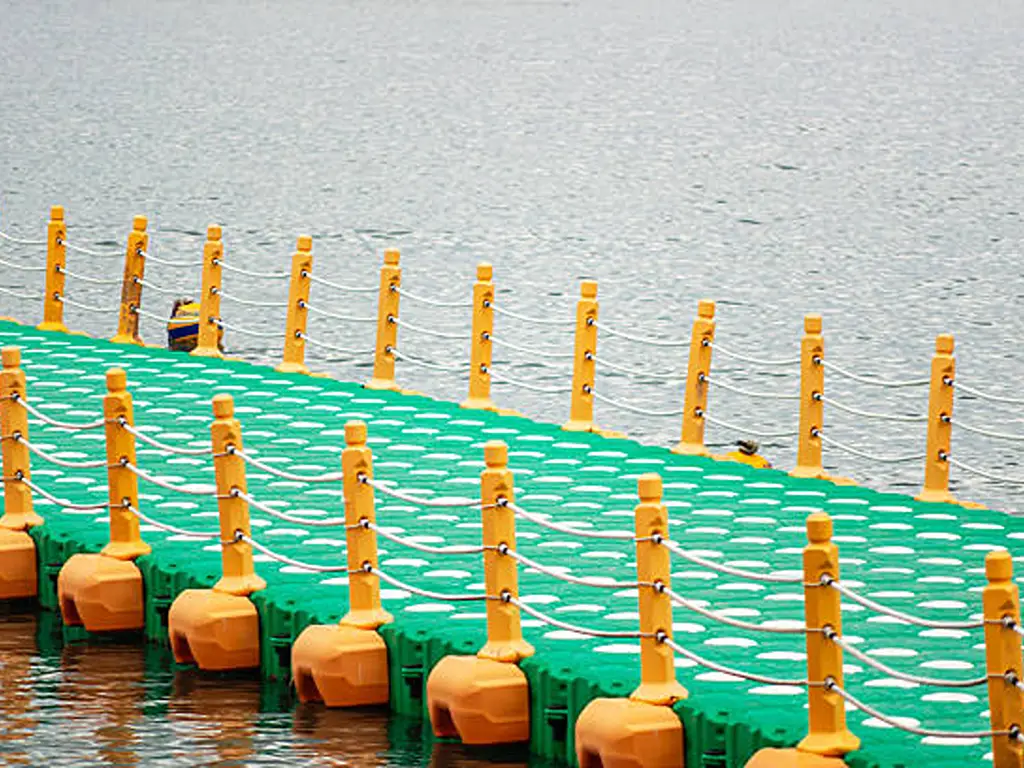
Un dique flotante es una construcción diseñada para ser colocada sobre el agua y anclada a la orilla o sumergida en el agua. Son muelles que se construyen sobre el agua y tienen la capacidad de cambiar su altura en relación con el nivel del agua de la masa de agua, por lo que facilitan el acceso a las embarcaciones. Los diques flotantes pueden fabricarse con tablones de madera, metales ligeros y plástico, y pueden equiparse con accesorios en función de la finalidad del dique.
Los diques flotantes son los preferidos en puertos deportivos y atracaderos privados, ya que son más cómodos de construir y mantener que los fijos. Pueden utilizarse en aguas tranquilas, fluviales y marítimas.
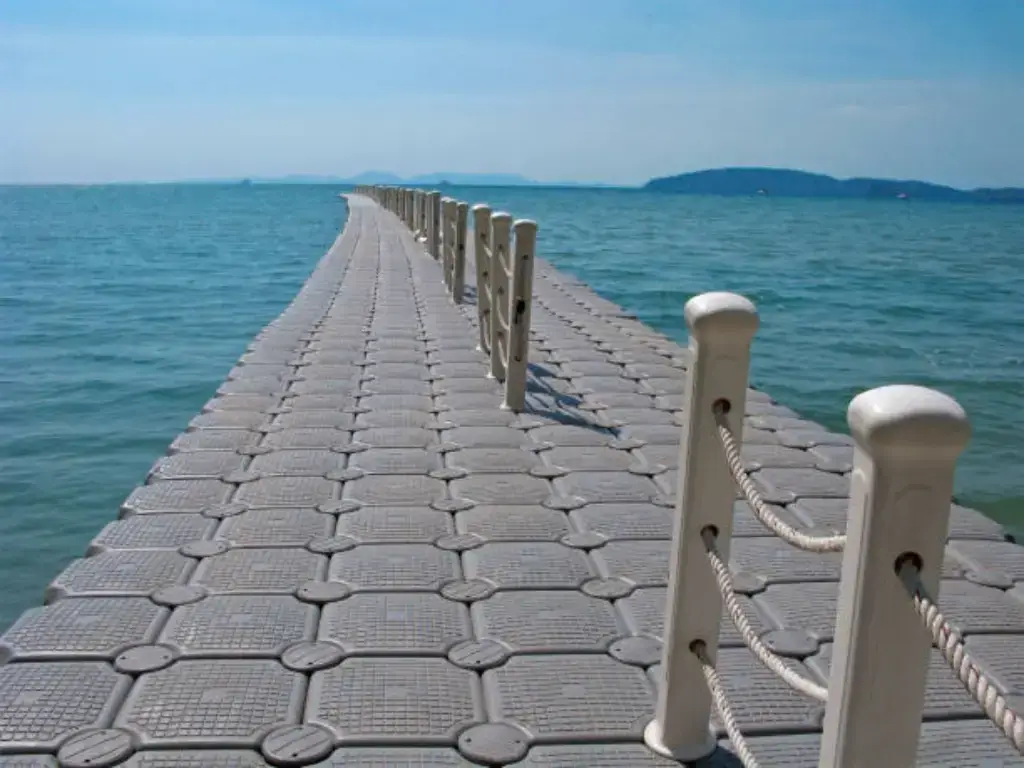
Por qué se balancean los diques flotantes: Diagnóstico técnico
Para resolver la inestabilidad, es necesario ir más allá de las soluciones superficiales y realizar un análisis técnico de las fuerzas ambientales, geométricas y físicas concretas que determinan la respuesta de una plataforma al agua.
Las fuerzas exteriores
La estabilidad no suele funcionar porque el muelle no es capaz de disipar la energía. Las repentinas ráfagas de energía cinética son provocadas por las estelas de los barcos, y la presión lateral causada por las corrientes fluviales puede provocar la cola de los peces. Las estructuras metálicas de perfil alto, como barandillas o marquesinas, están sometidas a la carga del viento, que provoca un momento escorante, y la tensión del sistema de atraque varía con los cambios de marea, provocando inestabilidad temporal.
Geometría estructural
El tamaño de un muelle determina su estabilidad. Una mala relación de aspecto, como un arreglo largo y estrecho, es una que tiene una base lo bastante ancha para crear un momento de reposo. Además, la distribución de la flotación añadida es esencial; una flotación excesiva de los muelles puede hacerlos temblorosos, mientras que una flotación escasa deja puntos muertos que se hunden cuando el usuario se desplaza hacia un lado.
La física de la interacción G-B
La relación entre el centro de gravedad (G) y el centro de flotabilidad (B), es decir, la altura metacéntrica (GM), define la verdadera estabilidad.
- GM positivo: El muelle producirá automáticamente el par necesario para reposicionarse en una posición nivelada.
- La fórmula:

KG es la altura del centro de gravedad, KB es la altura del centro de flotación y BM es el radio metacéntrico calculado por la anchura del muelle.
La paradoja de la flotabilidad: el efecto corcho
Uno de los errores más frecuentes es pensar que a mayor flotabilidad, mayor estabilidad. En la práctica, los diques con exceso de flotabilidad sufren el efecto corcho, en el que no ejercen ningún tipo de agarre sobre el fluido y responden violentamente a cualquier ondulación. Para lograr la amortiguación hidrodinámica, hay que encontrar el equilibrio correcto entre una masa ligera y un calado suficiente para conseguir un muelle estable. La cantidad de peso que puede transportar viene determinada por la flotabilidad, y la cantidad de estabilidad, por el calado (profundidad por debajo de la línea de flotación).
Factores que afectan a la estabilidad de los diques flotantes
En el diseño de diques flotantes, varios factores pueden influir en su estabilidad en el agua. A continuación se describen en detalle los principales factores:
- Profundidad del agua
La profundidad del agua donde se coloca el muelle es un factor que afecta en mayor medida a la estabilidad del mismo. Por ejemplo, los muelles construidos en aguas más profundas pueden requerir postes de anclaje más largos y flotadores más resistentes para evitar que la estructura vuelque.
- Acción de las olas
La energía y la frecuencia con que las olas golpean el muelle. Las olas más grandes y frecuentes provocan más movimiento y pueden requerir más apoyo, como anclajes más fuertes o rompeolas.
- Cambios en el nivel del agua
Factores como las mareas, los cambios de estación o incluso los cambios meteorológicos son algunos de los factores que provocan cambios en el nivel del agua. Las fluctuaciones del nivel del agua pueden ejercer una fuerza adicional sobre los sistemas de anclaje y flotación del muelle, por lo que exigen componentes que puedan modificarse.
- Calidad del material
El tipo de construcción y el tipo de material que se ha utilizado en la construcción del dique. El plástico es preferible para los diques flotantes porque es ligero, no se corroe ni se pudre con facilidad. Es más duradero, no requiere mantenimiento frecuente y puede soportar condiciones desfavorables en comparación con materiales como la madera o el metal.
- Distribución del peso
La distribución del peso sobre la superficie del muelle. Un desequilibrio en el peso puede provocar vuelcos y tambaleos. Para ello, el peso debe repartirse uniformemente para no ejercer presión sobre un lado u otro.
- Sistema de anclaje
El tipo de sistema de anclaje utilizado para asegurar el muelle, y la calidad del sistema utilizado. Debe emplearse un sistema de anclaje que incluya postes de anclaje, anclajes de peso muerto y pilotes para reducir el movimiento y mejorar la estabilidad.
- Diseño de muelles
El diseño general y la construcción del muelle en particular. Un buen muelle es el que tiene una base estable, una buena flotabilidad y un peso bien distribuido harán que el muelle sea más estable. Otras características que también pueden utilizarse para aumentar la estabilidad son los estabilizadores o las pasarelas.
- Condiciones medioambientales
Las condiciones del entorno en el que se encuentra el dique: viento, caudal de agua y temperatura. Los factores ambientales también pueden afectar al muelle y hacerlo más vulnerable al desgaste. Por eso es necesario elegir los materiales y diseños adecuados a estas condiciones para conseguir estabilidad.
- Mantenimiento e inspección
El mantenimiento y la inspección del muelle y de sus piezas de forma correcta y periódica. El mantenimiento también implica comprobaciones periódicas del muelle para ver si está desgastado, corroído o dañado de algún modo, de modo que pueda repararse o sustituirse para evitar que se convierta en un peligro para los usuarios.
- Normativa local
Se siguen los requisitos legales para garantizar que la construcción del muelle cumple las normas de seguridad y estabilidad establecidas, reduciendo así la probabilidad de que la estructura se derrumbe.
Los kits estabilizadores para muelles flotantes
| Componente | Función | Características |
| Postes de anclaje | Fije el muelle al fondo del lago o al lecho marino, evitando movimientos excesivos. | Fabricado con materiales duraderos como acero inoxidable o madera tratada. Ajustable a la profundidad del agua. |
| Dispositivos de flotación | Proporcionar flotabilidad adicional al muelle. | Fabricado en polietileno de alta densidad. Ligero, duradero y fácil de instalar. |
| Anclas de muelle | Asegure el muelle en su lugar, minimizando el movimiento lateral. | Varios tipos, incluidos bloques de hormigón y anclajes de tornillo. Gran fuerza de sujeción. |
| Estabilizadores | Amplía la anchura del muelle, aumentando la estabilidad. | Fabricado en aluminio o madera tratada; ligero, resistente y ajustable. |
| Pasarelas | Proporcionar una conexión estable entre el muelle y la orilla. | De aluminio o acero galvanizado; superficies antideslizantes y construcción duradera. |
| Anclajes de peso muerto | Añade peso al muelle, mejorando la estabilidad. | Pesado y duradero; estabilización sencilla pero eficaz. |
| Soportes ajustables | Fije diversos componentes al muelle, permitiendo su personalización. | Fabricado con metales resistentes a la corrosión. Ajustable para diferentes diseños de muelle. |
| Pilotes | Proporcionan un punto de anclaje sólido al clavarse en el lecho marino o fluvial. | Construido con madera tratada o acero. Diseñado para soportar fuerzas importantes. |
Cómo elegir los kits de estabilizador de muelle flotante adecuados?
Para determinar qué kit estabilizador es el más adecuado para un muelle concreto y su entorno, hay que tener en cuenta varios factores. En primer lugar, hay que evaluar la profundidad del agua y las condiciones de oleaje típicas de la zona. Para aguas más profundas, es posible que necesite postes de anclaje más largos y dispositivos de flotación más resistentes para sostener la estructura. Tenga en cuenta las piezas que contiene el kit; las piezas de acero inoxidable se utilizan porque son resistentes y pueden soportar un entorno duro en caso de cualquier desafío.
Además, es importante tener en cuenta la normativa vigente en una región determinada en relación con la instalación de estabilizadores. Algunos lugares tienen leyes específicas sobre el tipo de anclajes o pilotes que pueden clavarse en el suelo. Por último, pero no por ello menos importante, se recomienda consultar a un experto o a los fabricantes para obtener la mejor recomendación en función del tipo de muelle que se vaya a utilizar. Un buen kit estabilizador marcará una diferencia significativa en la estabilidad de su muelle y, por tanto, en su uso.
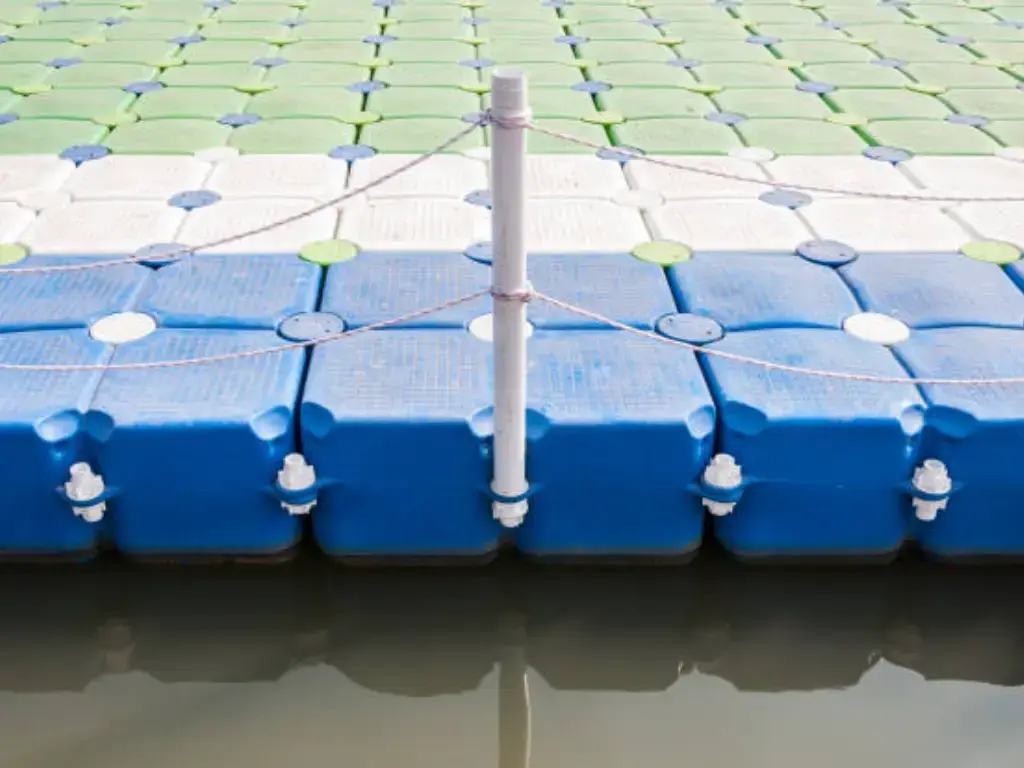
¿Cómo hacer más estable un muelle flotante?
Estabilizar un muelle requiere un planteamiento múltiple. A continuación, ocho métodos de eficacia probada para mejorar el equilibrio de su plataforma acuática.
Con el uso del kit estabilizador de muelle flotante
Los kits estabilizadores se utilizan para garantizar la estabilidad de su muelle proporcionándole apoyo y flotación adicionales. Suelen estar compuestos por postes de anclaje y mecanismos de flotación que puede fijar a su muelle. Los postes verticales que se utilizan para sostener el muelle se anclan al fondo del lago para minimizar la cantidad de movimiento que experimenta el muelle debido a la acción de las olas. Estos kits constituyen una mejora completa del sistema de anclaje, ya que suelen integrar herrajes especializados que se adaptan a las fluctuaciones del nivel del agua manteniendo una alineación vertical rígida. Un kit estabilizador es relativamente sencillo de instalar y puede mejorar enormemente la estabilidad de su muelle.
Mejora del sistema de anclaje
Los pilotes hincados en el fondo del mar o del río pueden proporcionar a su dique flotante un buen lugar de anclaje. Estos soportes verticales evitan la traslación lateral del dique y añaden más apoyo. Para mejorar aún más el sistema, considere la posibilidad de utilizar anclajes de tornillo para una mayor capacidad de sujeción en fondos arenosos o fangosos, o de aplicar técnicas de encadenamiento cruzado. El encadenamiento cruzado consiste en pasar líneas de anclaje en diagonal por debajo de la estructura para crear un sistema de tensión "triangulado" que minimice la deriva horizontal. Los anclajes de peso muerto pueden ser bloques de hormigón o anclajes de hormigón que pueden colocarse en algunas zonas específicas del muelle para aumentar la estabilidad del mismo. Estos anclajes ayudan a contrarrestar las fuerzas desarrolladas por las olas y las corrientes que pueden afectar al muelle, reduciendo así su movilidad. En cuanto a los parámetros específicos de ingeniería, es muy recomendable utilizar cadenas galvanizadas de 1/4″ o 3/8″ para garantizar la durabilidad a largo plazo y la resistencia estructural frente a la corrosión. En cuanto a la selección del peso, las anclas más pesadas proporcionan una estabilidad significativamente mayor en aguas más agitadas; por ejemplo, optar por un ancla de 600 lb en lugar de una de 450 lb puede proporcionar la inercia necesaria para resistir la deriva en entornos de corrientes o vientos fuertes. Hay que asegurarse de que las anclas tengan el tamaño adecuado para soportar las cargas ambientales y estén colocadas de forma que ofrezcan la fuerza estabilizadora de forma equilibrada.
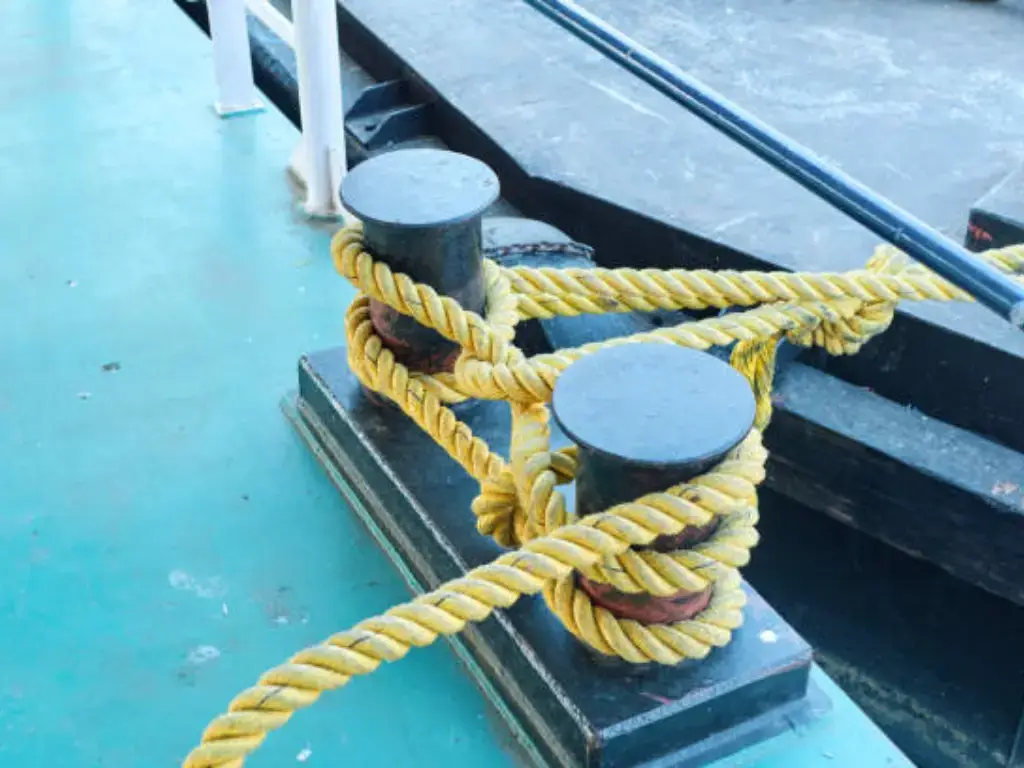
Contrapesos físicos y equilibrio
También puede colocar algunos pesos en su muelle flotante para asegurarse de que está bien anclado y es estable en el agua. Para mejorar el apoyo, se pueden colocar bloques de hormigón o cualquier otro material pesado en el muelle de forma que ofrezcan el soporte necesario. Para maximizar la eficacia, hay que centrarse en los contrapesos físicos y el equilibrio, añadiendo peso específicamente en la parte inferior de los flotadores para bajar el centro de gravedad de toda la estructura, lo que ayuda a evitar que el muelle se desplace u oscile de un lado a otro. Esto contribuirá a garantizar que la estructura no se sobrecargue en algunas zonas y esto provoque daños en la estructura.
Instalación de pasarelas y rampas
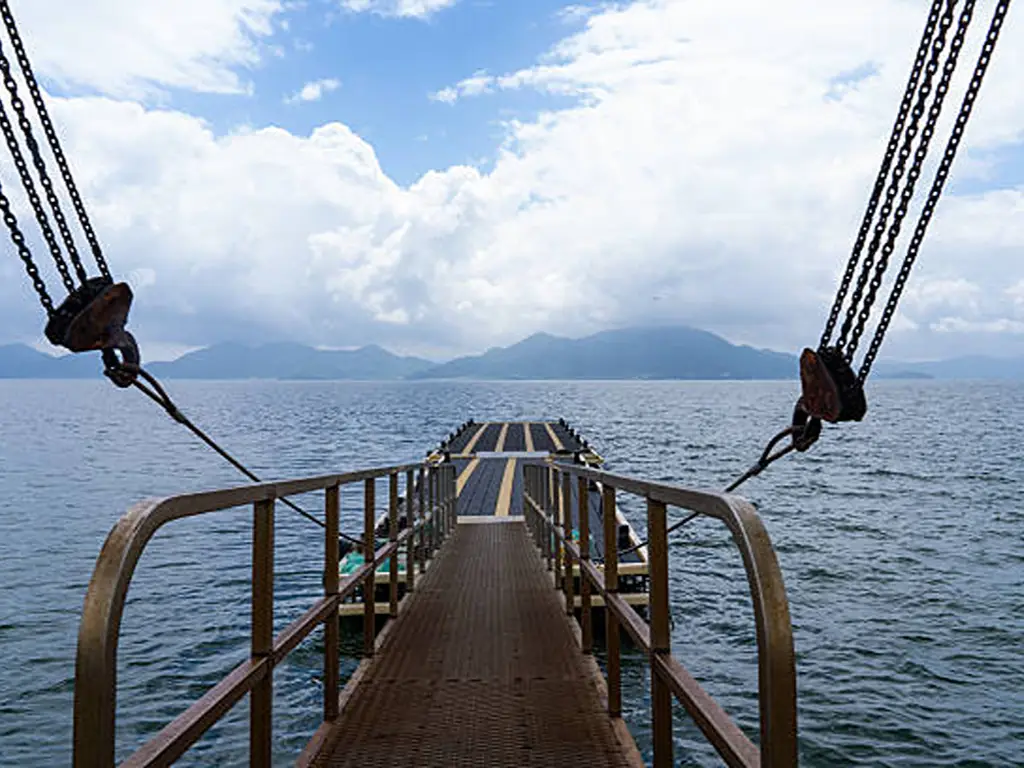
Las pasarelas también ayudan a mantener una conexión firme entre el muelle y la costa, ya que distribuyen el peso de forma diferente y con menos oscilaciones. Una pasarela bien diseñada actúa como una palanca estructural que utiliza la fuerza de la costa para limitar los movimientos laterales. Al fijar el extremo de la orilla a un mamparo de hormigón, la pasarela actúa como un estabilizador que limita el balanceo lateral del muelle. Algunas de las cargas ejercidas por las olas y las fluctuaciones del nivel del agua son bien soportadas por una pasarela bien construida, lo que aumenta la estabilidad del muelle. Asegúrese de que la pasarela esté bien anclada y construida con materiales que no se vean afectados por los factores ambientales imperantes.
Refuerzo estructural
Para evitar que el armazón del muelle se retuerza o se deforme bajo la fuerte presión de las olas, es esencial un refuerzo estructural. Esto implica instalar soportes estabilizadores y refuerzos transversales bajo la cubierta. Al añadir soportes diagonales metálicos o de madera entre los elementos principales del armazón, el muelle se convierte en una estructura rígida "monocasco". Esta rigidez interna impide que los flotadores individuales se muevan de forma independiente, lo que reduce significativamente la sensación de "ondulación" al caminar sobre el muelle.
Además, puede añadir estabilizadores. Se trata de extensiones fijas del espejo de popa montadas en los laterales del muelle y que amplían la anchura del muelle y su flotabilidad. Son como los estabilizadores de una canoa; constituyen una superficie adicional que reduce el balanceo y la inclinación. Pueden ser de tablas de madera o de metales ligeros, según el tipo de muelle, y deben fijarse firmemente a los laterales del muelle.
Añadir un tejado
También es importante tener en cuenta que un tejado en el dique flotante no es sólo un añadido estético para dar sombra y proteger de la lluvia, el sol y la nieve, sino que también aumenta el peso total de la estructura. La carga adicional del tejado también puede reducir el impacto del viento y las olas sobre el muelle debido al aumento de la inercia estructural: una masa más pesada es más difícil de poner en movimiento por pequeñas olas. Sin embargo, es vital realizar una compensación de la resistencia al viento; el tejado actúa como una vela, por lo que el diseño estructural debe garantizar que la estabilidad añadida por el peso compense las fuerzas laterales generadas por los vientos fuertes. Del mismo modo, un techo puede realzar la belleza y funcionalidad del muelle al proporcionar sombra a los trabajadores.
Distribución correcta de la carga
En el contexto del dique flotante, la distribución del peso es crucial en la estabilidad de la estructura para evitar que se hunda. También es importante no sobrecargar el dique con objetos pesados en un lado, ya que esto hará que el dique se vuelva inestable y se balancee mucho. La distribución eficaz de la carga sigue una "lógica de contrapeso": si una pieza pesada debe estar en el lado norte, debe añadirse un peso físico equivalente en el lado sur para mantener un plano nivelado. Pero es necesario repartir la carga uniformemente por toda la plataforma para que ésta no se deforme. Esto implica la identificación de la posición de los equipos, el mobiliario y cualquier estructura dentro de la zona del muelle.
Fijación a la orilla
Para mayor estabilidad, se aconseja anclar el dique flotante a la orilla mediante cuerdas o cadenas. Para una solución más robusta, utilice brazos rígidos. A diferencia de las cuerdas flexibles, estos brazos metálicos rígidos conectan el pantalán a una base en la orilla, lo que permite el movimiento vertical con las mareas y evita por completo que el pantalán se balancee hacia la orilla o se aleje de ella. También ayudan a evitar que el muelle se desplace de forma indeseable debido a las olas y las corrientes. Para las fijaciones, se recomienda utilizar materiales que no se corroan fácilmente, como el acero inoxidable, para aumentar la durabilidad del producto.
Matriz comparativa de mejora de la estabilidad de los diques flotantes
| Método de mejora | Nivel de costes | Dificultad de instalación | Durabilidad | El mejor caso de uso |
| 1. Kit estabilizador | Medio - Alto | Moderado | Alta | Muelles comerciales o de alto tráfico que buscan una actualización profesional todo en uno. |
| 2. Mejora del sistema de anclaje | Medio - Alto | Alta | Excelente | Zonas con corrientes fuertes, grandes fluctuaciones del nivel del agua o suelo blando. |
| 3. Contrapesos físicos | Bajo | Bajo | Alta | Solución económica para muelles que se sienten demasiado ligeros o "nerviosos" cuando están vacíos. |
| 4. Pasarelas y rampas | Medio | Moderado | Alta | Cuando se requiere acceso a tierra y se puede aprovechar para restringir el balanceo lateral. |
| 5. Refuerzo estructural | Medio | Alta | Alta | Los muelles experimentan deformaciones del armazón o sensaciones de "ondulación" en zonas de fuerte oleaje. |
| 6. Añadir un tejado | Alta | Alta | Medio - Alto | Necesidades de doble uso (sombra + inercia de masa) donde se gestiona la resistencia al viento. |
| 7. Distribución correcta de la carga | Mínimo | Mínimo | Perpetua | Lógica operativa diaria esencial para evitar el listado o el desgaste desigual. |
| 8. Brazos rígidos (brazos de apoyo) | Medio | Moderado | Excelente | Conexión permanente a tierra para eliminar por completo el "balanceo" o deriva de atraque. |
Hacks profesionales de alta tecnología para una estabilidad superior
El uso de lastre de agua en los sistemas modulares de HDPE es un método especial para reducir el centro de gravedad. Puede hacer que el sistema de amarre para embarcaciones se asiente más profunda y firmemente en el agua llenando los flotadores perimetrales del muelle hasta aproximadamente 1/3 de su capacidad. No obstante, la precisión es esencial para evitar el efecto de superficie libre. Los flotadores del muelle deben llenarse exactamente al mismo nivel y cerrarse herméticamente; de lo contrario, el agua chapoteará durante una inclinación y generará un impulso que, de hecho, puede hacer que una embarcación -incluso un yate de lujo- tenga más probabilidades de zozobrar.
Para reducir el violento balanceo de las estelas de los barcos, puedes colocar placas verticales o aletas en la parte inferior de la estructura del muelle. Estas aletas no aportan flotabilidad, como los flotadores de muelle, sino que sirven de amortiguadores viscosos. Estas quillas submarinas tienen que empujar a través de la columna de agua cuando las olas intentan elevar el dique, y este arrastre frena el movimiento vertical y lateral del dique. Este diseño, inspirado en los buques y establecimientos navales, es especialmente útil en muelles situados en canales muy transitados.
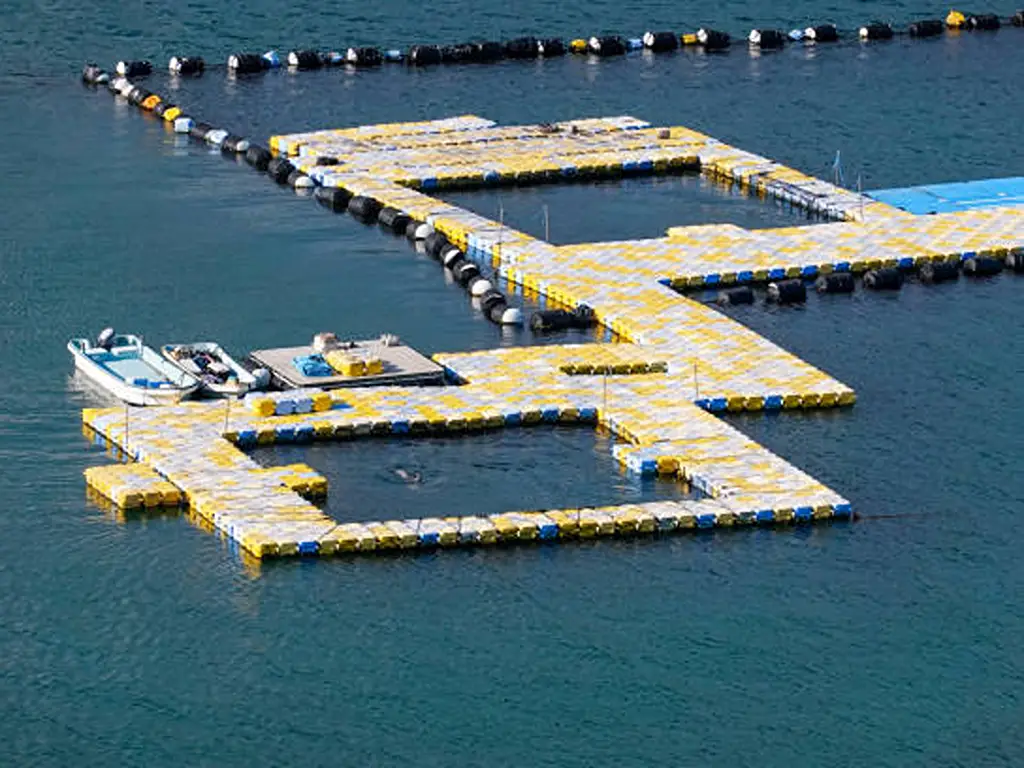
El mejor método de anclaje para eliminar el balanceo consiste quizá en maximizar el área del plano de flotación. La resistencia a la inclinación de un muelle puede incrementarse drásticamente aumentando la manga (anchura) del muelle, por ejemplo, cambiando un muelle estrecho en forma de I por un muelle en forma de L, U o T. La creación de estas formas con el uso de Finger Docks o balancines aprovecha el segundo momento de área, que tiende a mejorar la estabilidad global en más de la mitad que la de una pasarela lineal simple. No obstante, estas sofisticadas modificaciones son tan seguras como la propia plataforma, y necesitan la precisión y la integridad hermética de grado industrial que está presente en los sistemas Hisea Dock.
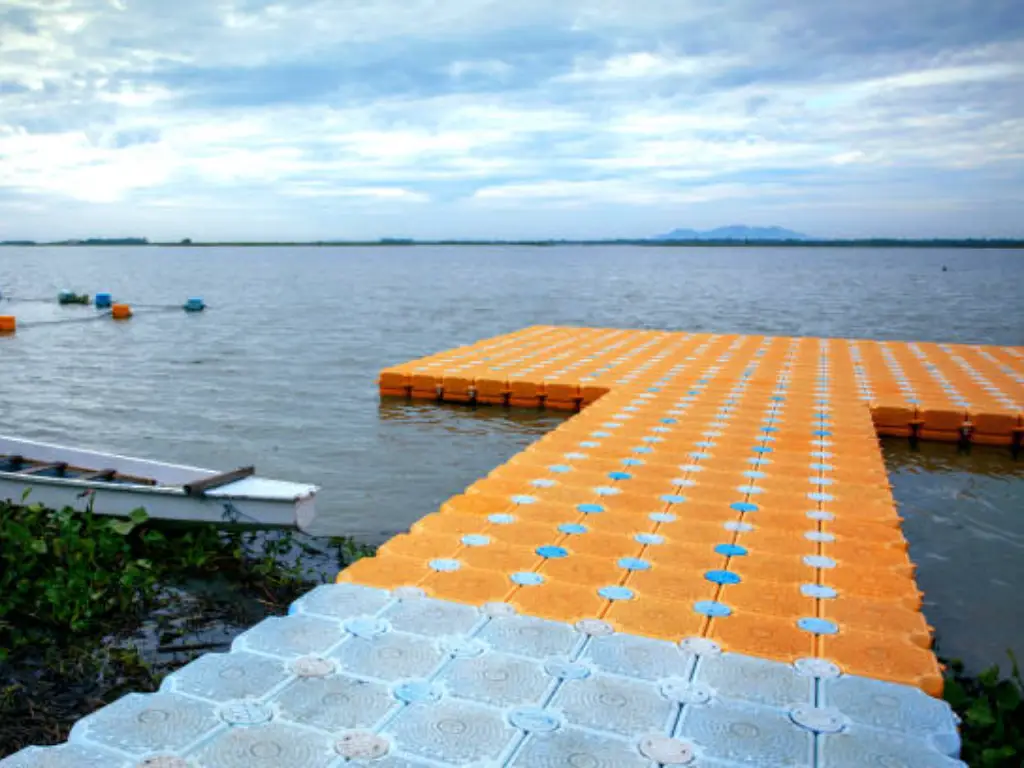
La ventaja de Hisea Dock: diseñar sistemas modulares para lograr una gran estabilidad
Para lograr la máxima estabilidad del muelle, el diseño de los propios módulos es tan importante como su inteligente decisión de anclaje. Hisea Dock lleva desde 2006 en el negocio de los sistemas modulares de alto rendimiento, cuyo objetivo es eliminar la típica sensación ondulante de las plataformas flotantes. Nuestros bloques tienen orejetas de conexión de 19 mm de grosor y un diseño especial de ranuras de cuatro lados que aumenta enormemente la rigidez estructural y la estabilidad lateral.
Nuestro polietileno de alta densidad de nueva generación con agentes anti-UV proporcionará a los usuarios una sensación de tablón sólido para caminar que no se hundirá con el tiempo como los muelles fijos tradicionales, ni se agrietará como los viejos tablones de madera. Sugerimos al menos tres flotadores de ancho para aprovechar nuestro diseño sin juntas y crear el mayor equilibrio. De nuestra amplia selección en línea, ofrecemos módulos que pueden resistir tifones, lo que le garantiza que tiene el kit estabilizador de muelle flotante adecuado para sus necesidades. Nuestra prueba de tensión diagonal se ha probado a 14.389 N para garantizar que puede soportar una presión extrema.
Hisea Dock cuenta con las certificaciones ISO-9001, CE y TUV, lo que significa que la vida útil del producto es de 20 a 30 veces superior a la de los competidores. Nuestra garantía es de 5 años, 24/7, y asesoramiento profesional de anclaje para ayudarle a hacer de su sueño marítimo una realidad estable y duradera.
Prevención de fallos críticos: Errores típicos y estrategias probadas de estabilidad
Para que sus métodos de estabilización sean eficaces, es importante conocer los errores comunes de ingeniería y procedimiento que provocan inestabilidad estructural y desgaste prematuro. A continuación se enumeran los escollos que deben identificarse y corregirse:
- Construcción sin comprobar los requisitos legales locales: Esto puede costarle muchas multas o incluso la retirada de su sistema de fondeo. Siempre hay que consultar al Departamento de Recursos Naturales (DNR) o al Cuerpo de Ingenieros del Ejército antes de instalar el sistema de fondeo para obtener los permisos necesarios.
- No cargar el peso uniformemente sobre la plataforma: Esto provoca una lista crónica y causa tensiones destructivas y asimétricas en los pernos de conexión estructurales. Más bien, concéntrese en la carga de la línea central, es decir, la colocación de todos los muebles y equipos pesados de una manera simétrica para lograr un equilibrio estático neutro.
- El uso de anclajes de tamaño insuficiente o inadecuado en zonas de alta energía: El uso de piezas metálicas de muelle de tamaño insuficiente provoca deriva y posibles daños por colisión durante fuertes marejadas. Para evitarlo, ajuste la masa de anclaje a la profundidad específica del agua y al entorno con eslabones rápidos y cadenas galvanizadas de 3/8″ y pesos muertos de 600 libras o más en aguas más bravas.
- No se tienen en cuenta los efectos de los cambios estacionales del nivel del agua: Un anclaje rígido puede hacer que el muelle se hunda cuando suba el nivel del agua o que quede alto en caso de sequía. La respuesta es disponer de sistemas de tensión ajustables o cabrestantes deslizantes que permitan al muelle moverse libremente desde la superficie del agua.
- Añadir accesorios pesados al muelle sin flotabilidad: La introducción de escaleras de aluminio, escaleras de aluminio para muelles o elevadores de motos acuáticas puede formar puntos muertos. Para corregir esto, puede utilizar un enfoque de flotabilidad escalonada, mediante el cual se colocan Flotadores Dobles (500 mm de altura) directamente debajo de los herrajes pesados del muelle para mantener el nivel de la superficie.
- Utilizar herrajes de mala calidad que no sean de uso marino: Esto provocará una rápida corrosión y la rotura estructural de sus líneas de estabilización. Para garantizar una vida útil de 1520 años, todas las piezas y fijaciones metálicas del muelle deben ser de acero galvanizado por inmersión en caliente o de acero inoxidable 316.
- Sobrecargar el muelle con su capacidad de carga diseñada durante los eventos: Esto provoca una inestabilidad insegura y una gran posibilidad de vuelco de la plataforma. Maneje siempre las cargas dinámicas dirigiendo a los invitados al centro y reubicando objetos portátiles como neveras para que sirvan de contramedidas temporales.
Soluciones escalonadas para cada nivel de estabilidad
El anclaje inteligente y el posicionamiento estratégico es una mejora de coste cero que pretende equilibrar sin comprar nuevos equipos aplicando la lógica de la ingeniería. Para que un muelle tenga menos probabilidades de escorarse, se puede reorganizar el equipo existente, por ejemplo, bancos, cajas de almacenamiento, neveras pesadas, etc., para acercarlos a la línea central y lograr un equilibrio estático neutro. En eventos sociales, el factor humano puede gestionarse de forma proactiva invitando a los invitados a sentarse en el centro en lugar de agolparse en el lateral del muelle, o trasladando los objetos portátiles al extremo opuesto.
Las mejoras de bricolaje sencillas que utilizan materiales simples son las mejores cuando el propietario desea ver una mejora significativa en la resistencia a las olas con la menor cantidad de dinero. El uso de anclajes de peso muerto de bricolaje, que incluyen bloques de hormigón vertido unidos con cadenas galvanizadas de 1/4 de pulgada o 3/8 de pulgada, suele costar unos 200 dólares. Aunque se trata de la siguiente mejor opción para quienes disponen de un presupuesto ajustado, estos sistemas requieren revisiones periódicas para comprobar que no se desgastan bajo el agua y proporcionan un aumento instantáneo de la inercia. Éstos, junto con el lastre físico o los estabilizadores simples, ofrecen una base firme y rentable a los muelles de lagos residenciales.
Para quienes buscan infraestructuras a largo plazo, un método de pilotaje profesional es el más rentable para el valor de la propiedad a largo plazo. Los brazos rígidos metálicos de alta resistencia o los sistemas de pilotaje profesionales pueden costar 5.000 o más, pero tienen una vida útil de 20 a 30 años sin mantenimiento. En este grado, los sistemas modulares de HDPE de alta calidad suelen tener una vida útil de 15 a 20 años, y los brazos rígidos de acero tienen una vida útil de 10 a 15 años, dependiendo de la calidad del galvanizado. Para los operadores comerciales, la menor responsabilidad y la mayor vida útil de un sistema anclado profesionalmente es mucho más que la inversión inicial de capital.
Conclusión
Por último, el muelle es estable gracias al equilibrio entre la energía externa y la integridad estructural interna. Puede que esté maximizando la superficie de su muelle para conseguir una sensación de mayor estabilidad, reforzando el armazón para eliminar la sensación de ondulación o mejorando su sistema de anclaje para resistir las fuertes corrientes, pero el objetivo es el mismo, proporcionar una interfaz segura, estable y predecible entre la tierra y el agua.
Una plataforma realmente estable es una compañera silenciosa en sus operaciones marítimas. Con estos principios de ingeniería y mejoras estratégicas, podrá asegurarse de que todas las transiciones entre la costa y el acuático se realizan con total confianza y serán una base segura en los años venideros.
FAQS
P: ¿Cómo garantizar la máxima estabilidad del kit de pantalán flotante?
A: Para mejorar la estabilidad de un kit de pantalán flotante, distribuya la carga uniformemente, utilice bolas metálicas pesadas y pilares metálicos, y realice comprobaciones periódicas de mantenimiento para detectar la putrefacción y asegurar las armellas, y utilice los dispositivos de flotación adecuados que puedan soportar la carga del kit de pantalán flotante.
P: ¿Cuál es la carga máxima que puede soportar un dique flotante?
A: La cantidad de peso que puede soportar un dique flotante viene determinada por la construcción, los materiales utilizados y el tipo de flotadores empleados en la construcción. Por lo general, los diques flotantes son capaces de soportar miles de kilos, pero conviene consultar la documentación del fabricante. Cuando el muelle se carga con demasiado peso, se vuelve inseguro e incluso puede derrumbarse.
P: ¿Qué medidas deben adoptarse para aumentar la seguridad en los diques flotantes?
A: Algunas de las medidas de precaución que deben tomarse al diseñar y construir los diques flotantes son una cubierta antideslizante, barreras protectoras y bordes bien definidos. También es importante asegurarse de que el muelle es seguro y está a salvo de peligros como tablones sueltos o clavos expuestos. Algunas de las cosas que hay que comprobar son: Comprobaciones diarias: Estas son algunas de las comprobaciones más importantes que hay que hacer en el dique flotante para asegurarse de que el entorno es seguro para su uso.

 English
  Thai
Thai  Spanish
  French
  German
  Dutch
Dutch  Italian
  Arabic
  Indonesian
  Portuguese
  Turkish