
Naviguer dans le monde des infrastructures maritimes commerciales aux enjeux considérables : Pourquoi l'ingénierie de précision des plates-formes flottantes constitue le meilleur retour sur investissement pour les fronts de mer modernes.
Introduction
Dans le paysage hautement compétitif de la gestion commerciale des embarcations, la marge entre une saison de pointe rentable et une saison marquée par des coûts d'entretien incessants se résume souvent à l'infrastructure de base qui se trouve sous vos pieds. Pour les exploitants de ports de plaisance, les propriétaires de stations balnéaires et les agences de location commerciale, le choix d'une plate-forme aquatique robuste ne se résume plus à une simple place de parking. Alors que les utilisateurs résidentiels peuvent encore débattre entre les ascenseurs mécaniques traditionnels pour jet ski et les ports flottantsLes entités commerciales passent définitivement aux technologies avancées de l'information et de la communication (TIC). meilleur quai flottant pour jet ski de l'eau. L'abandon des ascenseurs hydrauliques nécessitant beaucoup d'entretien a fondamentalement révolutionné la façon dont les entreprises interagissent avec les environnements marins dynamiques.
Lorsque des équipes d'acheteurs professionnels évaluent vente de quais pour jet skiIls doivent donc regarder rigoureusement au-delà du prix initial affiché. Une évaluation superficielle conduit souvent à des dépenses désastreuses à long terme. La véritable viabilité commerciale exige un examen approfondi de l'intégrité moléculaire des matières premières, du renforcement structurel des points de connexion critiques, de l'agencement précis des surfaces en contact avec la coque et de l'adaptabilité globale de la plate-forme aux fluctuations imprévisibles des marées et aux phénomènes météorologiques violents. Ce guide complet décortique l'ingénierie avancée qui sous-tend les plates-formes en polyéthylène haute densité (PEHD) de haute performance, en vous fournissant les preuves techniques nécessaires pour réaliser un investissement commercial en connaissance de cause.
Flotteurs de quai fabriqués sur mesure : La science de l'ESCR et la supériorité des matériaux
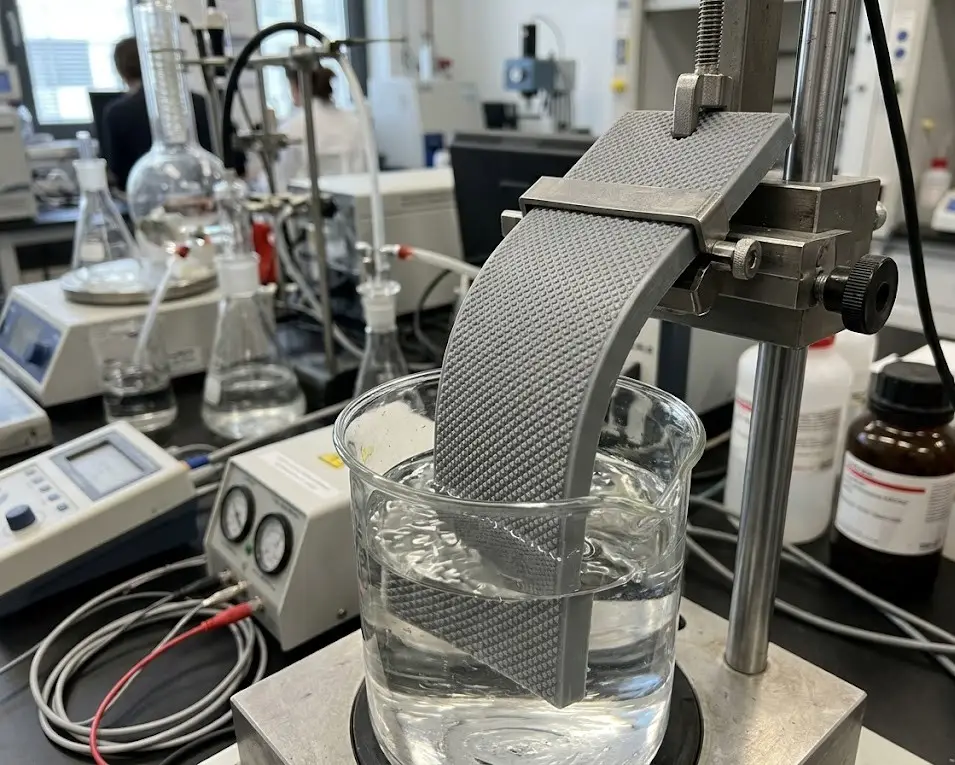
La base de toute plate-forme marine haut de gamme repose sur la science des matériaux. Alors que les plastiques standard de qualité grand public peuvent suffire pour une installation temporaire le week-end, les environnements commerciaux exigent une résilience exponentielle. Le PEHD à haut poids moléculaire est à l'avant-garde de cette norme industrielle. Contrairement aux plastiques standard qui deviennent cassants sous l'effet des rayons UV, le PEHD de qualité commerciale est chimiquement conçu pour résister à des variations de température allant de -60°C à 80°C. Pour les projets B2B à long terme, la mesure la plus critique est la résistance à la fissuration sous contrainte environnementale (ESCR).
Les structures flottantes Elite ont une cote ESCR supérieure à 1 500 heures, ce qui garantit que les composants modulaires ne subiront pas de dégradation prématurée. Au-delà de la durabilité, l'expérience du client est un facteur de décision essentiel. Une structure flottante meilleure façon d'amarrer un jet ski doit comporter une surface antidérapante intégrée qui est compatible avec les pieds nus. Dans les complexes hôteliers de luxe, les clients marchent souvent sans chaussures ; nos surfaces en PEHD sont conçues pour rester fraîches au toucher et confortables pour la peau, même en cas de chaleur tropicale intense, ce qui garantit la sécurité et le confort sans risque de brûlures ou d'irritations que l'on trouve dans les solutions traditionnelles en bois ou en métal.
Choisir la bonne fondation : Comparaison de la valeur commerciale et du retour sur investissement
Il est essentiel de comprendre les différences opérationnelles entre les plateformes modulaires et les systèmes de pointe spécialisés. Nous avons regroupé les principaux paramètres dans une matrice de valeur commerciale afin de mettre en évidence les différences flagrantes en matière de maintenance et de longévité.
| Dimension commerciale | Flotteurs modulaires en PEHD (meilleur choix) | Systèmes de bord de quai | Traditionnel Bois/Métal |
|---|---|---|---|
| Rôle structurel principal | Plates-formes et ports autoportants complets. | Renforcement de la flottabilité des quais existants. | Passerelles fixes ; très vulnérables. |
| Heures d'entretien annuel | 0 - 2 heures (inspection uniquement). | 2 - 5 heures (vérification du matériel). | 40+ heures (étanchéité, dérouillage). |
| Durée de vie prévue | 15 - 20+ ans. | 10 - 15 ans. | 5 - 7 ans (remplacement constant). |
| Protection de la coque (TCO) | Les rouleaux en polyuréthane ne provoquent pas d'éraflures sur les quais. | Modéré (protection basée sur les pare-chocs). | Médiocre (risque élevé d'endommagement du gelcoat). |
Le piège du poids humide : Calcul de la charge réelle nécessaire
L'une des erreurs les plus catastrophiques commises lors de la passation des marchés est de se fier strictement aux spécifications relatives au "poids à sec". Les embarcations commerciales modernes sont devenues des machines massives. Se fier au poids à sec conduit inévitablement à des plates-formes submergées et à des problèmes de sécurité. Les opérateurs professionnels doivent calculer le "poids humide opérationnel" pour s'assurer que le bateau est en bon état de marche. meilleur quai flottant pour jet ski reste stable.
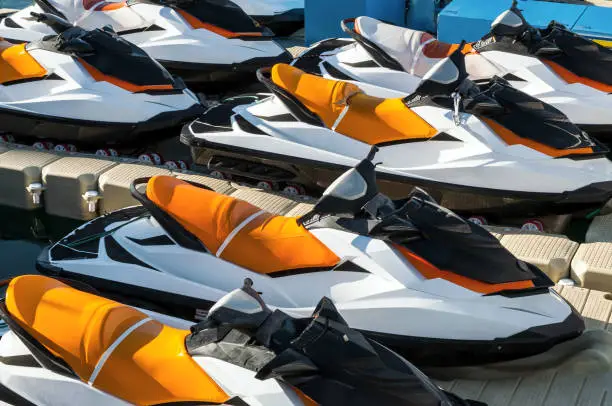
Prenons l'exemple d'un cruiser moderne : alors que la brochure indique un poids à sec de 385 kg (850 lbs), il faut ajouter environ 54 kg (120 lbs) pour un réservoir de carburant plein, 9 kg (20 lbs) pour l'huile, et au moins 181 kg (350 - 400 lbs) pour deux adultes et leur équipement. La charge dynamique dépasse souvent 612 kg. C'est pourquoi les systèmes modulaires d'élite offrent une capacité de flottabilité de 350 kg/m², répartissant ce poids humide opérationnel massif sur une large empreinte en PEHD afin de garantir une expérience d'embarquement haute et sèche.
Prévenir le "Dock Rash" (l'érythème des quais) : Systèmes d'enroulement avancés et protection de la coque
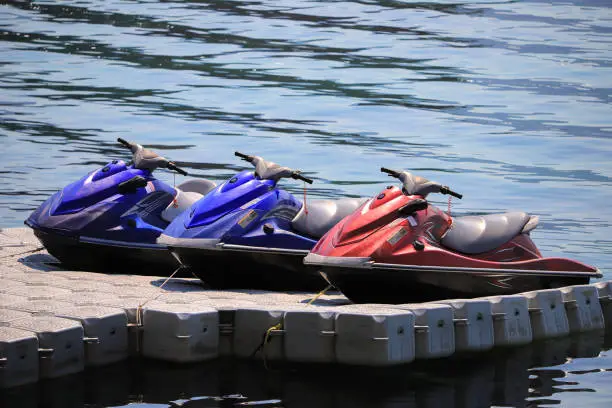
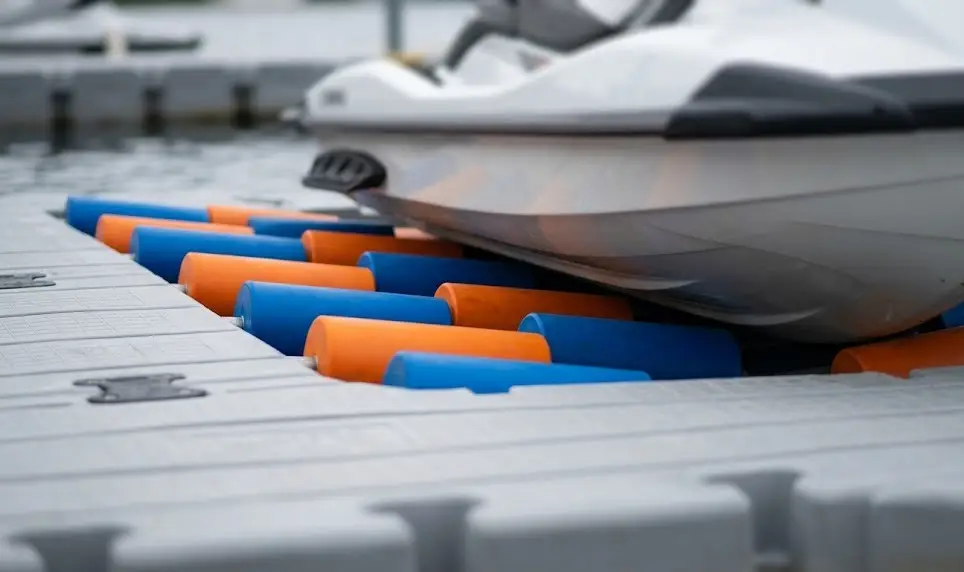
Dans le secteur de la location commerciale, l'état visuel de votre flotte a un impact direct sur la valeur de revente. Le "Dock Rash" - des abrasions profondes du gel-coat - peut coûter des centaines de dollars par navire à réparer chaque année. Le secret d'une protection absolue de la coque réside dans l'utilisation de rouleaux en polyuréthane haute densité. Le polyuréthane offre l'hybride parfait de rigidité structurelle pour supporter une machine de 590 kg et de souplesse moléculaire pour bercer la coque sans laisser la moindre marque.
Une disposition professionnelle en quinconce garantit que ces rouleaux sont espacés de manière à éviter toute interférence avec la grille d'admission du bateau ou les capteurs de vitesse. Lorsque l'embarcation glisse sur le meilleure façon d'attacher un jet ski à un quaiLes roues en polyuréthane répartissent uniformément les frottements, transformant un impact potentiellement dommageable en une expérience de stationnement sans frottement qui préserve l'état impeccable de votre embarcation.
Solutions d'ancrage pour l'eau salée, les marées et les conditions météorologiques extrêmes
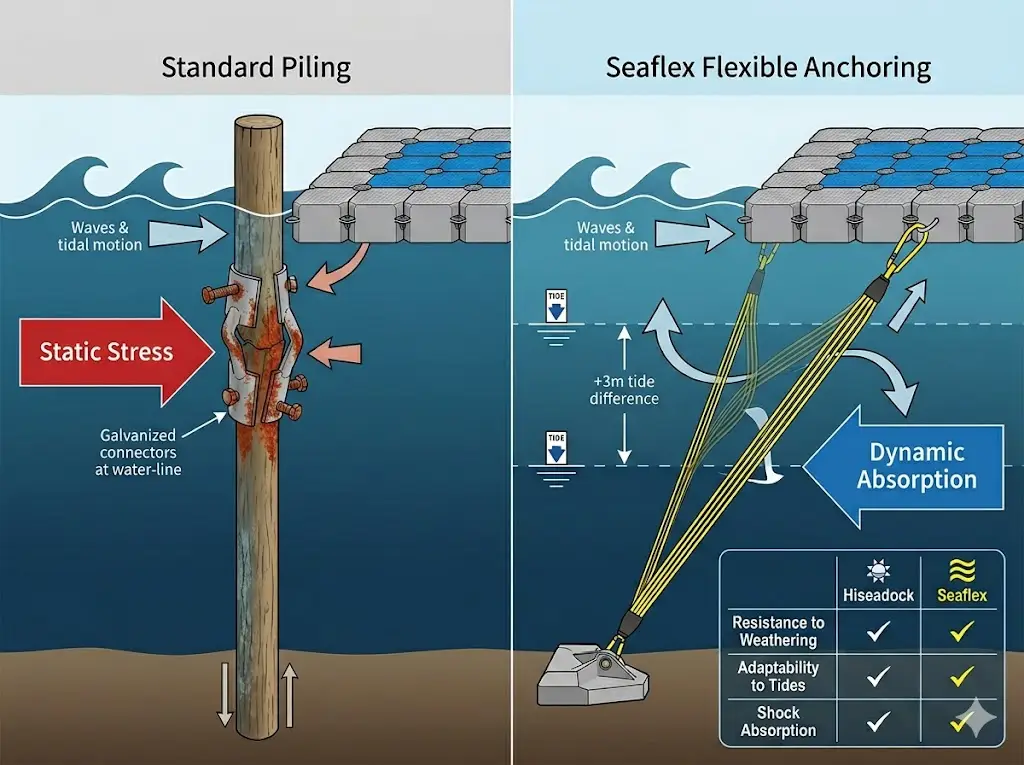
La durabilité du PEHD ne signifie rien si le système se détache lors d'une tempête tropicale. Les opérateurs professionnels mènent cette bataille au niveau des points d'ancrage. Pour les environnements côtiers, l'acier inoxydable 316 Supports de palplanches sont la norme, permettant à la plate-forme de glisser verticalement avec la marée. Cependant, pour les marinas en eaux profondes soumises à de violentes vagues, un système d'attache flexible avancé est nécessaire.
L'intégration d'un système d'amarrage élastique (tel que Seaflex) avec des poids morts en béton constitue l'ultime mesure de protection. Contrairement aux chaînes rigides qui se brisent sous l'effet de la force cinétique, ces aussières élastiques agissent comme des amortisseurs massifs. Elles dissipent l'énergie destructrice des vagues de tempête, offrant aux gestionnaires d'installations une tranquillité d'esprit absolue lorsque les conditions météorologiques deviennent extrêmes.
Derrière la qualité : 16 ans d'excellence en matière de fabrication
L'excellence de l'ingénierie est soutenue par une puissance de production vérifiable. Les principales installations atteignent une production quotidienne de 1 120 pièces. Cette échelle est essentielle pour respecter les délais de pré-saison commerciale. Pour raccourcir encore le cycle d'installation, nous utilisons Emballage prêt pour l'exportation. Notre configuration d'expédition standard comprend blocs de 4 flotteurs pré-assemblés (sections de 1 mètre carré). Ce pré-assemblage en usine permet aux équipes locales de simplement "encliqueter et verrouiller" les grandes sections, réduisant ainsi la main d'œuvre sur site de 50%.
En outre, nous avons renforcé les "oreilles" de connexion (pattes d'emboîtement) pour atteindre une épaisseur impénétrable de 19 mm, soit 40% de plus que la moyenne de l'industrie. Cela garantit que votre matrice modulaire survivra à la torsion des bateaux et au trafic piétonnier intense sans cisailler une seule goupille, assurant ainsi une durée de vie structurelle de 20 ans, même dans les ports commerciaux les plus exigeants.
Le véritable coût de la propriété : Une analyse financière sur 5 ans
Une analyse du coût total de possession sur cinq ans comparant les piliers traditionnels en bois et les ascenseurs mécaniques à un système modulaire en PEHD de première qualité révèle un vainqueur incontestable. Alors que les installations en bois nécessitent $1.500 - $2.500 d'entretien pour les mastics et les planches, les ascenseurs mécaniques traditionnels Les câbles rouillés, les poulies grippées et les fuites de liquide hydraulique en milieu salin drainent encore plus de capital. En revanche, un système modulaire en PEHD nécessite $0.00 sur 60 mois pour de telles réparations. Si l'on tient compte du temps d'arrêt opérationnel éliminé grâce à la commodité de l'installation et à la protection du gelcoat des navires, le retour sur investissement de l'investissement dans les systèmes modulaires HDPE est de $0,00 sur 60 mois. meilleurs systèmes de quais pour jet ski quais existants est réalisée dès la première saison.
Prêt à transformer votre front de mer commercial ?
Ne gaspillez plus votre capital dans des infrastructures nécessitant beaucoup d'entretien. De la modélisation CAO 3D sur mesure à la logistique mondiale rapide avec des unités préassemblées prêtes à l'exportation, nous fournissons des solutions de qualité industrielle pour sécuriser votre flotte.
Demander une analyse et un devis du coût total de possession (TCO)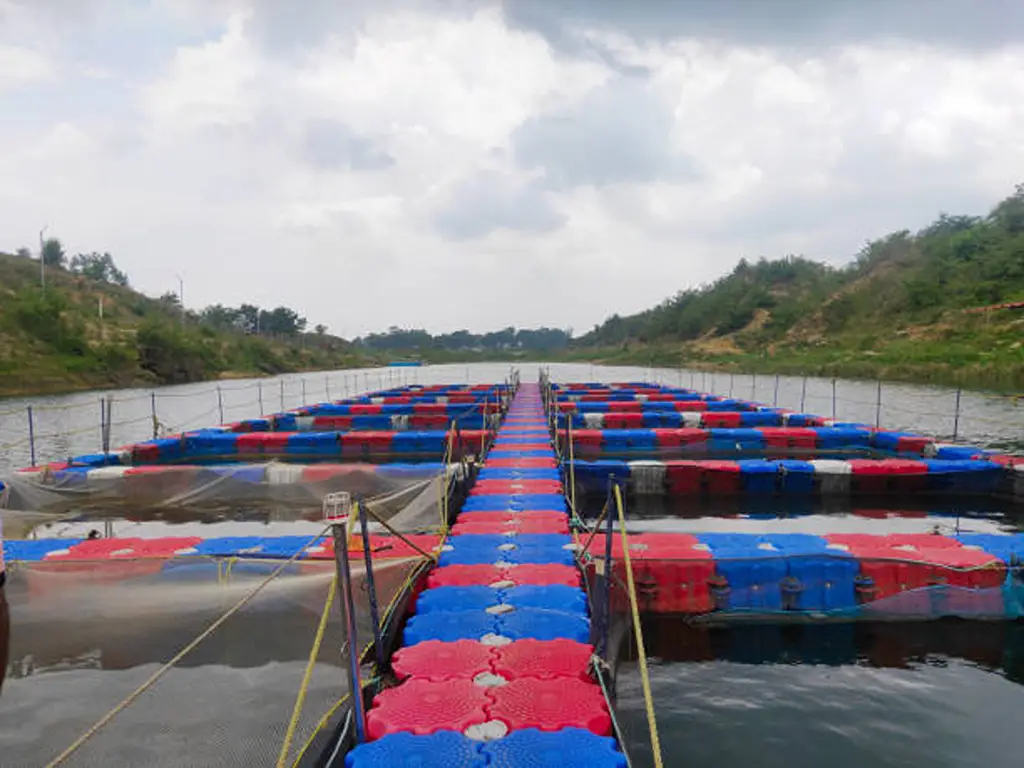

 English
  Thai
Thai  Spanish
  French
  German
  Dutch
Dutch  Italian
  Arabic
  Indonesian
  Portuguese
  Turkish