
Introduzione
A floating dock is not just a platform, but a very important interface between the land and the water. To dock owners, resort managers, and industrial operators, the dock is a guardian, keeping precious maritime property out of the uncertainties of tides and currents. But the same nature which renders a dock indispensable, the corrosive, inexorable character of the water, is its worst enemy. Even the strongest systems eventually give in to the entropy of the elements.
Maintaining the structural integrity of the dock is not only an aesthetic issue, but a basic safety and operational life concern. Whether you are dealing with a small privately owned slip or a large commercial marina, it is important to know the intricacies of boat dock repair, whether it is molecular HDPE welding or hydraulic realignment. This guide offers a detailed technical guideline on how to diagnose failures, make repairs, and assess the long-term longevity of your waterfront infrastructure.
The Significance of Floating Dock Repair
The deterioration of a floating dock is hardly an instantaneous phenomenon; it is a progressive one. The fact that a localized stress crack or a slightly loose hinge pin can be overlooked and result in disastrous structural issues in the event of a storm surge or high-wind event. Implementing routine maintenance is the best way to prevent further damage to the system.
In addition to safety, there is the financial aspect. A properly maintained dock maintains property value and reduces the Total Cost of Ownership (TCO). Moreover, environmental responsibility is the most important in the contemporary maritime management. A defective dock may spill buoyant fillers or release microplastics into the ecosystem, which may cause legal consequences and environmental damage. The main defense against these compounded risks is timely repair.
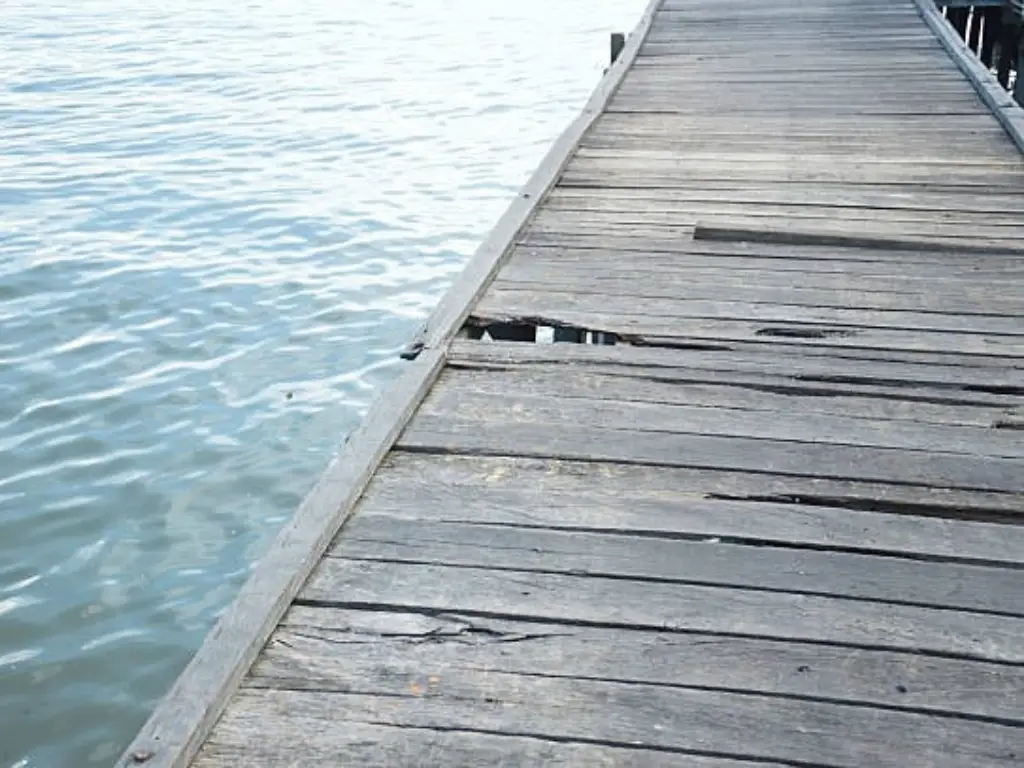
Strumenti e materiali necessari
Before commencing work, ensure you have the right tools and high-quality materials, such as a marine-grade adhesive or sealant.
| Strumento/Materiale | Scopo |
| Utensili manuali di base | Riparazioni generali |
| Ferro per saldatura | Riparazione del materiale della banchina in polietilene |
| Galleggianti | Sostituzione dei galleggianti danneggiati |
| Sigillanti impermeabili | Sigillatura di crepe e perdite |
| Bulloni e dadi | Fissare i componenti del bacino |
| Chiave dinamometrica | Assicurare il corretto serraggio dei bulloni |
| Sigillante siliconico di grado marino | Sigillatura dei fori di sfiato e di scarico |
| Tappi in plastica filettati | Sigillare i vecchi fori di sfiato |
Another thing that should be done before commencing the repair work is to prepare all the tools and materials that will be required. The basic hand tools, welding iron used in polyethylene dock material, floats, waterproof sealants and bolts and nuts are the list of items that should be included in a checklist. The materials must be durable and suitable to salt water and rough water conditions such as HDPE. This does not only assist in ensuring that the repairs last longer but also to be in a position to endure the harsh conditions of the marine environment.
It is also advisable to carry other equipment such as a torque wrench and a marine grade silicone sealant to make sure that any issue with the vent holes or drain holes is well addressed. The appropriate tools and materials to carry out the repair work should also be available such as threaded plastic plugs to seal the old vent holes. This preparation phase is significant as it will prevent any delays that can be encountered in the process and at the same time make sure that all the safety precautions and quality requirements are fulfilled during the process of repairing the floating dock.
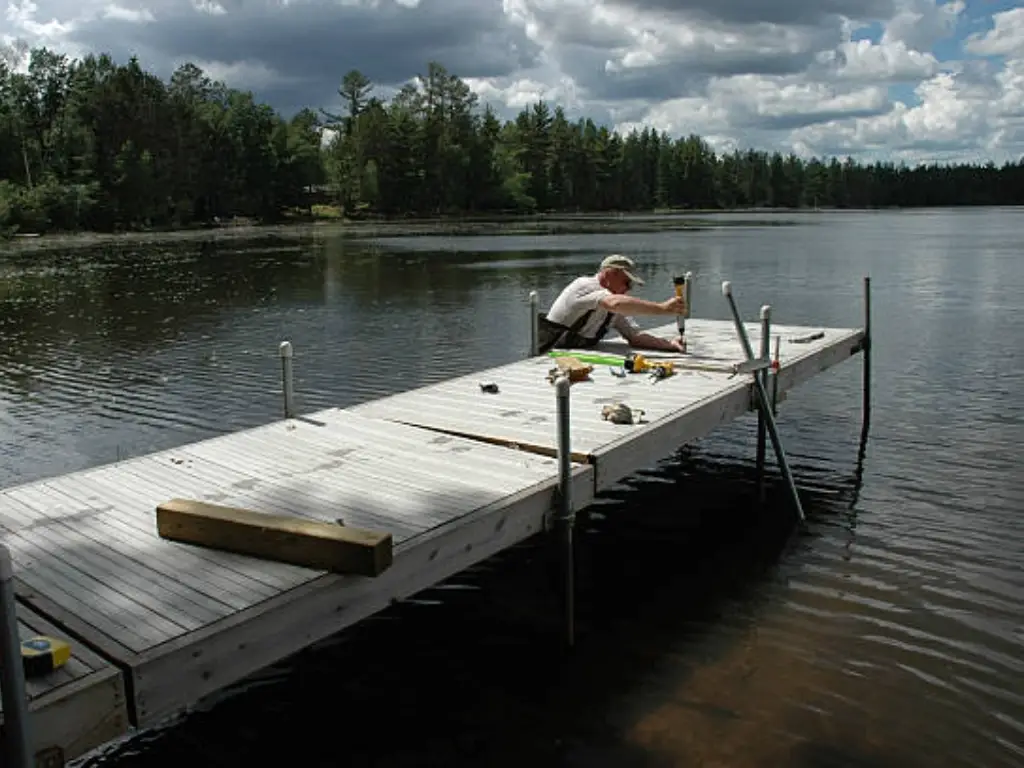
Repair Safety Guidelines
| Misura di sicurezza | Descrizione |
| Scarpe antiscivolo | Impediscono di scivolare sulle superfici bagnate |
| Guanti a mano | Proteggere le mani da oggetti taglienti e sostanze chimiche |
| Occhiali di protezione | Proteggere gli occhi da detriti e fumi chimici |
| Area ben ventilata | Prevenire l'inalazione di fumi nocivi |
| Spazio di lavoro organizzato | Ridurre il rischio di incidenti |
There are some safety precautions that you must observe before you begin any repair work on your floating dock. Firstly, make sure that you wear the appropriate protective equipment including slip-resistant shoes, hand gloves, and goggles. Such precautions are necessary to avoid potential hazards that can arise at the workplace, such as slipping, falling, or contact with sharp objects or toxic substances. Another thing to remember is that you should work in a well-ventilated place particularly when using chemical sealants or when using the plastic welding iron since the two tools emit fumes that are harmful to your health.
Besides wearing protective clothing and equipment, ensure that the working environment is safe and all the tools and other items are organized in a systematic way to prevent an accident. Inform other individuals who might be using the area that you are carrying out some repair work so that they do not interfere with you. Through these safety precautions, it is possible to prevent any kind of hazard and at the same time provide a safe and professional working environment to the floating dock repair process.
How to Repair a Floating Dock: Technical Guide to Troubleshooting and Solutions
The safety and performance of a floating system can only be maintained through a disciplined observational approach. After detecting the fault by visual or physical signs, it is important to implement the appropriate technical intervention to avoid additional deterioration.
Buoyancy Restoration and Sealing Methods
This type deals with problems in which the physical posture of the dock and lifting capacity is impaired, typically by water intrusion or bio-load.
- Abnormal Listing or Partial Submergence: When one side of the dock is lower than the rest, it means that there is a breach in a float or failed seal. In order to bring the balance, HDPE Thermal Fusion (V-groove method) is used on polyethylene floats; crack is ground to a V-shape and an industrial heat gun with corresponding PE filler rods is used to form a homogenous bond. In the case of pinholes or non-weldable material, inject two-part Marine Epoxy that is meant to cure in wet conditions and offer a waterproof plug.
- Loss of Freeboard: The system is either waterlogged or burdened by biofouling when the distance between the waterline and the deck has reduced by half. Apply Hydro-Blasting (1500 2000 PSI) to clean off barnacles and algae. In case the loss is caused by micro-leaks, check all modules on systemic seepage and reseal vent caps to recover original displacement.
- Local Depressions or Wavy Surfaces: A wavy surface indicates that the support frame beneath it has buckled or the modules have lost integrity. Structural Realignment is required in such situations. In case the sagging is due to a localized fracture, adopt the Stop-Drilling method- drill a 3mm hole at the tip of any migrating crack to relieve stress and then apply a permanent sealant or weld.
Connection Integrity and Hardware Upgrades
These techniques are concerned with the hardware and junction points that sustain the structural integrity of the modular system.
- Overgap Expansion: When the distance between modules is more than 1 inch (2.5 cm), the hinge pins are probably bent or the connection ears have been stretched. The answer is a Comprehensive Hinge Pin Replacement with high grade 316 stainless steel. Importantly, use synthetic marine grease when installing so as to remove friction that causes early wear.
- Mechanical Screeching during Wave Motion: Screeching sounds of high pitch metal-on-metal are signs that the bushings or buffers have been worn off. To remove this, carry out a Bushing Integration by inserting polyurethane or high density rubber bushings into the connection holes. These serve as shock absorbers, avoiding hard-impact loading and safeguarding the primary structure.
- Corrosion Trails or Tear Stains: Reddish-brown or white powdery streaks around bolts are signs of electrolytic corrosion. In the case of metal frames, polish the surface to bare metal and apply a zinc-rich Cold Galvanizing Spray to replace the sacrificial protective coating. In case bolts have been thinned considerably, they should be substituted with similar stainless steel bolts.
Material Preservation and Surface Safety
This type includes the work on the deck surface to fight against environmental aging and guarantee the safety of pedestrians.
- Surface Chalking and Fading: Plastic docks with a powdery texture are a sign of UV damage. Following a complete cleaning, spray a special UV-inhibitor. This serves as a shield, which retards the molecular breakdown of the polymer chains and makes the material brittle.
- Spider-Web Stress Cracking: These are fine patterns that are the forerunners of complete fracture. Stop-Drilling is applied to stop crack migration, and then a surface-matching sealant. In case the surface is also worn out and thus slippery, then carry out an Anti-Slip Texture Renewal by applying marine-grade non-slip grit paint or attaching new anti-slip strips.
- Warping, Protrusions, and “Buckling”: Curling edges or sticking out screw heads on composite surfaces are a major cause of trips. This necessitates Expansion Gap Calibration: loosen the fasteners and reposition the panels to permit a 5mm-10mm gap per 3 meters, so that the substrate is not crowded out by the panels.
Stability of Anchoring and System Alignment
These protocols entail the external systems that ensure that the dock remains in its right position and is rigid.
- Greater Sway and Drifting: When the dock has gone beyond its original radius, the anchor chains are probably worn out by oxidation or the weights moved. Re-tension of the lines is done using a Tension Calibration method using a chain hoist (come-along). In case the weights have been dragged, a Weight Resetting operation using a work boat with a crane is necessary to re-position the submerged anchors.
- Wobbling or Loss of “Rigidity”: When walking, the internal structural tension has disappeared, which is indicated by a loose feel. In addition to re-tensioning the anchor lines, check all modular connectors and tighten any loose hardware to make the system behave like a monolithic platform. In soft bottom conditions, an upgrade to helical anchors to enhance seabed grip is to be considered.
Repair of Structures in Extreme Conditions
Repairs should be aimed at stabilizing the environment and structural salvage when the environmental forces are beyond the design limits.
- Ice Damage Restoration: Ice growth usually bends metal frames or smashes floating modules. Repair metal structures by welding reinforced sleeves into damaged areas to re-enforce. In the case of modular HDPE systems, any damaged units should be replaced and the connection grid should be re-torqued. Following the thaw, re-position any anchor weights that have been dragged by moving ice to achieve appropriate system tension.
- Post-Storm Recovery and Realignment: The post-storm utility safety and anchoring should be prioritized. Before testing breakers, flush submerged electrical conduits with fresh water and dry them with compressed air to prevent corrosion. Check anchor lines; cables that have been overstretched should be changed. To re-align lost modules, first clamp the shore-side unit and then winch the next piece in place, one at a time, to avoid snapping connection lugs.
- Emergency Procedures in case of severe failure: In case a dock snaps or loses more than half of its buoyancy, it must be immediately acted upon. Seal HDPE drums or strap salvage airbags under sinking areas to hold the deck in suspension. In the case of snapped frames, temporary steel beams or timber walers should be placed across the break to stabilize the building. This will avoid additional damage in towing or permanent modular replacement.
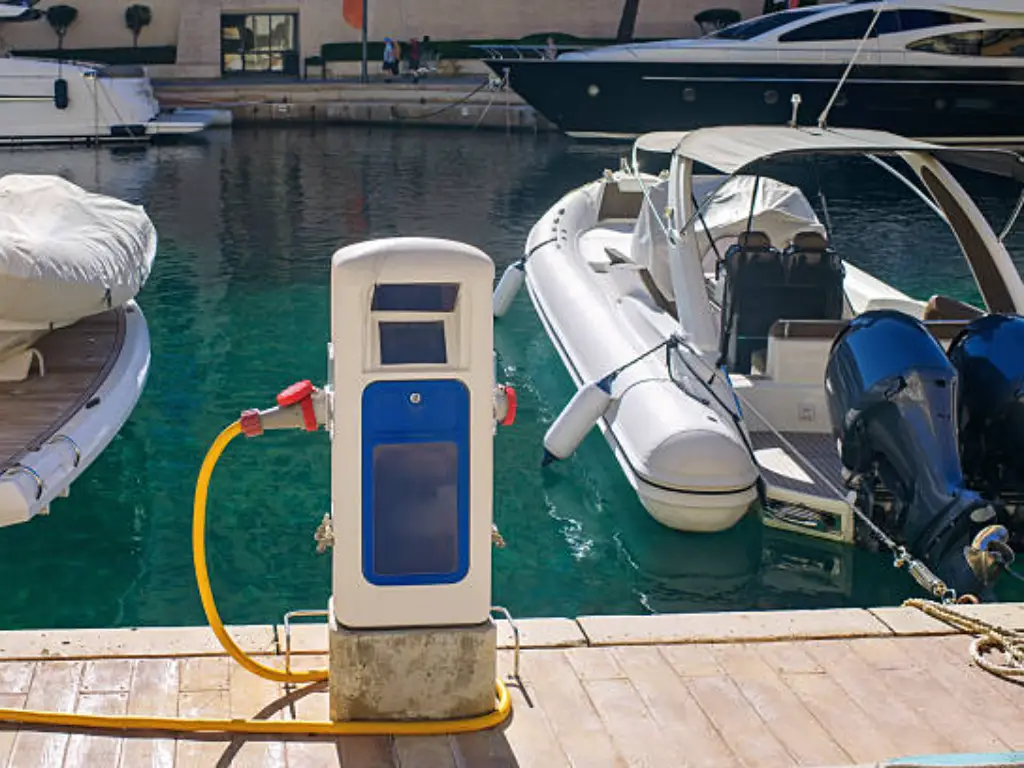
DIY vs. Professional Cost Analysis Floating Dock Repair
A floating dock needs to be maintained with a balance between short-term repair expenses and structural safety in the long term. Small surface problems can be handled by the owners easily, but major damages such as the foundation of the dock or power systems require professional skills.
Comparative Overview
| Repair Type | Estimated Total Cost | Best For… | Typical Scenarios |
| DIY (Manual) | $50 – $900 | Surface-level fixes and part swaps. | Pinhole leaks, rusted cleats, and single float replacement. |
| Professional | $1,000 – $15,000+ | Structural safety and specialized engineering. | Submerged anchoring, buckled frames, and electrical failure. |
DIY Maintenance that is Cost-effective
In cases where the damage is localized and non-structural, the most effective method of maintaining your maintenance budget to less than 900 is to do the repair yourself. The majority of the common jobs are to seal small cracks or pinholes with HDPE patch kits or marine sealants, ranging in price between $50 and 150. In the case of owners of modular docks, it is sometimes as easy as buying a replacement float (costing between 150 and 400 dollars) and replacing it by hand when a large puncture occurs. You save on high labor premiums and mobilization fees by doing your own hardware upgrades, like changing worn decking or rusted hinge pins. Despite the fact that the specialized equipment such as a thermal welder is occasionally rented, DIY is still the best option when it comes to regular maintenance.
Professional Intervention of High-Risk Repairs
Any work that requires underwater mechanics, structural realignment, or electrical systems, requires professional services, and the cost usually begins at $1,000 and may go up to $15,000 in case of major restorations. The majority of contractors will charge a mobilization fee of $200 to 500 to get to your location and then charge labor at a rate of 75 to 150 per hour. These increased expenses are to be anticipated on complicated engineering such as repositioning heavy anchor blocks, which involves commercial divers, or repairing bent frames following a storm. Also, professional quotes include the so-called hidden logistics like towing the dock off-site and paying environmental hazardous waste to dispose of old materials, which gives a certain degree of safety and certified guarantee that cannot be achieved by self-repair.
Repair or Replace: When to Invest and When to Walk Away?
It is important to find out whether the core materials of your dock are still in good structural condition before making a big repair. Even the most costly professional repair will only provide a short-term solution in case the basis of the system has come to its natural end-of-life.
Material Fatigue: The Point of No Return
You need to know whether your dock is structurally salvageable before you can calculate the costs. When the core material has attained its fatigue limit, it is a waste of capital to repair it.
- Wood and Metal Docks: The majority of structures have a life span of 10-15 years. When you are constantly changing the surface boards and the joists underneath are soft or sagging, you have internal rot. Repairs at this point are just band-aids on a crumbling foundation that is no longer profitable to invest in.
- HDPE Modular Systems: HDPE is durable but ultimately becomes brittle due to UV radiation. Systemic failure is indicated by a chalky surface texture or cracks that develop in new locations as soon as a repair is done. The material in this state has lost its elasticity and the only safe and cost effective way is complete replacement.
The 50 Percent Rule: The Financial Threshold
After evaluating the material, use the 50% Rule: when a complete repair cost is more than 50 percent of the cost of a new system, replacement is the more economically reasonable decision. Maintaining an old asset can easily turn into a money pit as the total cost of the small repairs can easily exceed the cost of a new, low-maintenance installation.
TCO Analysis: The Real Cost of “Staying the Course”
A Total Cost of Ownership (TCO) analysis shows that the drip, drip, drip of repair costs is the most costly route to take. The following table is a comparison of the 5-year financial effect of continuing to use a failing system and investing in a new modular setup.
| Financial Factor | Maintaining an Aging System (Repair) | Investing in a New Modular System |
| Initial Project Cost | $4,000 – $6,000 (Major overhaul) | $9,000 – $13,000 (Full replacement) |
| Annual Maintenance | $1,000 – $1,500 (Labor & parts) | $50 – $150 (Basic inspection) |
| 5-Year Cumulative Total | $9,000 – $13,500 | $9,250 – $13,750 |
| Asset Value at Year 5 | Near Zero (High liability) | High (90% structural integrity) |
As the analysis indicates, it is costly to pay between 1,000 and 1,500 dollars a year to maintain a failing dock afloat only to pay the full replacement cost in the end. When you decide to upgrade a system that has reached its material lifespan, you not only save high-frequency labor costs but also get a new warranty, which offers much more protection to your waterfront investment and guarantees the safety of its users. Instead of investing in a failing system, an upgrade to a Hisea Dock system will be a more robust solution that will reduce future maintenance needs.
What Hisea Dock Systems Can do to Streamline Future Floating Dock Repair Needs?
Material fatigue and incompetent engineering are often manifested through frequent repairs. Hisea Dock has assisted the owners to break the costly repair cycle since 2006 by offering high-performance systems that are zero-maintenance.
Our docks are made of next-generation HDPE with advanced anti-UV properties, which means that they will last 20-30 years longer than the typical competitors, practically eliminating the brittle nature and cracking that causes leaks. Structurally, we deal with the most frequent points of failure: our modules have 19mm connection ears and a smooth design, which has been tested by diagonal tension tests to resist forces up to 14,389 N. Hisea Dock is tough whether it is high-impact waves or frozen winter ice, when our floats are designed to lift above the surface so they are not crushed.
This is not a replacement but a maintenance free upgrade. We offer 5-year warranty and 24/7 professional assistance supported by ISO, CE, and TUV certifications. Quit wasting your weekends on repairs and invest in a high-strength, anti-slip platform that will secure your waterfront asset over decades.
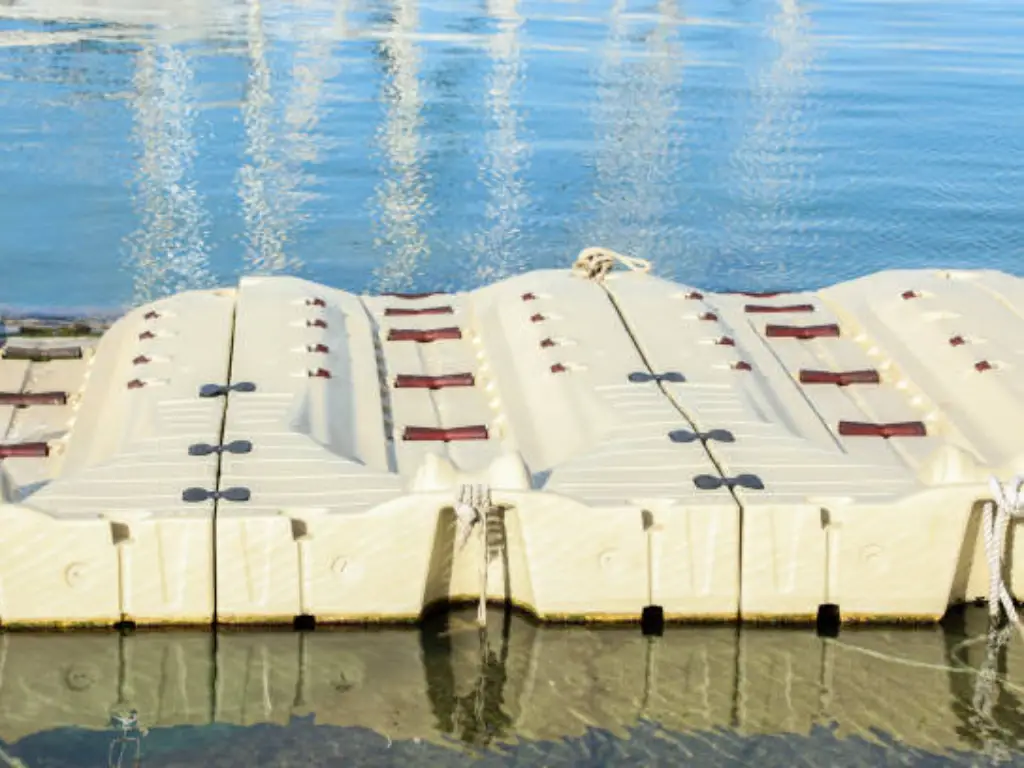
Environmental Responsibility and Legal Compliance
It is important to make sure that your dock repair is legal and environmentally friendly to prevent fines and safeguard aquatic life. Adhere to these simplified steps:
- Plan Permits: Small repairs, such as replacing single floats, do not usually need a permit. But when your repairs alter the footprint of the dock or when you are disturbing the seabed to install new anchors, you need to consult with agencies such as the USACE or DFO so that you do not violate local maritime regulations.
- Use Eco-Safe Materials: Standard chemicals may be poisonous to marine life. Always apply Low-VOC marine sealants and solvent-free epoxies that are specifically non-toxic. These materials are structural integrity and do not leech dangerous chemicals into the water column.
- Prevent Microplastic Pollution: In HDPE repairs, it is becoming a regulatory requirement to avoid the entry of debris into the water. When drilling or sanding, use containment kits or vacuum-capture systems to trap plastic shavings, and in this way, you are fulfilling your environmental responsibility and at the same time, you are not compromising the quality of water.
Preventive Maintenance
Good dock maintenance is in line with the seasons. Begin your Spring with a structural audit, tightening all fasteners and connection ears to the proper torque following winter dormancy. With the arrival of Summer peak heat, change your attention to bio-fouling control and UV tests; early removal of barnacles and algae will avoid surface etching and make the system lightweight. In freezing areas, Winter preparation is all a matter of movement management: just loosen your anchoring lines to permit the dock to rise and float on the ice, and avoid the crushing damage of ice expansion.
In the case of Bio-Cleaning, the objective is to preserve the material surface and eliminate growth. We suggest a hard plastic scraper or low-PSI pressure washer at an angle of 45 degrees to loosen marine life. Scratches on the HDPE surface should be avoided at all costs since microscopic grooves form which attract bio-attachment faster and may affect the anti-slip texture of the dock in the long run.
Conclusione
The process of repairing a floating dock is a complex task that requires a combination of mechanical engineering and knowledge of maritime dynamics. Although the sea is an unforgiving entity, the use of the right materials, including 316 stainless steel and HDPE thermal fusion, can greatly prolong the lifespan of your waterfront property.
Nevertheless, the ghost in the machine of old dock systems is structural failure. Once the number of repairs starts to grow, it is a definite indication that it is time to shift towards modern, modular solutions. With proactive maintenance and high-quality engineering by manufacturers such as Hisea Dock, you will be able to be sure that your bridge to the water will be safe, stable, and resilient decades to come.
FAQS
Q: How long will a floating dock last?
A: The material used will determine the life expectancy; HDPE (High-Density Polyethylene) docks have a life span of 20 to 30 years, and professional-grade aluminum or treated wood docks have a life span of 15 to 25 years when maintained.
Q: How to fix a broken float?
A: To repair a broken float, drain all the internal water, clean the surface, and then weld with HDPE plastic using a heat gun or apply marine-grade epoxy to seal small punctures and cracks.
Q: What is the cost of replacing a float valve?
A: The cost of replacing a standard industrial float valve is usually between 20 and 150 dollars depending on the size and material, and the replacement of a complete dock float unit is usually between 50 and 250 dollars plus labor.
Q: Can you repair dock floats?
A: Yes, dock floats can be repaired with thermal welding or special marine sealants in case of minor leaks, but full replacement is advisable in case of major structural deformation or serious UV-induced brittle nature of the unit.

 English
  Thai
Thai  Spanish
  French
  German
  Dutch
Dutch  Italian