
Una guida completa per i revisori dei conti per capire i veri costi di proprietà, evitare le trappole di plastica a basso costo e massimizzare l'investimento sul lungomare.
Sia che siate proprietari di un'abitazione sul lungomare o sviluppatori di un porto commerciale, vi trovate di fronte a una scelta cruda: accontentarvi di una struttura tradizionale in legno, che notoriamente ha una durata di vita breve e richiede molta manutenzione, oppure sfidare le acque torbide del prezzi dei pontili galleggianti modulari. Il mercato dei sistemi modulari è invaso da offerte confuse che vanno da un prezzo sospetto a un prezzo esorbitante.
Questa guida evita le vendite a tappeto. Analizzeremo i costi reali, smaschereremo le spese nascoste per l'ancoraggio e il trasporto e vi mostreremo esattamente cosa cercare per assicurarvi un ritorno decennale dell'investimento. Se vi state chiedendo quanto costa un pontile galleggiante in totale, siete nel posto giusto.
Il costo medio reale dei pontili galleggianti modulari
Per un preventivo accurato di un progetto di lungomare, è necessario guardare oltre il prezzo base di un singolo cubo di plastica. Una struttura funzionale e di livello commerciale sistema modulare di pontili galleggianti è un ecosistema completo di moduli di galleggiamento, connettori e hardware di ancoraggio.
Metodo di stima 1: la linea di base del piede quadrato
Per i sistemi in HDPE (polietilene ad alta densità) di alta qualità e ad alto peso molecolare, i prezzi realistici vanno da $25 a $80 per piede quadrato. Questa variazione dipende in larga misura dalla capacità di carico, dalla resistenza ambientale e dalla forma specifica della piattaforma.
Attenzione ai preventivi che scendono sotto la soglia di $20/piedi quadrati: si tratta della classica trappola della "plastica economica". Spesso questi numeri bassissimi si riferiscono a moduli nudi senza i necessari perni di collegamento, accessori per i bordi o capacità di carico sicuro. Ad esempio, durante la ricerca di un prezzo del bacino galleggiante candock o altri marchi di qualità superiore, noterete che i loro prezzi riflettono un "prezzo di sistema". Un cubo indipendente può sembrare economico, ma un dock privo di hardware di collegamento strutturale è solo una zattera pronta a rompersi durante la prossima tempesta.
Metodo di stima 2: Configurazioni di sistema preconfezionate
Poiché il calcolo dell'esatta metratura può essere complesso con le diverse dimensioni dei moduli, l'acquisto di layout standard via kit di pontili galleggianti modulari spesso fornisce un quadro finanziario più chiaro.
| Tipo di layout | Il migliore per | Dimensione media Dimensione (piedi quadrati) | Stima del costo totale (sistema) |
|---|---|---|---|
| Forma a I (dritta) | Litorali stretti, lancio dei kayak | 100 – 150 | $2.500 – $6.500 |
| Forma a T | Nautica da diporto standard, nuoto | 200 – 250 | $5.000 – $11.000 |
| Forma a U (doppio scivolamento) | Porti per PWC carrabili, doppia moto d'acqua | 250 – 300 | $7.000 – $14.000 |
| Forma a L | Ormeggi d'angolo, piattaforme di pesca | 150 – 200 | $4.000 – $8.500 |
Processi produttivi: Perché lo stampaggio a soffiaggio offre il miglior ROI
Non tutte le materie plastiche sono uguali. Il metodo di produzione determina direttamente l'integrità strutturale e il prezzo finale di un pontile modulare galleggiante.
Soffiaggio e rotostampaggio: Bilanciare costi e prestazioni
Lo stampaggio rotazionale (rotomolding) crea pareti spesse e prive di tensioni, ma comporta costi di produzione significativamente più elevati e tempi di produzione più lenti. Il soffiaggio avanzato, tuttavia, si è evoluto per offrire un'eccezionale efficienza economica senza sacrificare la resistenza.
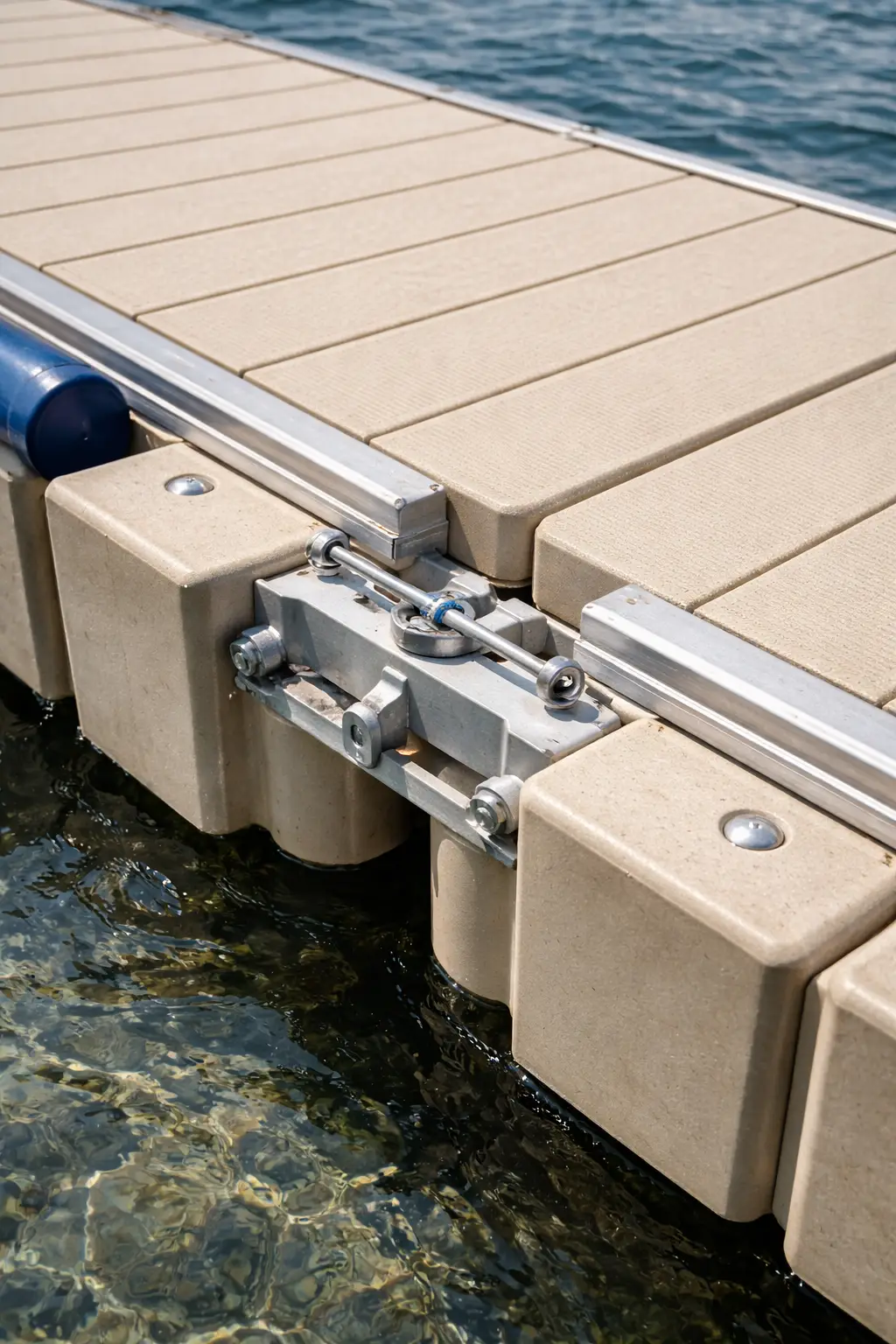
I produttori di alto livello utilizzano macchine di soffiaggio su larga scala per creare moduli cavi, leggeri ma incredibilmente robusti. Ad esempio, per combattere la debolezza comune delle plastiche soffiate (punti di connessione fragili), i leader del settore come Hiseadock hanno progettato le orecchie di connessione con uno spessore di 19 mm-40% più spesso della media del settore. Questa precisa progettazione garantisce che i punti di stress più vulnerabili possano resistere alle massicce forze di trazione delle maree, offrendo agli acquirenti una durata di livello commerciale a un prezzo altamente competitivo.
Grado del materiale: perché l'HDPE ad alto peso molecolare non è negoziabile
Un sistema affidabile deve essere realizzato in HDPE ad alto peso molecolare. Questo materiale specifico garantisce che il bacino rimanga stabile ai raggi UV e resistente alle crepe a temperature estreme, da -60℃ a 80℃. (Nota ingegneristica: tuttavia, nelle aree soggette a "ondeggiamento dinamico del ghiaccio", in cui le lastre di ghiaccio che si spostano e si espandono creano forze orizzontali di schiacciamento, consigliamo vivamente di rimuovere i moduli di banchina prima dell'inverno profondo o di installare un sistema rompighiaccio per proteggere l'investimento). Garantisce una capacità di carico fino a 350 kg/mq, assicurando la massima sicurezza sia che si tratti di ospitare un raduno in riva al lago, sia che si tratti di ormeggiare imbarcazioni medio-leggere e moto d'acqua.
I costi nascosti che i concorrenti non vi dicono
Quando si stila il budget per un progetto, la superficie plastica è solo una parte dell'equazione. La mancata considerazione della sottostruttura e della logistica è il motivo più comune per cui i progetti di waterfront sforano il budget.
Hardware e pin di connessione (la tassa "Lego")
Ogni blocco flottante richiede robusti perni di collegamento, rondelle e dadi di bloccaggio. Un sistema correttamente ingegnerizzato funziona con un rapporto esatto di 1:1 tra perno e galleggiante, oltre alla ferramenta perimetrale per la stabilità strutturale. Questa necessaria ingegnerizzazione può aggiungere da 15% a 20% al costo totale dei galleggianti grezzi. I sistemi di alta qualità utilizzano perni in HDPE o bulloni in acciaio inox 316 per evitare il taglio durante l'azione delle onde.
Sistemi di ancoraggio per diverse condizioni d'acqua
Il budget per l'ancoraggio dipende dall'acqua sotto il bacino. In laghi calmi e statici, semplici pesi morti e catene possono costare da $500 a $800 in più. Tuttavia, nelle zone di marea o con forti correnti, sono necessari pali zincati per impieghi gravosi e guide per pali scorrevoli. Queste soluzioni di ancoraggio in acque profonde possono facilmente superare $3.000, spostando drasticamente il preventivo totale.
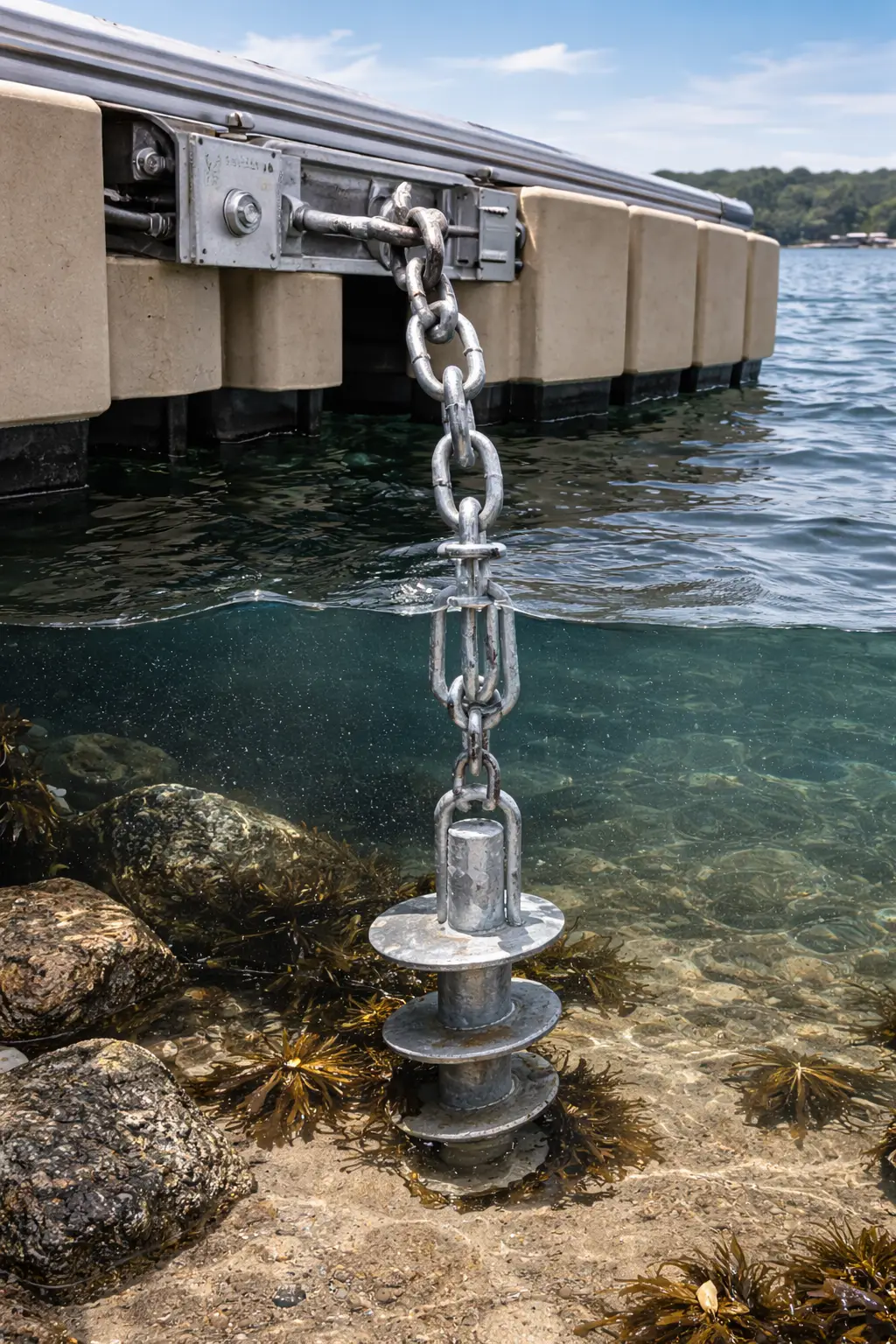
Ottimizzazione del trasporto, dell'imballaggio e della logistica globale
Poiché i galleggianti sono leggeri ma molto voluminosi, i vettori di trasporto si basano sul "peso dimensionale" (trasporto LTL). Potreste trovare un incredibile prezzo di fabbrica, ma i costi di spedizione potrebbero cancellare completamente il vostro risparmio.
Per combattere questo problema, i produttori d'élite progettano i loro prodotti tenendo conto della logistica. Utilizzando un metodo di imballaggio ottimizzato a blocchi quadrati di 4 pezzi, lo spreco di spazio viene ridotto al minimo nei container di spedizione. Questa precisa strategia di imballaggio può ridurre i costi di trasporto globali fino a 20%, assicurando che i risparmi ottenuti in fabbrica raggiungano effettivamente il sito del progetto.
Una ripartizione della fattura nel mondo reale: Prezzi di una banchina di 10×20 piedi
Per darvi una base finanziaria reale, ecco una distribuzione realistica dei costi assoluti per una piattaforma ricreativa standard di 200 piedi quadrati (10×20 piedi). La presentiamo come una semplice valutazione della fattura, in modo che possiate sapere esattamente dove va a finire il vostro budget.
Stima del progetto: Piattaforma ricreativa 10×20 piedi
Applicazione: Lago calmo / Acqua statica
- Moduli soffiati in HDPE (con orecchie da 19 mm) $2,750
- Hardware di collegamento e accessori per bordi $750
- Ancoraggio statico in acqua (catene e pesi) $600
- Trasporto LTL ottimizzato $900
- Manodopera per l'installazione* $0 (Weekend fai da te)
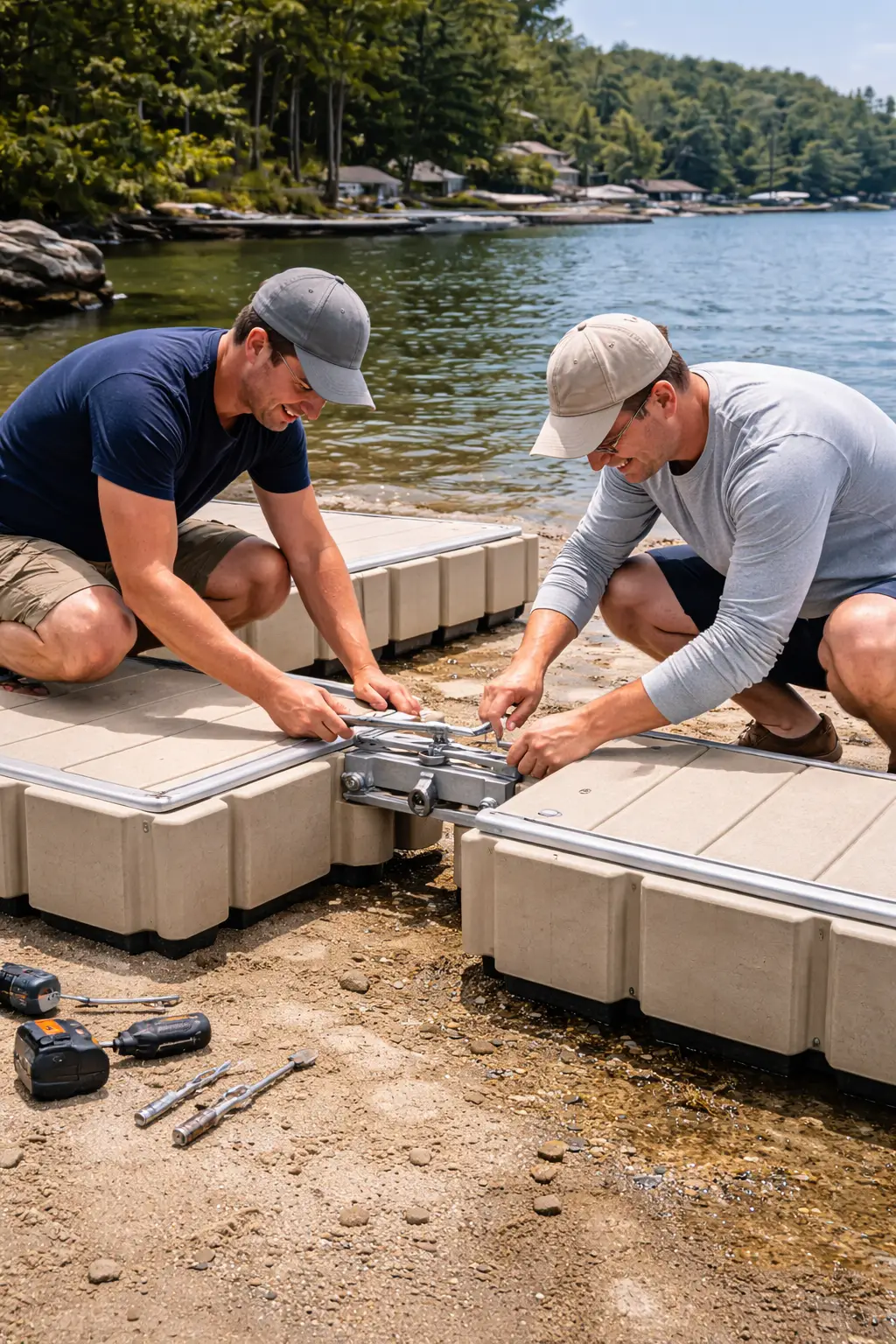
*Per quanto riguarda la manodopera: L'assunzione di un imprenditore marittimo per la costruzione di banchine in legno tradizionali costa tra $50 e $100 all'ora, aggiungendo facilmente $2.000 al vostro budget. I sistemi modulari evitano questo problema. Armati di una chiave dinamometrica specializzata, due adulti possono facilmente assemblare una piattaforma da diporto standard in un solo fine settimana.
*Disclaimer: L'installazione fai-da-te del 100% è consigliata solo per applicazioni in acque statiche o poco profonde con pesi morti. Se la vostra località è soggetta a forti sbalzi di marea, correnti estreme o richiede l'infissione di pali in acque profonde, è necessario rivolgersi a un'impresa navale locale certificata per garantire la sicurezza strutturale.
Costi di manutenzione e TCO: il valore finanziario a 20 anni
I moderni investimenti commerciali richiedono una lungimiranza finanziaria a lungo termine. I pontili tradizionali in legno trattato richiedono ogni 2 o 3 anni interventi di restauro, levigatura e sostituzione della ferramenta arrugginita. Nell'arco di due decenni, queste spese di manutenzione e di manodopera possono facilmente far lievitare i costi da $3.000 a $5.000. Al contrario, l'HDPE premium è 100% ecologico e completamente riciclabile. Con una durata di vita senza manutenzione di 15-20 anni, elimina queste spese finanziarie ricorrenti, riducendo il costo totale di proprietà (TCO) a quasi zero dopo l'installazione iniziale.
Due diligence del fornitore: Cosa cercare in un produttore
Nella scelta di un fornitore, la capacità produttiva è la vostra polizza assicurativa definitiva contro i ritardi del progetto e i difetti di qualità. Non comprate solo plastica, ma uno standard di produzione comprovato. Il fornitore scelto deve rispecchiare i parametri di riferimento stabiliti da leader del settore come Hiseadock: operare con oltre 16 anni di profonda esperienza ingegneristica (dal 2008), utilizzare linee di soffiaggio avanzate su larga scala in grado di produrre 1.120 pezzi al giorno e possedere rigorose certificazioni ISO-9001, CE, SGS e TUV. Esigete una logistica snella in cui l'inventario standard viene spedito in 3-10 giorni e la modellazione CAD 3D personalizzata fino alla produzione finale richiede non più di 10-15 giorni, il tutto supportato da una garanzia di 5 anni.
Siete pronti a ricevere un preventivo preciso e trasparente per il vostro specifico waterfront?
Preventivo TCO reale + CAD 3D gratuito

 English
  Thai
Thai  Spanish
  French
  German
  Dutch
Dutch  Italian
  Arabic
  Indonesian
  Portuguese
  Turkish