
Construção de marinas: custos, licenças e a decisão sobre o cais flutuante
Marina construction begins with the site and operating plan, not a catalog of dock modules. A marina must provide safe boat access, suitable berth depth, shore connections, utilities, and a maintenance route. Its layout also has to work within local permits, shoreline conditions, and the expected water-level and wave range. This guide follows a practical sequence: define the fleet and services, survey the site, plan approvals, choose berth structures, then specify and buy the system.
A marina is more than its floating docks. It may include fixed piers, floating fingers, gangways, shore buildings, utilities, fuel facilities, and areas for boats to maneuver. Each component needs an owner, a design basis, and an inspection plan.
A marina build breaks into four workstreams, and every dollar and every month lands in one of them:
- Berth structures: the fixed piers or floating docks that boats tie up against
- Foundations and anchoring: piles, anchors, guides, and anything that fights waves
- Utilities: power, water, lighting, and fuel where applicable
- Permits and compliance: federal, state, and local approvals
Fixed and floating berths are two common structural families. A hybrid combines them. The site survey should guide that decision, while the budget must also cover dredging where needed, utilities, access, environmental controls, and ongoing maintenance. A dock quote by itself cannot describe the total cost of a marina.
Owners can use the first sections to frame scope and approvals; designers and procurement teams can use the later specification checklist. In both cases, the same measured site conditions and vessel mix should appear in every request for proposal.
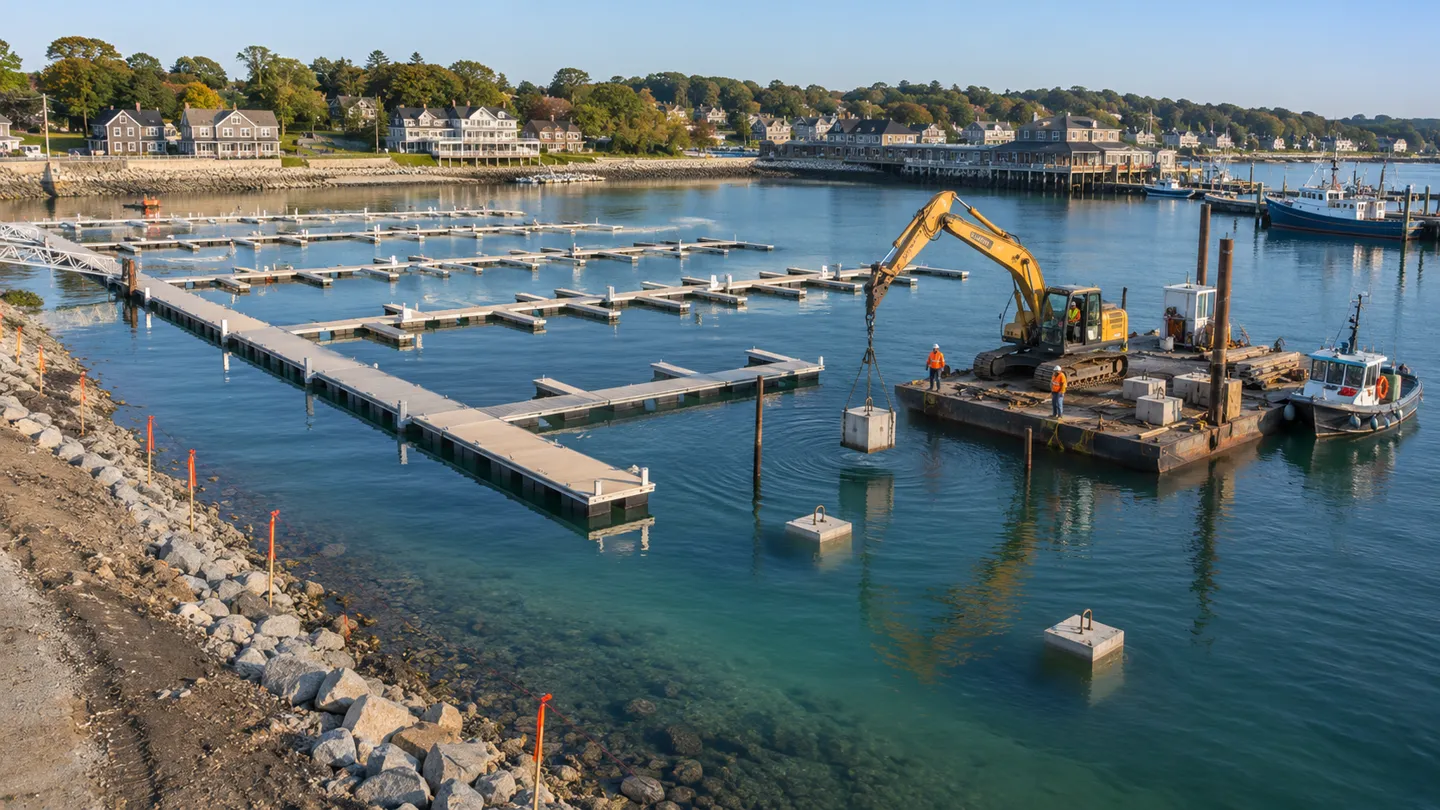
Berth Structures and Materials: The Forms a Marina Takes
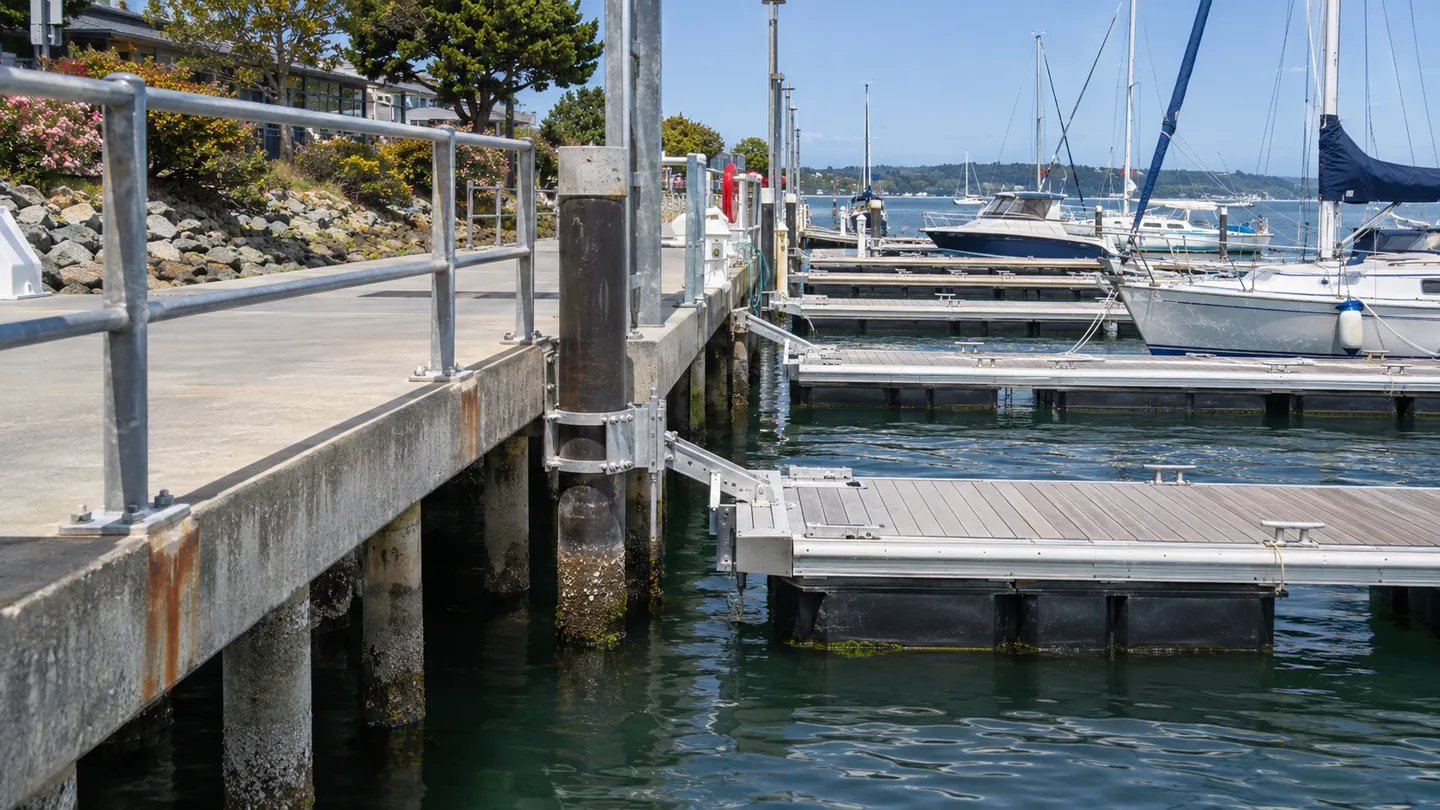
Three forms are common. Fixed piers use piles or other engineered foundations and hold the deck at a set elevation. Floating docks rise and fall with water and use anchors, moorings, or pile guides to control movement. Hybrid layouts join fixed shore access to floating berths with gangways. The appropriate arrangement depends on depth, bottom material, water-level range, vessel size, waves, and accessibility requirements. The U.S. Access Board gives specific guidance for accessible routes and gangways at recreational boating facilities ( Conselho de Acessibilidade dos EUA ).
Berth forms at a glance
| Form | Como é | Fits best | Watch out |
|---|---|---|---|
| Fixed pier | piles plus rigid deck at fixed height | Suitable bottom and manageable level range | Check foundations, ice, and boarding height |
| Doca flutuante | buoyant modular units on anchors or pile guides | Changing water levels with engineered mooring | Check freeboard, motion, and anchors |
| Híbrido | fixed spine with floating fingers | marinas that want stable main access and flexible slips | two systems to maintain, interface hardware needs inspection |
Material selection comes after the structure and exposure are defined. Wood, aluminum, concrete, steel, and molded HDPE have different connection details and maintenance needs. Review corrosion protection in salt water, surface grip, replacement access, and the manufacturer’s documented conditions. No material is maintenance-free; joints, anchors, utilities, and walking surfaces still require inspection.
Request pricing against one site plan and one written scope. Separate surveys, engineering, permits, environmental work, dredging, foundations or anchors, dock modules, utilities, installation, contingency, and commissioning. A generic per-foot price cannot account for slip count, berth dimensions, bottom conditions, wave exposure, or fuel infrastructure.
Boundary check
Put your annual water-level swing on paper before you choose a berth form. Big swings push you toward floating; calm, deep, load-hungry sites argue for fixed.
A site that drops three feet between spring and fall will fight a fixed deck every season, and no amount of upfront savings fixes that.
From Site Survey to Commissioning
Begin with a vessel schedule: how many slips, what boat lengths and drafts, which berths need shore power or water, and where visitors and service crews will move. Pair it with a bathymetric survey, shoreline topography, bottom investigation, water-level records, and a wave and wind brief. Check vessel turning space and the route for emergency access. A concept layout based only on the maximum number of slips can overlook the operating space needed between them.
Next, place utilities and environmental controls on the same plan as the berths. Electrical distribution needs an appropriate marine design and a maintenance route. Water connections, wastewater collection, lighting, fire protection, and fuel handling may require separate approvals and specialist contractors. If fuel service is planned, include spill prevention and response in the operating concept from the beginning; the U.S. Environmental Protection Agency provides marina-specific spill prevention guidance ( EPA marina guide ).
Only after the concept and approval path are established should procurement lock the berth modules, gangways, guides, and anchors. Confirm what the contractor will build off-site, what will be assembled on the water, and how equipment will reach the shore. Sequence installation around permitted work windows and any dredging or seabed preparation. Keep as-built drawings, product data, inspection points, and commissioning results in one handover package.
Commissioning checks the actual marina against the design: berth widths and depths, gangway movement at expected water levels, anchor positions, float freeboard, utility operation, and clear emergency routes. Record defects and resolve them before opening slips to customers. The operator then needs an inspection schedule, weather response plan, and spare-parts list. These documents turn a construction project into a facility that can be maintained and expanded without guessing how it was built.
Budget and Permits: The First Real Fork in Marina Construction
Build the budget around complete work packages: site investigation and design; permits and environmental measures; shoreline and seabed work; berth structures and anchoring; utilities and access; installation and commissioning; and a contingency for conditions confirmed during construction. Keep recurring inspection and replacement costs in the business plan.
Compare like with like. One supplier may quote only floating modules, while another includes gangways, piles, installation, and freight. Require every bid to state its scope, exclusions, quantities, design loads, and assumptions. Then compare the installed system cost and long-term maintenance plan, not a single linear-foot figure.
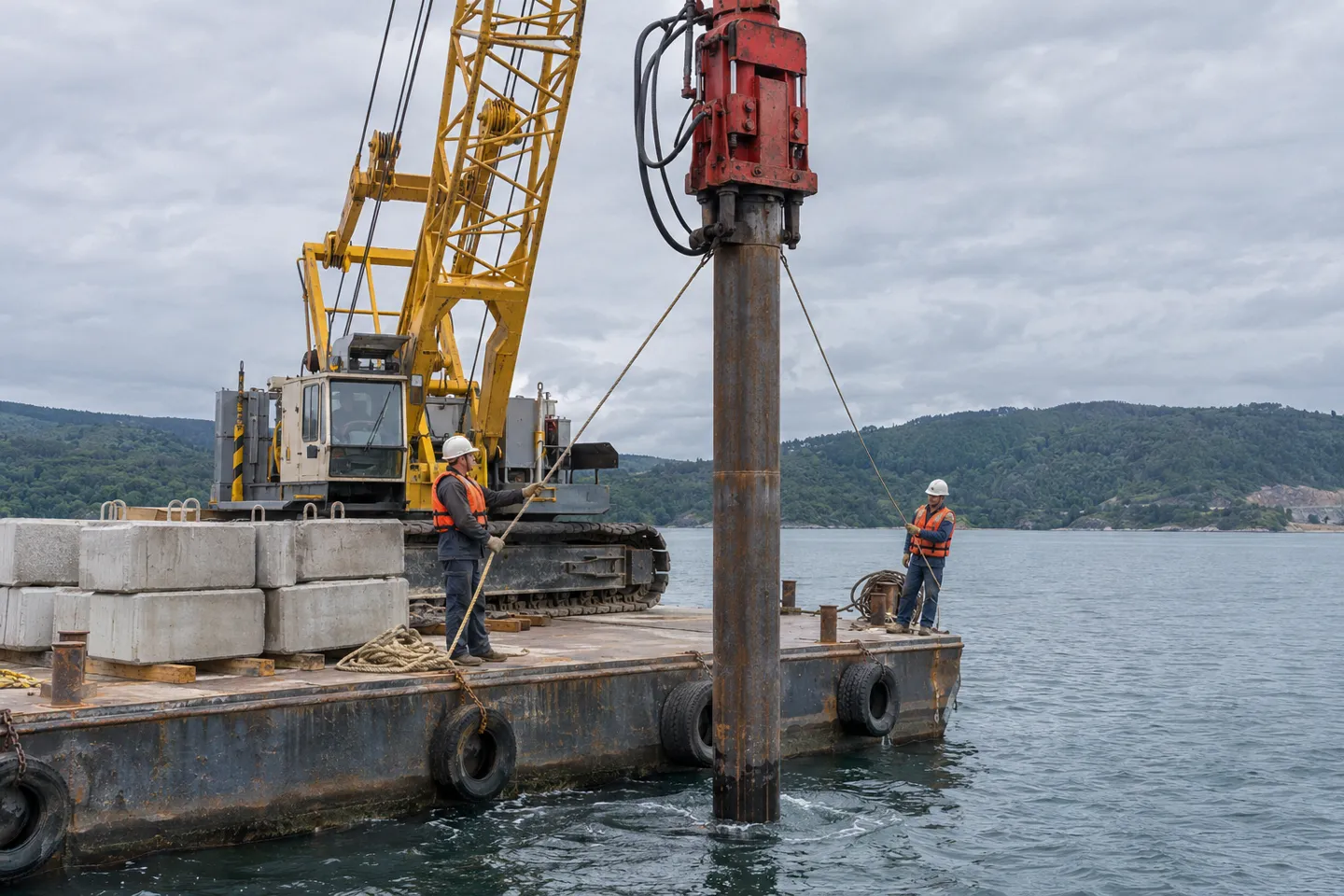
Permits depend on the location and work. In U.S. navigable waters, structures may require review under Section 10 of the Rivers and Harbors Act. Discharge of dredged or fill material may trigger Clean Water Act Section 404 review. State, local, port, and waterbody-manager approvals may also apply. The Corps notes that a regional general permit for smaller docks does not necessarily authorize a public marina ( USACE permit notice ). Ask the responsible offices for a project-specific permit path before fixing the construction schedule.
Approval time varies with the site, dredging, habitat, public review, and the completeness of submitted drawings. Do not use another state’s timeline as a project commitment. Put survey, concept design, agency consultation, application preparation, review, and possible revisions on the schedule before ordering long-lead dock components.
Lifespan, Waves, and What Fails First
Cost tells you what a marina takes. Lifespan tells you what it costs to own, and that is where projects quietly win or lose.
The Real Denominator Is Wave Climate
Service life depends on material, exposure, installation, loading, and maintenance. Compare systems using a documented design life and an inspection schedule rather than a generic promise of 25, 30, or 40 years. Wave climate and storm water levels affect both fixed and floating structures; an exposed marina may need an engineered breakwater or other protection before berth hardware is specified.
Maintenance Is a Budget Line, Not a Surprise
Maintenance is a recurring operating cost. Plan inspections of deck surfaces, cleats, fenders, piles or guides, anchors, gangways, electrical and water services, and any fuel equipment. Record observed movement and damage after storms. Budget planned replacement of wear parts so a small connection problem does not become a closure or a safety issue.
What Actually Fails First
Connections and anchors are important inspection points, but failure can also begin at a pile, shore transition, utility, or damaged float. Assess the whole load path and the site conditions. Ask the engineer to identify critical components, inspection access, and the conditions that require taking a berth out of service.
Neither fixed nor floating construction is automatically suitable for an exposed location. The wave study, storm levels, berth geometry, vessel loads, and protection works should guide the design. A floating dock’s ability to rise with water does not replace an engineered mooring and connection system.
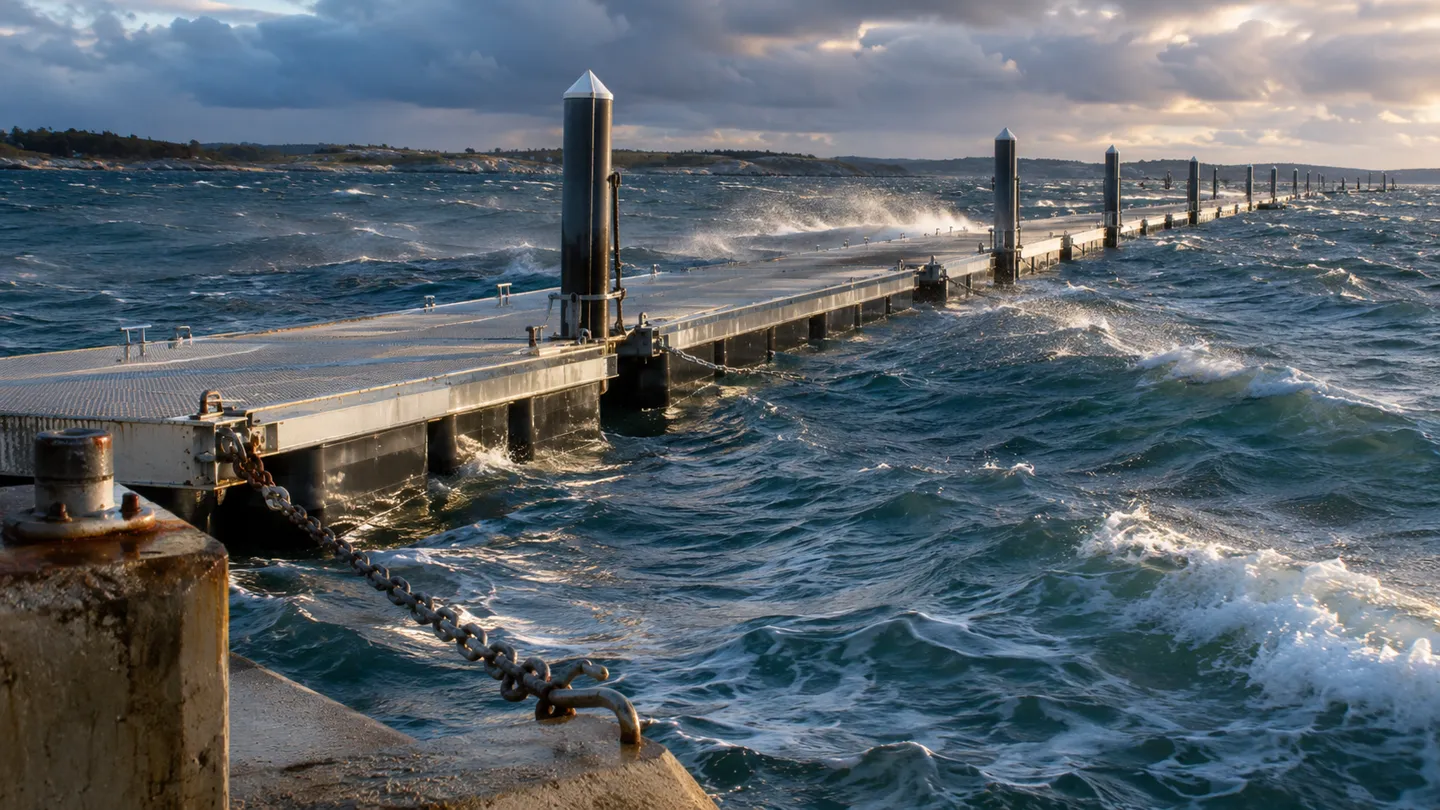
The matrix below condenses the failure logic into a form you can hold against your own site:
Water environment by system fit and failure boundary
| Ambiente aquático | Best-fit system | Onde falha | Confirm before you build |
|---|---|---|---|
| Calm inland water | standard floating modular cubes | UV aging, minor impact damage | buoyancy rating per square metre and mooring layout |
| Large tidal or seasonal swing | floating with pile guides or sliding anchors | connection binding at range ends | vertical travel distance and guide fit against pile diameter |
| Coastal exposure | Site-engineered berth and protection | Waves and storm loads exceed design | Wave study and engineer review |
| Ice-prone water | Site-specific winter plan | Ice heave or movement damages components | Removal or approved leave-in design |
Specifying and Buying the Floating Dock System
Once the decision lands on floating, the dock system stops being a line item in someone else’s quote and becomes a procurement project with its own language. This section is that language.
The Spec Sheet That Actually Matters
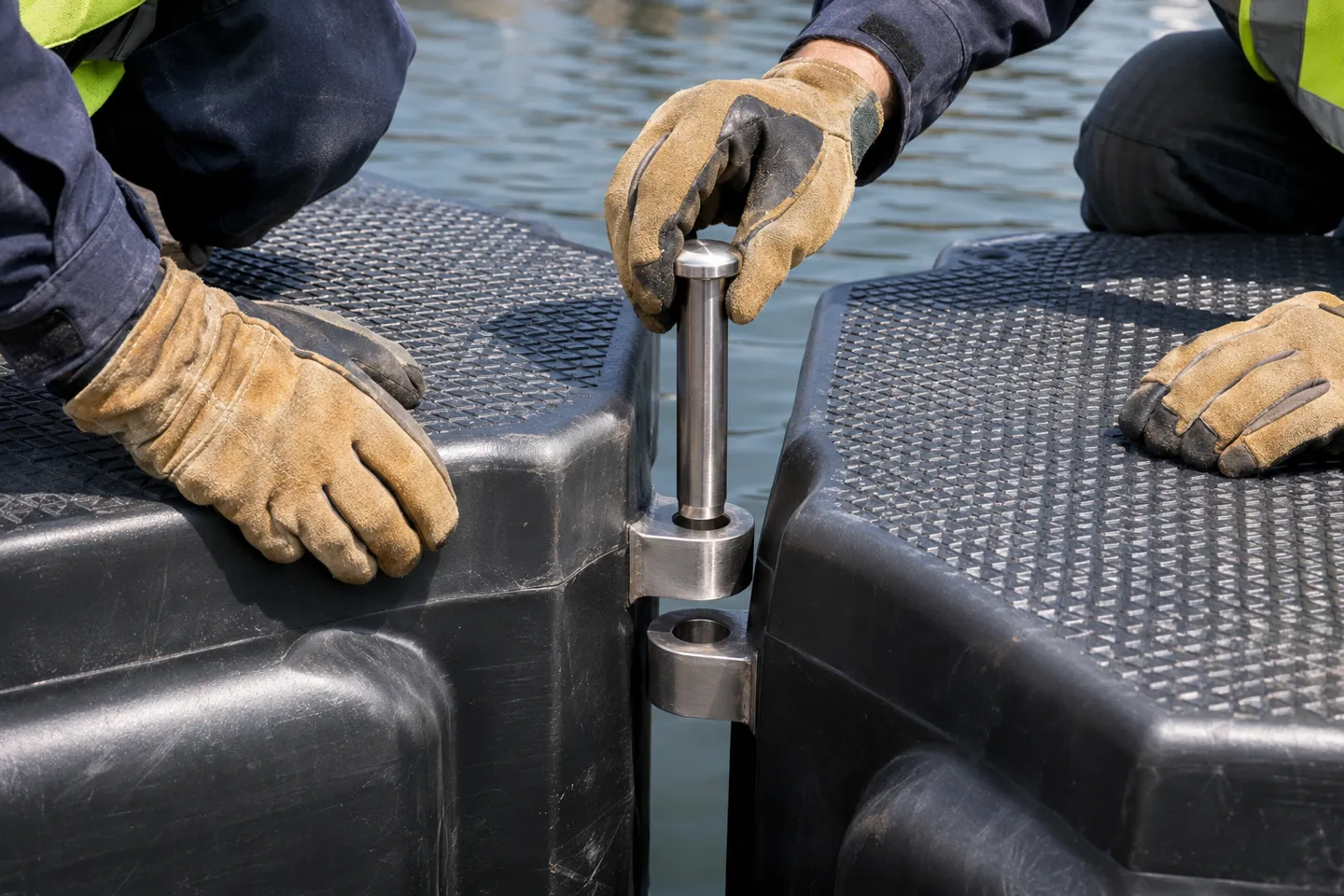
Specify each float by model, dimensions, material, and published buoyancy method. Then specify the finished dock’s allowable loads, freeboard, connector design, anchoring, and expected movement. A float’s buoyancy per square metre is not the safe live load of the complete berth. HiSeaDock publishes model-specific specifications, including a square HDPE float rated at 200 kg/m² ( Especificações do produto HiSeaDock ). Verify the quoted model rather than applying one rating to every cube.
The Commercial Terms Behind the Numbers
The datasheet also needs commercial terms: current availability, approved colors and configurations, production and freight scope, spare parts, warranty coverage, exclusions, and the process for a damaged component. State whether the supplier provides installation drawings or only product information. The engineer of record should approve the final layout for the site.
Comparing Quotes Without Getting Burned
Compare quotes only after every supplier answers the same questions. Use one vessel schedule, one water-level and wave brief, and the same drawings. Request a line-item proposal showing floats, connectors, gangways, guides or anchors, accessories, freight, installation, and documentation.
Floating system quote checklist
- Buoyancy rating per square metre, matched to your use case
- Wall thickness and material grade in writing
- Connection test data, with the test method named
- Warranty length, trigger condition, and replacement terms
- Production lead time and container shipping terms to your nearest terminal
Missing documents are a reason to ask for clarification before purchase. Request the actual float model and buoyancy data, connection instructions, material information, warranty terms, and realistic delivery dates. Ask separately for the completed system’s load and anchoring assessment. HiSeaDock’s public product pages can support a model comparison, but the site-specific configuration still needs review ( especificações do produto ).
The Business Math Behind a Marina Build
A marina business case should model occupancy, berth mix, seasonal demand, services, operating costs, capital repairs, and financing. Compare scenarios with the same time horizon and discount assumptions. A residential slip lease is not a reliable proxy for the cost or revenue of a commercial marina, and a made-up break-even year can mislead investors.
Separate initial construction from operating and renewal costs. Foundations, utilities, fuel systems, and shore access may dominate the budget even when the floating modules are competitively priced. Model the effects of storm repairs, periodic anchor work, deck replacement, and insurance using quotes and local records rather than fixed industry-wide price trends.
Dealers and marine contractors should quote by site conditions and vessel use. A sheltered freshwater marina and an exposed coastal site may need different float models, connections, anchoring, and winter plans. Keep commonly used components in stock where demand supports them; order unusual layouts against approved drawings.
Solicite ao fornecedor as especificações do produto e os termos da garantia por escrito, e peça ao projetista que confirme como os componentes selecionados se encaixam no sistema completo da marina. Os requisitos específicos do local relativos a ondas, carga e ancoragem devem constar no briefing do projeto. Relatos de clientes não estabelecem uma vida útil geral nem uma classificação de resistência a tempestades.
Obtenha uma cotação de doca flutuante baseada em cálculos de ciclo de vida
Graus de flutuabilidade, espessura das paredes, dados de testes de conexão e termos de garantia, preenchidos por cubo antes de comparar preços.
Solicite uma cotação de doca flutuanteReferências
- Corpo de Engenheiros do Exército dos EUA. Seção 10 da Lei dos Rios e Portos .
- Corpo de Engenheiros do Exército dos EUA. Aviso sobre a Licença Geral Regional para Píeres e Docas .
- Conselho de Acessibilidade dos EUA. Instalações para navegação de lazer .
- Agência de Proteção Ambiental dos EUA. Guia SPCC para marinas e proprietários de embarcações .


 English
 Thai
 Spanish
 French
 German
 Dutch
 Italian
 Arabic
 Indonesian
 Portuguese
 Turkish