
การเลือกทุ่นลอยที่เหมาะสมจะเป็นปัจจัยกำหนดว่าท่าเรือลอยของคุณจะใช้งานได้ 5 ปี หรือ 15 ปี เนื่องจากผู้ผลิตทุกรายต่างอ้างว่าผลิตภัณฑ์ของตนเป็นที่ดีที่สุด ทำให้การแยกแยะทุ่นลอยแบบใช้แล้วทิ้งกับทุ่นลอยคุณภาพสูงเป็นเรื่องที่ยากลำบาก คู่มือนี้จะวิเคราะห์วัสดุ ความลอยตัว และแบรนด์ชั้นนำ เพื่อช่วยคุณตัดสินใจลงทุนอย่างถูกต้อง.
ประเภทของทุ่นลอยสำหรับท่าเรือ: รู้ให้แน่ชัดว่าคุณกำลังซื้ออะไรก่อนที่จะเปรียบเทียบ
ก่อนที่คุณจะเปรียบเทียบแบรนด์หรือ คำนวณแรงลอยตัว, คุณต้องรู้ว่าตัวเองกำลังดูอะไรอยู่ก่อนเลย อุปกรณ์ลอยสำหรับท่าเรือมีอยู่สี่ประเภทหลัก และไม่สามารถใช้แทนกันได้.
| พิมพ์ | วิธีทำงาน | อายุการใช้งานโดยทั่วไป | เหมาะที่สุดสำหรับ | ระวัง |
|---|---|---|---|---|
| ทุ่นโฟมแบบหุ้ม | เปลือก HDPE ที่ผลิตด้วยวิธีการขึ้นรูปหมุน และบรรจุด้วยโฟม EPS แบบเซลล์ปิด | 10–20 ปี | ท่าเรือสำหรับที่อยู่อาศัยและเชิงพาณิชย์ ไม่ว่าอยู่ในสภาพใดก็ตาม | หนักกว่าผลิตภัณฑ์แบบกลวง; ค่าใช้จ่ายเริ่มต้นสูงกว่า |
| ทุ่น / ลูกบาศก์ HDPE แบบกลวง | ห้อง HDPE แบบกลวงที่ผลิตด้วยวิธีการเป่าขึ้นรูป; ความลอยตัวเกิดจากอากาศที่ถูกกักไว้ | 5–12 ปี (มีคุณสมบัติป้องกันรังสี UV) | ท่าเรือแบบโมดูลาร์, การสร้างด้วยตนเอง, น้ำตื้น | การเจาะเพียงครั้งเดียวก็อาจทำให้น้ำเข้าท่วมห้องได้; คุณภาพของรอยต่อมีความสำคัญอย่างยิ่ง |
| ถังยกที่เติมอากาศ | ถังที่ผลิตด้วยวิธีโรโตโมลด์ผนังหนา ซึ่งอาศัยแรงลอยตัวจากอากาศเป็นหลัก | 8–15 ปี (ระดับอุตสาหกรรม) | แพลตฟอร์มทำงาน, สะพาน, อุปกรณ์อุตสาหกรรมสำหรับรับน้ำหนักหนัก | การรั่วซึมอย่างช้าๆ ที่ตรวจไม่พบจนกระทั่งการสูญเสียแรงลอยตัวถึงระดับวิกฤต |
| Barrel / Improvised | ถังพลาสติกหรือโลหะที่นำมาใช้ใหม่ | 2–5 ปี | ระบบคอมพิวเตอร์แบบชั่วคราวหรือราคาถูกสุดๆ | ความเสียหายที่คาดการณ์ไม่ได้; ไม่มีรับประกัน; การกัดกร่อน (โลหะ) |
สำหรับท่าเรือที่คาดว่าจะใช้งานได้นานกว่าห้าปี สองประเภทแรกเป็นหัวข้อหลักในการพูดคุย โฟมลอยน้ำแบบหุ้มเป็นมาตรฐานอุตสาหกรรมสำหรับการติดตั้งแบบถาวร ส่วนโปนทูน HDPE แบบกลวงเป็นทางเลือกที่เบากว่าและสามารถจัดเรียงเป็นโมดูลได้ ซึ่งได้รับความนิยมเป็นพิเศษในการสร้างด้วยตนเอง (DIY) ที่การควบคุมน้ำหนักเป็นปัจจัยสำคัญ.
ถังมีราคาถูก และดูถูกด้วย สิ่งที่เริ่มต้นจากวิธีประหยัดเงิน มักจะกลายเป็นการซ่อมแซมที่มีค่าใช้จ่ายสูงขึ้นในอีกสองปีต่อมา.
เมื่อคุณสามารถแยกประเภทแต่ละประเภทได้แล้ว การเปรียบเทียบที่แท้จริงจึงเริ่มขึ้นที่ระดับวัสดุ.
วัสดุของทุ่นลอยท่าเรือ: HDPE, โฟม EPS และองค์ประกอบทางเคมีที่กำหนดอายุการใช้งาน
ความแตกต่างระหว่างโฟมแบบลอยตัวอายุการใช้งาน 5 ปี กับโฟมแบบลอยตัวอายุการใช้งาน 15 ปี ไม่ได้อยู่ที่ชื่อแบรนด์ที่พิมพ์อยู่ด้านข้าง แต่ขึ้นอยู่กับระดับคุณภาพของโพลิเมอร์ สูตรของโฟม และว่าผู้ผลิตได้ลงทุนในสารป้องกันรังสี UV เมื่อผสมวัตถุดิบหรือไม่ สามชั้นนี้คือปัจจัยที่กำหนดทุกสิ่ง.
ประเภทเปลือก HDPE: วัสดุใหม่เทียบกับวัสดุรีไซเคิล และเหตุผลที่ความหนาของผนังไม่ใช่ปัจจัยสำคัญเพียงอย่างเดียว
โพลีเอทิลีนความหนาแน่นสูง (HDPE) เป็นวัสดุหลักที่ใช้ทำตัวเรือลอยสำหรับท่าเรือ และมีเหตุผลที่ชัดเจน เพราะมันทนต่อแรงกระแทก ทนต่อน้ำทะเล และไม่เกิดการกัดกร่อน แต่ HDPE ไม่ได้มีคุณภาพเท่ากันทั้งหมด.
HDPE บริสุทธิ์ประกอบด้วยสายโพลิเมอร์ที่ยาวและสม่ำเสมอ ซึ่งผลิตขึ้นโดยตรงจากเอทิลีน สายโพลิเมอร์ที่ยาวเหล่านี้ทำให้วัสดุมีความแข็งแรงในการดึง ความทนทานต่อแรงกระแทก และความทนทานต่อรอยแตก ส่วน HDPE ที่ผ่านการรีไซเคิลหรือบดใหม่จะผ่านกระบวนการให้ความร้อนเพิ่มเติม ซึ่งทำให้สายโพลิเมอร์เหล่านั้นสั้นลง การหลอมละลายซ้ำแต่ละครั้งจะทำให้โครงสร้างโมเลกุลเสื่อมสภาพลงเล็กน้อย และวัสดุที่ได้จะมีความเปราะมากขึ้นอย่างเห็นได้ชัด.
ในความเป็นจริง: ตัวลอยที่ทำจาก HDPE บริสุทธิ์จะดูดซับแรงกระแทกจากท่าเรือและแรงจากคลื่นได้โดยไม่เกิดรอยแตก ส่วนตัวลอยที่ทำจากวัสดุรีไซเคิลที่มีสัดส่วนสูงอาจดูเหมือนกันในวันแรก แต่หลังจากผ่านกระบวนการเปลี่ยนแปลงอุณหภูมิซ้ำๆ และการสัมผัสกับแสง UV เป็นเวลาสองปี รอยแตกขนาดเล็กจะเริ่มปรากฏขึ้น.
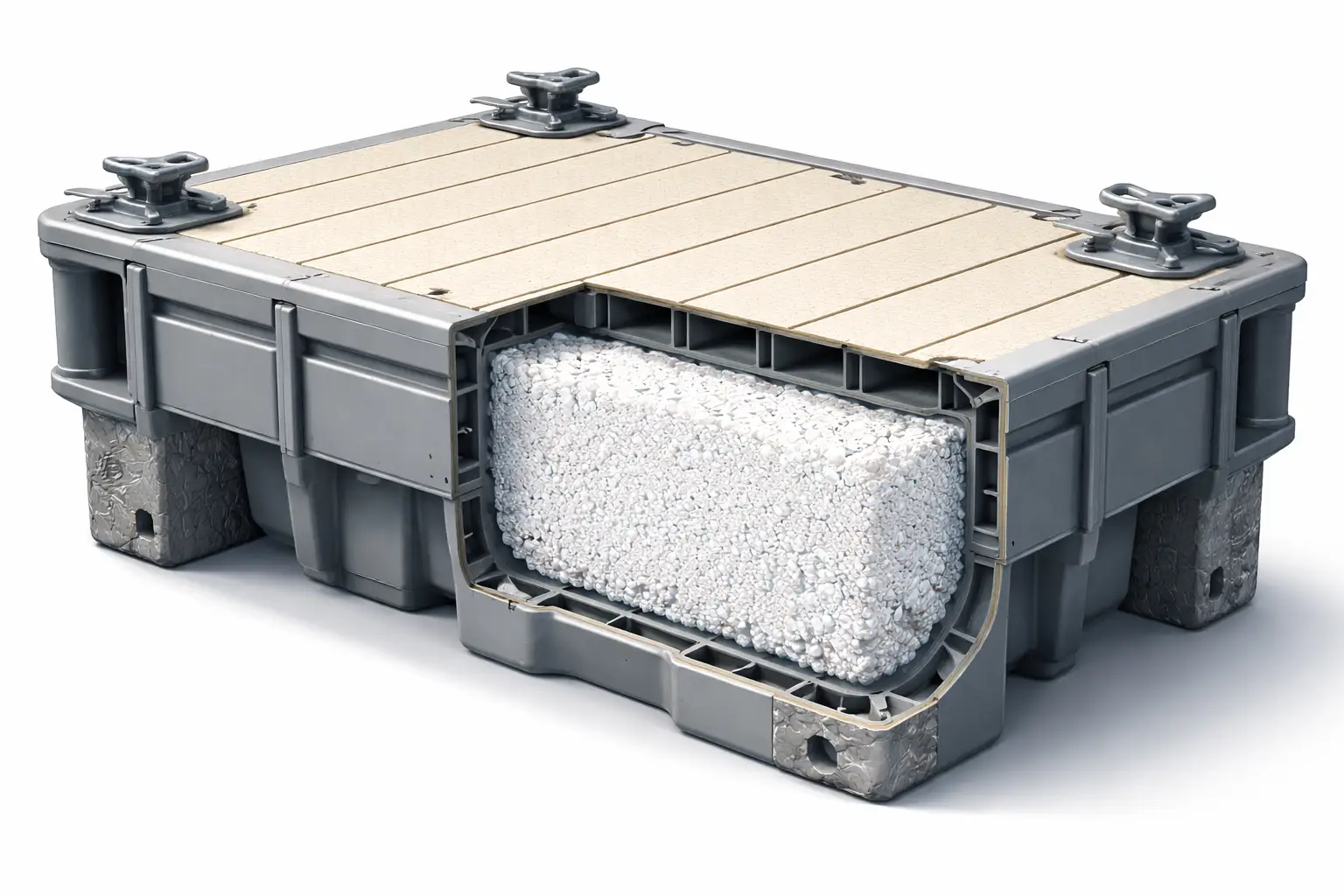
ความหนาของผนังก็สำคัญเช่นกัน แต่หากพิจารณาเพียงอย่างเดียวอาจทำให้เข้าใจผิด ผนังหนา 5 มม. ที่ทำจาก HDPE บริสุทธิ์คุณภาพสูงพร้อมการป้องกันรังสี UV ที่เหมาะสม จะมีอายุการใช้งานยาวนานกว่าผนังหนา 8 มม. ที่ทำจากวัสดุรีไซเคิลที่ยังไม่ผ่านการป้องกันรังสี UV มาตรฐานอุตสาหกรรมสำหรับตัวลอยแบบโฟมที่หุ้มด้วยวัสดุหุ้มคือ ≥0.150" (3.8 มม.), ซึ่งผลิตด้วยวิธีการหล่อหมุน (rotational molding) วิธีการหล่อหมุนนี้สร้างตัวเรือที่ไม่มีรอยต่อและไม่มีความเครียด พร้อมทั้งมีความหนาของผนังที่สม่ำเสมอ ส่วนตัวเรือ HDPE ที่ผลิตด้วยวิธีการหล่อเป่า (blow-molding) มีความหนาของผนังโดยทั่วไปอยู่ระหว่าง 3 มม. ถึง 6 มม. โดยจุดที่มีความเครียดสูง เช่น จุดต่อและมุม จะได้รับการเสริมความหนาของผนังให้ถึง 19 มม.
วิธีตรวจสอบคุณภาพ: ถามผู้ผลิตอย่างชัดเจนว่าพวกเขาใช้ HDPE แบบบริสุทธิ์หรือแบบรีไซเคิล และในสัดส่วนเท่าใด หากพวกเขาไม่สามารถหรือไม่ยอมตอบ ให้สมมติว่าสถานการณ์เป็นไปในทางที่เลวร้ายที่สุด.
เทคโนโลยีแกนโฟม: EPS แบบหุ้มปิด vs. ห้องอากาศแบบกลวง
นี่คือความแตกต่างทางโครงสร้างที่สำคัญที่สุดในการออกแบบทุ่นลอยท่าเรือ และหากเลือกผิด ก็อาจก่อให้เกิดผลตามมาที่ร้ายแรงที่สุด.
ทุ่นโฟมแบบหุ้มมีเปลือกนอกทำจาก HDPE ที่บรรจุด้วยโฟมโพลีสไตรีนขยายตัว (EPS) แบบเซลล์ปิด โดยทั่วไปมีความหนาแน่นอยู่ที่ 1.0–2.0 lb/ft³ (16–32 kg/m³) โฟมและเปลือกนอกถูกยึดติดกันในระหว่างกระบวนการขึ้นรูปด้วยการหมุน (rotational molding) จนเกิดเป็นโครงสร้างที่เป็นหนึ่งเดียว หากเปลือกนอกถูกเจาะทะลุโดยเศษวัสดุ น้ำแข็ง หรือใบพัดเรือที่เคลื่อนผิดตำแหน่ง แกนโฟมจะยังคงให้แรงลอยตัวต่อไป ตัวลอยจะไม่จมลง และไม่สูญเสียความสูงเหนือน้ำ (freeboard) อย่างมีนัยสำคัญ คุณสามารถซ่อมแซมเปลือกนอกเมื่อสะดวก และท่าเรือยังคงใช้งานได้ตามปกติ.
ทุ่นลอยตัวแบบกลวงที่เต็มไปด้วยอากาศไม่มีแกนโฟม ความลอยตัวเกิดจากอากาศที่ถูกกักไว้ภายในห้องปิดสนิททั้งหมด ระบบนี้ทำงานได้อย่างสมบูรณ์จนกระทั่งเกิดปัญหา เพียงแค่มีรูรั่วหนึ่งจุด รอยต่อที่แตกร้าวหนึ่งจุด หรือฝาปิดปลายที่เสื่อมสภาพหนึ่งจุด ห้องภายในก็จะถูกน้ำท่วม ความลอยตัวจะสูญเสียไปทันทีและมักก่อให้เกิดความเสียหายอย่างรุนแรง ยิ่งไปกว่านั้น การรั่วซึมอย่างช้าๆ จากรอยแตกร้าวขนาดเล็กที่รอยต่อนั้นแทบจะตรวจจับไม่ได้ จนกระทั่งเรือเริ่มเอียงอย่างเห็นได้ชัด.
ความแตกต่างด้านประสิทธิภาพนั้นชัดเจนมาก: ตัวลอยที่หุ้มด้วยโฟมสามารถสูญเสียความสมบูรณ์ของเปลือกถึง 80% แต่ยังคงลอยได้ภายใน 90% ของความจุที่กำหนด ส่วนตัวลอยที่เติมอากาศและมีรูรั่วขนาดเล็กจะสูญเสียแรงลอยตัวทีละน้อยและไม่สามารถฟื้นคืนได้ สำหรับการติดตั้งถาวรในน้ำที่มีคลื่น เศษซาก หรือน้ำแข็ง โฟมหุ้มจึงเป็นมาตรฐานที่ใช้กันทั่วไปด้วยเหตุผลที่ชัดเจน.
การทดสอบปฏิบัติ: หากได้ยินเสียงน้ำกระเพื่อมภายในตัวลอย แสดงว่ามันกำลังเสียหายแล้ว.
สารเสถียรภาพต่อรังสี UV และสารเติมแต่ง: เคมีที่มองไม่เห็นซึ่งช่วยป้องกันการเสื่อมสภาพก่อนเวลาอันควร
มีทุ่น HDPE สองชิ้นที่มีลักษณะเหมือนกันวางไว้ใต้แสงแดดเป็นเวลาสามปี ชิ้นหนึ่งมีผิวที่ขาวซีดและมีรอยแตกร้าว ส่วนอีกชิ้นดูเหมือนใหม่เกือบทั้งหมด ความแตกต่างนี้ไม่ได้เกิดจากวัสดุ HDPE แต่เกิดจากสิ่งที่ถูกผสมเข้าไปในวัสดุนั้น.
รังสีอัลตราไวโอเลต (UV) ทำให้ HDPE สลายตัวในระดับโมเลกุล โดยตัดสายโพลิเมอร์และก่อให้เกิดความเปราะบางบนพื้นผิว รอยแตกขนาดเล็ก และในที่สุดก็เกิดการล้มเหลวของโครงสร้าง หากไม่มีการป้องกันรังสี UV HDPE ที่ถูกแสงแดดส่องอย่างต่อเนื่องอาจสูญเสียความแข็งแรงในการดึงได้มากกว่า 40% ภายในไม่กี่ปีหลังจากถูกวางไว้กลางแจ้ง การเสื่อมสภาพนี้จะเร่งตัวขึ้นในสภาพแวดล้อมทางทะเล ซึ่งละอองเกลือและวงจรความร้อน-เย็นช่วยเพิ่มความเครียดให้กับวัสดุ.
สารเสถียรภาพต่อรังสี UV คือคำตอบ วิธีที่นิยมใช้มากที่สุดคือการเพิ่มคาร์บอนแบล็คในความเข้มข้น 2–3% วิธีนี้มีต้นทุนต่ำ มีประสิทธิภาพสูง และดูดซับรังสี UV ก่อนที่มันจะถึงสายโซ่โพลิเมอร์ สารเสถียรแสงแบบฮินเดอร์ด อามีน (HALS) ซึ่งมักถูกเพิ่มในปริมาณ 0.1–0.5% ทำงานด้วยกลไกที่ต่างออกไป: มันจับอนุมูลอิสระที่เกิดจากการสัมผัสกับรังสี UV เพื่อทำให้ปฏิกิริยาการสลายตัวเป็นกลางก่อนที่มันจะแพร่กระจาย สูตรคุณภาพสูงจะใช้ทั้งสองชนิด.
คำถามที่ควรถามผู้ผลิตทุกคน: “สารประกอบ HDPE ของคุณมีสารป้องกันรังสี UV หรือไม่ และมีความเข้มข้นเท่าใด?” หากคำตอบไม่ชัดเจน — “วัสดุของเราทนต่อรังสี UV” — นั่นไม่ใช่คำตอบที่ถูกต้อง HDPE ที่ได้รับการเสริมความเสถียรอย่างถูกต้องด้วยสารเติมแต่งคาร์บอนแบล็คหรือ HALS สามารถรักษาคุณสมบัติทางกลได้นานกว่า 15 ปี แม้จะถูกสัมผัสกับสภาพแวดล้อมกลางแจ้งอย่างต่อเนื่อง ส่วน HDPE ที่ไม่ได้รับการป้องกันจะเริ่มเกิดการเสื่อมสภาพที่วัดได้ภายใน 12–18 เดือน.
ถามผู้ผลิตทุกแห่ง 3 คำถาม: (1) HDPE เป็นวัสดุใหม่หรือวัสดุรีไซเคิล — และสัดส่วนเป็นเท่าใด? (2) สารป้องกันรังสี UV ชนิดใดมีอยู่ในส่วนผสม และมีความเข้มข้นเท่าใด? (3) สามารถให้ข้อมูลผลการทดสอบแรงดึงจากหน่วยงานอิสระสำหรับขั้วต่อได้หรือไม่? หากพวกเขาตอบอย่างคลุมเครือหรือไม่ตอบเลย ให้ถือว่านั่นคือข้อมูล.
คุณต้องการแรงลอยตัวเท่าใดจริงๆ? คู่มือการเลือกขนาดที่ใช้งานได้จริง
การเลือกทุ่นลอยสำหรับท่าเรือที่ “ดีที่สุด” ก็ไม่มีความหมายอะไรเลย หากคุณซื้อขนาดที่ผิด ทุ่นลอยที่ขนาดเล็กเกินไปจะทำให้ท่าเรือของคุณอยู่ต่ำเกินไปในน้ำ: ไม่มั่นคง เปียกตลอดเวลา และอันตรายเมื่อมีน้ำหนักบรรทุก ส่วนทุ่นลอยที่ใหญ่เกินไปจะทำให้เสียเงินโดยเปล่าประโยชน์ และสร้างส่วนเหนือน้ำที่สูงเกินไปจนทำให้การขึ้นลงเรือเป็นเรื่องยากลำบาก.
สูตรพื้นฐานนั้นเรียบง่าย:
แรงลอยตัวรวมที่จำเป็น = (น้ำหนักคงที่ + น้ำหนักใช้งาน) × ค่าความปลอดภัย
โหลดคงที่: 8–12 psf สำหรับไม้ / 5–8 psf สำหรับอลูมิเนียม · โหลดใช้งาน: 20–40 psf · ค่าความปลอดภัย: 1.5× ในสภาพอากาศสงบ / 2.0× ในสภาพอากาศเปิด
น้ำหนักคงที่ คือน้ำหนักของทุกส่วนที่ติดตั้งถาวร: โครงสร้างท่าเรือ (ไม้ ≈ 8–12 ปอนด์ต่อตารางฟุต; อลูมิเนียม ≈ 5–8 ปอนด์ต่อตารางฟุต), วัสดุพื้นท่าเรือ, อุปกรณ์ติดตั้ง และอุปกรณ์เสริมที่ติดตั้งถาวร เช่น ตัวยึดหรือบันได สำหรับท่าเรือไม้ขนาดทั่วไป 10×20 ฟุต น้ำหนักตายเพียงอย่างเดียวอาจสูงถึง 1,600–2,400 ปอนด์.
โหลดใช้งาน การคำนวณสำหรับคน เฟอร์นิเจอร์ ตู้เย็น และอุปกรณ์ มาตรฐานอ้างอิงสำหรับท่าเรือส่วนตัวคือ 40 psf ของพื้นที่พื้นท่าเรือ แต่การคำนวณแรงลอยตัวของท่าเรือลอยน้ำมักใช้ 20 psf สำหรับการออกแบบแรงลอยตัว ระบบลอยตัวจำเป็นต้องเพียงรักษาโครงสร้างให้อยู่เหนือน้ำเท่านั้น ไม่จำเป็นต้องรับน้ำหนักรวมที่โครงสร้างพื้นท่าเรือรับไว้แยกต่างหาก สำหรับท่าเรือและมารีน่าเชิงพาณิชย์ ข้อกำหนดเกี่ยวกับน้ำหนักใช้งานจะเพิ่มขึ้นเป็น 50–100 psf.
ปัจจัยความปลอดภัย เพื่อปรับให้เหมาะสมกับสภาพที่เปลี่ยนแปลงได้ ใช้ค่า 1.5× สำหรับน้ำที่สงบและได้รับการคุ้มครอง เช่น ทะเลสาบในแผ่นดินและอ่าวที่มีที่กำบัง ใช้ค่า 2.0× สำหรับพื้นที่ที่เปิดโล่งซึ่งมีคลื่น กระแสน้ำขึ้นลง หรือน้ำแข็ง ขอบเขตนี้ช่วยให้ท่าเรือของคุณคงที่เมื่อกลุ่มคนเคลื่อนตัวไปด้านเดียวกันพร้อมกัน หากไม่ปฏิบัติตามนี้ คุณต้องรับผิดชอบความเสี่ยงด้วยตนเอง.
ตัวอย่างการแก้ปัญหา: ท่าเรือไม้ขนาด 10×20 ft (200 sq ft) ในทะเลสาบที่น้ำสงบ.
| ส่วนประกอบ | การคำนวณ | น้ำหนัก (ปอนด์) |
|---|---|---|
| น้ำหนักคงที่ (โครงไม้ + แผ่นปูพื้น @ 10 psf) | 200 × 10 | 2,000 |
| โหลดใช้งาน (คน + อุปกรณ์ @ 20 psf) | 200 × 20 | 4,000 |
| ยอดรวมย่อย | 6,000 | |
| ปัจจัยความปลอดภัย (1.5× สำหรับน้ำที่สงบ) | 6,000 × 1.5 | ต้องการแรงลอยตัวรวม 9,000 ปอนด์ |
ตอนนี้ให้หารด้วยแรงลอยตัวตามค่าที่กำหนดของตัวลอยที่คุณเลือก หากใช้ตัวลอยแบบหุ้มห่อมาตรฐานขนาด 24″×48″×16″ ที่มีแรงลอยตัวตามค่าที่กำหนด 600 lbs ต่อตัว:
9,000 ÷ 600 = 15 ลำ
สองข้อผิดพลาดที่พบบ่อยที่ควรหลีกเลี่ยง ข้อแรก: คำนวณแรงลอยตัวให้สอดคล้องกับน้ำหนักบรรทุกคงที่เท่านั้น ท่าเรือของคุณจะอยู่เหนือผิวน้ำเพียงเล็กน้อยจนกว่าจะมีคนก้าวขึ้นไป ข้อที่สอง: ไม่คำนึงถึงปัจจัยความปลอดภัย การคำนวณอาจดูถูกต้องบนกระดาษ แต่ท่าเรือในความเป็นจริงจะรู้สึกนุ่มนิ่มและไม่มั่นคงเมื่อรับน้ำหนักแบบไดนามิก.
นอกจากนี้ ควรพิจารณาความสูงของส่วนเหนือน้ำ (freeboard) คือความสูงของพื้นเรือเหนือระดับน้ำ สำหรับน้ำที่สงบ ความสูง 12–18 นิ้วถือว่าเหมาะสม ส่วนสำหรับน้ำที่เปิดโล่ง ควรตั้งเป้าหมายที่ 18–24 นิ้ว ความสูงทางกายภาพของตัวลอยและแรงลอยตัวจะร่วมกันกำหนดความสูงของส่วนเหนือน้ำ ดังนั้นควรพิจารณาทั้งสองปัจจัยนี้ในการเลือก.
อะไรที่ทำให้ทุ่นลอยน้ำมีอายุการใช้งานมากกว่า 10 ปี? รายการตรวจสอบความทนทาน
อายุการใช้งานของทุ่นลอยท่าเรือไม่ได้ขึ้นอยู่กับปัจจัยเดียว แต่เป็นผลรวมของสามปัจจัยที่ทำงานร่วมกัน ได้แก่ ความสามารถของวัสดุในการต้านทานสภาพแวดล้อม ความแข็งแรงของโครงสร้างทางกายภาพ และระดับความมั่นใจของผู้ผลิตต่อผลิตภัณฑ์ของตนเอง หากขาดปัจจัยใดปัจจัยหนึ่งไป อายุการใช้งานก็จะลดลงเร็วกว่าที่ควรจะเป็น.

ความทนทานต่อสภาพแวดล้อม: รังสี UV, น้ำทะเล, น้ำแข็ง และการเจริญเติบโตของสิ่งมีชีวิตในทะเล
สภาพแวดล้อมคือปัจจัยหลักที่ทำให้ทุ่นลอยน้ำเสียหาย แต่ผู้ซื้อส่วนใหญ่กลับถามเพียงว่า “มันจะจมไหม?” แทนที่จะถามว่า “มันจะทนได้ไหม?”
- รังสี UV: ดังที่กล่าวไว้ข้างต้น HDPE ที่ไม่ได้รับการป้องกันจะสลายตัวอย่างค่อยเป็นค่อยไปเมื่อสัมผัสกับแสงแดด ในพื้นที่ที่มีแสงแดดแรง เช่น ฟลอริดา เท็กซัส ออสเตรเลีย หรือภูมิภาคเมดิเตอร์เรเนียน การเสริมความเสถียรต่อรังสี UV เป็นปัจจัยสำคัญที่กำหนดอายุการใช้งานของทุ่นลอยน้ำจาก 5 ปี เป็น 15 ปี.
- น้ำทะเล: หนึ่งในจุดขายที่โดดเด่นที่สุดของ HDPE คือความเฉื่อยทางเคมีต่อเกลือ ต่างจากเหล็กที่เกิดการกัดกร่อน หรือไม้ที่เน่าเปื่อย HDPE ไม่เกิดปฏิกิริยากับน้ำทะเล อย่างไรก็ตาม อุปกรณ์ยึดและชิ้นส่วนโครงสร้างที่ทำจากโลหะจะเกิดการกัดกร่อนได้ ดังนั้น ควรเลือกใช้เหล็กสแตนเลสหรืออลูมิเนียมเกรดทางทะเลสำหรับทุกจุดเชื่อมต่อ.
- สภาพอากาศหนาวจัด: อุณหภูมิที่ HDPE เริ่มเปราะอยู่ที่ประมาณ -70°C (-94°F) ดังนั้นวัสดุนี้เองจะไม่เปราะในสภาพอากาศใด ๆ ที่มีผู้อยู่อาศัย อย่างไรก็ตาม น้ำที่ติดอยู่ในรอยต่อหรือเกลียวของฝาปิดอาจแข็งตัวและขยายตัว ซึ่งอาจก่อให้เกิดรอยแตกจากแรงเครียดเมื่อผ่านวงจรการแข็งตัวและละลายซ้ำ ๆ โฟมที่หุ้มด้วยวัสดุกันน้ำมีประสิทธิภาพดีกว่าในกรณีนี้ เนื่องจากแกนโฟมช่วยจำกัดปริมาณน้ำที่อาจซึมเข้าไปได้.
- การเจริญเติบโตของสิ่งมีชีวิตในทะเล: หอยหิน สาหร่าย และหอยม้าลาย จะมาเกาะบนพื้นผิวที่จมอยู่ใต้น้ำทุกชนิด ข่าวดีคือ: พวกมันไม่ก่อให้เกิดความเสียหายทางโครงสร้างต่อ HDPE แต่พวกมันเพิ่มน้ำหนักและแรงต้านการเคลื่อนที่ และการทำความสะอาดพวกมันเป็นงานบำรุงรักษา มีสารเคลือบกันการเกาะติดอยู่ แต่ไม่ค่อยจำเป็นสำหรับท่าเรือส่วนตัว.
การประเมินตนเองแบบรวดเร็ว: น้ำของคุณเป็นน้ำกร่อยหรือน้ำเค็มหรือไม่? ท่าเรือของคุณหันหน้าไปทางทิศใต้โดยตรงหรือไม่? ภูมิภาคของคุณมีอากาศหนาวจัดจนน้ำแข็งเกาะหรือไม่? ทุกคำตอบ “ใช่” จะทำให้มาตรฐานของคำว่า “ทนทานพอ” สูงขึ้น”
น้ำเค็มหรือน้ำกร่อย?
ให้ใช้ชิ้นส่วนโลหะสแตนเลสและ HDPE (ไม่ถูกกัดกร่อนโดยเกลือ) เป็นหลัก
มีทิศทางหันหน้าไปทางใต้โดยตรงหรือไม่?
ต้องมีเอกสารรับรองสารป้องกันรังสี UV
ทุกฤดูหนาวอากาศหนาวจัดจนแข็งตัวหรือไม่?
มือจับทำจากโฟมแบบหุ้มมีคุณสมบัติทนต่อการแข็งตัวและละลายได้ดีกว่า
ความสมบูรณ์ของเปลือก: ความหนาของผนัง คุณภาพของรอยต่อ และส่วนต่อเชื่อม
โครงสร้างทางกายภาพของตัวลอยมีจุดสำคัญสามจุด และกระบวนการผลิตที่ราคาถูกมักมีแนวโน้มที่จะเกิดข้อบกพร่องในทั้งสามจุดดังกล่าว.
ความหนาของผนัง เป็นตัวชี้วัดคุณภาพที่ชัดเจนที่สุด แต่ไม่ใช่ทั้งหมด ตัวลอยแบบโรโตโมลด์ที่หุ้มด้วยวัสดุปิดผนึกและมีความหนาผนังที่สม่ำเสมอ 0.150 นิ้ว มีโครงสร้างที่เหนือกว่าตัวลอยแบบบลูว์โมลด์ที่มีความหนาผนัง 0.200 นิ้วที่ส่วนกลาง แต่เพียง 0.080 นิ้วที่มุม กระบวนการโรโตมอลด์ผลิตตัวเรือแบบชิ้นเดียวไร้รอยต่อ พร้อมความหนาของผนังที่สม่ำเสมอ ส่วนกระบวนการเป่าขึ้นรูปจะสร้างเส้นแบ่งที่จุดต่อของครึ่งแม่พิมพ์ และรอยต่อนั้นคือจุดอ่อนตามธรรมชาติ การควบคุมกระบวนการที่ไม่ดีอาจทำให้ความหนาของผนังที่เส้นแบ่งบางลง 20–40% ซึ่งสร้างจุดที่อาจเกิดความเสียหายที่ไม่ได้ระบุไว้ในเอกสารสเปค.
ขั้วต่อ คือจุดที่ทุ่นท่าเรือเชื่อมต่อกันทางกายภาพและกับโครงเรือ ส่วนนี้รับแรงกระแทกจากคลื่น การขยายตัวของน้ำแข็ง และการเคลื่อนไหวของท่าเรืออย่างเต็มที่ ความหนาของส่วนเชื่อมต่อ 19 มม. (0.75 นิ้ว) เป็นมาตรฐานสำหรับทุ่นท่าเรือที่ใช้งานหนัก ส่วนเชื่อมต่อที่บางกว่า 12 มม. หรือน้อยกว่า อาจถูกฉีกขาดเมื่อรับแรงจากพายุ เมื่อทุ่นหนึ่งหลุดออก แรงจะกระจายไปยังทุ่นข้างเคียง ทำให้เกิดการล้มเหลวแบบลูกโซ่ การทดสอบแรงดึงแนวทแยงวัดผลนี้อย่างแม่นยำ: ลอยน้ำคุณภาพสูงสามารถทนทานได้มากกว่า 14,000 N (ประมาณ 3,150 lbf) ก่อนที่ส่วนยึดจะเสียหาย.
คุณภาพของรอยต่อ สำหรับทุ่นลอยแบบกลวง การติดตั้งฝาปิดปลายแบบเกลียวบนทุ่น HDPE ต้องแนบสนิทกับ O-ring หรือปะเก็นอย่างสมบูรณ์ เพื่อรักษาความแน่นของอากาศ O-ring แบบ $0.50 ที่เสื่อมสภาพจากรังสี UV อาจทำให้ทุ่นลอยแบบ $200 ถูกน้ำท่วมได้ ผู้ผลิตที่มีคุณภาพใช้ปะเก็น EPDM หรือซิลิโคน ที่ได้รับการรับรองว่าสามารถทนต่อการสัมผัสกับสภาพแวดล้อมกลางแจ้งอย่างต่อเนื่อง.
การรับประกันในฐานะตัวชี้วัดคุณภาพ: ความหมายที่แท้จริงของระยะเวลา 5, 10 และ 15 ปี
การรับประกันในอุตสาหกรรมทุ่นลอยสำหรับท่าเรือนั้นไม่ใช่เพียงนโยบายบริการลูกค้า แต่เป็นคำรับรองทางวิศวกรรม ผู้ผลิตกำลังบอกคุณว่า วัสดุและกระบวนการผลิตของพวกเขาจะคงทนได้นานเท่าใด (นับเป็นปี).
| ระยะเวลาการรับประกัน | ความหมายของมันคืออะไร | สิ่งที่ควรตรวจสอบ |
|---|---|---|
| 1–3 ปี | การคุ้มครองตามกฎหมายขั้นต่ำ ซึ่งบ่งชี้ถึงความมั่นใจที่จำกัดต่อความทนทานของวัสดุ. | คาดว่าจะต้องเปลี่ยนใหม่ภายใน 5 ปี. |
| 5 ปี | มาตรฐานอุตสาหกรรมสำหรับผู้ผลิตที่มีคุณภาพ ระบุว่าเป็น HDPE บริสุทธิ์ + การป้องกันรังสี UV ขั้นพื้นฐาน. | การเปลี่ยนชิ้นส่วนนี้เป็นการเปลี่ยนฟรีหรือคิดตามสัดส่วน? การรับประกันนี้ครอบคลุมการเสื่อมสภาพจากรังสี UV หรือไม่? |
| 8–12 ปี | ความมั่นใจที่สูงกว่าค่าเฉลี่ย โดยทั่วไปเป็นผลิตภัณฑ์โฟมแบบหุ้มห่อที่ผลิตด้วยวิธีโรโตโมลด์จากแบรนด์ที่มีชื่อเสียง. | ตรวจสอบว่าค่าจัดส่งถูกรวมอยู่ในค่าเปลี่ยนสินค้าหรือไม่. |
| 15 ปี | ระดับสูงสุด มีเพียงไม่กี่บริษัทผู้ผลิตเท่านั้นที่เสนอสิ่งนี้ ซึ่งบ่งชี้ถึงการใช้วัสดุคุณภาพสูง กระบวนการควบคุมคุณภาพที่เข้มงวด และส่วนเผื่อในการออกแบบโครงสร้างที่เกินความจำเป็น. | Eagle Floats (Permafloat) เป็นตัวอย่างที่ถูกอ้างอิงมากที่สุดในระดับนี้. |
แต่ระยะเวลาการรับประกันเพียงอย่างเดียวไม่สามารถบอกเล่าเรื่องราวทั้งหมดได้ โปรดอ่านข้อความในตัวหนังสือเล็กเพื่อตรวจสอบสามข้อต่อไปนี้: (1) การรับประกันครอบคลุมการเสื่อมสภาพจากรังสี UV อย่างชัดเจนหรือไม่ หรือเพียงข้อบกพร่องในการผลิตเท่านั้น? (2) การเปลี่ยนสินค้าเป็นแบบฟรีหรือไม่ หรือเป็นแบบคิดตามสัดส่วน (pro-rated) ที่มูลค่าการคืนเงินจะลดลงทุกปี? (3) การรับประกันมีเงื่อนไขว่าต้อง “ติดตั้งโดยผู้เชี่ยวชาญ” หรือไม่ ซึ่งอาจทำให้การรับประกันเป็นโมฆะสำหรับผู้ติดตั้งด้วยตัวเอง (DIY) ที่คิดเป็นส่วนใหญ่ของตลาดนี้?
ผู้ผลิตที่เสนอการรับประกันการเปลี่ยนสินค้าฟรีเป็นระยะเวลา 5 ปี ซึ่งครอบคลุมความเสียหายทุกประเภท กำลังให้คำมั่นสัญญาที่แตกต่างอย่างพื้นฐานจากผู้ผลิตที่เสนอการรับประกันแบบสัดส่วนเป็นระยะเวลา 10 ปี ซึ่งไม่ครอบคลุมความเสียหายจากรังสี UV การกระแทก และ “ภัยธรรมชาติ” ผู้ผลิตแรกกำลังยืนหยัดสนับสนุนผลิตภัณฑ์ของตนเอง ส่วนผู้ผลิตที่สองกำลังยืนหยัดสนับสนุนฝ่ายกฎหมายของตนเอง.
ตัวอย่างเช่น ผู้ผลิตอย่าง Hisea Dock ให้การรับประกันการเปลี่ยนใหม่ฟรีเป็นระยะเวลา 5 ปี สำหรับตัวลอย ซึ่งครอบคลุมความเสียหายใดๆ ภายในช่วงระยะเวลาการรับประกัน พร้อมด้วยบริการหลังการขาย 24/7 และการจัดหาชิ้นส่วนสำรองอย่างครบถ้วน สูตร HDPE ของพวกเขามีสารป้องกันรังสี UV ที่ผสมโดยตรงลงในวัตถุดิบ และสายการผลิตของพวกเขาจะนำตัวลอยไปผ่านการทดสอบแรงดึงตามแนวทแยงมุมจนถึง 14,389 N ระดับความเครียดนี้ช่วยเปิดเผยจุดอ่อนที่มองไม่เห็นด้วยการตรวจสอบด้วยตาเปล่า ข้อมูลทั้งสี่จุดนี้ — กระบวนการผลิตที่ได้รับการรับรองตามมาตรฐาน ISO 9001, การรับรองผลิตภัณฑ์จาก CE/SGS/TUV, ผลทดสอบแรงดึงที่เฉพาะเจาะจง และนโยบายการรับประกันที่ไม่ซ่อนเงื่อนไขยกเว้น — ให้ผู้ซื้อมีเกณฑ์วัดผลที่ชัดเจนเพื่อเปรียบเทียบกับผู้ผลิตอื่น ๆ หากผู้จัดหาไม่สามารถจัดเตรียมเอกสารที่เทียบเท่าสำหรับผลิตภัณฑ์ของตนเองได้ ช่องว่างด้านข้อมูลนี้คือข้อมูลที่มีค่าที่ควรนำมาพิจารณา.
สมการความทนทาน
ความทนทานไม่ใช่เพียงคุณสมบัติเดียว แต่เป็นผลรวมของทั้งสามปัจจัยนี้ แผ่นลอยน้ำที่ทำจากวัสดุคุณภาพสูงแต่การเชื่อมตะเข็บไม่ดี จะเสียหายได้แน่นอนไม่ต่างจากแผ่นลอยน้ำที่มีเปลือกบางแต่ใช้โฟมคุณภาพสูง ควรประเมินทั้งสามปัจจัยนี้ร่วมกัน — ไม่ใช่เพียงด้านใดด้านหนึ่งเท่านั้น.
การติดตั้งทุ่นลอยสำหรับท่าเรือ: อุปกรณ์, ความเข้ากันได้ของโครง และความผิดพลาดที่มักเกิดขึ้นเมื่อทำเอง
การติดตั้งไม่ใช่จุดเน้นหลักของคู่มือ “ทุ่นลอยท่าเรือที่ดีที่สุด” แต่เป็นขั้นตอนที่แม้จะเลือกทุ่นลอยที่ดีที่สุดแล้ว ก็อาจถูกทำให้ประสิทธิภาพลดลงได้หากการติดตั้งไม่ถูกต้อง.
การติดตั้งลูกลอยกับโครง: ตัวลอยส่วนใหญ่ได้รับการออกแบบมาพร้อมหน้าแปลนติดตั้งที่หล่อรวมไว้หรือช่องสำหรับใส่สลักเกลียว หมุด หรือตัวยึดรูปตัว U อุปกรณ์ยึดที่ทำจากเหล็กชุบสังกะสีหรือเหล็กสแตนเลสเป็นสิ่งที่ขาดไม่ได้ สลักเกลียวชุบสังกะสีแบบมาตรฐานจะเกิดสนิมภายในไม่กี่เดือนในสภาพแวดล้อมทางทะเล ตัวลอยควรจัดวางให้ชิดกัน โดยช่องว่างระหว่างตัวลอยไม่ควรเกิน ¼ นิ้ว เพื่อกระจายน้ำหนักให้สม่ำเสมอและป้องกันไม่ให้ตัวลอยแต่ละตัวหลุดออกจากการยึด.
ความเข้ากันได้ของวัสดุกรอบ: ไม้ อลูมิเนียม และเหล็ก เป็นสามวัสดุที่ใช้ทำโครงหลักที่นิยมใช้กัน อลูมิเนียมเป็นวัสดุที่เหมาะสำหรับน้ำจืด เนื่องจากมีน้ำหนักเบา ทนต่อการกัดกร่อน และมีความแข็งแรง หากใช้เหล็ก ต้องแยกทางไฟฟ้าจากชิ้นส่วนอลูมิเนียมเพื่อป้องกันการกัดกร่อนแบบกัลวานิก ในน้ำเค็ม การผสมผสานโลหะต่างชนิดกันจะสร้างวงจรไฟฟ้าที่กัดกร่อนโลหะที่มีค่าความขั้วไฟฟ้าต่ำกว่า ไม้ที่ผ่านการรักษาด้วยแรงดันสามารถใช้ได้ แต่จะเพิ่มน้ำหนักอย่างมาก ดังนั้นต้องนำปัจจัยนี้มาพิจารณาในการคำนวณความลอยตัว.
สองข้อผิดพลาดที่พบบ่อยที่สุดในการทำด้วยตัวเอง: แรกคือระยะห่างระหว่างทุ่นที่ไม่เท่ากัน ช่องว่างหนึ่งนิ้วด้านหนึ่งและครึ่งนิ้วด้านอีกด้านหนึ่ง ทำให้การกระจายน้ำหนักไม่เท่ากัน ซึ่งเร่งการสึกหรอด้านที่ช่องว่างแคบกว่า ประการที่สอง การยึดตรึงที่ไม่เพียงพอ ท่าเรือลอยตัวที่ไม่ได้รับการยึดตรึงอย่างถูกต้องจะลอยไปตามกระแสน้ำ บิดตัว และในที่สุดจะเกิดความเสียหายจากการชนกับชายฝั่งหรือโครงสร้างใกล้เคียง ตัวเลือกการยึดตรึง ได้แก่ บล็อกคอนกรีตถ่วงน้ำหนัก ขายึดเสาที่เลื่อนบนเสาแนวตั้ง การเชื่อมต่อแบบแขนแข็งกับชายฝั่ง และระบบยึดตรึงด้วยท่อผ่านรูที่มุมของทุ่นลอยตัว การเลือกวิธีที่เหมาะสมขึ้นอยู่กับความลึกของน้ำ สภาพพื้นน้ำ และว่าระดับน้ำมีการเปลี่ยนแปลงตามฤดูกาลหรือไม่.
สองคนสามารถทำสิ่งนี้ได้ไหม? ใช่ครับ นั่นคือจุดเด่นหลักของ ระบบลอยตัวแบบโมดูลาร์. ลอยน้ำแบบมาตรฐานสำหรับที่อยู่อาศัยมีน้ำหนัก 30–50 ปอนด์ต่อชิ้น ซึ่งผู้ใหญ่สองคนสามารถจัดวางและยึดให้มั่นคงได้อย่างสะดวก ท่าเรือขนาด 10×20 ฟุต เป็นโครงการที่สามารถทำเสร็จได้ภายในวันหยุดสุดสัปดาห์ หากมีการวางแผนอย่างเหมาะสม.
พร้อมที่จะเปรียบเทียบสเปกแล้วหรือยัง? รับเอกสารข้อมูลจากผู้ผลิตและใบเสนอราคาที่ปรับแต่งตามความต้องการสำหรับโครงการท่าเรือของคุณ.
การเปรียบเทียบแบรนด์ทุ่นลอยน้ำชั้นนำ: ตารางเปรียบเทียบสำหรับผู้ซื้อ
ไม่มีทุ่นลอยสำหรับท่าเรือแบบใดที่เรียกว่า “ดีที่สุด” อย่างเด็ดขาด แต่มีทุ่นลอยที่เหมาะสมที่สุดตามงบประมาณของคุณ สภาพน้ำ และระยะเวลาที่คุณวางแผนจะใช้ท่าเรือนั้น ตารางด้านล่างนี้ให้ข้อมูลดิบเพื่อช่วยคุณตัดสินใจ โดยจัดเรียงตามปัจจัยที่คุณรู้แล้วว่าควรพิจารณา.
วัสดุและโครงสร้าง: ความหนาของชั้นนอก, ประเภทโฟม และวิธีการผลิต
| แบรนด์ | ประเทศ | ประเภทลอยตัว | วัสดุเปลือก | ความหนาของผนัง | การเติมส่วนกลาง | การผลิต | การป้องกันรังสี UV |
|---|---|---|---|---|---|---|---|
| Eagle / Permafloat | สหรัฐอเมริกา | โฟมแบบหุ้ม | HDPE บริสุทธิ์ | ≥0.150″ | โฟมเซลล์ปิด EPS | ผลิตด้วยวิธีโรโตโมลด์ | คาร์บอนแบล็คที่ได้รับการทำให้เสถียร |
| CWI (Carolina Waterworks) | สหรัฐอเมริกา | โฟมแบบหุ้ม | HDPE บริสุทธิ์ | ≥0.150″ | EPS ความหนาแน่นสูง | ผลิตด้วยวิธีโรโตโมลด์ | มีสารป้องกันรังสี UV |
| แอคคิวด็อก | สหรัฐอเมริกา | ทุ่นลอยน้ำแบบโมดูลาร์ทำจาก HDPE | HDPE + กรอบอลูมิเนียมแบบทนต่อสภาพแวดล้อมทางทะเล | - | ตัวเลือกแบบกลวง / แบบโฟม | ขึ้นรูปด้วยวิธีเป่า + การอัดรีด | PE ที่ทนต่อรังสี UV |
| ท่าเรือฮิเซีย | จีน | โฟมแบบหุ้ม / โพนทอน HDPE | HDPE บริสุทธิ์ + สารป้องกันรังสี UV | 3–6 มม. (พอนทูน), 19 มม. (ส่วนยึด) | ตัวเลือกโฟม EPS / แบบกลวง | การขึ้นรูปด้วยวิธีเป่า + การขึ้นรูปด้วยวิธีโรโตโมลด์ | HALS + สารเติมแต่งคาร์บอนแบล็ค |
| แคนด็อค | แคนาดา | ลูกบาศก์ HDPE แบบโมดูลาร์ | HDPE บริสุทธิ์ | - | กลวงและเต็มไปด้วยอากาศ | ผลิตด้วยวิธีเป่าขึ้นรูป | มีคุณสมบัติต้านรังสี UV |
| อีซีด็อก | สหรัฐอเมริกา | ระบบเฉพาะ | โพลีเอทิลีน | - | โฟมแบบหุ้ม (Permafloat) | ลิขสิทธิ์ | ทนต่อรังสี UV |
| ท่าเทียบเรือเจ็ท | สหรัฐอเมริกา | ระบบขับขึ้น | โพลีเอทิลีน | - | กลวง / โฟม | ผลิตด้วยวิธีเป่าขึ้นรูป | มีชั้นป้องกันรังสี UV |
| บล็อกท่าเรือ | สหรัฐอเมริกา | ทุ่นลอยน้ำทำจากโพลีเอทิลีนความหนาแน่นสูง | HDPE | - | กลวง | ผลิตด้วยวิธีเป่าขึ้นรูป | มีคุณสมบัติต้านรังสี UV |
“—” = ผู้ผลิตไม่ได้เปิดเผยข้อมูลนี้ต่อสาธารณะ โปรดขอใบข้อมูลทางเทคนิคโดยตรงเสมอ.
แรงลอยตัวและความสามารถรับน้ำหนัก: การปรับให้ข้อมูลจำเพาะของทุ่นลอยตัวสอดคล้องกับน้ำหนักจริงของท่าเรือ
| แบรนด์ / รุ่น | ขนาด (ยาว×กว้าง×สูง) | แรงลอยตัว (ปอนด์) | เหมาะที่สุดสำหรับ | ระดับราคาประมาณ |
|---|---|---|---|---|
| PermaFloat 48×96×32 | 48″×96″×32″ | 4,804 | ท่าเรือ, เชิงพาณิชย์, งานหนัก | $$$$ |
| ลูกลอยมาตรฐาน CWI | ต่างๆ | 600–4,500 | จากที่อยู่อาศัยเป็นพื้นที่เชิงพาณิชย์ | $$$ |
| Hisea Dock 500×500×400 มม. | 19.7″×19.7″×15.7″ | 485–925 (ต่อโมดูล) | อาคารที่อยู่อาศัย/อาคารพาณิชย์ขนาดเล็กแบบโมดูลาร์ | $$ |
| Candock Cube | 19.7″×19.7″×15.7″ | ~485 | สำหรับที่อยู่อาศัย, แบบโมดูลาร์ทำเอง | $$$ |
| ส่วน EZ Dock | ต่างๆ | 450–2,500 | น้ำใช้ในครัวเรือนที่มีปริมาณไม่คงที่ | $$$$ |
| บล็อกท่าเรือ 24″×48″×16″ | 24 นิ้ว × 48 นิ้ว × 16 นิ้ว | 600 | ท่าเรือขนาดเล็กสำหรับที่อยู่อาศัย | $$ |
ระดับราคา: $ = ระดับประหยัด/DIY, $$ = ระดับคุ้มค่า, $$$ = ระดับพรีเมียมสำหรับที่อยู่อาศัย, $$$$ = ระดับเชิงพาณิชย์ ราคาจริงอาจแตกต่างกันไปตามปริมาณและตัวแทนจำหน่าย.
เมื่อเปรียบเทียบแรงลอยตัว ให้พิจารณาแรงลอยตัวต่อหนึ่งตารางฟุตของพื้นที่ผิวของทุ่นลอย ไม่ใช่เพียงแรงลอยตัวรวมเท่านั้น ทุ่นลอยตัวที่มีแรงลอยตัว 50 ปอนด์/ตารางฟุต มีความหนาแน่นและมั่นคงกว่าทุ่นลอยตัวที่มีแรงลอยตัว 30 ปอนด์/ตารางฟุต ในขนาดที่เท่ากัน ตัวชี้วัดนี้มีความสำคัญเป็นพิเศษสำหรับท่าเรือที่แคบ ซึ่งจำนวนทุ่นลอยตัวมีจำกัด.
การรับประกันและบริการสนับสนุน: คำสัญญาหลังการขายที่คุณกำลังซื้ออยู่จริง
| แบรนด์ | การรับประกัน | มีฟังก์ชันป้องกันรังสี UV ไม่? | เปลี่ยนใหม่ฟรี? | ประเทศต้นทาง |
|---|---|---|---|---|
| Eagle / Permafloat | 15 ปี | ใช่ | ใช่ | สหรัฐอเมริกา |
| CWI | 12 ปี | ใช่ | ใช่ (ตามเงื่อนไข) | สหรัฐอเมริกา |
| แอคคิวด็อก | 10 ปี | จำกัด | - | สหรัฐอเมริกา |
| ท่าเรือฮิเซีย | 5 ปี | ครอบคลุมความเสียหายทุกประเภท | ใช่ (เปลี่ยนใหม่ฟรี) | จีน |
| แคนด็อค | 10 ปี (อาจแตกต่างกัน) | - | - | แคนาดา |
| อีซีด็อก | 10 ปี (จำกัด) | - | ตามสัดส่วน | สหรัฐอเมริกา |
| ท่าเทียบเรือเจ็ท | จำกัด | - | - | สหรัฐอเมริกา |
ภาพรวม: ข้อมูลที่ตารางนี้บอกคุณ
หากสิ่งที่คุณให้ความสำคัญคือการรับประกันที่ยาวนานที่สุดพร้อมกับการผลิตที่แข็งแรงที่สุด Eagle/Permafloat และ CWI เป็นผู้นำในตลาดระดับสูง ด้วยราคาที่สอดคล้องกัน แต่หากคุณกำลังสร้างท่าเรือสำหรับบ้านพักด้วยงบประมาณจำกัด และให้ความสำคัญกับระบบโมดูลาร์แบบทำเอง (DIY) ผลิตภัณฑ์ Dock Blocks และ Hisea Dock’s modular cubes เป็นตัวเลือกที่เข้าถึงได้ง่ายกว่า หากคุณต้องการระบบยกเรือหรือ PWC ที่สามารถขับขึ้นได้ Jet Dock และ EZ Dock ได้รับการออกแบบมาโดยเฉพาะสำหรับกรณีการใช้งานนี้ และราคาจึงสอดคล้องกับคุณสมบัติดังกล่าว.
ข้อมูลสำคัญที่แท้จริงอยู่ที่ช่องว่างเหล่านั้น แบรนด์ที่ไม่สามารถหรือไม่ยอมเปิดเผยข้อมูลเกี่ยวกับความหนาของผนัง ข้อมูลการทดสอบความลอยตัว หรือข้อมูลจำเพาะของสารป้องกันรังสี UV กำลังขอให้คุณเชื่อมั่นในชื่อแบรนด์ของพวกเขาแทนที่จะเชื่อมั่นในกระบวนการวิศวกรรมของพวกเขา หลังจากอ่านคู่มือนี้แล้ว คุณจะมีความรู้เพียงพอที่จะขอข้อมูลเหล่านั้น และคุณจะเข้าใจดีพอที่จะถือว่าการปฏิเสธที่จะให้ข้อมูลดังกล่าวเป็นข้อมูลสำคัญในตัวมันเอง.
ควรเชื่อถือข้อมูลทางเทคนิคที่เผยแพร่ ไม่ใช่ชื่อเสียงของแบรนด์. ผู้ผลิตที่ไม่เปิดเผยข้อมูลเกี่ยวกับความหนาของผนังหรือสารป้องกันรังสี UV กำลังขอให้คุณซื้อสินค้าโดยเชื่อใจเขา แต่คุณควรซื้อสินค้าโดยอ้างอิงจากข้อมูลแทน.
เปรียบเทียบแรงลอยตัวต่อหนึ่งตารางฟุต ไม่ใช่ต่อทุ่นลอยตัว. ทุ่นที่มีขนาดใหญ่กว่าแต่มีความหนาแน่นของแรงลอยตัวต่ำกว่า จะให้ความมั่นคงน้อยกว่าทุ่นที่มีขนาดกะทัดรัดแต่มีความหนาแน่นสูงกว่า ควรเปรียบเทียบสิ่งที่เทียบเคียงกันได้เท่านั้น.
เงื่อนไขการรับประกันสำคัญกว่าจำนวนปีของการรับประกัน. การรับประกันแบบสัดส่วน 10 ปี ที่ไม่รวมความเสียหายจากรังสี UV มีค่าต่ำกว่าการรับประกันเปลี่ยนใหม่ฟรี 5 ปี ที่ครอบคลุมทุกกรณี อ่านเงื่อนไขในตัวหนังสือเล็ก ๆ ให้ละเอียด.
ซื้อทุ่นลอยท่าเรือได้ที่ไหน: การเปรียบเทียบระหว่างการซื้อแบบขายปลีก ขายส่ง และซื้อโดยตรงจากผู้ผลิต
คุณได้เลือกประเภทและสเปกของเรือลอยแล้ว ตอนนี้: คุณจะซื้อจากที่ไหน? ช่องทางที่คุณเลือกจะส่งผลต่อราคา ตัวเลือกการปรับแต่ง ระยะเวลาการผลิต และบริการหลังการขาย ซึ่งมักมีอิทธิพลมากกว่าแบรนด์เอง.
| ช่อง | ราคาต่อหน่วย | จำนวนสั่งซื้อขั้นต่ำ | การปรับแต่ง | ระยะเวลาดำเนินการ | การสนับสนุน |
|---|---|---|---|---|---|
| ผู้จำหน่ายท้องถิ่น / อุปกรณ์ทางทะเล | ราคาสูงสุด (มาร์กอัปขายปลีก 30–50%) | 1 หน่วย | ไม่มี (เฉพาะในแคตตาล็อก) | มีพร้อมส่งทันที (จากสต็อก) | การแนะนำการติดตั้งแบบพบหน้า |
| ขายส่งออนไลน์ | ระดับกลาง | 10–50 หน่วย | มีจำนวนจำกัด (สี, ขนาด) | 1–2 สัปดาห์ (ภายในประเทศ) | โทรศัพท์/อีเมล, ขึ้นอยู่กับผู้ขาย |
| ส่งตรงจากผู้ผลิต | ราคาต่ำที่สุด (ไม่มีค่าเพิ่มจากผู้กลาง) | 50–100+ หน่วย (ขึ้นอยู่กับโรงงาน) | ทั้งหมด: โครงสร้าง, สี, ขนาด, โลโก้, การสนับสนุนด้านวิศวกรรม | 7–15 วันสำหรับการผลิต + 20–40 วันสำหรับการขนส่งทางทะเล (ระหว่างประเทศ) | ขายตรงจากโรงงาน พร้อมทีมวิศวกรเทคนิค |
สำหรับผู้ซื้อบ้านที่ชอบทำเอง การสร้างแท่นชาร์จหนึ่งเครื่อง: การซื้อจากผู้จำหน่ายท้องถิ่นหรือร้านค้าออนไลน์เป็นวิธีที่สะดวกที่สุด แม้คุณจะต้องจ่ายราคาต่อเครื่องสูงกว่า แต่ได้ความสะดวกสบาย การส่งสินค้าที่รวดเร็ว และมีผู้ติดต่อได้หากมีปัญหา.
สำหรับท่าเรือ ผู้รับจ้าง และผู้ประกอบการเชิงพาณิชย์ การซื้อในปริมาณมาก: ความแตกต่างของราคาระหว่างการซื้อจากร้านค้าปลีกกับการซื้อโดยตรงจากผู้ผลิตนั้นมีความสำคัญมาก โดยทั่วไปอยู่ที่ 30–50% ต่อหน่วย ซึ่งสำหรับคำสั่งซื้อ 200 ชิ้น อาจช่วยประหยัดเงินได้หลายหมื่นดอลลาร์ แต่ต้องแลกกับระยะเวลาการส่งสินค้าและระบบโลจิสติกส์ ผู้ผลิตต่างประเทศที่ส่งสินค้าผ่านตู้คอนเทนเนอร์ทางทะเลต้องใช้เวลาขนส่ง 20–40 วัน ซึ่งจำเป็นต้องวางแผนให้สอดคล้องกับกำหนดเวลาของโครงการ แต่คุณจะได้รับสิทธิในการกำหนดสี ขนาด ค่าความลอยตัว และแม้กระทั่งพื้นที่สำหรับโลโก้แบรนด์บนทุกลอยได้อย่างแม่นยำ ซึ่งเป็นตัวเลือกที่หาไม่ได้ผ่านช่องทางขายปลีก.
ตัวอย่างเช่น ผู้ผลิตที่ให้บริการตลาดโลกจากฐานการผลิตเดียวสามารถเสนอผลิตภัณฑ์มาตรฐานภายในระยะเวลาการผลิต 7–10 วัน และคำสั่งซื้อที่ออกแบบตามความต้องการภายในประมาณ 15 วัน พร้อมบริการขนส่งทางทะเลไปยังจุดหมายปลายทางในกว่า 80 ประเทศ Hisea Dock ซึ่งเป็นผู้ผลิตหนึ่งในนั้น ดำเนินการจากโรงงานขนาดกว่า 5,000 ตารางเมตร พร้อมสายการผลิต 4 สาย และกำลังการผลิตต่อวันเกิน 1,100 หน่วย ขนาดการผลิตในระดับนี้หมายความว่าคุณไม่ต้องแข่งขันกับข้อจำกัดด้านสต็อกสินค้าของร้านค้าปลีก: หากสเปคของทุ่นลอยน้ำมาตรฐานตรงกับความต้องการของคุณ ระยะเวลาการผลิตจะเป็นปัจจัยกำหนดวันที่ส่งมอบ แทนที่จะเป็นความพร้อมของสต็อกสินค้า หากคุณกำลังจัดหาสินค้าสำหรับโครงการมารีน่า รีสอร์ท หรือโครงการท่าเรือหลายแห่ง แนวปฏิบัติมาตรฐานในอุตสาหกรรมคือการขอใบเสนอราคาจากผู้ผลิต 2–3 รายพร้อมกัน เปรียบเทียบสเปควัสดุ เงื่อนไขการรับประกัน และระยะเวลาการผลิต ไม่ใช่เพียงราคาต่อหน่วยเท่านั้น ทุ่นลอยน้ำที่มีราคาถูกกว่า 15% แต่มาพร้อมสารกัน UV ที่ไม่ได้รับการยืนยันและรับประกันเพียงหนึ่งปี ไม่ใช่การซื้อที่คุ้มค่า.
ขอใบเสนอราคาสำหรับทุ่นลอยน้ำแบบสั่งทำ
ส่งขนาดและความต้องการของท่าเรือของคุณมาให้เรา คุณจะได้รับข้อเสนอรายละเอียดพร้อมการคำนวณแรงลอยตัวและราคาภายใน 24 ชั่วโมง.
แหล่งอ้างอิง
- ScienceDirect. “การประเมินการสลายตัวของโพลีเอทิลีนความหนาแน่นสูง (HDPE) เมื่อถูกแสง UV” 2024. https://www.sciencedirect.com/science/article/abs/pii/S0048969724070049
- UpCodes. “มาตรา 3604: แรงออกแบบขั้นต่ำ — เสาและท่าเรือแบบคงที่” https://up.codes/s/minimum-design-loads
- เกย์ทเวйт, จอห์น ดับเบิลยู. การออกแบบสิ่งอำนวยความสะดวกทางทะเล. ห้องสมุด ASCE. https://ascelibrary.org/doi/book/10.1061/9780784414309

 English
  Thai
Thai  Spanish
  French
  German
  Dutch
Dutch  Italian
  Arabic
  Indonesian
  Portuguese
  Turkish