
Types of Rowing Boat: Racing Shells, Coastal Boats, and Rowboats
The main types of rowing boat are flatwater racing shells, wider recreational sliding-seat boats, coastal rowing boats, and traditional fixed-seat rowboats. A racing single suits a trained sculler on sheltered water. A wider recreational single gives a new rower more room to learn, while a coastal boat is built for rougher water within its operating limits. Fixed-seat boats range from family tenders to traditional racing gigs.
Use the categories below to compare seating, oar setup, and intended water. Then check the whole purchase: boat fit, storage, transport, and how you will launch.
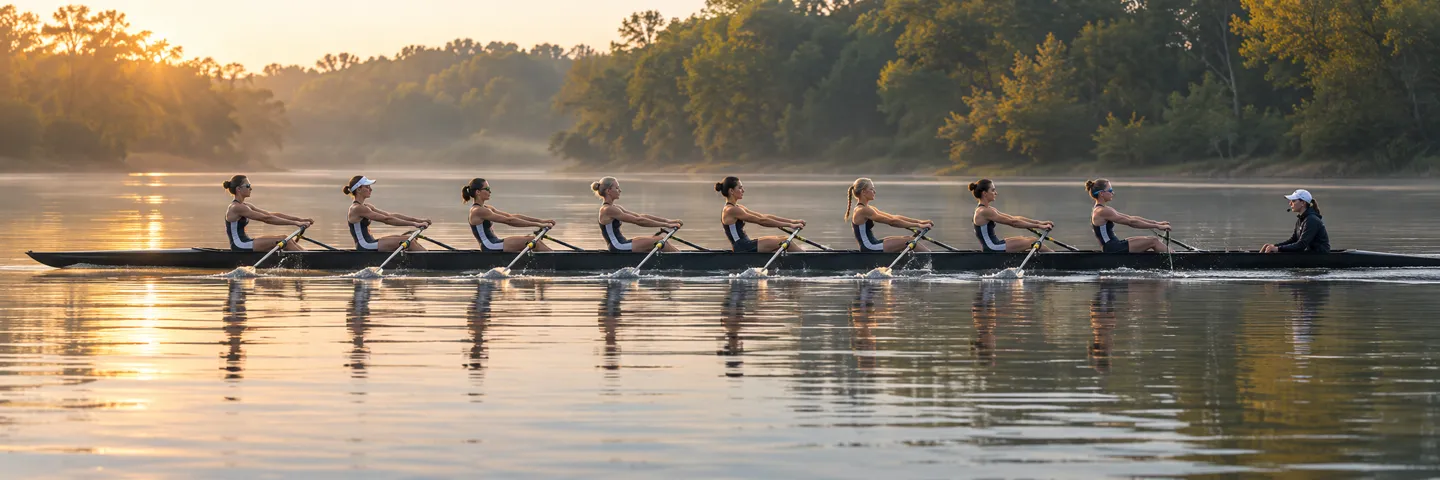
How Rowing Boats Are Classified
Start with three questions: Does the boat use a fixed or sliding seat? Does each rower use one oar or two? What water and activity was the hull designed for?
Flatwater racing shells usually combine a narrow hull with sliding seats and outriggers. The seat allows the legs to contribute to the stroke, and the outriggers place the oarlocks outside the narrow hull.
Recreational sliding-seat boats give up some speed in exchange for a more forgiving hull. Coastal shells also use sliding seats, including in competition. Fixed-seat craft include working and recreational designs such as dories and skiffs, as well as boats raced in traditional events.
In sport rowing, sculling means each rower handles two oars. In sweep, each rower handles one. “Rowboat” is a broad everyday term, while “shell” commonly refers to the lightweight boats used for sport rowing.
When borrowing or buying a boat, ask about the specific hull and rig. A traditional name can cover several builds, and some recreational boats can be set up with a sliding seat.
Racing Shells: Sculling and Sweep, Class by Class
Racing shells divide by how many oars each rower holds. Scullers carry two oars, one in each hand, and sculling boats carry an “x” in their name. Sweep rowers hold one oar with both hands. Riggers alternate down the boat, so half the crew pulls left and half pulls right. Sweep boats are named by crew size alone.
The table lists eight classic boat classes. The minimums apply to eligible competition boats with essential fittings under World Rowing rules. Actual hull length varies by model.
Racing shell classes side by side
| Boat class | Discipline | Rowers | Oars per rower | Coxswain | Minimum boat weight | LA28 flatwater event |
|---|---|---|---|---|---|---|
| Single scull (1x) | Sculling | 1 | 2 | No | 14 kg | Sí |
| Double scull (2x) | Sculling | 2 | 2 | No | 27 kg | Sí |
| Quadruple scull (4x) | Sculling | 4 | 2 | No | 52 kg | Sí |
| Pair (2−) | Sweep | 2 | 1 | No | 27 kg | Sí |
| Four (4−) | Sweep | 4 | 1 | No | 50 kg | Sí |
| Coxed four (4+) | Sweep | 4 | 1 | Sí | 51 kg | No |
| Eight (8+) | Sweep | 8 | 1 | Sí | 96 kg | Sí |
| Coxed pair (2+) | Sweep | 2 | 1 | Sí | 32 kg | No |
Source for boat classes and minimum weights: World Rowing Equipment Compliance .
The symbols read like a code once you see the three marks. An “x” means sculling, so a quad (4x) and a four (4-) both carry four rowers who hold completely different numbers of oars. A “+” means the boat carries a coxswain; a bare dash means it does not. That is the entire grammar, and it is worth learning properly because boat classes are the units every program, regatta entry list and second-hand listing is written in.
The coxswain deserves a paragraph of its own because first-time spectators consistently misread the role. The cox does not row. They steer (in coxed boats, with lines to the rudder), call the stroke rate and run the race tactics. They coach from inside the boat, and on the start line they are the reason a hull worth as much as a car stays straight. A 4+ or 8+ without a good cox is slower long before anyone notices why. In senior sculling boats there is no cox at all; a quad is steered by the bow rower’s toe strapped to a steering line.
En LA28 flatwater rowing program lists singles, doubles, quads, pairs, fours, and eights for men and women. Club and championship classes can differ from the Olympic program.
An eight requires a larger crew, more space to carry and turn the hull, and a longer storage rack. Check the actual boat dimensions before planning a berth or changing a boathouse layout.
Some clubs use octuple sculls for training. These carry eight scullers and typically a coxswain. They sit outside the classic weight table shown above, so confirm equipment rules with the relevant program.
A coached session can help beginners choose between a wide training single and a crew boat. Crew boats add timing and communication to the balance work. Ask which boat the club uses for its beginner sessions and what conditions it allows.
Recreational, Coastal and Traditional Rowing Boats
These descriptions group boats by use and construction. A coastal boat can race, and a traditional fixed-seat gig can be used for competition.
Recreational sliding-seat boats are the on-ramp for adults who want the rowing workout without the racing nerves. Wide open-water singles and doubles trade speed for stability so a beginner can relax and row long, steady kilometers. Kit-built wooden wherries have become the classic self-build project of this world. At the lowest entry cost, a simple rig can convert a stable platform such as a paddleboard into a rowing craft. Recreational hulls sit between the racing single and a rowboat, and they are what most first-time buyers should actually be shopping for.
Coastal boats typically have wider hulls and sterns shaped to shed water. Examples include the coastal single (C1x), double (C2x), and coxed quad (C4x+). World Rowing distinguishes coastal endurance racing from beach sprints, and its technical tables also list a coastal sweep four (C4+). See the World Rowing coastal overview y equipment rules .
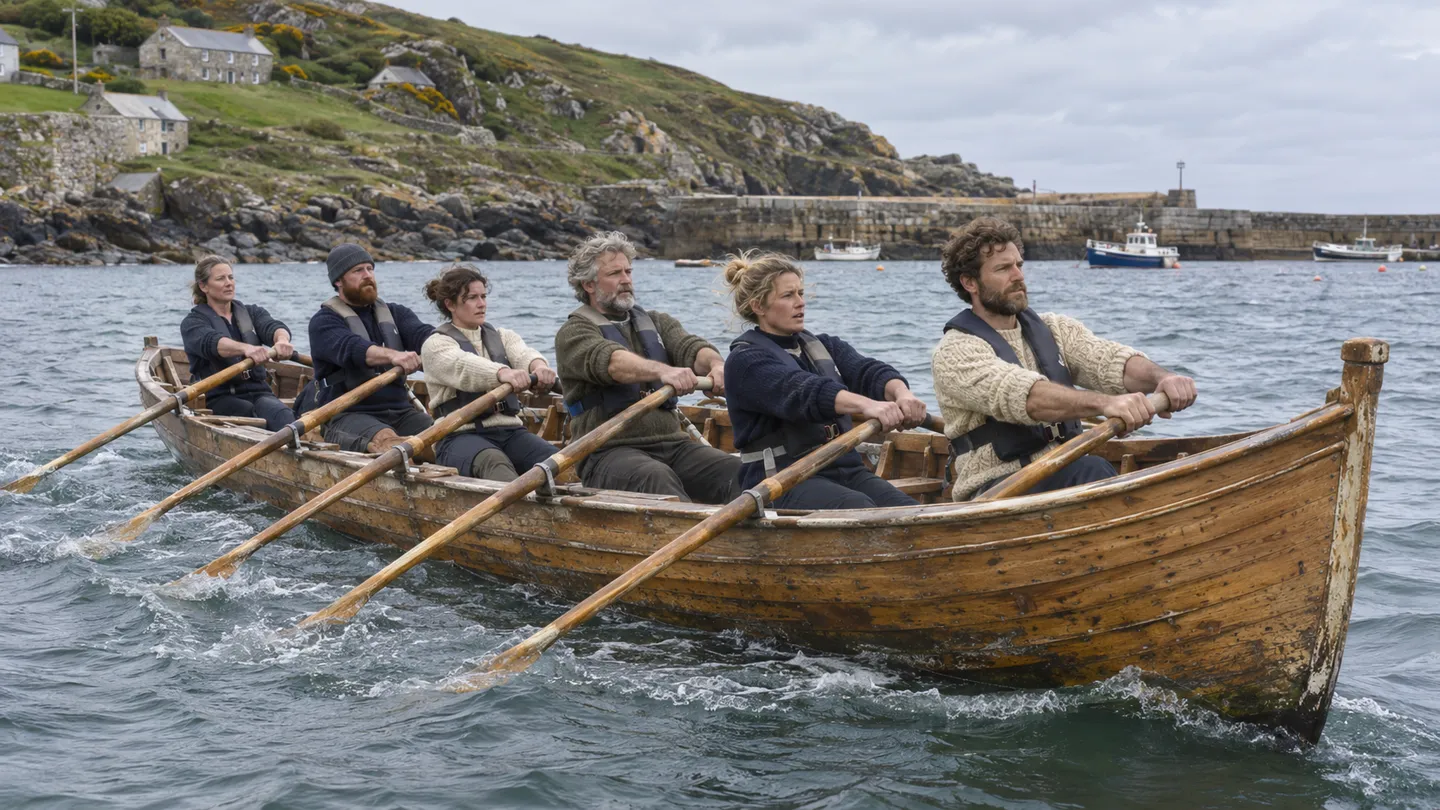
Traditional rowing boats commonly use a fixed seat or thwart. Coastal racing shells generally use sliding seats. On both types, hull form, loading, and the rower’s experience affect handling.
The dictionary of traditional and recreational craft, at a glance:
Traditional and recreational rowboats at a glance
| Barco | Origin in one line | Where it lives today |
|---|---|---|
| Skiff | shallow, flat-bottomed work and fishing boat of sheltered coasts | leisure rowing, tender duty, small-class racing |
| Dory | flat-bottomed, high-sided fishing boat launched from beaches | rowing and sailing hybrids, beach-launch culture |
| Wherry | smooth, fine-lined working boat of rivers and coasts | beloved kit-build and hand-build rowing craft |
| Pilot gig | six-oared wooden pilot boat from Cornwall | active racing circuit with hundreds of club crews |
| Whitehall | fast American harbor tender of the 1800s | classic tender and traditional-rowing favorite |
| Adirondack guideboat | ultra-light double-ended carry boat of Adirondack guides | hand-built tradition, solo expedition rowing |
| Currach | hide-or-tarped light frame boat of Atlantic coasts | Irish coastal racing and cultural events |
| Gondola | flat-bottomed oar-propelled Venetian craft | Venice tradition, separate lineage |
| Sampan | Asian oar-and-sweep working boat | harbor and river transport heritage |
Traditional boat names vary by region and builder. Use the descriptions as examples and check the individual design for capacity and intended water.
A wider hull can feel more forgiving at rest, but stability also depends on hull shape, load and conditions. Check the builder’s limits and allow for the effort of carrying, launching and recovering the boat.
Which Boat Fits Your Water, Skill and Purpose
Families and classes are the map; now the map has to find you. Three questions, in a fixed order, sort almost every real-world case: the water you will row on, the balance you currently have, and the purpose the boat must serve. Answering them in the wrong order is how people end up with a gorgeous racing single that lives in a garage.
Start with your water
Match the hull to wind, wakes, current, water temperature, and your launch access. Flatwater racing shells are best suited to sheltered routes and appropriate training conditions. For an exposed lake or coastal route, assess conditions and the available safety support before choosing a boat. British Rowing RowSafe provides guidance for clubs and rowers.
Then your experience and stability
Initial stability depends on hull form, beam, load distribution and how the rower balances the boat. A steady crew also has to coordinate its timing. Try a boat with a coach before judging stability solely by the number of oars or seats.
Many beginners benefit from a wide training boat, a supervised launch and instruction in stopping, turning, and recovery. Progress to a narrower shell when you can control the training boat and the club approves the conditions.
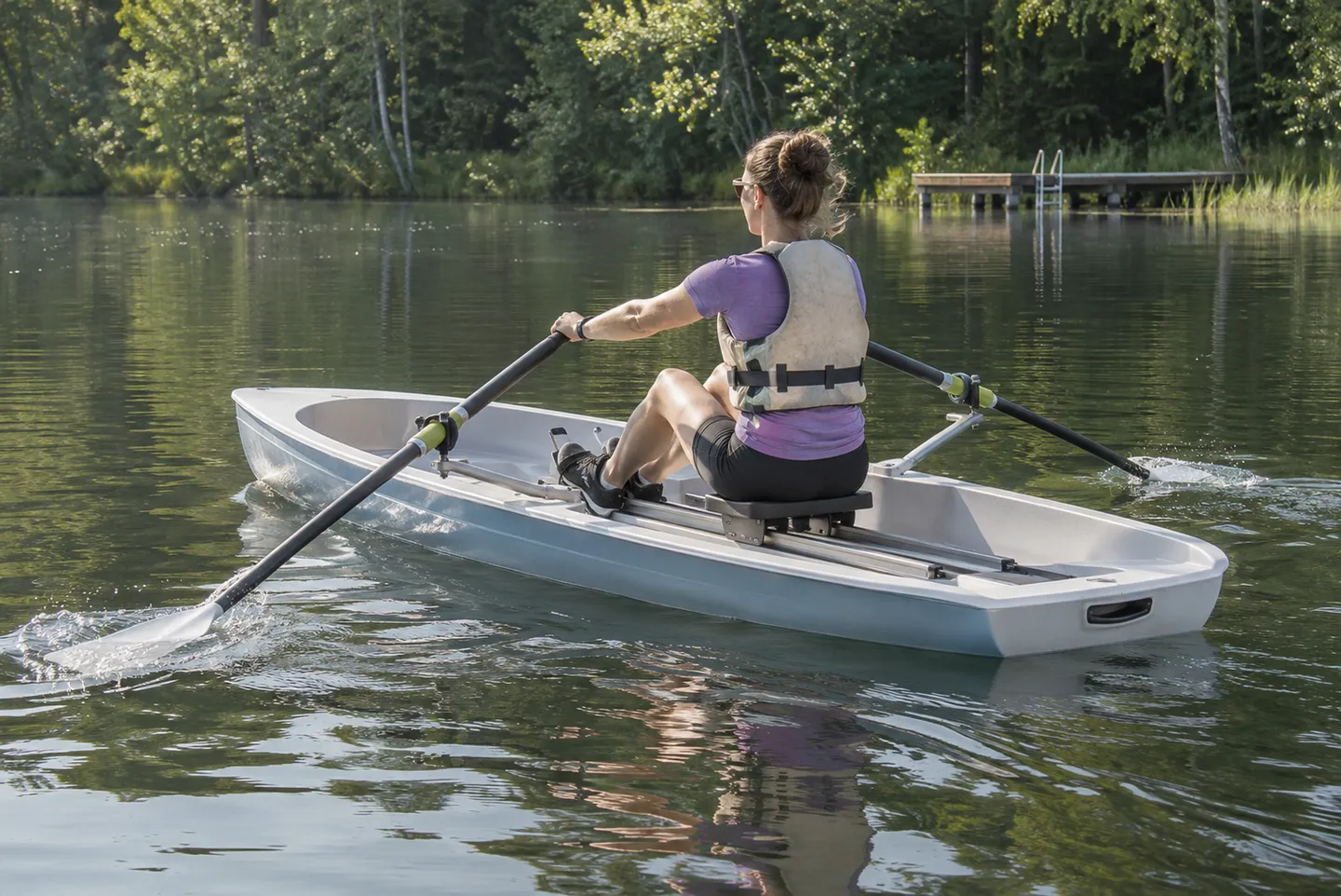
Then fold in purpose, because it overrides the last defaults. If the goal is steady-state fitness, a recreational single or a wherry is the honest choice. If the goal is family outings and tender duty, a fixed-seat traditional type or a stable open boat fits better than anything with riggers. If the goal is racing, the answer is usually a club, not a purchase, because programs own the fleet, the coaching and the water.
A quick self-check before any purchase or fleet decision:
- What is the water classification of my regular stretch: protected flat, open lake, or coastal chop?
- How many hours of on-water experience do I (or my newest crew member) actually have?
- Is the primary purpose fitness, family use, or racing progression?
- Where will the boat live between rows, and who is moving it, me or a trailer?
LA28 lists coastal beach sprints at Belmont Shore . If your club is adding coastal sessions, plan the launch, rescue cover and storage around the specific boats and conditions.
The whole selection compressed into one matrix:
Rowing boat families: fit, failure lines and storage demands
| Family | Representative boats | Best water and use | When this choice fails | Storage and launching demands |
|---|---|---|---|---|
| Flatwater racing shells | 1x, 2x, 4x, 2−, 4−, 4+, 8+ | Sheltered water and race training | Wakes, wind or current beyond the crew and boat limits | Supported rack and enough room to carry and turn the hull |
| Recreational sliding-seat | wide rec singles/doubles, wherries, explorer hybrids | Open lakes and calm bays, steady-state fitness | Racing ambitions (too slow) or real surf (not built for it) | Rack or covered outdoor storage, trailer- or car-toppable in most sizes |
| Coastal rowing boats | C1x, C2x, C4x+ | Coastal training and racing in suitable conditions | Exposure exceeds the crew, equipment or rescue plan | Beach launch or suitable landing, plus storage and cleaning space |
| Traditional fixed-seat boats | Skiff, dory, wherry, gig, Whitehall, guideboat | Recreation, tender duty or traditional racing, depending on design | Load, waves or trip demands exceed the design limits | Plan storage, carrying or trailer access for the hull |
| Inflatable with rowing rig | Compatible inflatable and sculling frame | Portable rowing in conditions allowed by the maker | Rig or hull lacks the stiffness, load rating or handling the outing requires | Allow time and space to rig, dry and pack it |
Use this matrix with the boat builder’s guidance and your club’s operating limits.
What Rowing Boats Really Cost: Price Bands, Hidden Costs and Checks
Serious about buying? The decision chain that actually works runs: purpose first (if the honest answer is “learn to row”, join a club and stop shopping), then storage reality, then water, then budget. Skipping the first step produces the most expensive rowing mistake there is. That mistake is a competitive hull owned by someone who needed a club.
2024 Racing Single Budget Examples
A 2024 single-shell buying guide on r/Rowing gives one experienced buyer’s USD budget examples. The figures apply to racing singles and related accessories. Collect current local prices for your model, condition and location before using them in a purchase budget.
New top-tier racing single
Allow for taxes, transport and accessories
Recent demo hull, top level
Quality hull built in the last 5-7 years
Very good racing hull 10-15 years old with full parts
Doable, but older hulls and less known brands, with compromises
Compare used boats by condition, repair history and included hardware. Transport costs and parts availability can change which offer makes sense. Check the price of a comparable hull with the same rigger and fittings before estimating resale value.
What to Budget Beyond the Hull
Budget for oars, covers, transport supports, straps, storage, wear parts, and insurance where applicable. Ask the club or insurer which equipment and uses are covered. The accessory figures below come from the same historical buyer example.
Accessory costs in the 2024 buyer example
Illustrative accessory budgets in USD from the 2024 buyer guide.
What to Inspect When Buying Used
Ask the seller for the hull serial number, year, crew weight range, repair history and photos of the underside, bow, stern, riggers and fittings. Inspect the hull and arrange a test row where possible. Check whether the price includes oars, covers or transport.
Compare the fit and condition of the individual hull with local service and spare-parts access. Ask whether the seat, tracks, shoes, rigger hardware and replacement fittings are still available for that model.
A suitable rack should support the hull at the points recommended by the builder. Budget for a rack space, protection from weather, and transport if storage is away from the water.
How Rowing Boats Fail: UV, Salt, Storage and Scams
Include hull condition, riggers, oarlocks, tracks, seats and steering in a routine inspection. Review damage after a collision or capsize before returning the boat to service. Use the boat maker’s care instructions and your club’s RowSafe procedures.
Failure mode, and the check you can run
Inspection frequency should reflect use, storage, and exposure to salt and sunlight.
After an incident, follow the club’s emergency procedures. Before the next outing, inspect the boat and oars for impact damage and clean them according to the manufacturer’s instructions.
Planning a Fleet: Boats and Waterfront as One Decision
Everything above was written from a buyer’s chair. This section moves to the other side of the desk, where clubs, schools and training centers decide what to buy, and the same facts reorganize themselves into a planning logic.
Step one: the fleet is planned in boat classes, because classes are the units programs coach, race and budget in. A growing program’s standard shape is wide and stable at the bottom, with novice crews in forgiving hulls and the octuple or quad as the training workhorses. It then narrows toward competitive hulls as crews earn them. Budget-tier boats carry the learning groups; better hulls are reserved for crews actually racing for medals ( r/Rowing , 2023). Quality-versus-quantity is a fleet-structure decision, not a moral one.
Step two: the fleet is a depreciating asset base whose lifespan is decided, as the failure list showed, mostly by where the boats live and how they land. UV, berthing strikes, hull-flex at the rack, salt residue: every line item on that list is a waterfront and storage condition before it is a boat condition.
Step three, the one this guide exists to plant: reverse-engineer the dock from the fleet, not the other way around.
The dock equation
Check hull clearance, boarding height, and simultaneous dock loads.
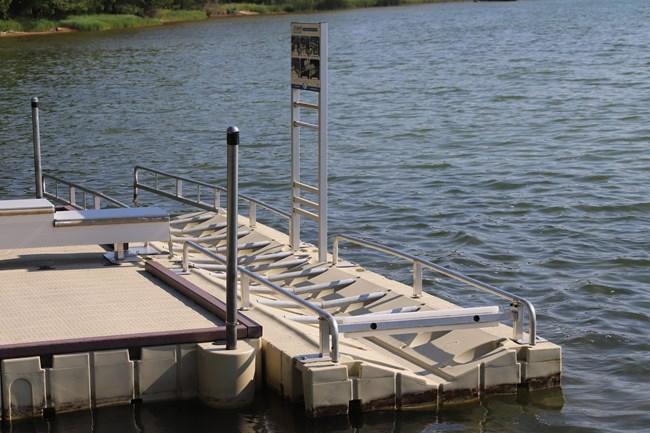
Measure actual hull lengths and rigged widths, including clearance to carry and turn the boats. Set boarding height using the lowest boarding arrangement in the fleet, and check dock freeboard and movement under the expected simultaneous load. Account for changing water levels, launch traffic and shore access. The site designer should confirm anchoring and clearances for the busiest session.
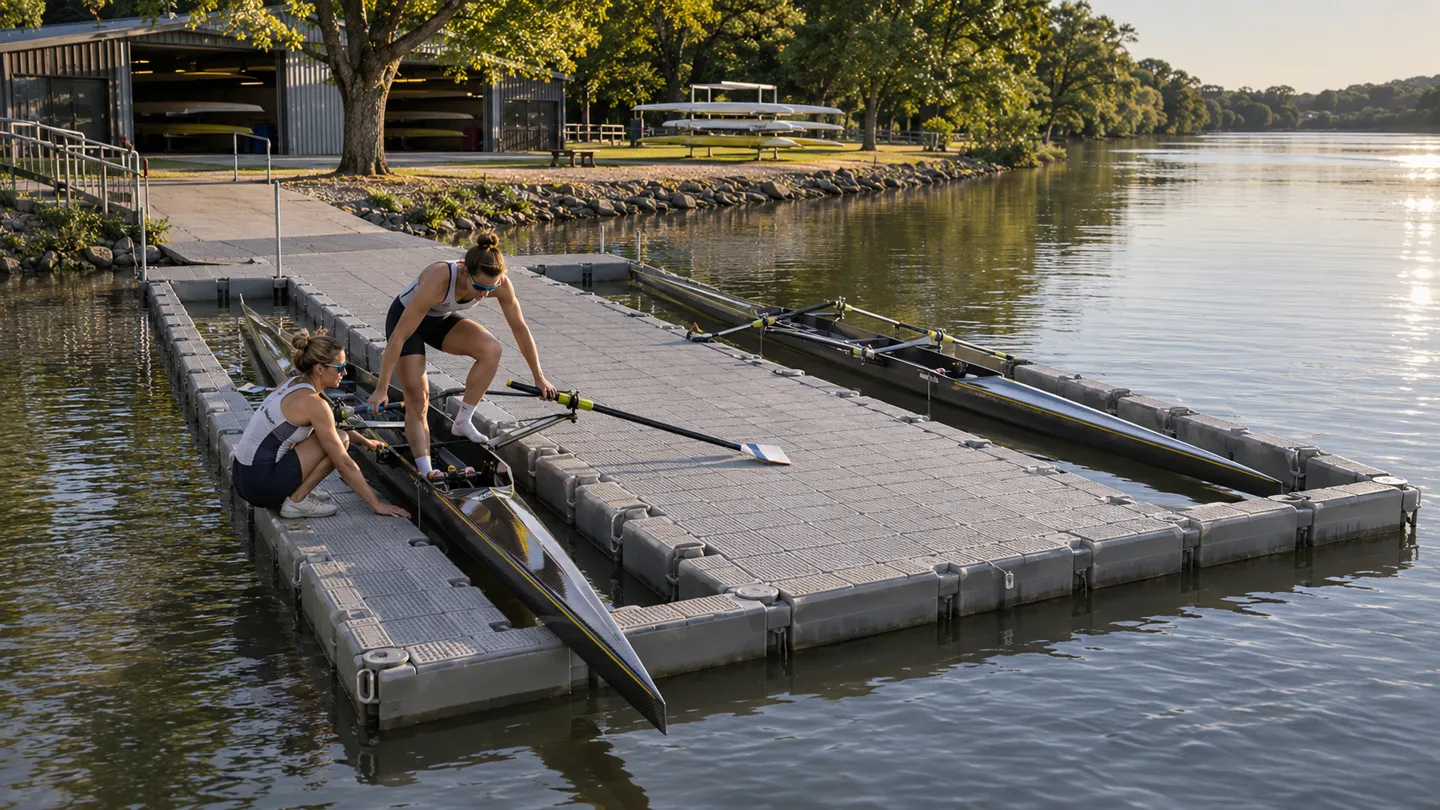
If a club offers both flatwater and coastal rowing, verify that its launch plan can handle each fleet. Beach launches and low boarding docks serve different site conditions. Put staging, rescue access and storage on the same layout.
Share the fleet dimensions, launch traffic, available shoreline, and seasonal water levels when discussing HiSeaDock’s modular rowing docks .
Plan the dock around your fleet
Share your fleet and shoreline details to discuss boarding height, launch space, and a modular dock layout.
Start your dock designReferencias
- World Rowing. Equipment Compliance
- World Rowing. Coastal Rowing
- British Rowing. RowSafe
- LA28. Rowing
- LA28. Belmont Shore
- r/Rowing (2024 buyer account). A Comprehensive Single Buying Guide

 English
 Thai
 Spanish
 French
 German
 Dutch
 Italian
 Arabic
 Indonesian
 Portuguese
 Turkish