
Introduction
One of the significant investments in the marine asset management industry is a high-performance personal watercraft (PWC). Protecting this watercraft investment is paramount; while water is the principal medium of the vessel, but it is also its greatest foe, particularly in cases where the water is unpredictable. Gradual chemical and biological decay starts immediately the hull is placed in water.
Investing in a high-quality pwc dock, a specialized PWC lift, or boat lifts is not just an addition for the rational owner, but a strategic move to minimize depreciation. This guide provides a rigorous paradigm of evaluating the engineering requirements and environmental factors required to relocate the risky submersion to a better dry dock solution. You can extend your boating experience by improving your storage, and in doing so, you can consider your storage as an extension of the engineering of the vessel itself and you will be assured that your investment will be in the best possible state of operation.
Why Choose a Floating Jet Ski Dock?
Constant submersion is the primary enemy of the life of a PWC. Even though many jet ski owners leave a boat in water, it has a silent damage. Your hull gelcoat is semi-permeable; water molecules creep in with time, causing osmotic blistering (hull pox) that makes the structure weak. Meanwhile, bio-fouling, or the growth of algae and barnacles, results in an enormous drag, reducing fuel consumption and maximum speed. Besides chemistry, fixed docks are also mechanically hazardous; they do not go up and down with the tide, so your jet ski will be smashed by the pier or dragged by its mooring lines as the water level fluctuates.
A floating dock acts as a safe harbor, providing a Drive-on ( Dry Storage ) option that eliminates these variables. It provides peace of mind knowing your vessel is 100% dry and safe, , requiring less time for hull cleaning and more time on the waves. It flows in ideal time with the tides such that your PWC is at the ideal dock height, which removes the inconvenience of lifting it by hand or the mechanical strain of traditional mooring. It is a strategic investment that leaves your hull in finish, leaves your resale value, and leaves your craft always in good condition to ride.
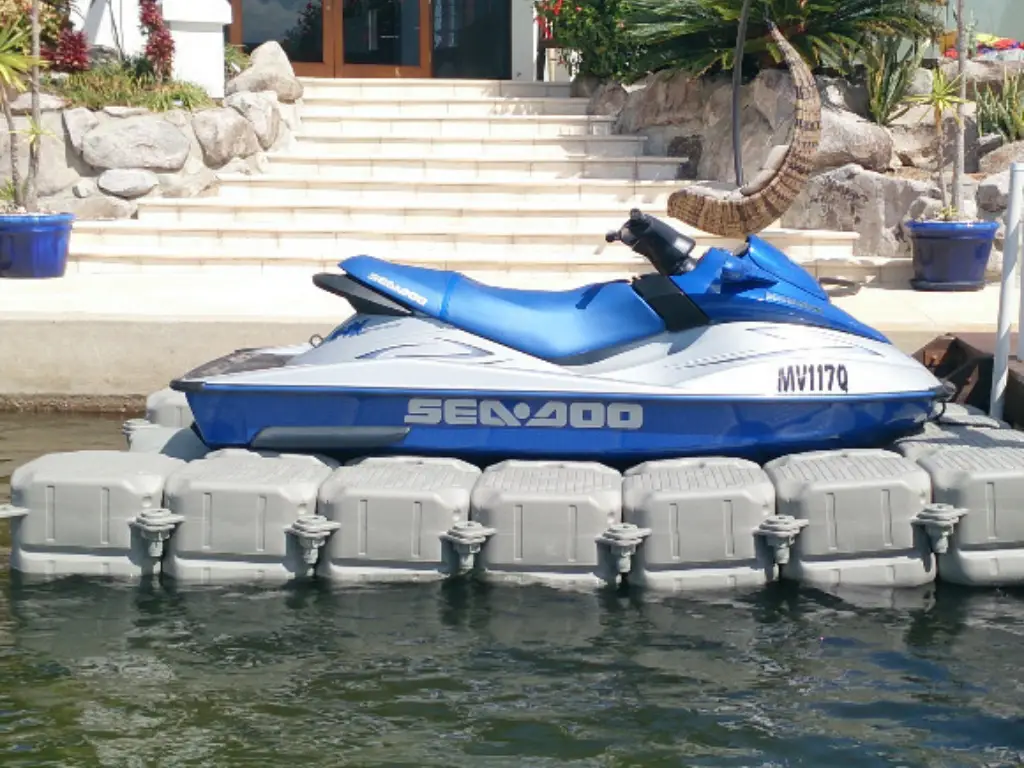
Floating Jet Ski Docks
One trade-off between structural permanence and operational portability is the selection of a docking architecture. Whether you are docking small boats or heavy cruisers, the following matrix compares the dominant systems.
Docking Architectures Comparison
| Feature | Modular Blocks | One-Piece Ports | Inflatable Platforms |
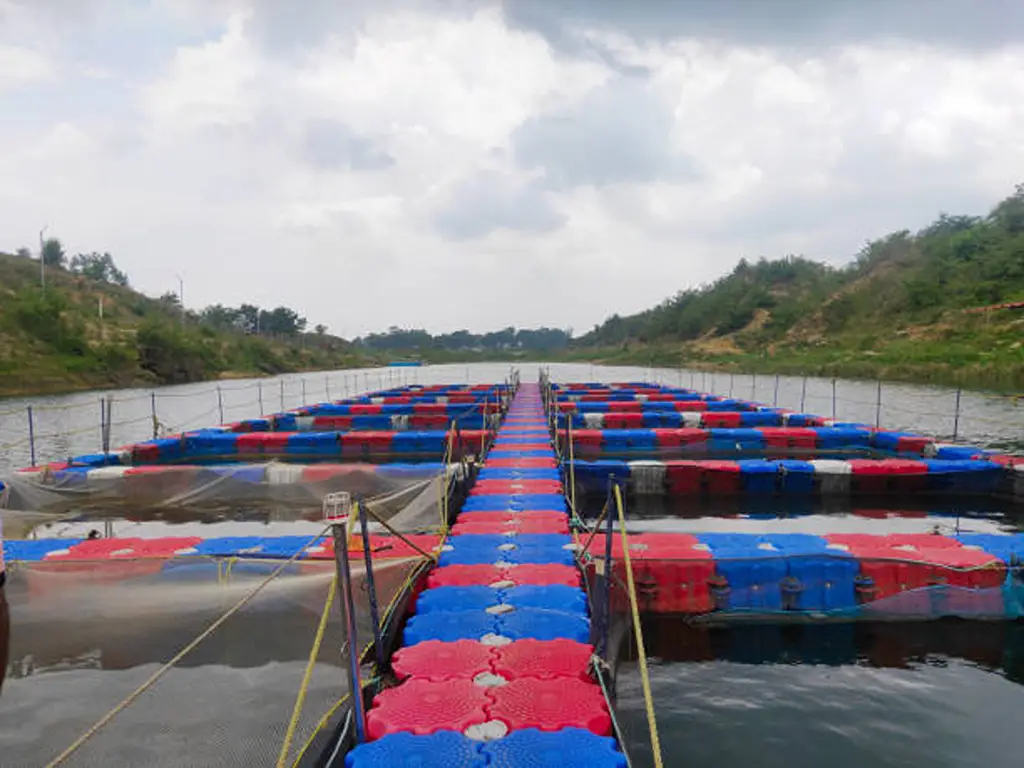
| Construction | Interlocking HDPE cubes with reinforced lugs. | Solid rotomolded ramp with integrated rollers. | High-pressure drop-stitch reinforced PVC. |
| Best For | Multi-vessel setups & custom shorelines. | High-speed, frequent private use. | Super-yachts & seasonal storage. |
| Flexibility | Infinite: Easily reconfigured or expanded. | Static: Fixed dimensions; non-adjustable. | High: Deflatable for deck storage. |
| Structural Integrity | High (Wave-energy dissipation). | Excellent (Rigid walking surface). | Moderate (Prone to puncture/leaks). |
| Asset Lifecycle | 15+ Years (Individually replaceable). | 10–12 Years (Single-point failure risk). | 3–5 Years (High UV degradation). |
Modular Blocks have the highest utility-to-life span ratio to the long-term investor. The system is a living asset; in case you add more fleet or change the location, the structure can be redesigned without tensile strength being lost.
One-Piece Ports, however, are ergonomically designed to be fast but cannot be adapted to new hull designs. Inflatable Platforms remain a niche product to the super-yacht market, where the price of deck space is so high that the trade-off in long-term durability is acceptable. Modularity is more appropriate to hedge future requirement changes to protect permanently on shore.
Buying a Jet Ski Dock? These 3 Environmental Factors Should be Considered First
Before installing the dock system, you need to consider the interaction between the dock system and your particular waterfront environment to make sure that your investment will withstand the test of time.
- Salinity and Extreme Climates: The major threats to dock longevity are water chemistry and local weather. Saltwater is aggressively corrosive and high grade, corrosion resistant hardware is required to avoid structural failure of the joints in a few years only. In addition to salinity, a high-end dock should provide high climate resistance. This implies that the material should be designed to resist the pressure of freezing ice during winter and the high UV heat during summer without being brittle so that the structure does not collapse despite the season.
- Water Movement and Wave Exposure: The stress on your dock is determined by the energy of your site, be it a calm lake or a busy waterway. In narrow waterways or near a shared boat ramp, heavy wakes expose the structure to torsional forces. The high-strength connection system is essential in such high-movement regions to make sure that separate modules will not snap and decouple under the constant pressure of passing ships and waves.
- Tidal Adaptation and Shallow Water Safety: The best feature of a floating system is that it is tidally adapted, eliminating the usual problem of fixed structures, the unreachable dock. These docks are raised and lowered in perfect time with the water, so that your PWC is always at the optimal launching height. But in shallow or tidal water you should be careful of grounding. When the water level falls sufficiently to allow the dock to be on a rocky seabed, the modules may be worn away by constant abrasion. In these conditions, it is necessary to provide sufficient clearance or select a reinforced bottom design to prevent physical damage to your investment.
The Five Golden Standards of the Best Jet Ski Docks
High-quality Materials and Rotomolded Strength
The industry standard is High-Density Polyethylene (HDPE) that is used in elite systems like the permaport xpress and snap port series due to its high impact resistance, UV protection, and anti-corrosion characteristics. Compared to wood, aluminum, or inflatables, HDPE is almost indestructible and resistant to the severe marine environment. The latest product innovation in this space involves rotomolding, which produces a single-piece structure. Rotomolding produces a single-piece structure with smooth corners, unlike cheaper blow-molded products, which have weak and thin corners. This stress-free design offers enormous structural integrity and makes the dock fully watertight, which removes the possibility of internal leakage or seam failure with time.
There are two essential additives that are necessary to ensure long-term safety and durability. To begin with, internal EPS foam-filling provides an unsinkable core, which keeps the dock afloat in the event of the outer shell being punctured, which is very unlikely to occur. Second, the HDPE should be mixed with high grade UV stabilizers to ensure that the material does not become brittle due to constant exposure to the sun. A good dock is an investment that will last 15 or more years. This quality can be frequently determined by a thick, matte finish; a surface that is too glossy may mean that there is no deep-seated UV protection, and the surface may crack and degrade in only a few seasons.
Weight Capacity and Buoyancy in the Real World
The dock must be of gold standard and Full Dry Storage with the hull being 100 percent above the waterline to prevent osmotic blistering. The determination of buoyancy should never be determined using dry weight. Instead, you must take into account the overall operating weight, including fuel, gear, and batteries, and a 20% safety margin. To illustrate this, a 400kg fully-loaded craft requires a dock of at least 500kg rating to be stable in rough water.
In addition, the dock must be capable of balancing the dynamic and the static buoyancy. While a jetport small pwc is ideal for lightweight models like the sea doo spark, heavy 3-seaters require a system with a more robust operating capacity to prevent the dock from diving during launching. A good system is that which is displaced sufficiently to allow the momentum of a drive-on maneuver. A stable platform prevents the dock from diving during the launching process and reduced mechanical strain in every docking process.
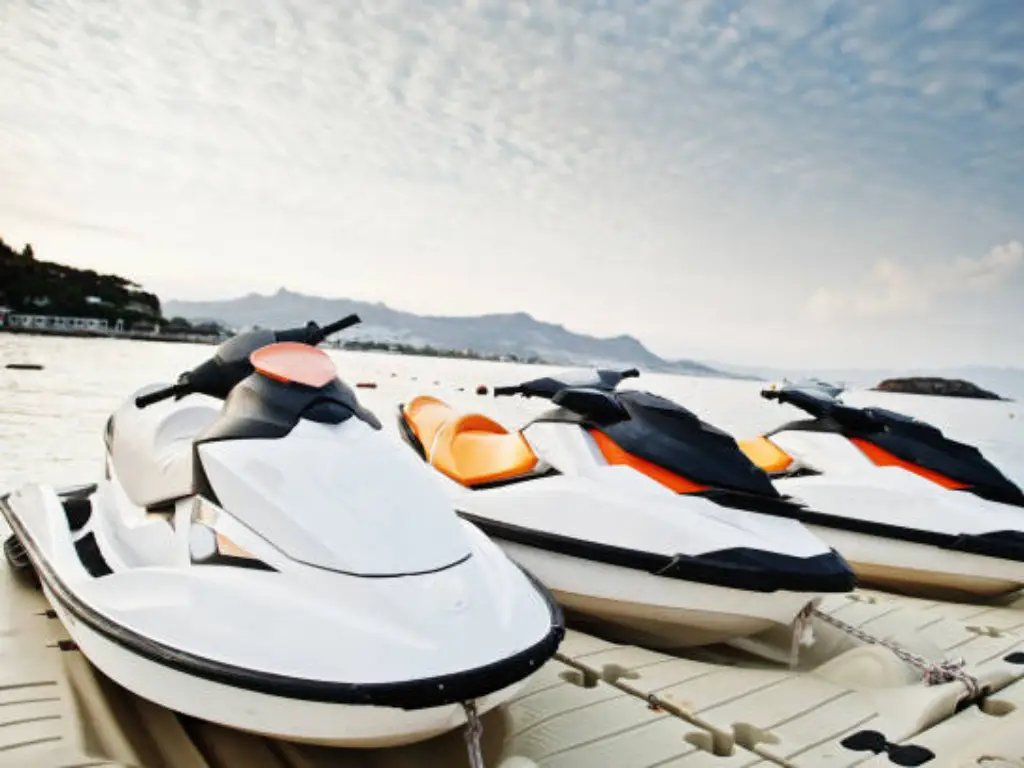
Continuous Drive-On Protection and Hull Protection
The distinguishing feature of a high-quality floating dock is the Drive-On design that makes the landing process more of a smooth glide than a bang. This smooth ride is greatly reliant on the strategic number and positioning of inline rollers. Systems like the jetport glide and jetport roll rely on the strategic positioning of snap port inline rollers. These rollers help the vessel to slide into position by distributing the weight of the watercraft over several contact points, eliminating the stress concentration on the hull.
Since the hull shapes, like the deep-V of a Sea-Doo or the more flatter shapes of a Yamaha, differ greatly across brands, adjustable roller systems are essential. They can be custom-fitted to ensure that your PWC is centered and safe. For longer crafts, a front extension pwc or a new middle extension can be added to the modular frame. If you need the widest pwc port available, look for a wide port design that allows for a long front platform, ensuring the nose of the craft is fully supported. These systems are made using high quality non-marking materials and industrial grade corrosion resistant hardware to protect your investment. This guarantees smooth, jam free operation even in rough salt water or sandy environments, which practically removes the scuffs and scratches that are typical of the static platforms.
In addition to mechanical performance, the dock should be concerned with the safety of the rider. The worry-free mounting, dismounting, and maintenance environment is provided by a stable platform with an integrated non-slip surface and a large walking area. This increased stability is whether you are flushing the engine or putting on a winter cover, you can move around your craft with complete confidence even when the surface is wet.
Connection Strength and Structural Integrity
The lug and pin system is durable and is the foundation of any modular dock. These are the primary load-bearing connection points that bear the load of waves and impacts. Professional grade systems are those with reinforced lugs that are very high in tensile strength, and therefore, modules are firmly locked together even in extreme environmental conditions.
A great system is designed to absorb the wave energy. A good dock is not a hard and brittle one, but a flexible one that moves with the water. This is a controlled elasticity that allows the platform to take in kinetic energy in case of a storm, and the connectors are not sheared. Precision engineering is also applied to these joints to prevent the widening of the gaps with time so that the surface is tight, level and stable throughout its life.
Advanced Safety and Surface Ergonomics
A dock being a busy walking surface must must provide easy access at all times. It should contain anti-slip textures that are carved into the surface for a small amount of walking room around the vessel to provide safe footing and inbuilt drainage to prevent water pooling and algae growth. These features significantly reduce the risk of falls and slips.
The safety of the user is also a concern of ergonomics. Beveled edges and sloped corners eliminate the chances of scraping and tripping to the users. Finally, the material must be heat dissipating. The HDPE quality of the surface makes the surface comfortable to the bare feet even in the direct and intense sunlight, which renders the environment safe and comfortable to all users.
Fitting the Dock to Your PWC Model
The decision of which docking system to use is not a one-size-fits-all process; it entails balancing the physical attributes of your PWC with your specific operational needs.
- Hull Profile and Weight Compatibility: Lightweight and Rec-Lite models are more versatile and traction oriented than extreme buoyancy. These units are light and therefore the system should focus on high grip surfaces and low resistance rollers to ensure that the craft is safe and easy to launch. Deep-V hulls in heavy-duty performance cruisers (400kg+) on the other hand require high-displacement buoyancy and precise roller positioning. These bigger vessels need a central guidance system to prevent docking off-centre and a more robust structure to absorb the high level of kinetic energy generated during the drive-on manoeuvre.
- Intensity of Usage and Maintenance Standards: How you ride dictates the longevity of your dock hardware needs. Leisure use requirements and commercial rental requirements are quite different on the weekend, and high frequency use accelerates roller bearing and anti-slip wear. In the case of a daily rider or a rental business, you need to consider industrial grade hardware and designs with replaceable wear parts. With the choice of a system with removable rollers, the system can be kept at a relatively low cost, which will lower the long-term operation costs (OpEX) by a significant percentage without the need to replace entire modules.
- Fleet Size and Layout Scalability: When you have a fleet of vessels, the key advantage of a modular system is that it can increase your walkway space. Professional layout ensures that there is enough clearance of two or more riders to prepare gear without interference. This is a modular skeleton that allows you to re-configure the platform to L-shaped, T-shaped or parallel as your fleet grows. This scalability will ensure that your docking system can be scaled to your distinct shoreline and fleet size, to ensure that your infrastructure is not obsolete.
Jet Ski Dock Pricing Guide and Budget Guide
The pricing and budget guide of jet ski docks is in a tabular format as shown below:
| Tier | Price Range | Key Features & Best Use Case |
| Economy / DIY | $1,000 – $2,000 | Inflatable platforms or basic modular cubes. Best for lightweight PWCs, budget-conscious owners, or temporary seasonal use. |
| Professional / Private | $2,000 – $3,500 | High-quality PWC ports or modular systems with integrated rollers. Offers the best balance of durability and ease of use for most private owners. |
| Commercial / Elite | $4,000 + | Large, heavy-duty docks with custom walkways. Engineered for luxury cruisers, multi-PWC setups, or high-traffic rental operations. |
Shipping costs, professional installation, and anchoring hardware are the hidden costs that you must always take into consideration when planning your investment. These indirect costs usually add 15-20 percent to the total cost of the project.
The Professional Tier is the gold standard of the roller systems which are required by the private owners to guarantee that your hull gelcoat is protected in the long term. The Elite Tier is less expensive to invest in when you are operating a commercial site since the hardware will be industrial grade and the wear parts will be replaceable, which will save you a lot of money in the long-term operational costs (OpEX).
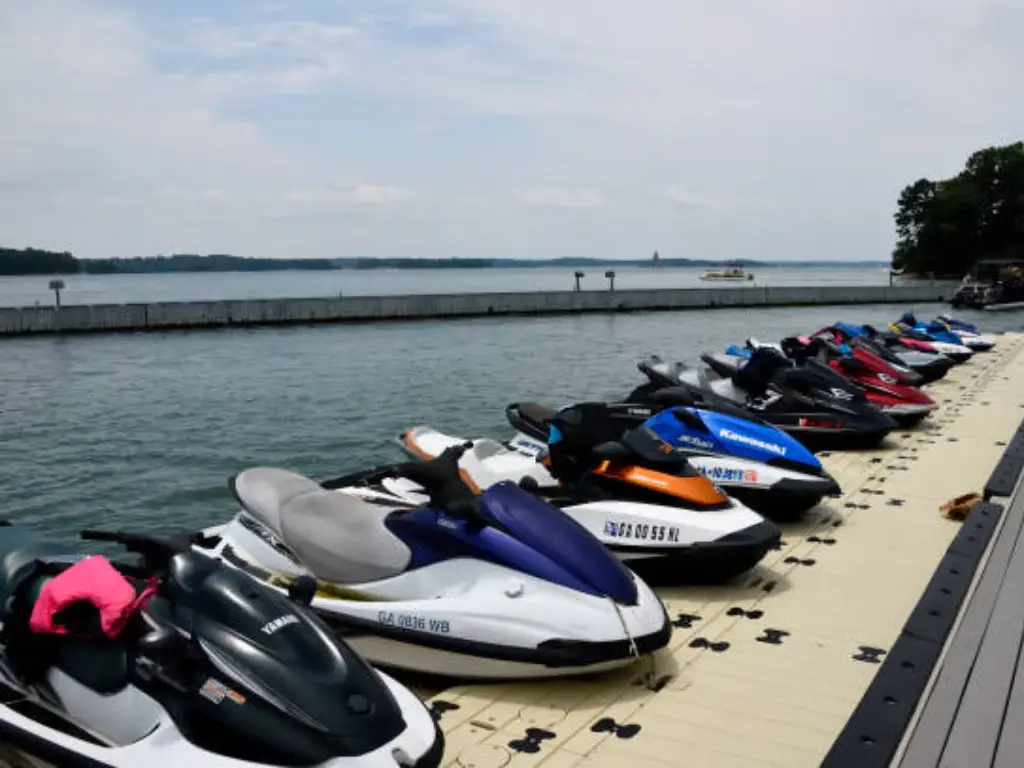
Deep Dive: Leading Brand Comparison
The Ultimate PWC Port Comparison Table
Despite the superiority of all brands, the technical information reveals that there are distinct differences in engineering and value. Use this table to compare the benchmarks that affect daily performance.
| Feature | Wave Armor SLX | EZ Port 2i | Jet Dock | Hiseadock (Modular) |
| Price Est. | $2,800 – $3,800 | $2,500 – $3,600 | $3,000+ | $1,200 – $2,500 |
| Rollers | 12-16 (High density) | 8-12 (Adjustable) | None (Static) | 4-12 (Customizable) |
| Warranty | 5-10 Years | 8 Years | Lifetime (Limited) | 5 Years (Replacement) |
| Dead Weight | High (Thick shell) | High (Solid build) | Moderate (Hollow) | Medium (High-density) |
| Material | Rotomolded HDPE | Linear Low-Poly | Modular Poly | New Gen HDPE + UV |
| Best For | Luxury Cruisers | Public Marinas | Shallow Water | Universal / DIY |
Brand Analysis: What Brand Fits You?
- Wave Armor (The Luxury Choice): Wave Armor is preoccupied with high roller density and high aesthetics. It has an incredible glide-on touch and is best suited to individuals who have 3-seater luxury cruisers and would like to have a dock that portrays the luxurious look of a waterfront villa.
- EZ Dock (The Industry Standard): EZ Dock is the one that is reputed to be the standard of the public marinas with its beige color and extreme durability. Its patented material is meant to resist heavy traffic and it is the safest to users who need a dock that can fit the already existing large scale commercial systems.
- Jet Dock (The Original Modular Design): Jet Dock is made to work in harsh environments, particularly in very shallow water where the rollers of the conventional type cannot be submerged. The air-lift or non-portable cube design is most appropriate to the users who need non-linear layouts or a platform that can be customized to a particular shape.
- Hiseadock (The Manufacturer Advantage): Hiseadock is the most utility-price ratio solution as it is a factory-direct solution. It is targeted at owners seeking tensile strength and modular flexibility that are professional grade but not at the luxury price point. It is the most appropriate to those who are planning to expand their dock in the long term or those who would like to be directly sponsored by the manufacturer.
Why Hisea Dock is the Best All-Round?
Since 2006, Hiseadock has been redefining performance-based floating systems and has been serving over 80 countries across the world. Most generic modular systems start to exhibit terminal symptoms of failure after only three years, usually due to worn-out connection pins that cause unstable platforms or thin-walled pontoon seepage that undermines the buoyancy, but our Manufacturer Advantage is designed to avoid these traps.
We are determined to live long by introducing a new generation of HDPE with high-quality UV stabilizers, which will have a service life of 20-30 years compared to the normal products in the market. Our systems have 19mm-thick connection ears in stark contrast to the industry-standard 10mm lugs which often break under the pressure of the waves. They have been tested in the laboratory to resist diagonal tensile loads up to 14,389 N, which is sufficient to prevent the zipper-like decoupling that ruins cheaper docks. This high-quality engineering ensures a stable and coherent walking surface that captures wave energy and is also stable in difficult shallow-water conditions where grounding is a concern.
We know that in the marine business, quality should be accompanied by availability. We provide the best lead times in the industry with standard orders shipped in 7-10 days using the most recent rotomolding and blow-molding technology to provide consistency in wall thickness and leak-free integrity. To ensure additional security of your investment, we support our systems with a 5-year replacement warranty and 24/7 technical support. All Hiseadock systems are low-maintenance, high-performance shields to your PWC with slip-resistant surfaces and ISO-9001/CE-certified structural integrity. Choose the brand that provides factory-direct value and the modular flexibility to change with your fleet.
The Real World Problems of Installation and Anchoring
The most striking aspect of the perfect floating jet ski dock is that it is stable over a large variety of shoreline geographies. Professional installations in the case of silt or mud bottoms are on screw-piles or weighted deadman anchors to provide a good hold in soft substrates. Stiff Arm bracket system is required on rocky bottoms where piling is impossible, to keep the dock in place to a fixed structure on shore, that it may move with the tidal action, but not laterally. The installation must be made of special brackets, shock-absorbing cushions of industrial quality, and stainless steel fasteners to ensure long-term and corrosion-resistant security to be mounted on the side to the dock. This bespoke solution ensures that your investment is secure and working regardless of the underwater conditions.
Maintenance Myths: A Pro-Active Lifecycle Checklist
Although the finest floating docks are usually sold as maintenance-free, it is necessary to maintain the mechanical efficiency and safety of the docks proactively. The fact is that anti-slip textures may be compromised by algae and moss with time, and internal roller axles may be taken by salt and grit. To ensure the best performance, you need to adhere to a tiered maintenance plan that changes with the age of your dock.
- Annual Performance Tuning: Each year, a simple checklist will make sure your dock is safe and operational. Begin with a good power-wash to get rid of slippery biofilm and inspect all connection pins to ensure that they are not growing any gaps or loosening. More to the point, grease roller bearings with marine grade grease; this is an easy measure that will ensure that the “jamming” that can be a common occurrence in older, neglected systems is avoided, and that you can always enter the water with ease.
- The 5-to-10-Year Horizon: When your dock is in its second decade, cleaning is no longer the priority, but structural preservation. Plastic embrittlement can be caused by ten years of intensive UV exposure even with high-grade stabilizers. Micro-cracks can be checked periodically and UV-protectant treatments are applied to restore the flexibility of materials and avoid cracking. Mechanically, you might finally require a complete roller bearing replacement to keep that “like-new” glide. Lastly, do not overlook the bottom; in saltwater, the bottom can be heavily biofouled with barnacles, which adds weight and drag to the dock. By scraping these attachments after every few years, you will be guaranteed that your system has retained its original buoyancy and is the most dependable solution on the waterfront.
Allowing and Environmental Laws
Environmental compliance is the key to a hassle free installation in the selection of the most appropriate floating jet ski dock. Floating systems are also popular as temporary structures in the US (USACE) and Canada (DFO), and the permitting process is far faster than that of fixed docks, which need seabed-disturbing piles.
Besides the ease of approval, high quality modular docks are also made to be light penetrating. These systems minimize the shadow footprint on the ocean floor, thus preserving the underwater vegetation and saving valuable aquatic habitats. This makes a modular floating dock the most environmentally friendly, permit-compliant solution to any modern waterfront.
Conclusion
The selection of the most suitable floating jet ski dock is a very important watercraft investment in protecting your vessel against the relentless threats of osmotic blistering and bio-fouling. By focusing on the Five Golden Standards—from UV-stabilized HDPE to precision inline rollers—you ensure your PWC stays in peak condition and its resale value over time. Whether you are more concerned with modular flexibility or high-performance looks, the shift to dry-docking is the perfect solution against the high cost of hull repairs in the future. Lastly, a professional docking solution will make sure that your experience is defined by performance and reliability, rather than the gradual decline of the experience because of continuous submersion.

 English
  Thai
Thai  Spanish
  French
  German
  Dutch
Dutch  Italian
  Arabic
  Indonesian
  Portuguese
  Turkish