
A Floating Swimming Pool in Quzhou, China
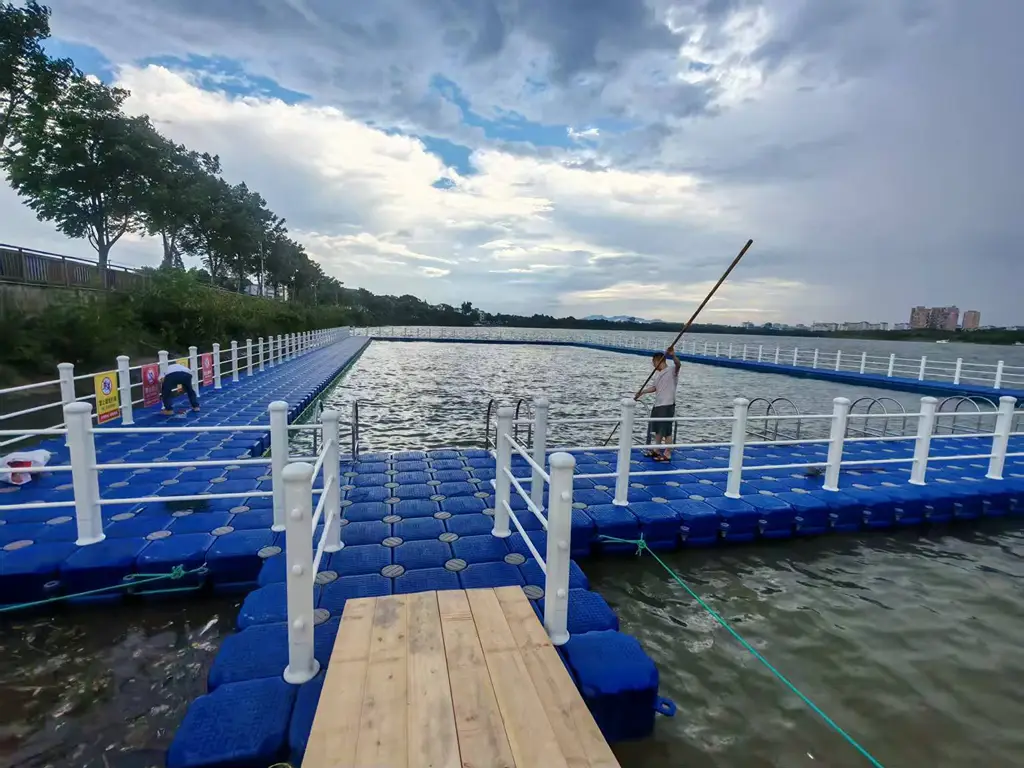
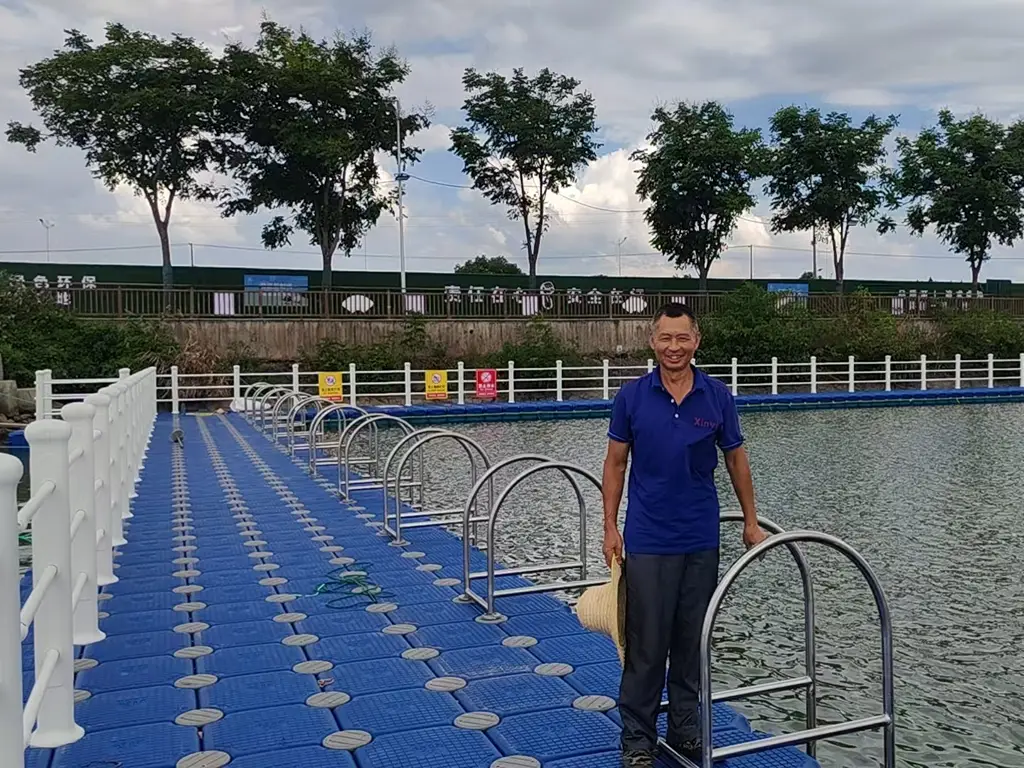
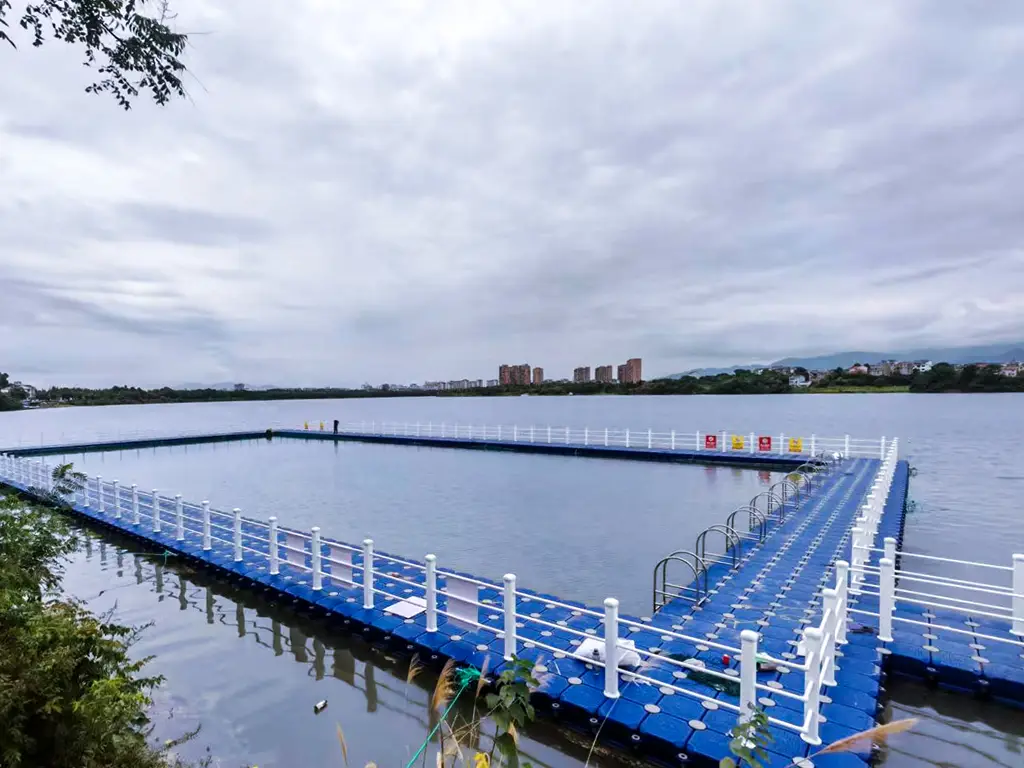
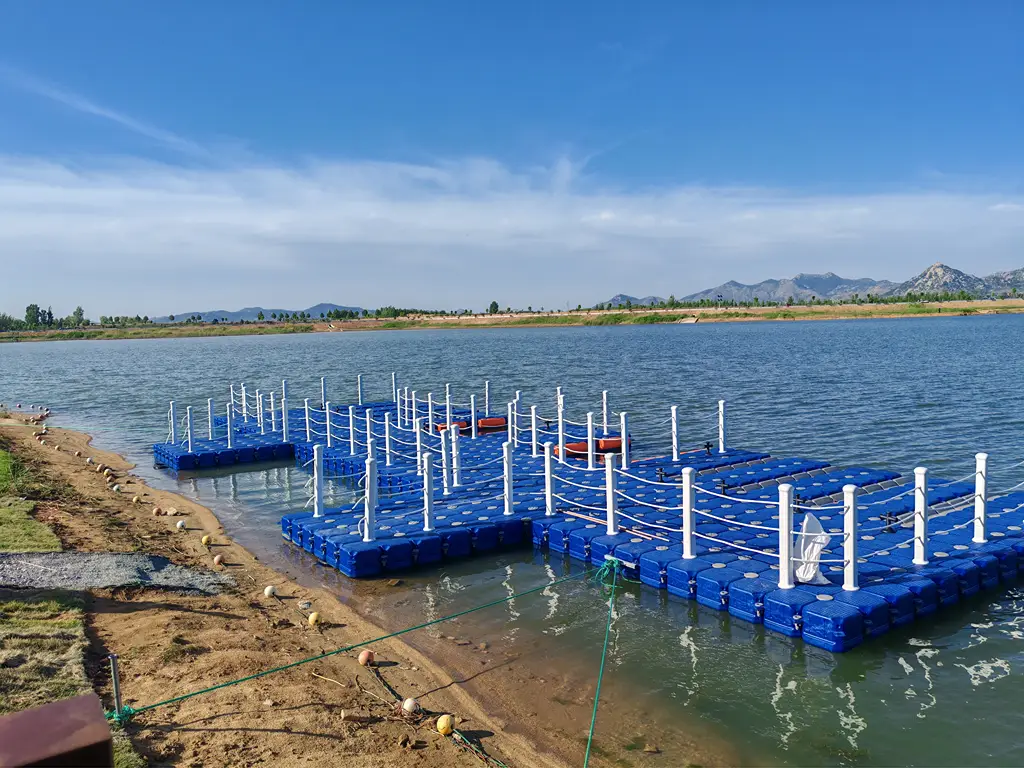
A unique floating swimming pool in Shawan Village, Kecheng District, Quzhou, Zhejiang Province, China, has attracted attention on social media. Built on the calm waters of Xin’an Lake, this rectangular swimming area offers visitors a refreshing way to enjoy swimming while surrounded by open water, distant mountains, and beautiful sunset views.
Unlike conventional swimming pools that typically require extensive excavation and permanent civil engineering works, this project uses modular floating pontoons to create a swimming platform on the water.
The concept demonstrates how floating structures can help waterfront resorts, scenic attractions, and tourism operators develop distinctive recreational facilities while reducing the need for major onshore construction.
1. A New Waterfront Attraction: Swimming on the Water
The floating swimming pool takes advantage of the wide water surface and natural scenery of Xin’an Lake.
Instead of constructing a traditional pool on land, the project uses interconnected modular floats to form a defined swimming area. This approach offers greater flexibility in layout and can be suitable for waterfront tourism projects where conventional construction may be difficult, expensive, or disruptive.
According to the project description, the swimming area uses natural lake water, with a protective net installed approximately 1.5 meters below the surface and four safety personnel assigned to support operations.
The combination of open-water scenery and a designated swimming area creates a different recreational experience from that of a conventional indoor swimming pool.
For tourism developers, this type of project illustrates an alternative way to make productive use of existing water resources.
Important: Floating swimming facilities require site-specific engineering, water-quality assessment, suitable anchoring, access control, and appropriate safety measures. Local regulations and operating requirements must be evaluated before construction.
2. Modular HDPE Floating Pontoons: A Flexible Solution for Water Projects
How can a stable, rectangular swimming platform be built on open water?
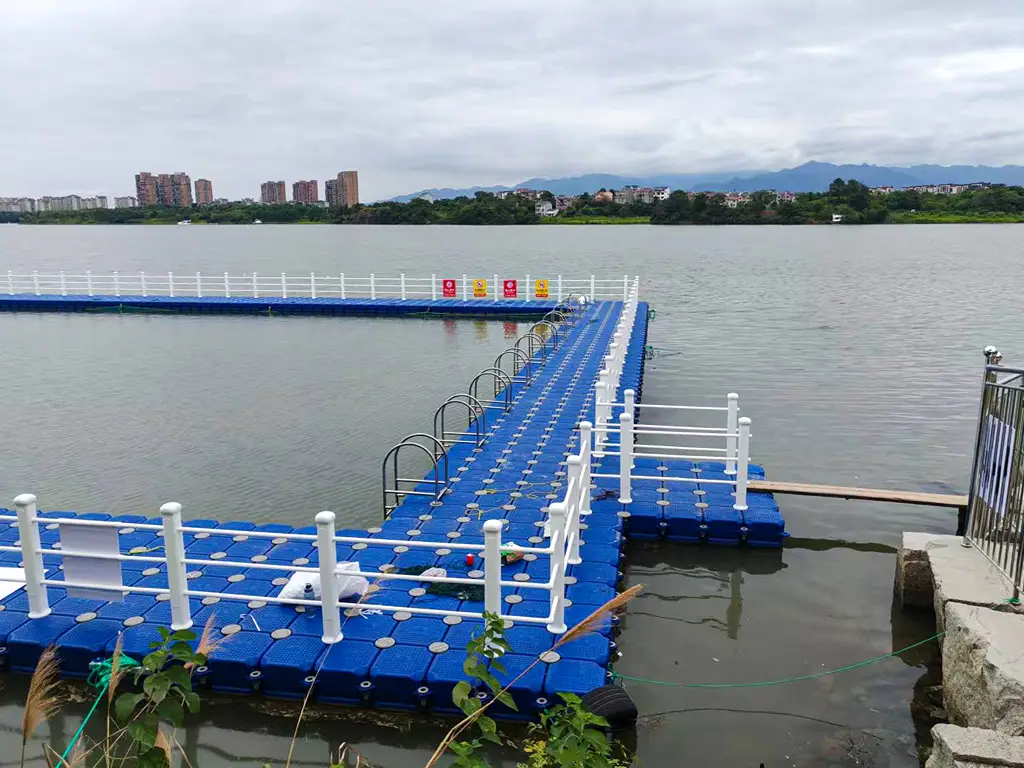
One possible solution is a modular floating pontoon system made from high-density polyethylene (HDPE).
Similar to building blocks, individual floating modules can be connected to create platforms of different shapes and sizes. Depending on the project requirements, the system can be designed to accommodate swimming areas, access walkways, safety barriers, steps, and other supporting components.
Key Advantages of Modular Floating Systems
1. Reduced need for extensive civil engineering
Floating pontoon systems can often be installed without large-scale excavation or permanent foundations beneath the water. Actual site preparation and anchoring requirements depend on local conditions.
2. Flexible layouts and scalable designs
Modular floats allow project developers to configure different platform dimensions and layouts. Additional modules may be incorporated into a system when its original design and load capacity permit.
3. Efficient installation and removal
Compared with many permanent waterfront structures, modular floating platforms can offer a more flexible installation process. Their modular construction can also simplify relocation, maintenance, or seasonal dismantling.
4. Durable HDPE construction
HDPE is widely used in floating pontoon applications because of its resistance to moisture, corrosion, and many common environmental conditions. Product performance depends on the material grade, manufacturing quality, wall thickness, UV stabilization, structural design, and maintenance.
5. Multiple applications across the tourism industry
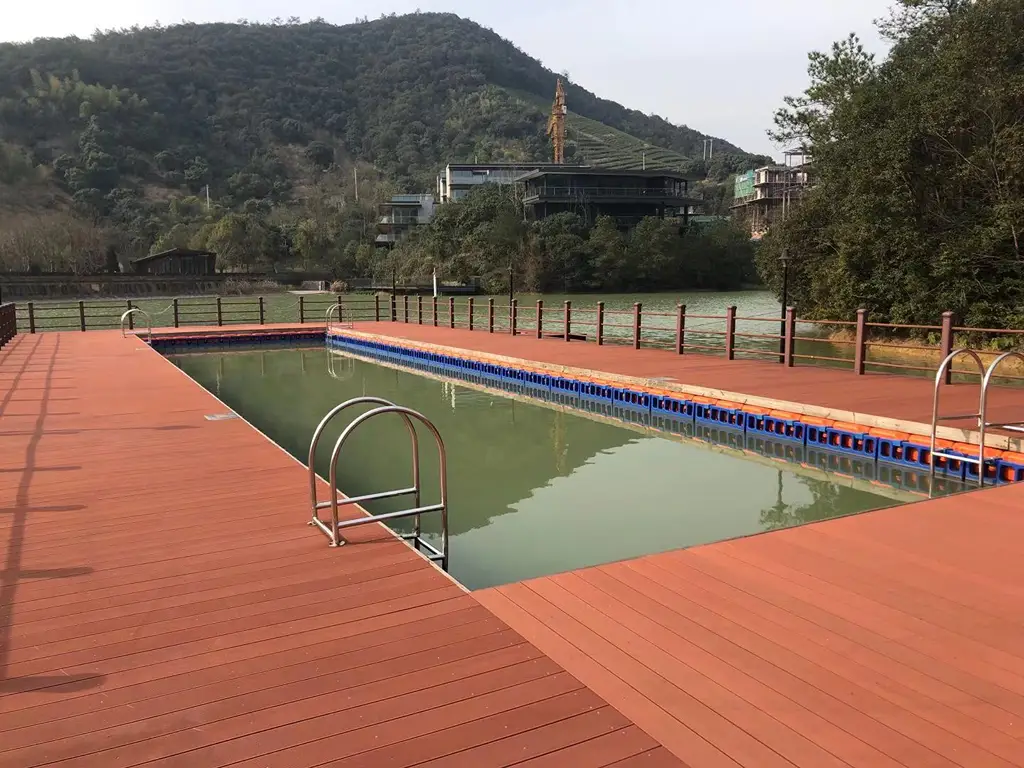
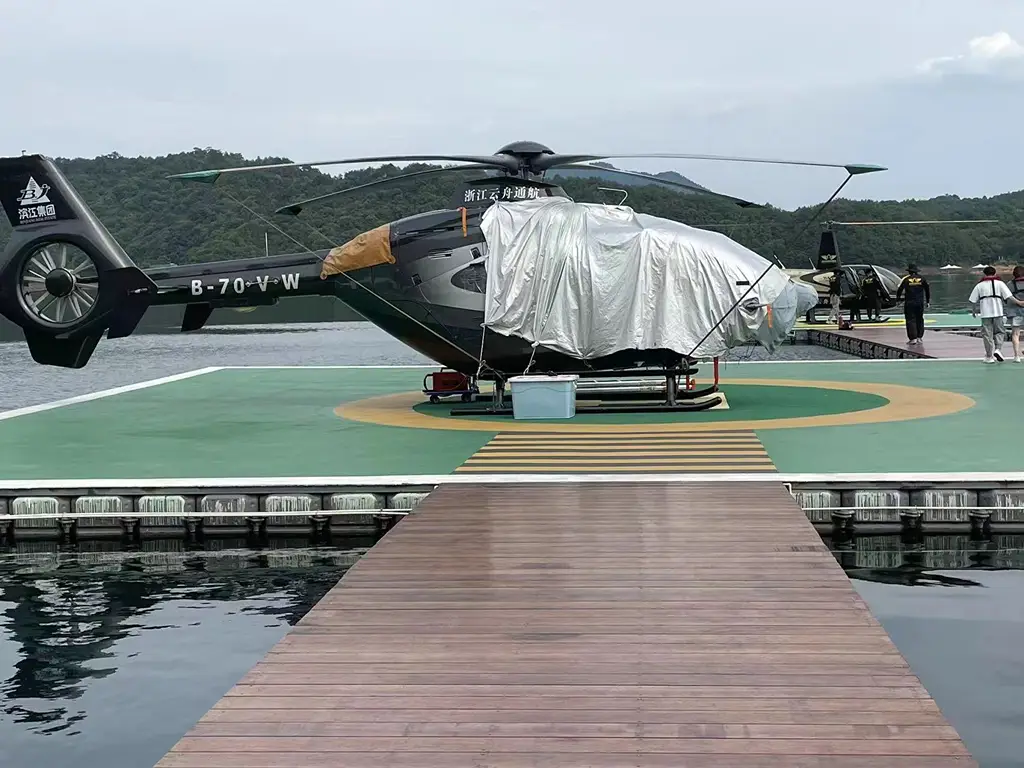
Modular floating systems are not limited to swimming pools. They can also be used for floating docks, waterfront leisure platforms, floating restaurants, water parks, and other recreational facilities, subject to appropriate engineering and safety assessments.
3. Beyond Swimming Pools: Applications for Waterfront Tourism
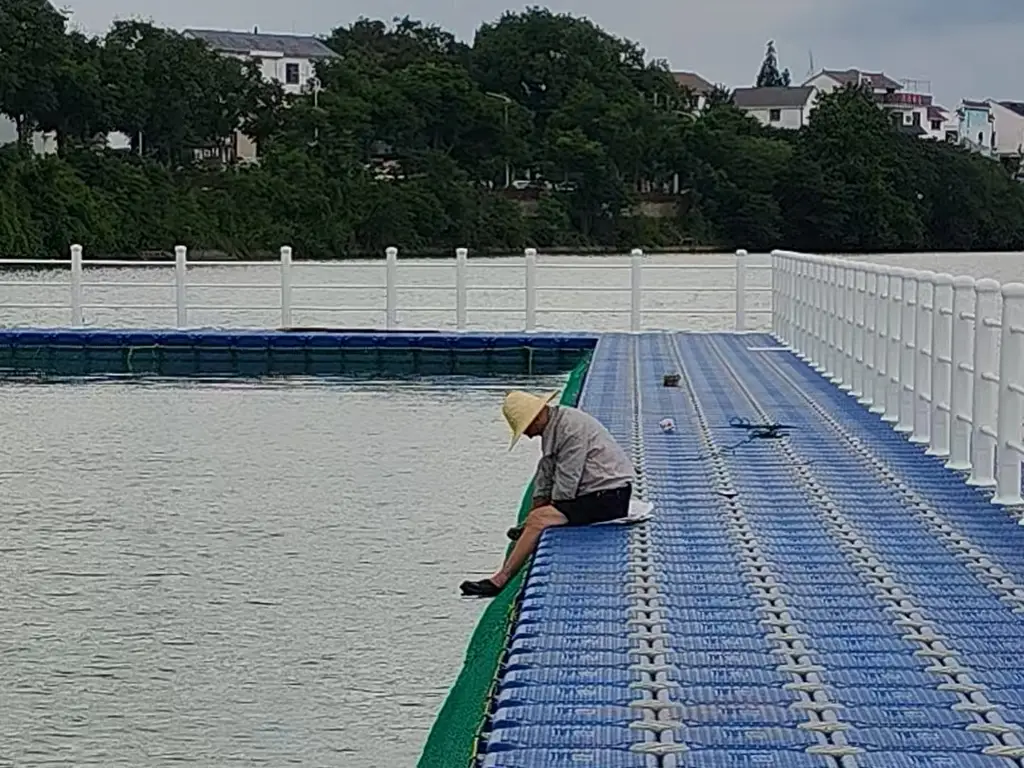
As tourism destinations look for distinctive visitor experiences, modular floating platforms offer opportunities to develop new attractions on suitable lakes, reservoirs, and other water bodies.
Potential applications include:
- Floating swimming pools: Designated swimming areas on suitable water bodies, with engineered boundaries and safety systems.
- Floating docks and marinas: Platforms for boat access, boarding, and waterfront recreation.
- Floating leisure platforms: Spaces for sightseeing, relaxation, events, and outdoor activities.
- Floating restaurants: Waterfront dining facilities built on appropriately designed floating structures.
- Waterfront activity zones: Modular platforms for selected recreational activities, subject to load, stability, and safety requirements.
Each application requires a different structural configuration. Factors such as water depth, water-level fluctuations, wind, waves, current, occupancy, live loads, anchoring conditions, and local regulations should be considered during project planning.
For tourism investors, the main advantage is flexibility: a floating platform can potentially be adapted to the available water area and the intended use without relying entirely on permanent waterfront construction.
4. How to Plan a Floating Swimming Pool Project
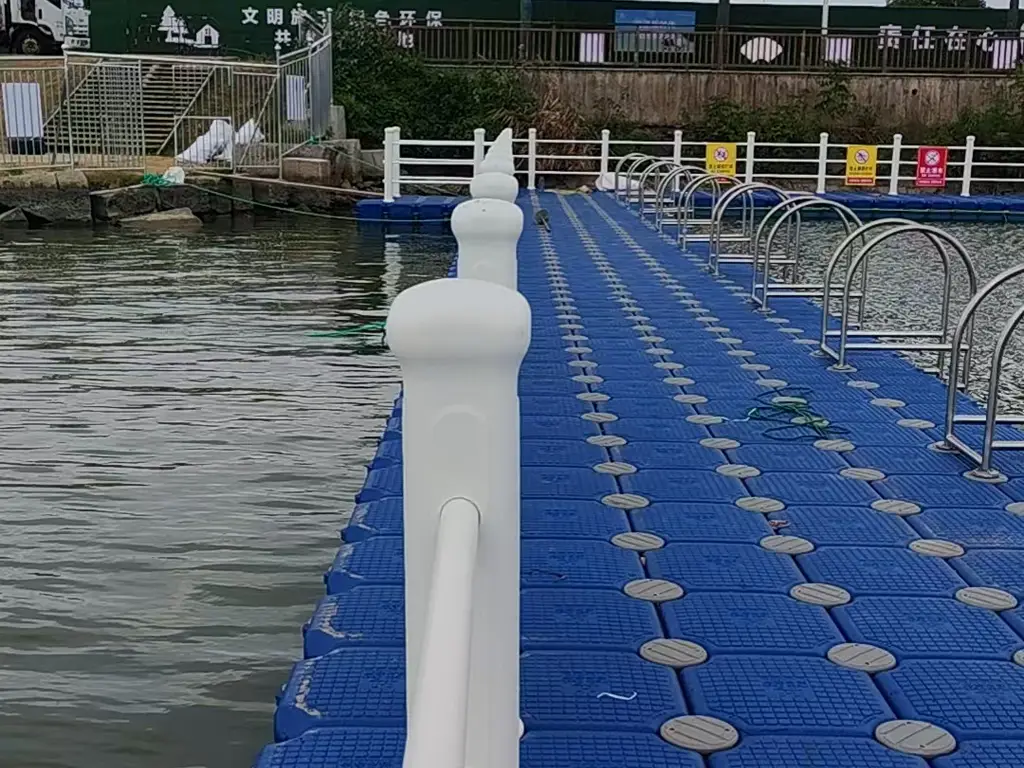
A successful floating swimming pool project involves more than connecting floating modules. Developers should consider the following factors before selecting a system.
Water conditions: Evaluate water depth, seasonal water-level changes, currents, wind, waves, and the characteristics of the installation site.
Buoyancy and load capacity: Calculate the required flotation capacity for the platform, equipment, users, and other design loads. Allow for appropriate reserve buoyancy and stability.
Anchoring and connections: Design the anchoring system and module connections for the actual site conditions, including water-level fluctuations and environmental loads.
Swimming safety: Assess barriers, access points, underwater protection, emergency access, supervision, rescue equipment, and applicable local safety regulations.
Materials and manufacturing quality: Confirm the HDPE material specification, UV resistance, wall thickness, connection design, quality-control procedures, and expected service conditions.
Installation and maintenance: Plan transportation, assembly, inspection, cleaning, seasonal operation, and ongoing maintenance before construction begins.
A professional supplier should evaluate these requirements before recommending a floating pontoon configuration for a specific project.
5. Work with a Floating Pontoon Manufacturer
For project developers, resorts, marinas, and tourism operators, selecting an experienced floating pontoon manufacturer is an important step toward achieving a reliable and practical design.
As a manufacturer specializing in rotomolded HDPE floating products and mold design and manufacturing, Hisea Dock focuses on modular floating solutions for different waterfront applications.
Depending on project requirements, a floating platform solution may incorporate:
- Modular HDPE floating pontoons
- Custom platform layouts and module configurations
- Compatible connection components and accessories
- Safety barriers, access steps, and related equipment
- Project-specific technical support and product recommendations
Our manufacturing background in rotomolding and mold engineering supports the development of floating products for different applications. Product selection and system configuration should be based on the project’s actual requirements rather than a one-size-fits-all design.
Whether you are planning a floating swimming pool, a floating dock, a waterfront leisure platform, or another recreational water project, the first step is to define the site conditions, intended use, dimensions, and expected loads.
Contact Hisea Dock to discuss your floating pontoon project and explore a suitable modular floating solution.

 English
 Thai
 Spanish
 French
 German
 Dutch
 Italian
 Arabic
 Indonesian
 Portuguese
 Turkish