
Floating Jet Ski Dock Costs Explained: Buy the Right Port for Your PWC
Stop guessing the actual total cost of ownership. From upfront sticker prices to hidden freight fees, here is your definitive guide to making a smart marine investment.
The True Cost of a Floating Jet Ski Dock: Upfront Price vs. Total Cost of Ownership
When researching the floating jet ski dock price online, it is easy to be misled by the initial sticker price. Retailers often display the raw cost of the plastic platform, but the reality for waterfront property owners is that the upfront unit is only part of the equation. To determine your total cost of ownership (TCO), you must account for the dock, oversized freight, anchoring hardware, and installation.
Safety and structural integrity also strictly dictate pricing. Unlike residential walkways, a proper PWC port is engineered around total static buoyancy and the ability to safely handle massive concentrated loads (often exceeding 1,500 lbs centered directly on the hull footprint). Cutting corners on displacement capacity leads to dangerous instability. Generally, the market is divided into three tiers: Entry-level platforms ($1,000 – $1,500), mainstream durable ports ($1,500 – $2,500), and commercial heavy-duty docks ($2,500 – $4,000+).
Core Variables Dictating the Sticker Price
Why do two docks that look visually similar have vastly different price tags? The answer lies in physical displacement capacity, entry mechanisms, and the underlying material science.
Dimension and Buoyancy Capacity
The exact jet ski dock price you pay is heavily dependent on the dry weight of your personal watercraft (PWC) plus fuel, gear, and riders. A heavy 3-seater PWC, like a Yamaha FX Cruiser, requires a significantly larger footprint and higher buoyancy capacity than a stand-up model. If you manage a marina or a multi-vessel household, comparing the double port configuration against buying individual single ports reveals a significant financial advantage: by sharing central anchoring hardware, a double-port configuration typically reduces the per-unit cost by 15% to 20%.
| PWC Classification | Recommended Float Size | Static Buoyancy Requirement | Estimated Sticker Price |
|---|---|---|---|
| Stand-up / Light 2-Seater (e.g., Spark) | 10 ft x 5 ft | Min. 1,000 lbs | $1,200 – $1,600 |
| Standard 3-Seater PWC | 12 ft x 5 ft | Min. 1,500 lbs | $1,700 – $2,200 |
| Heavy-Duty / Deep V-Hull Cruisers | 13 ft+ x 6 ft | 1,800+ lbs | $2,400+ |
Entry & Roller Systems
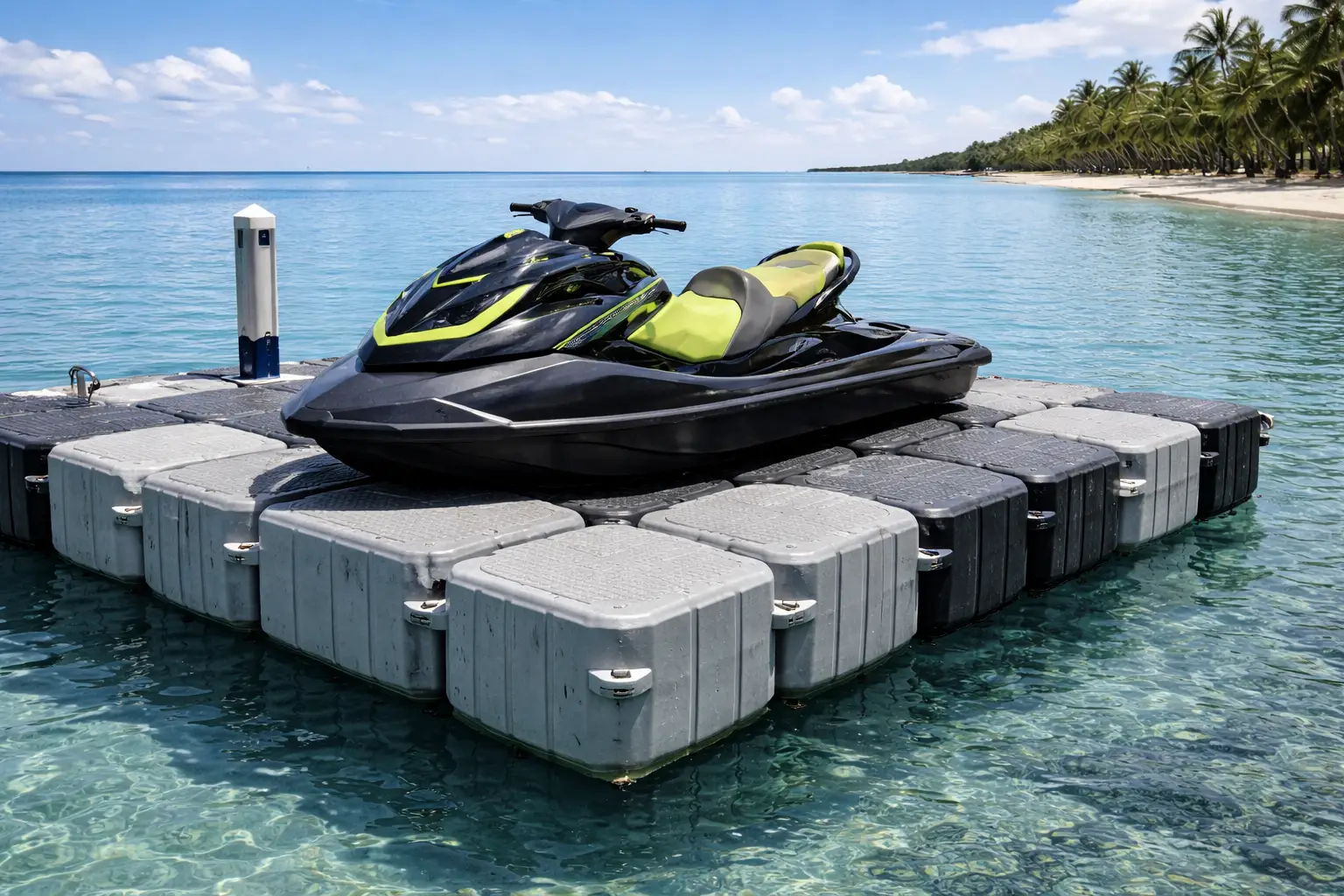
The mechanism you use to drive onto the platform drastically impacts both user experience and manufacturing cost. Entry-level models often utilize molded-in hard plastic slides, which are cheap to produce but can scratch fiberglass hulls over time and require aggressive throttle to mount. Premium ports integrate self-adjusting polyurethane silent rollers. These advanced roller systems conform to deep V-hulls, making launching effortless and safe, which justifies the premium in the final price tag.
Material Engineering and Manufacturing Processes
Many buyers fall into the trap of purchasing cheap, thin-walled blow-molded plastics that crack during the first winter freeze. Conversely, traditional rotomolding can carry heavy brand markups. The modern industrial standard bridging extreme durability with economic efficiency is High Molecular Weight High-Density Polyethylene (HMWHDPE) processed through advanced blow molding.
This premium eco-friendly material ensures uniform wall thickness and incredible impact resistance. Platforms manufactured with HMWHDPE can safely withstand extreme climate fluctuations from -60°C up to 80°C, delivering exceptional Environmental Stress Cracking Resistance (ESCR) and high tensile yield strength. This superior engineering ensures the platform can effortlessly handle the massive concentrated loads of modern PWCs without deforming. Furthermore, HMWHDPE is naturally resistant to UV degradation and marine corrosion, practically eliminating maintenance over a 15 to 20-year lifespan. As a fully recyclable material, it also represents an environmentally sustainable choice for waterfront properties.
The Hidden Costs Retailers Rarely Disclose
Protecting your budget means looking beneath the surface. The following three variables often blindside first-time buyers and drastically inflate the final invoice.
Freight, Logistics, and Oversized Shipping
Due to their massive “cube weight” and dimensions, standard one-piece docks are classified as oversized LTL (Less Than Truckload) freight. Shipping a single unit across states can add $400 to $800 to your bill, especially with residential liftgate fees.
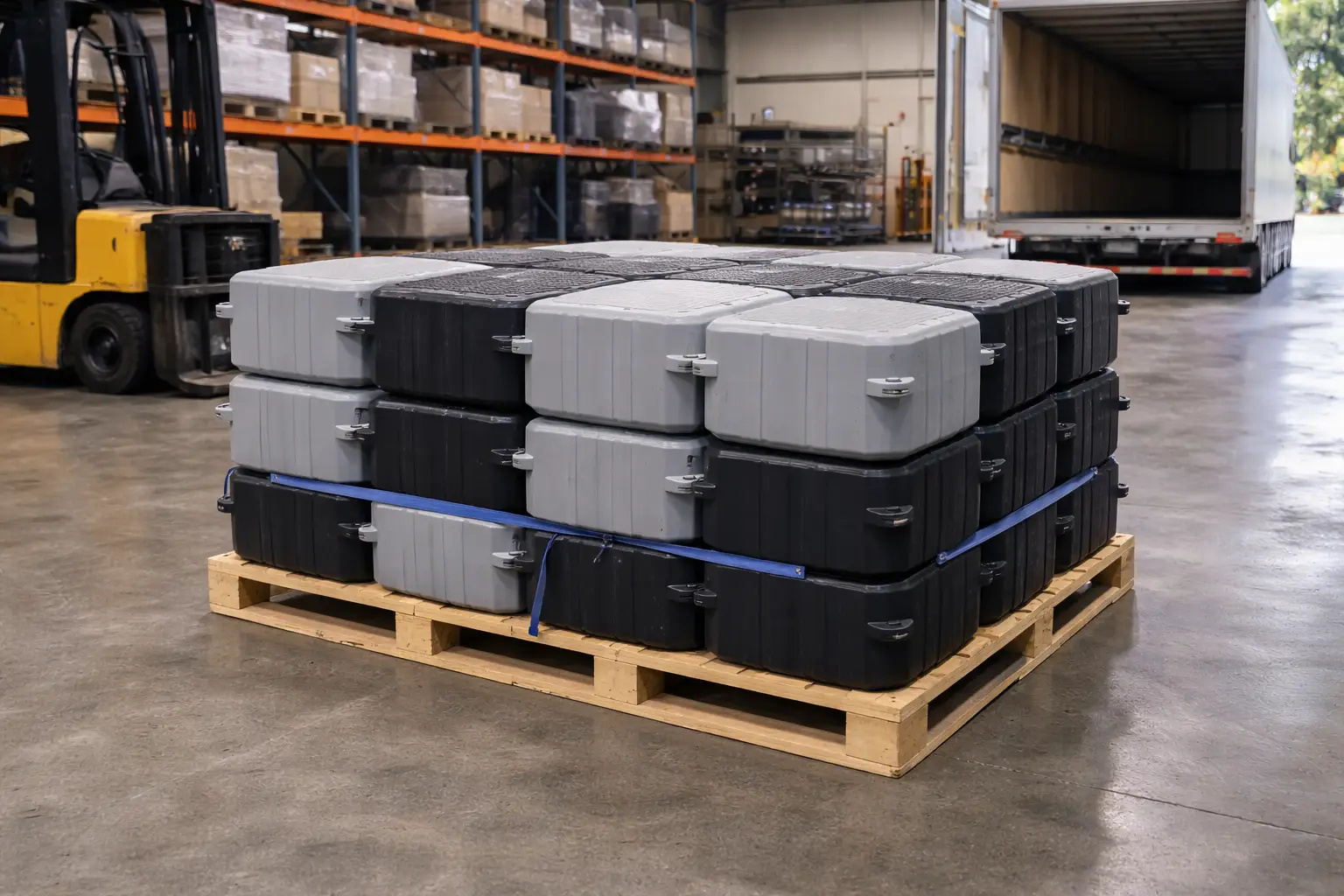
Smart buyers mitigate this by selecting manufacturers with optimized modular designs. For instance, innovative systems utilize a highly efficient packaging logic: combining standard weight-bearing peripheral floats with the central U-shaped float channels (which house the integrated roller systems) designed to nest tightly together. This allows a complete drive-on port to fit perfectly on standard shipping pallets, slashing freight costs, preventing shipping damages, and enabling fast 3-10 day deliveries worldwide.
Marine-Grade Anchoring Hardware Upgrades
Proper anchoring is non-negotiable and is usually excluded from the bare platform price. To prevent severe galvanic corrosion, you cannot mix standard metals underwater. Upgrading to Marine 316 Stainless Steel hardware – essential for saltwater or brackish environments – adds a necessary premium to your installation budget. If you are hunting for a bargain and evaluating used floating jet ski docks from a previous saltwater environment, beware: the internal anchoring hardware is often severely compromised, presenting a massive safety liability.
Marine Permits and Professional Installation
Local municipalities and environmental agencies (such as the EPA or Army Corps of Engineers) often require permits for over-water structures. While a premium modular floating port is designed to be highly convenient and easy for DIY assembly – saving you $500 to $1,000 in contractor fees – navigating the permit process is a mandatory step in your total cost analysis.
Floating PWC Ports vs. Mechanical Boat Lifts: A Long-Term ROI Analysis
Should you invest in a drive-on floating platform or a mechanical lift? By projecting costs over a 5-year and 10-year lifecycle, the absence of moving parts gives floating ports an overwhelming financial advantage, effectively eliminating the recurring nightmare of mechanical overhauls.
| Lifecycle Cost Factor | Floating PWC Port (HMWHDPE) | Mechanical / Hydraulic Lift |
|---|---|---|
| Initial Upfront Cost | $1,800 – $2,800 | $4,000 – $6,500+ |
| 5-Year Maintenance Cost | $0 (No cables, motors, or greasing) | $800 – $1,500 (Cable replacement, servicing) |
| Year 10 Overhaul Cost | $0 (Robust 15-20 year physical lifespan) | $1,200 – $2,000 (Motor & control box replacements) |
| Total 10-Year Ownership Estimate | ~$2,500 (Incl. basic hardware) | ~$6,000 – $10,000+ (Recurring financial drain) |
Top Jet Ski Dock Brands Pricing and Value Breakdown
Navigating the complex jet ski floating dock price landscape requires comparing the industry leaders. Here is an objective look at top-tier options:
- EZ Dock: Known for their signature dog bone connectors and extreme stability. The catch? You will pay a heavy premium for the brand name.
- Candock: Offers excellent modularity and customization. However, depending on your region, securing direct inventory can sometimes result in slower lead times.
- Hiseadock (The Manufacturer-Direct Choice): For those seeking uncompromising commercial-grade quality without the middleman markup, Hiseadock is the industry’s hidden gem. Backed by 16 years of specialized manufacturing experience, a 5,000+ square meter facility, and CE/SGS/TUV certifications, they deliver unparalleled value.
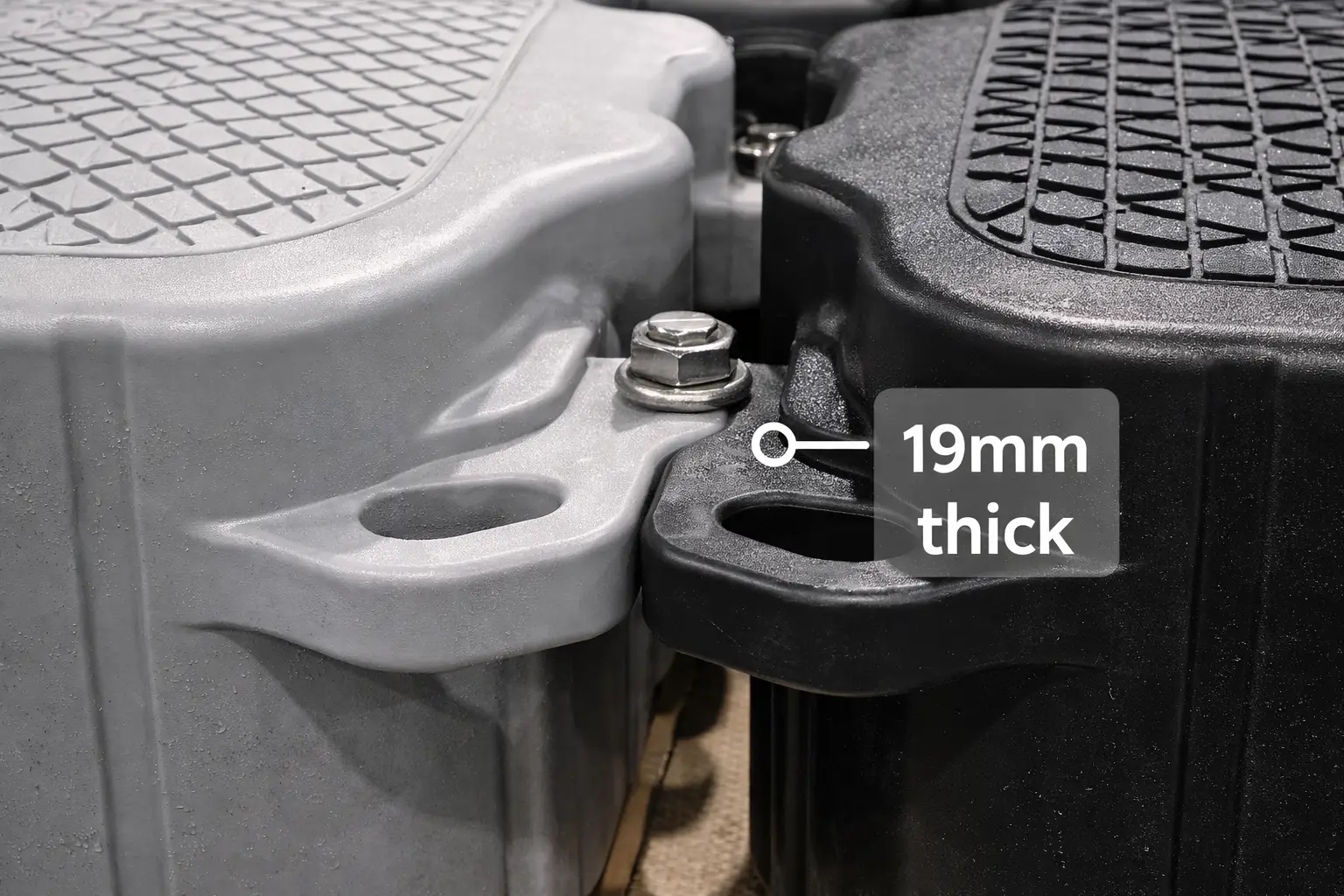
What makes Hiseadock the ultimate ROI play? Safety and engineering tolerances. Their floating modules feature connecting ears that are 19mm thick – roughly 40% thicker than the industry average – ensuring absolute structural integrity. Coupled with an anti-skid surface, a 5-year warranty, and free expert 3D CAD design services, it is the definitive solution for both residential owners and global marina projects.

 English
  Thai
Thai  Spanish
  French
  German
  Dutch
Dutch  Italian
  Arabic
  Indonesian
  Portuguese
  Turkish