
Read the units. Check the waterline. A useful capacity figure belongs to a defined model and operating condition.
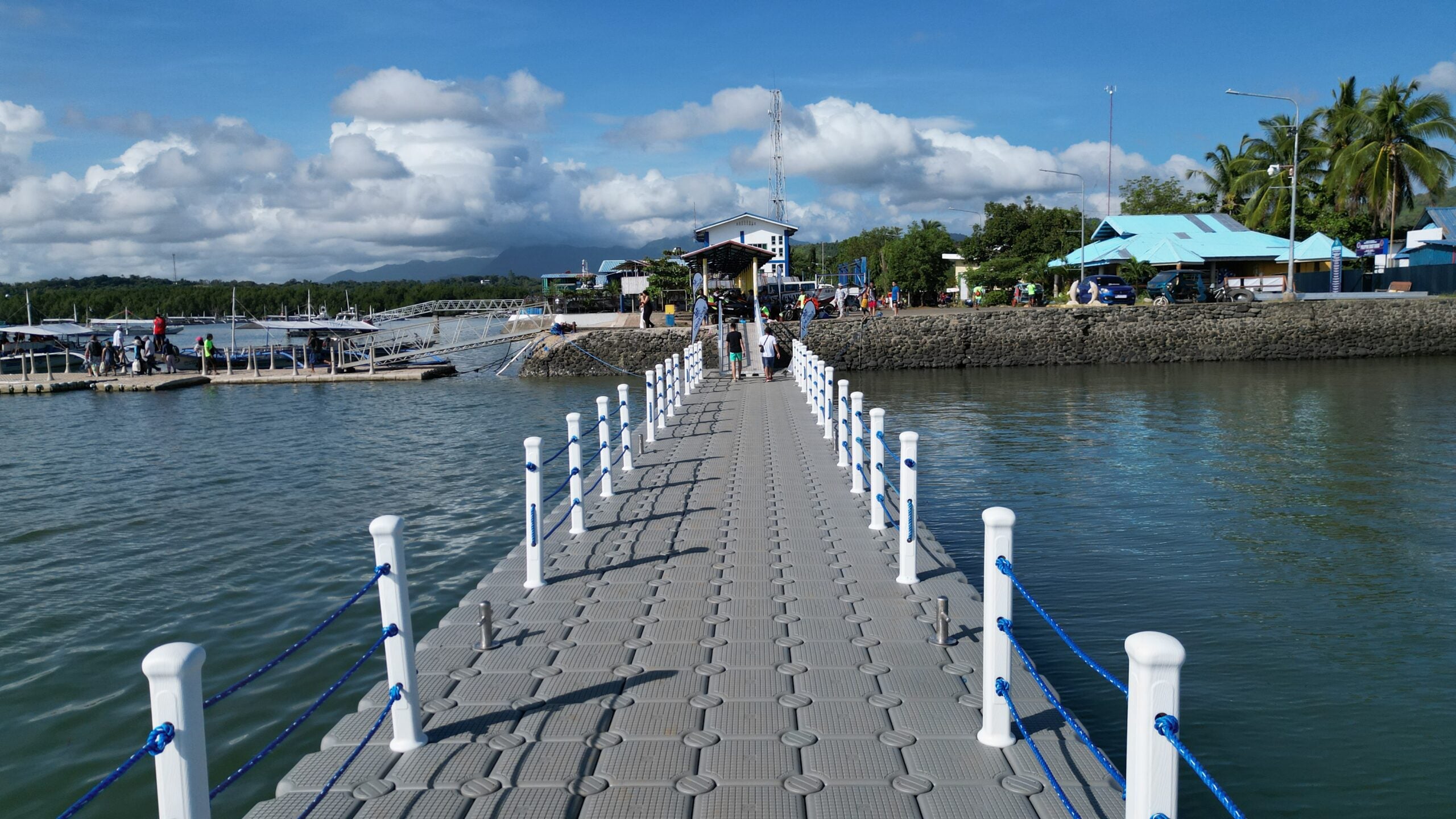
1. What do “7 kg” and “350 kg/m²” mean?
7 kg is the float’s own mass. 350 kg/m² is the buoyancy figure listed for its area. They describe different things. There is no fixed rule linking an extra kilogram of plastic to a particular increase in carrying capacity.
500×500 mm = 0.25 m²
kg per unit, converting the same buoyancy figure
If the specified model also covers 0.25 m²
kg per unit; the figure’s definition still matters
Four standard 500×500 mm plan modules nominally cover 1 m². Consequently, 350 kg/m² does not mean 350 kg per individual unit; 450 kg/m² does not mean 450 kg per unit either. The 450 figure here illustrates the conversion only. The relevant model documents must establish its applicability.
2. Buoyancy comes from the water actually displaced
Archimedes’ principle relates buoyancy to the weight of displaced water. In fresh water, displacing approximately 1 m³ supports approximately 1000 kg of total mass. That total includes the floats, fixed installations, people and movable equipment.[5]
FB = ρ × g × Vdisplaced
FB is force in newtons; ρ is water density; g is gravitational acceleration; V is the actual displaced volume below the current waterline. Commercial buoyancy figures in kg usually express a supported-mass equivalent rather than force in newtons.
A taller float can generally provide more displacement space for the same footprint. However, rounded corners, recesses and connection features affect the external shape. Overall length × width × height is not the actual displacement, and full-submersion capacity is not an everyday working-load rating.
3. Floating is only one part of the load assessment
| Term | Meaning |
|---|---|
| Gross buoyancy | Total support at a specified waterline, including support for the float’s own mass. |
| Net load figure | Its deductions must be stated. Do not subtract float mass again if it has already been deducted. |
| Allowable working load | An operating limit for the agreed layout, freeboard and conditions, checked against structure, connections and stability. |
Freeboard is the vertical distance from the water to the walking surface under the stated condition. Added weight generally increases draft and reduces freeboard. People gathering along one edge can also cause local inclination. Where weight is placed matters as well as how much is added.[6]
≈ water density × actual displaced volume − float mass − fixed-installation mass
This checks buoyancy balance only. It does not determine the final allowable working load.
As an illustrative calculation only, suppose a 1 m² assembly has a displacement of 0.30 m³ at the required freeboard, established from its actual shape or a displacement test. With 28 kg of floats and 22 kg of fixed fittings and installations, its still-water load budget is approximately 1000×0.30−28−22 = 250 kg. This is not a Hisea Dock model rating. Connections, local loads, uneven loading and site conditions still require assessment.
4. Match the assessment to the use
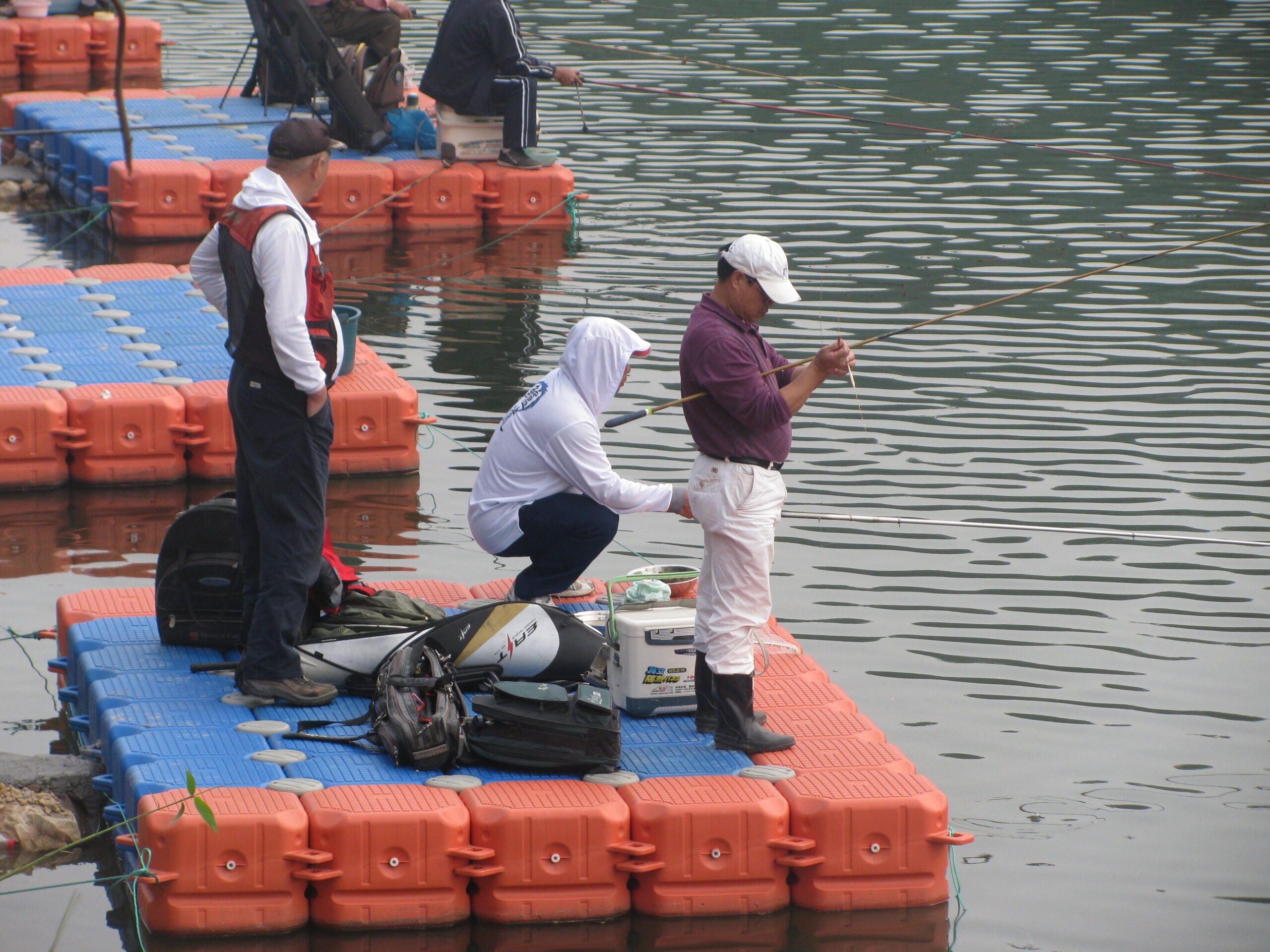
Fishing platforms: include tackle boxes, seats and equipment, as well as people gathering at the edges. Shaded platforms: include the canopy, seating and railings; a canopy also introduces wind loads. Floating walkways: consider uneven pedestrian loading, stopping areas, shore transitions, waves and changing water levels.
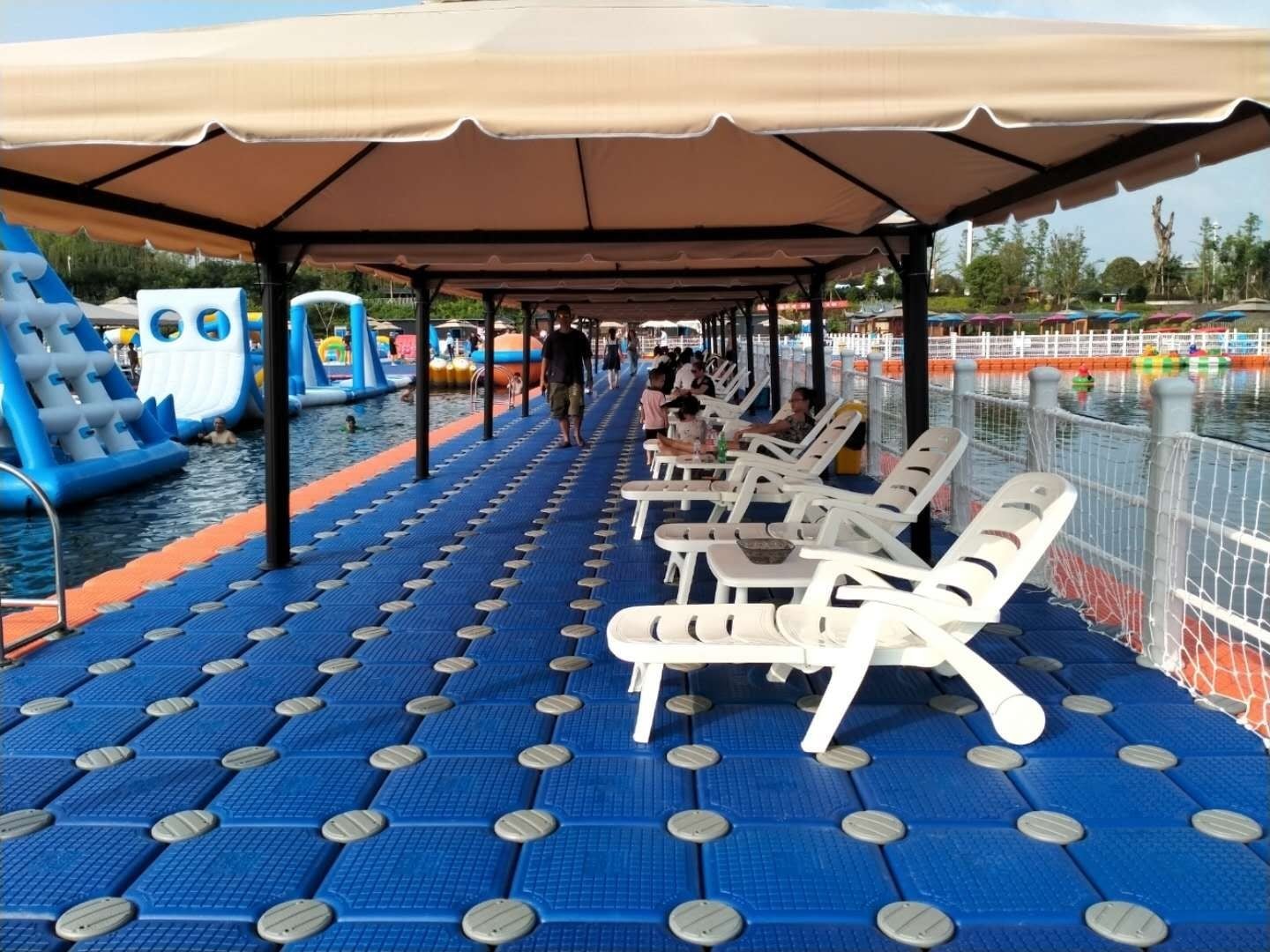
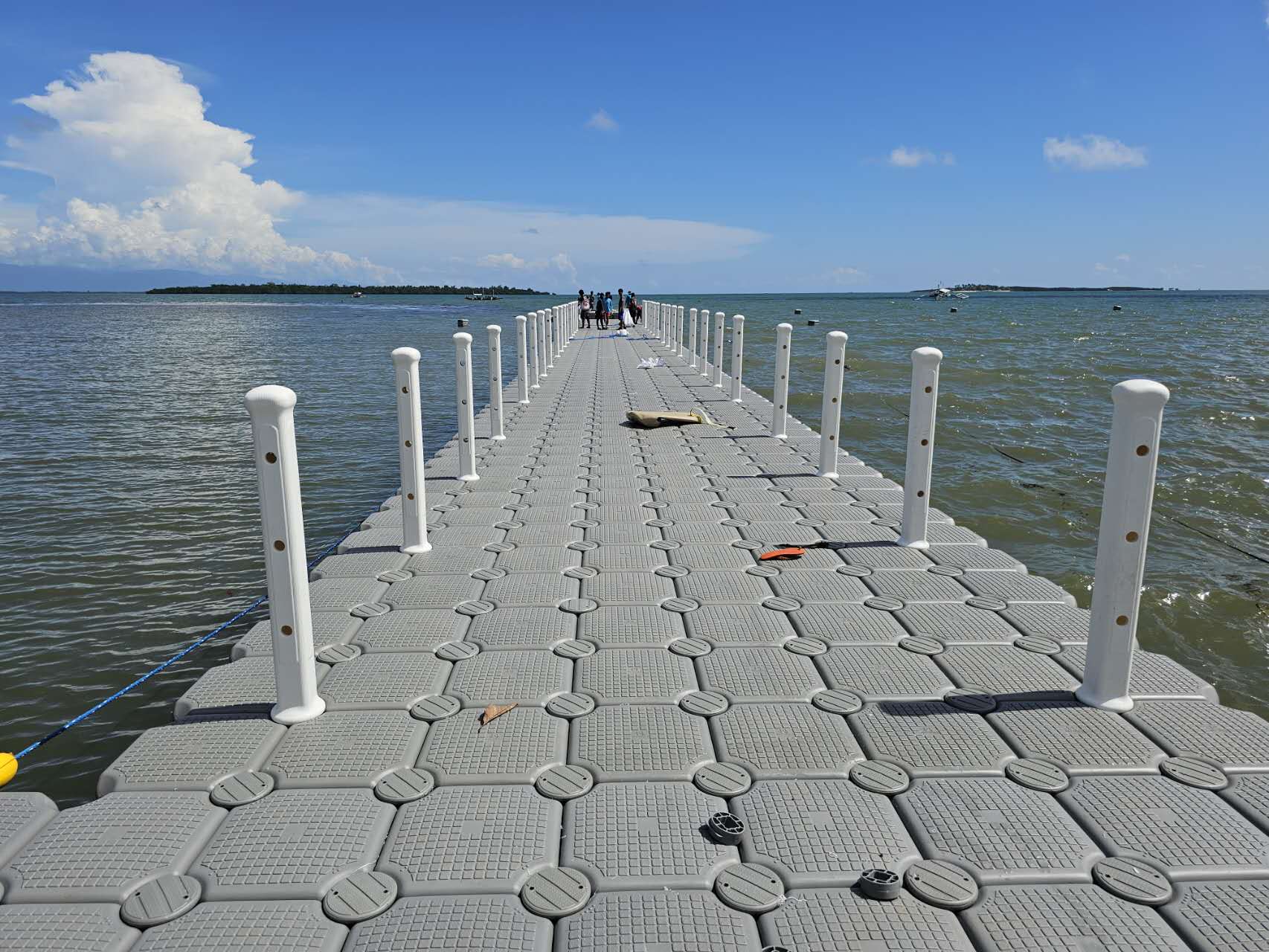
The same float can have different operating limits in different assembled layouts.

5. Put four items in the purchasing documents
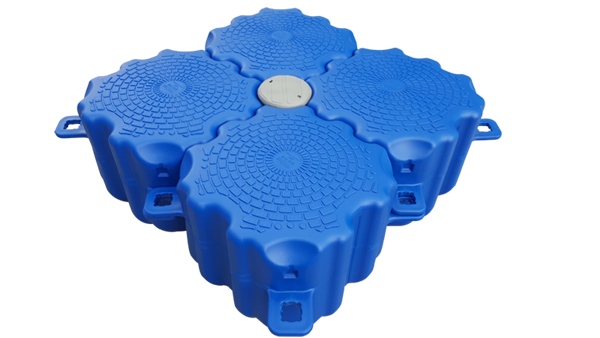
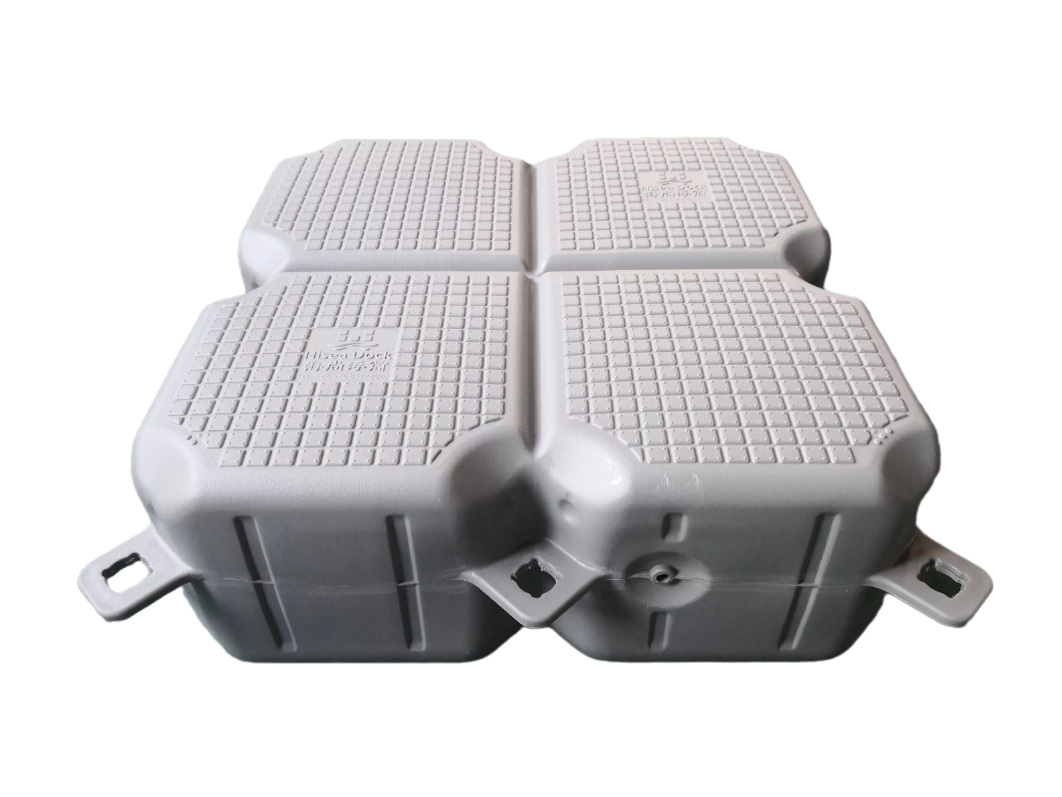
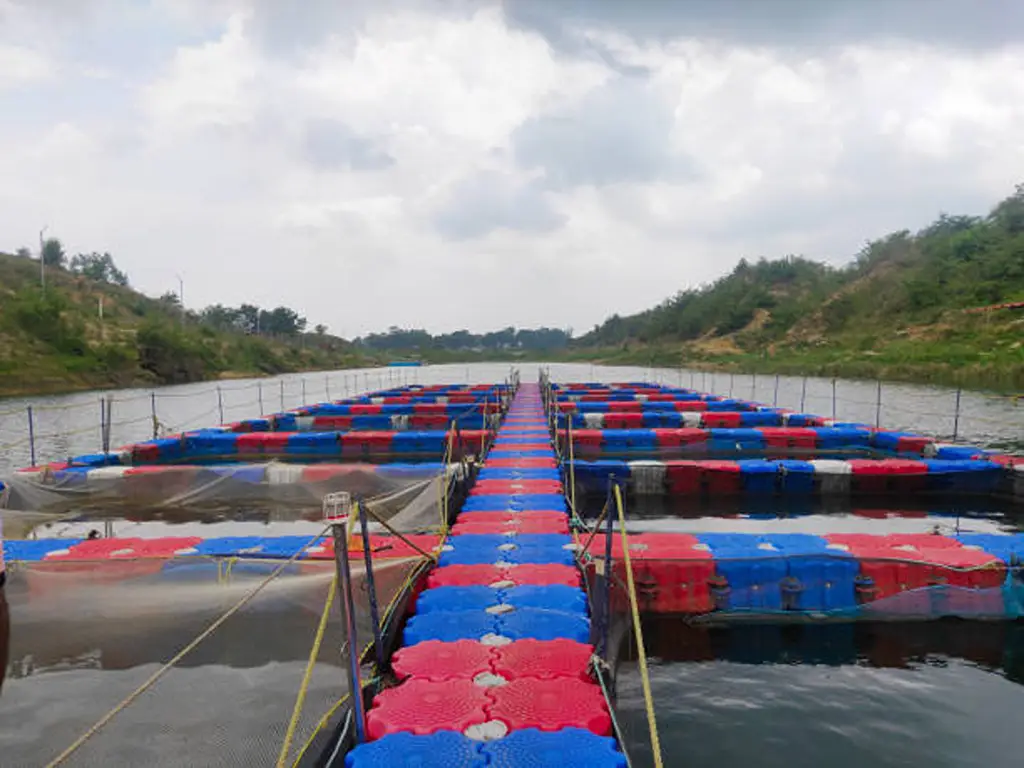
① Model and dimensions: identify which product the mass describes and whether a photograph shows a single unit, an assembly or a quad float.
② Definition: kg per unit or kg/m²; gross buoyancy or a net figure with stated deductions.
③ Working condition: water density, loading method, draft and freeboard.
④ Project limits: fixed installations, load distribution, connection and anchoring conditions, and the final allowable working load.
Common questions
Can I convert 350 kg/m² directly into a people limit?
No. That figure alone does not establish the project’s allowable working load, accessory mass, uneven-loading conditions or freeboard requirements. The operating people limit must follow the project assessment.
Does an 8 kg float always carry more than a 7 kg float?
No. Compare the actual models, displacement shapes, operating waterlines and finished-product performance. A difference between 350 and 450 kg/m² cannot be attributed simply to one extra kilogram of resin.
Can a 6 kg float use the same capacity figure?
Identify the model first. Mass alone does not establish dimensions, displacement or a rating. A different model’s figure cannot simply be transferred.
Connect the capacity figure to your project
Hisea Dock uses imported high molecular weight high-density polyethylene (HMW-HDPE) for its floats. Review the material, finished construction, buoyancy information and intended use together so that each specification relates to a clear condition.
Planning a floating bridge or platform? Send the proposed dimensions, intended use, fixed-installation details and site photographs to discuss the model and layout.
www.hiseadock.com · WhatsApp: +86 17369861101
Sources and calculation basis
Model facts refer to Hisea Dock public documents. Area conversions and arithmetic are calculated here. Photographs and imported-resin information were supplied by the company. The published 350 kg/m² buoyancy entry does not, by itself, define deductions, test waterline or a safety factor.

 English
 Thai
 Spanish
 French
 German
 Dutch
 Italian
 Arabic
 Indonesian
 Portuguese
 Turkish