
A practical specification guide for floating bridges—from imported high molecular weight HDPE to connections, working loads and site conditions.
A scenic pedestrian bridge, a lake walkway and a boat-boarding access route may all use modular floats, yet their operating requirements differ. Pedestrian distribution, stopping areas, changes in shore elevation and passing-boat wakes can affect the system requirements.
A useful purchasing discussion connects each product specification to a test condition, an assembly and an intended use. Establishing those relationships makes quotations easier to compare and provides a clearer basis for installation, acceptance and maintenance.
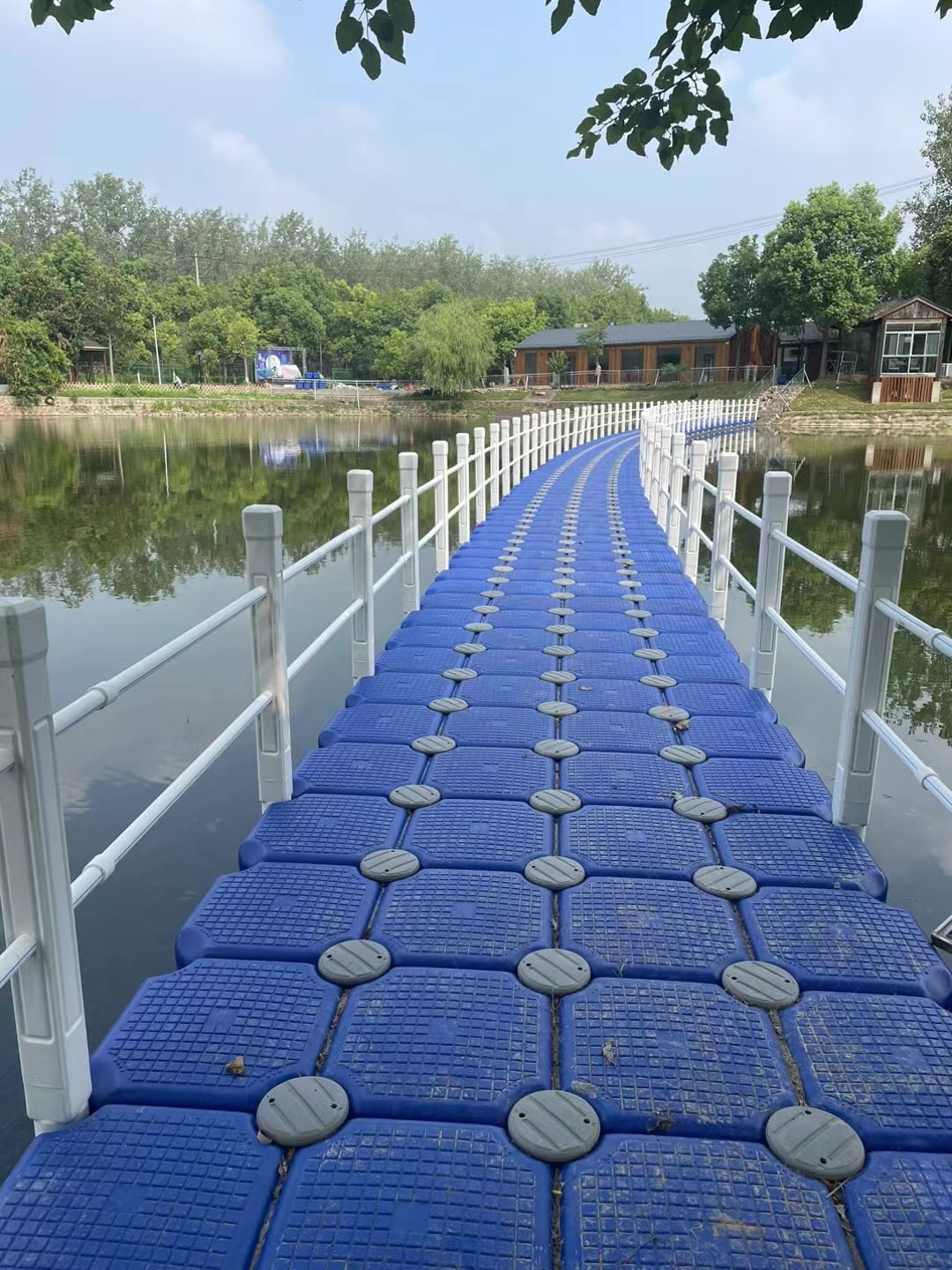
1. Resin documents: identify the grade and the batch
Hisea Dock selects imported high molecular weight high-density polyethylene (HMW-HDPE) as the raw material for its floats. “Imported” describes the resin’s origin; “high molecular weight” describes a material characteristic. Both should relate to the material records for the product being purchased.
For a technical evaluation, request the resin technical data sheet (TDS). Review the producer, grade, density and melt-flow data with the stated test temperature and load. A TDS generally describes typical grade properties; batch certificates and incoming-material records address the specific material supplied. Establish how resin batches are linked to finished-product batches. For impact or environmental stress-cracking data, distinguish resin-specimen results from results obtained using finished-product samples.
These documents help buyers assess whether the material selection suits the manufacturing process and intended application. They also support subsequent traceability. HMW-HDPE should not be confused with ultra-high molecular weight polyethylene (UHMW-PE); purchasing documents should use the correct designation.
Material quality becomes useful to a buyer when it is connected to an identifiable grade, consistent manufacturing and documented product performance.
2. Product drawings: check dimensions, wall thickness and sealing details
Floats with similar external shapes can differ in local wall thickness, connection details and construction. Review the drawing, dimensional tolerances, unit-weight range and wall-thickness measurement locations together.
If a thickness value is quoted, establish whether it is a design value, an average or a measured minimum. Pay attention to the construction and inspection requirements around connection-lug roots, corners, the base and closures. A heavier float or a thicker area alone does not establish a higher allowable bridge load.
Two examples from Hisea Dock’s public product pages provide a starting point for understanding module sizes:[1][2]
| Product example | Published dimensions | Published unit weight | Confirm for the order |
|---|---|---|---|
| Single Float | 500 × 500 × 400 mm | 7 kg | Current drawing, tolerances, accessories and layout |
| Double Float | 1000 × 500 × 400 mm | 12 kg | Connections, arrangement and project suitability |
These are published product details. Final supply specifications should follow the agreed model documents. External dimensions and unit weight do not directly establish an assembled bridge’s allowable working load.
3. Load information: define the working condition before comparing buoyancy
Meaningful load information should identify the float arrangement, loading method, accessory weight, load distribution and resulting draft and freeboard. Freeboard is the vertical distance between the walking surface and the water under the stated condition; it matters to both operation and user experience.
When reading a figure expressed in kilograms per square metre, establish whether it describes gross buoyancy, net buoyancy after self-weight, or a working load determined for a specified layout and freeboard. These terms are not interchangeable. Railings, additional decking and equipment must also be included in the system assessment.
For pedestrian bridges, consider people standing along one edge, local gathering and movement at the access points. Vehicles, heavy equipment and dense public gatherings require their own design criteria rather than an assumed extension of an ordinary pedestrian configuration.
A load figure becomes a useful purchasing specification when its layout, loading conditions and operating state are stated with it.
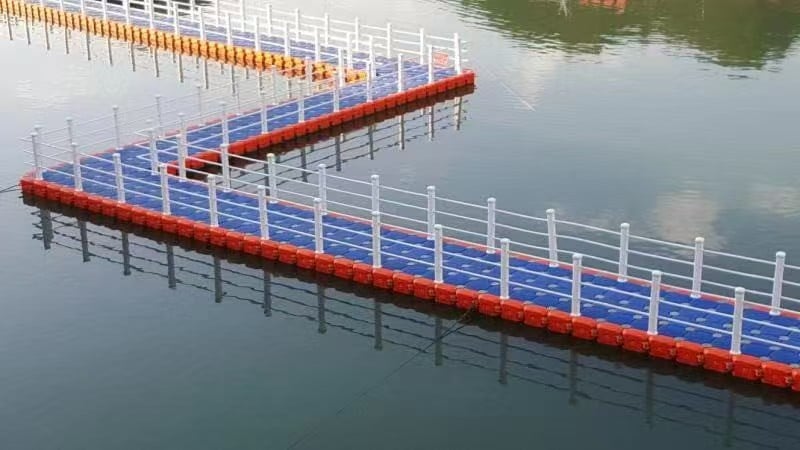
4. Connections: review the load path from the lugs to the anchors
Connection lugs, pins, bolts and washers work as an assembly. Confirm matching part numbers, installation orientation, fastening requirements and the method for inspecting or replacing connection components.
Where connection performance data are supplied, identify whether the tested item was an individual fitting, a lug or a complete assembly. The loading direction, duration and failure criteria should also be stated. A single static pull test does not establish connection performance under repeated movement.
At corners, ends and shore transitions, the layout should explain how forces are transferred. Anchoring attachments and their locations should be considered with the floats and connections so that the purchasing evaluation covers the assembled system.
5. Weathering documents: read the conditions and the changes in performance
Hisea Dock’s published production process includes UV-resistant additives, blow molding and quality checks.[3] Buyers can build on this information by reviewing weathering documents relevant to the selected product, including sample identity, test method, exposure conditions and changes in appearance or mechanical properties.
If a report refers to a UV-exposure practice such as ASTM G154, read the specified conditions and evaluation criteria with it. Exposure hours alone should not be converted directly into a stated number of outdoor service years.[5] Environmental stress-cracking data likewise need their specimen and test conditions; ASTM D1693 results should be interpreted within the method’s scope.[4]
To assess whether a report applies to an offered float, check its number, sample description, model, date and scope. Resin testing, finished-product testing and project design answer different questions and should be connected accordingly.
6. Site information: choose the floats within a complete bridge proposal
Before finalizing quantities and pricing, provide the proposed bridge length, clear walking width, water depth, high and low water levels, wind and wave or wake conditions, currents, shore structure and intended use. Navigation openings, accessibility requirements and boat-berthing use should also be identified at the proposal stage.
Changing water levels affect access gradients and the positioning arrangement. Wind, current and wakes influence movement and anchoring requirements. Anchor locations, attachments and shore structures therefore need to be checked against the site. A completed float count is only one part of a complete proposal.
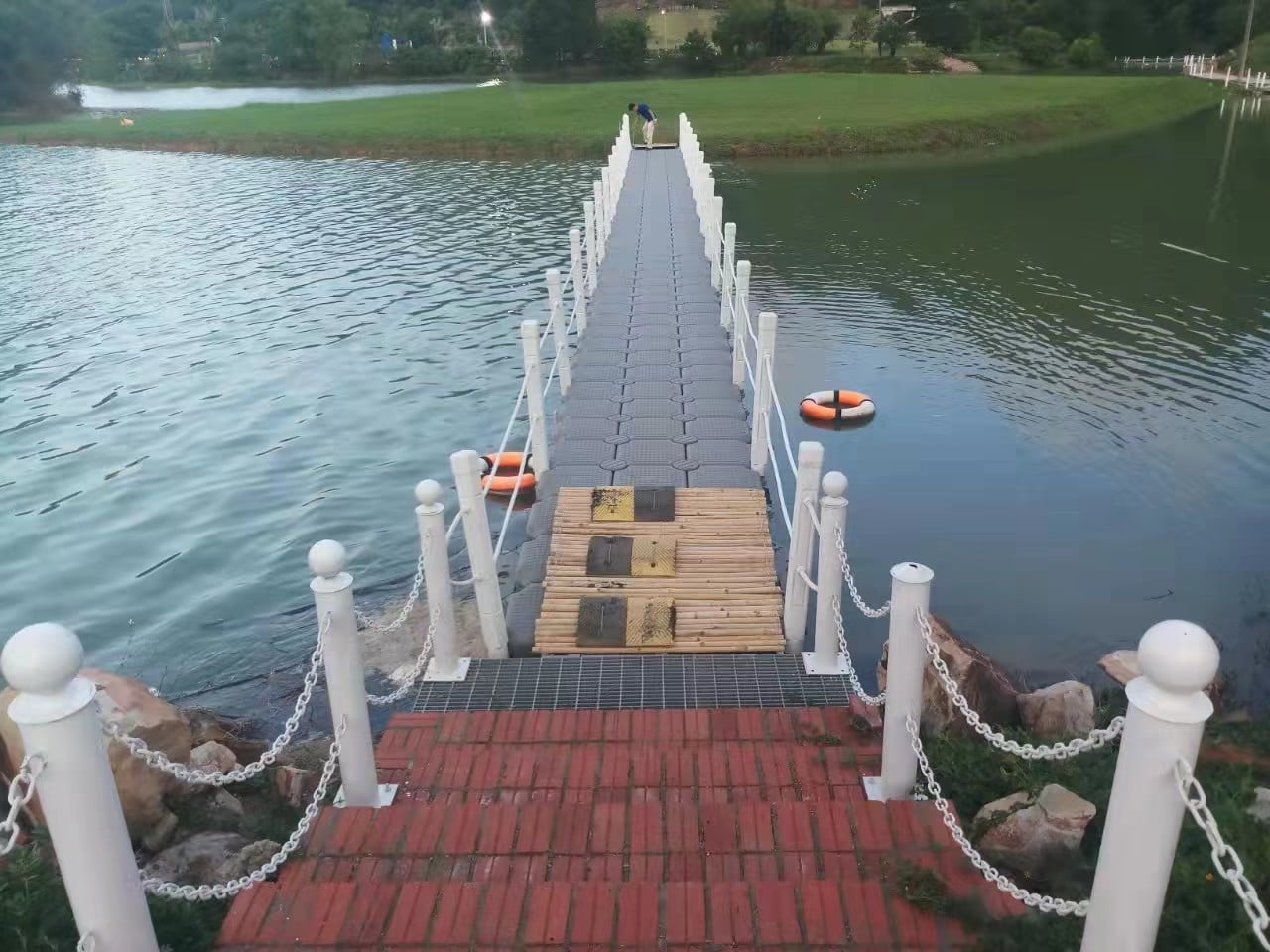
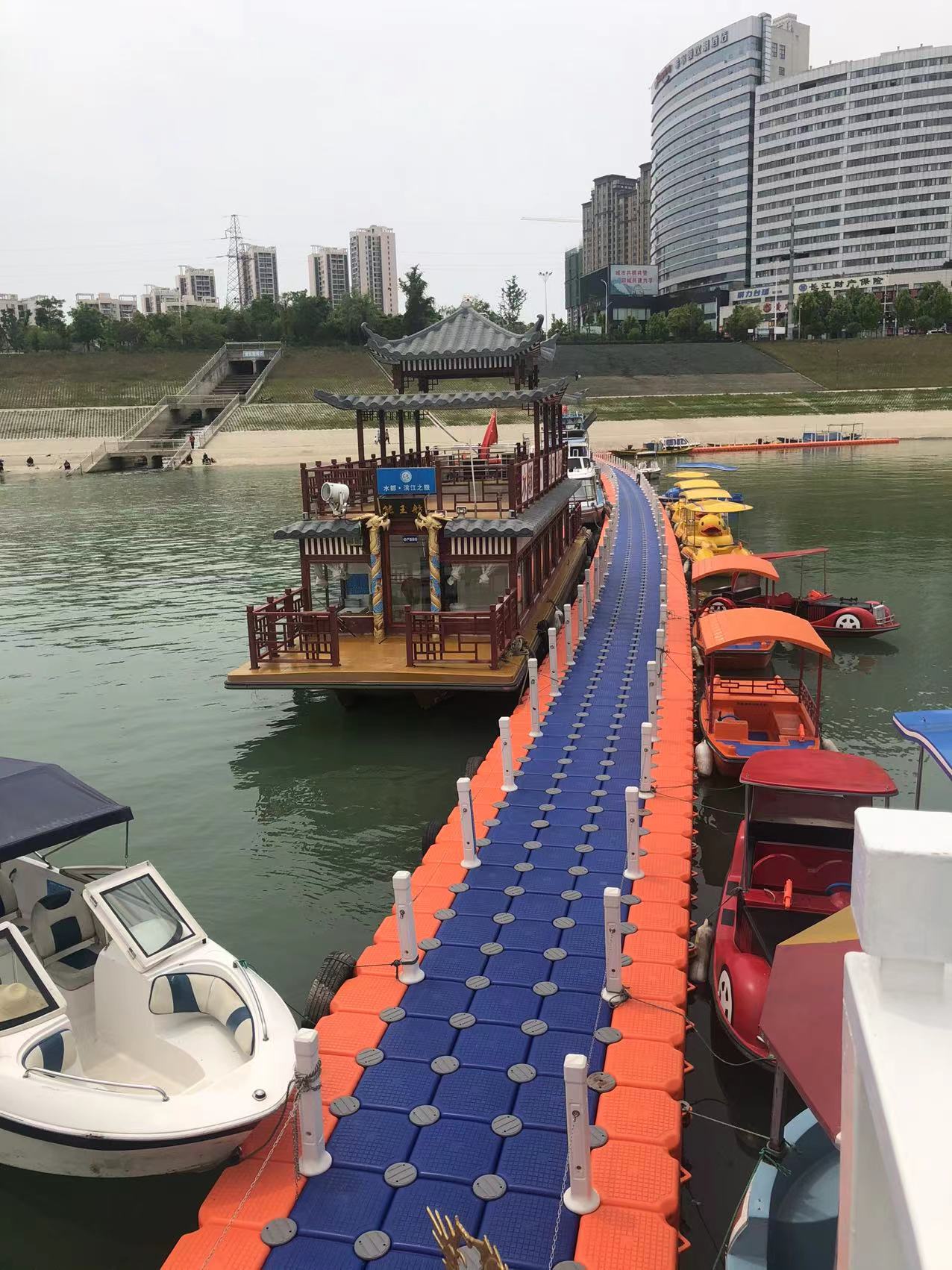
Check the walking surface and the buoyancy structure separately
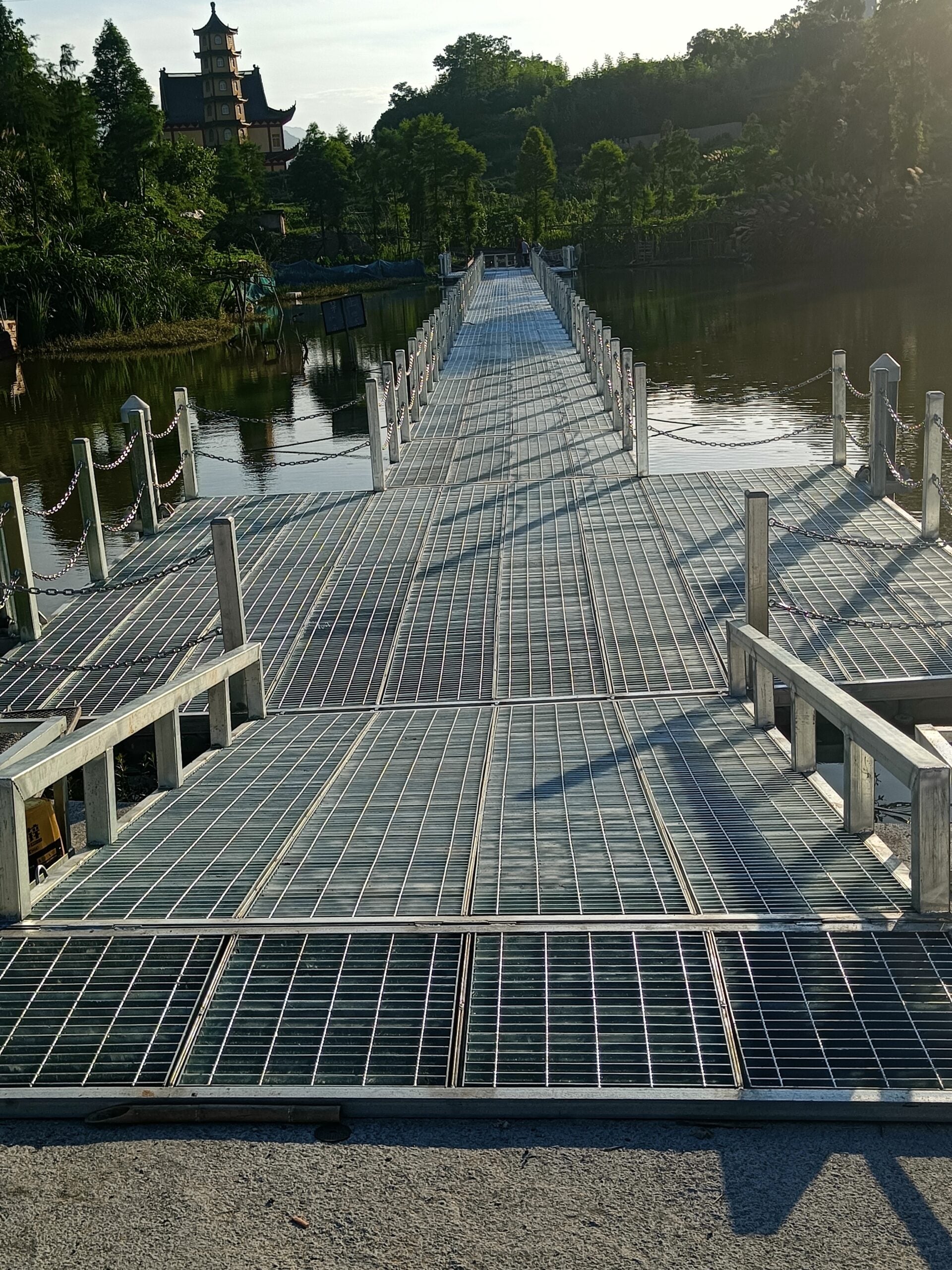
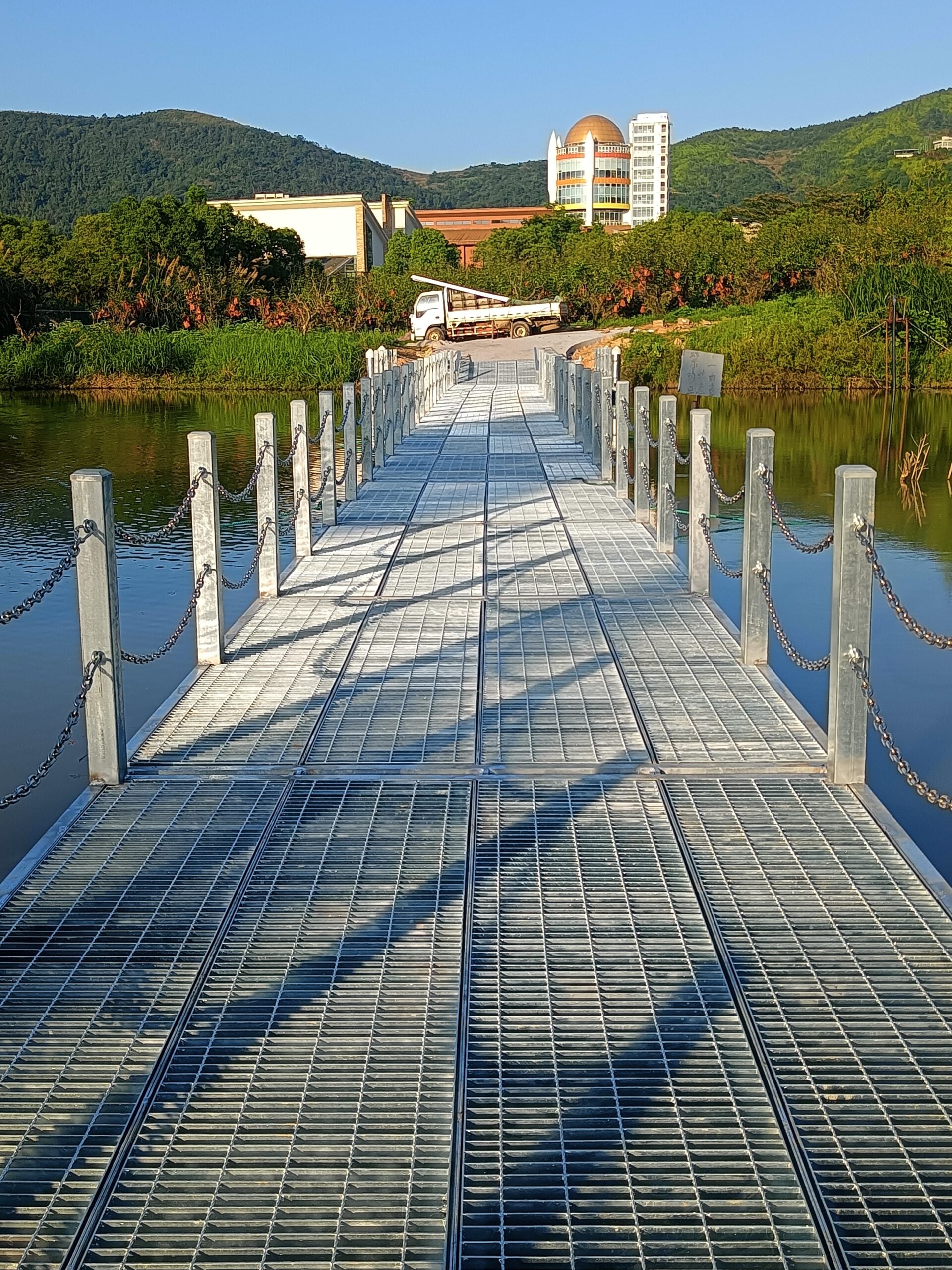
A project may use the float surface directly or incorporate separate decking or a frame. Additional structures introduce weight, connections and local loads that must be assessed. The two company-supplied photographs below show metal grating and railing details. They do not clearly reveal the underlying floats; confirm the buoyancy material, model and load configuration from the project drawings.
7. Delivery and maintenance: carry the requirements into the order
Once the configuration is selected, agree on models and quantities, the accessory list, packaging, spare parts, installation instructions, inspection items and acceptance criteria. Drawings, quotations and delivered items should use consistent model names and document revisions.
Warranty documents should define coverage, commencement, operating conditions and the claims process. During operation, plan inspections appropriate to the site, including connections, unusual deformation, signs of water ingress, anchoring wear and debris or growth on the walking surface. A textured surface still requires cleaning and an assessment of wet-condition use.
Seven document groups to request from an HDPE float manufacturer
| Document group | What to check |
|---|---|
| Resin information | Producer, grade, TDS, batches and traceability |
| Drawings and inspection records | Dimensions, tolerances, weight range, thickness locations and sealing checks |
| Buoyancy and load statement | Definitions, layout, loading, accessory weight, draft and freeboard |
| Connection information | Compatible parts, installation, test object and conditions, inspection and replacement |
| Weathering and test documents | Sample relevance, methods, conditions, evaluation criteria and scope |
| Layout and positioning proposal | Use, water levels, wind, waves, current, shore access and anchoring |
| Delivery and after-sales documents | Supply list, acceptance, maintenance, warranty and spare parts |
Frequently asked questions about HDPE float selection
Does imported high molecular weight HDPE determine float quality on its own?
The material is an important starting point. Finished-product quality also depends on the specific grade, formulation, molding, wall-thickness distribution, sealing and connection design. Review the resin and relevant finished-product documents together.
Are heavier or thicker HDPE floats always better?
Weight and thickness must be considered with the design. Check minimum thickness, critical locations, dimensional and weight consistency, and buoyancy and connection performance in the proposed configuration.
Can nominal buoyancy tell me how many people a bridge can carry?
It cannot be converted directly into a people count. Self-weight, accessories, load distribution, freeboard, stability and operating requirements must also be established before determining project operating limits.
What should I send an HDPE float manufacturer first?
Provide the intended use, planned length and width, site photographs, water depth and level range, wind, wave and current conditions, expected loads and installation location. Clear information supports a more relevant model and layout discussion.
How can I compare quotations from two manufacturers?
First align the resin requirements, float models, accessories, operating conditions, installation scope, transport and after-sales provisions. Similar unit prices do not necessarily describe the same supply scope or project suitability.
Hisea Dock: from material selection to a documented bridge configuration
Hisea Dock uses imported high molecular weight high-density polyethylene as its float resin. We recommend evaluating the material, product construction and application together, so that specifications relate to clear models and operating conditions.
The value of a quality floating bridge is expressed through the combined performance of its material, connections and suitability for the site. Planning a project? Send Hisea Dock your site photographs, proposed dimensions and intended use to start a focused discussion about product documents and layout.
www.hiseadock.com | WhatsApp: +86 17369861101
References
The product dimensions, weights and production steps refer to the public pages below. ASTM references explain test-method scope; they do not claim that Hisea Dock has obtained particular test results or certification.
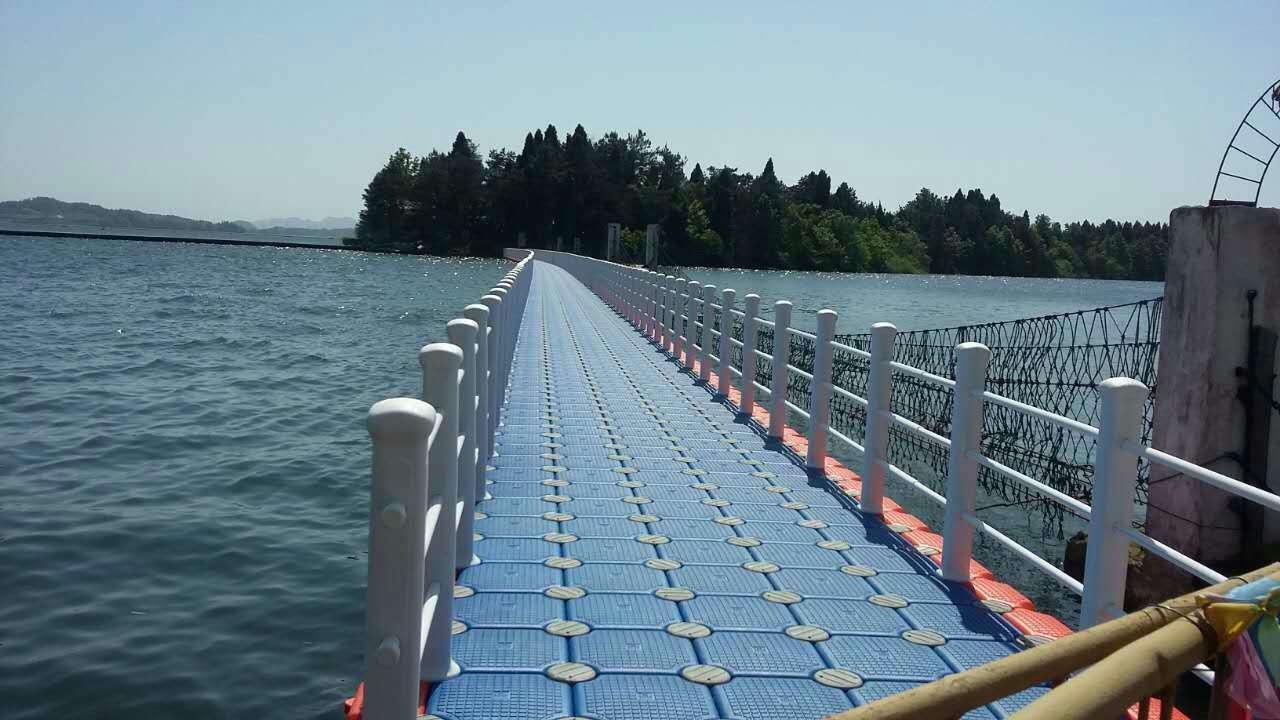
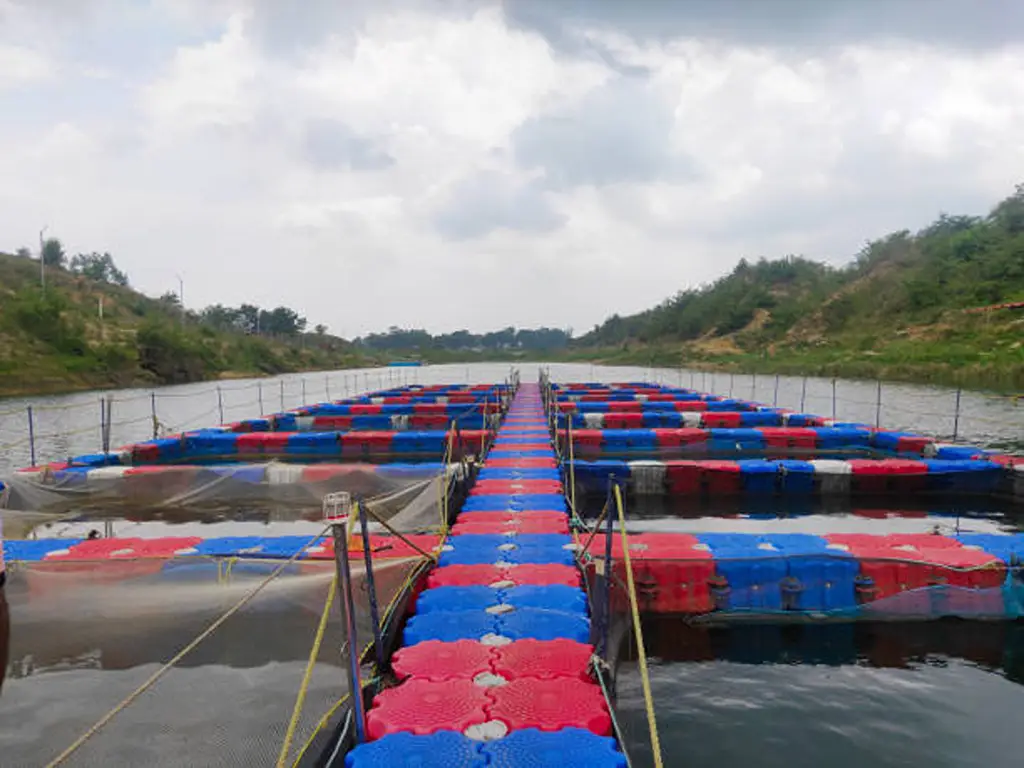
Imported-resin information and photographs supplied by the company. Final supply specifications, load conditions and project configurations should follow the agreed technical documents.

 English
 Thai
 Spanish
 French
 German
 Dutch
 Italian
 Arabic
 Indonesian
 Portuguese
 Turkish