
Yes. A floating dock can incorporate a lift-out railing section or a hinged gate for equipment access. On an existing dock, trace the route from the gangway to the launch point before choosing the bay. Moving the opening by one post can spare the crew a tight turn at the water’s edge.
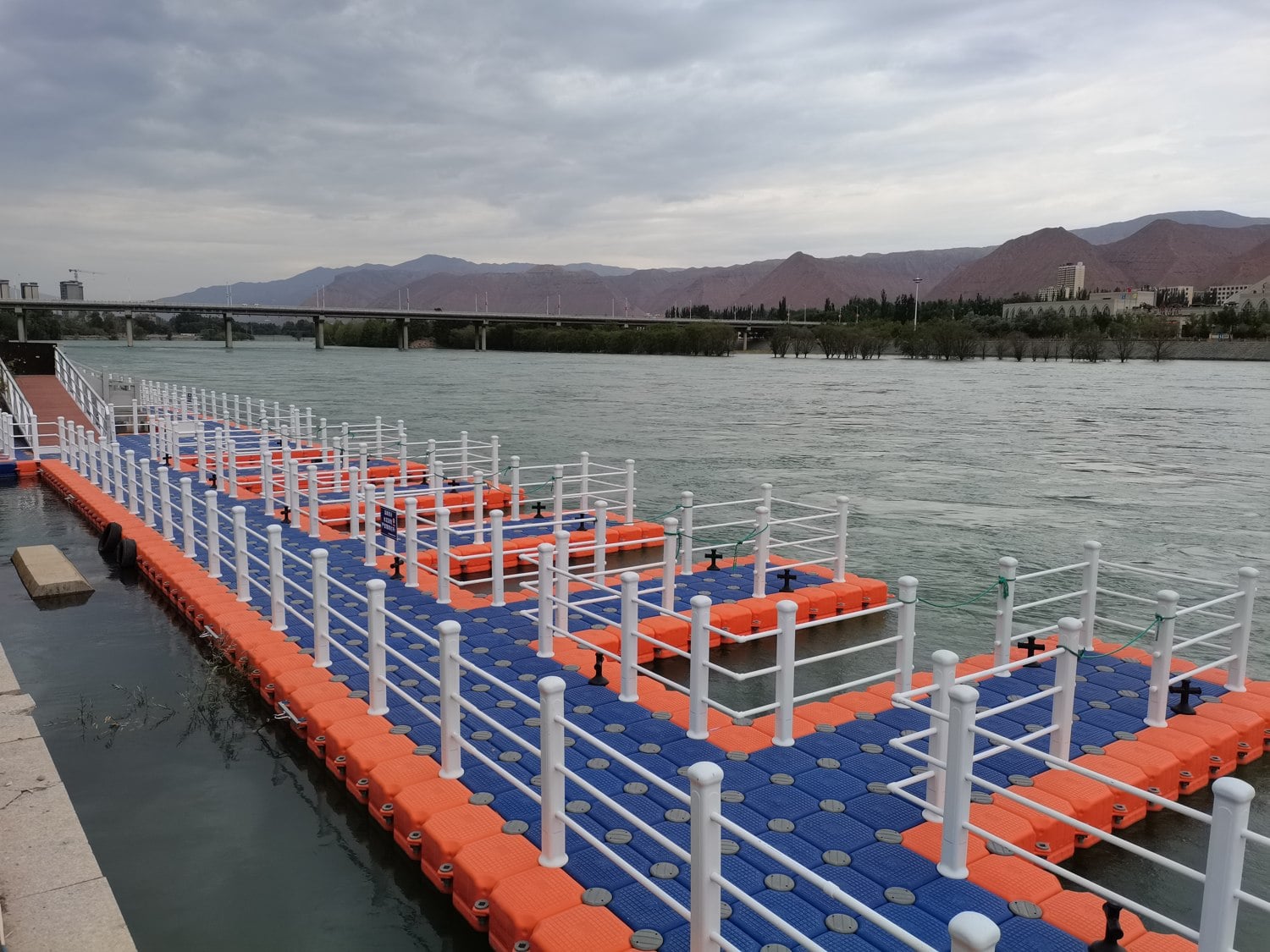
How much of a 1,200 mm bay can a cart actually use?
Measure the cart with the equipment strapped in. A handle or bracket may extend beyond the frame. Record both the maximum width and its height above deck, then measure the opening at that same height. Check it again at wheel level, where a post socket or base plate may project into the route.
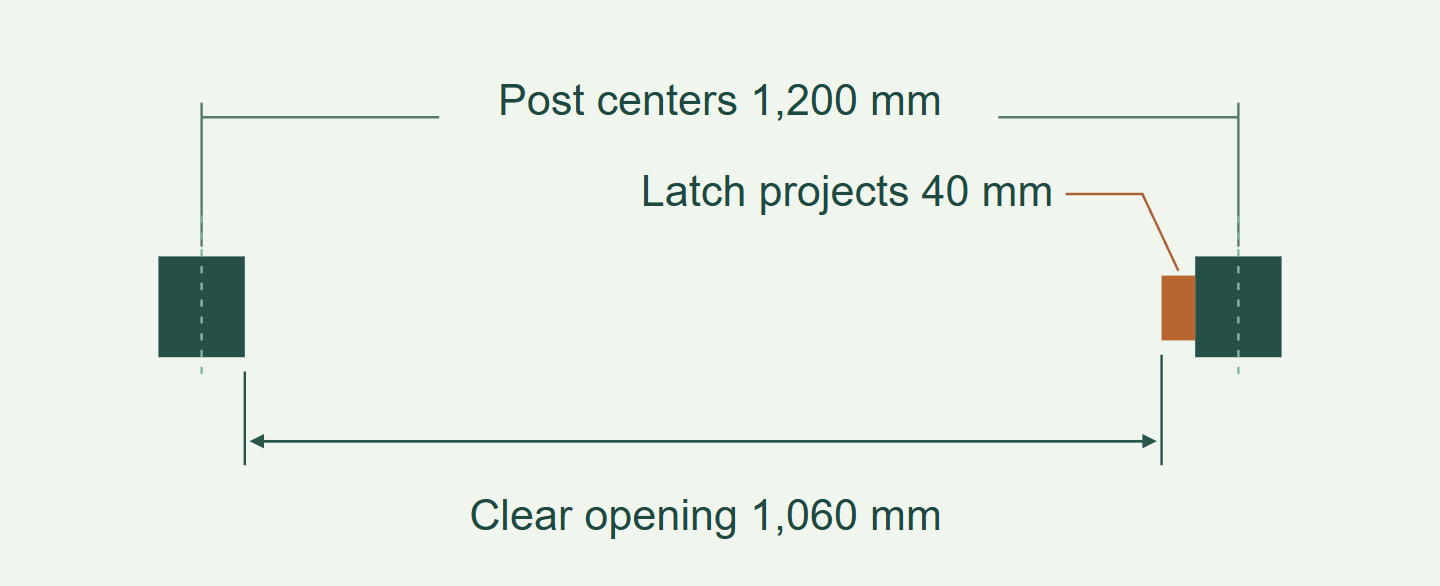
In the example, the clear opening is 1,200 − 50 − 50 − 40 = 1,060 mm. A 980 mm cart, perfectly centered and moving straight ahead, has 40 mm on either side. That small allowance tells you little about the approach. Mark out the posts and the corner on shore and walk the actual cart through before ordering the rail.
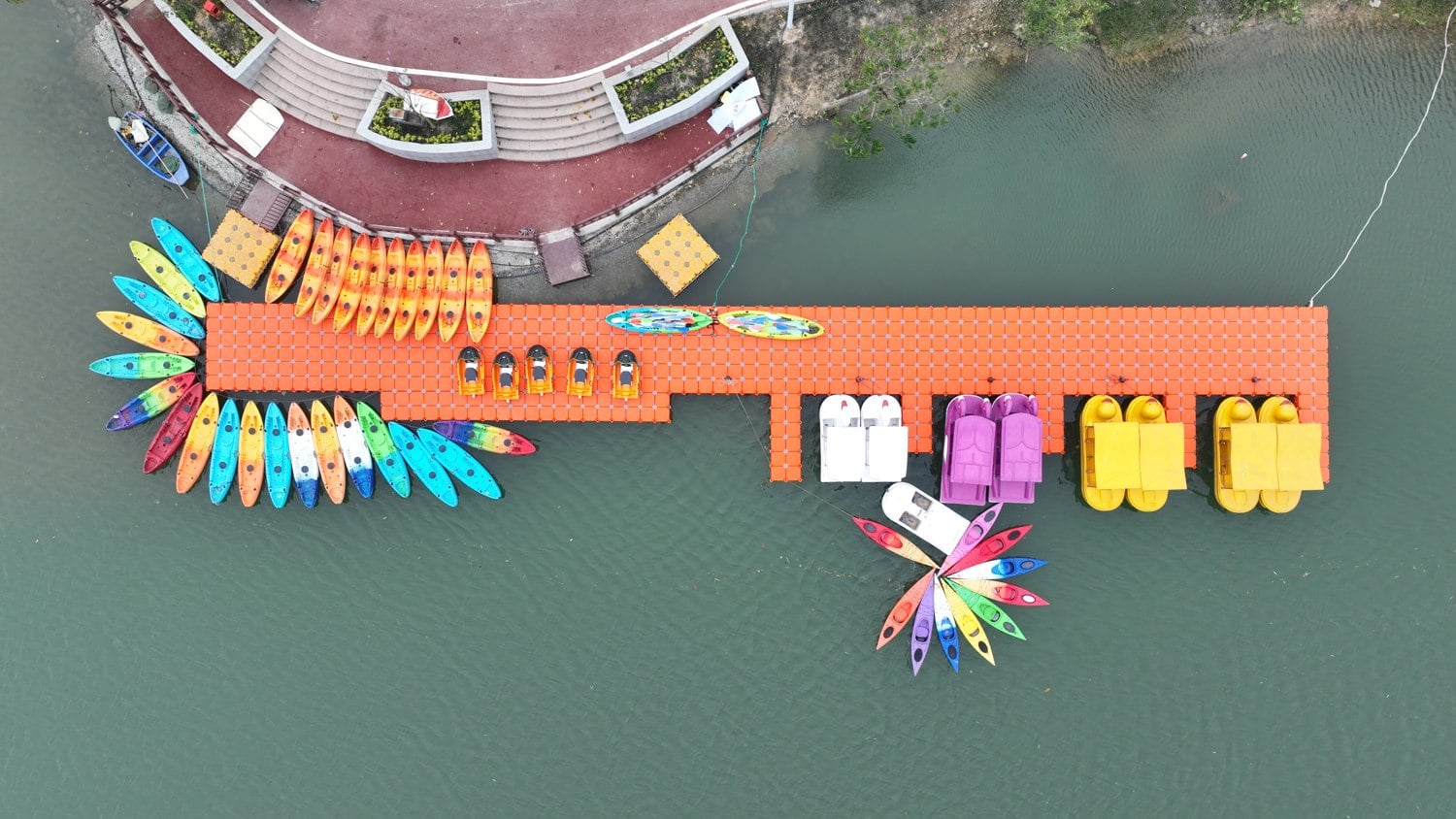
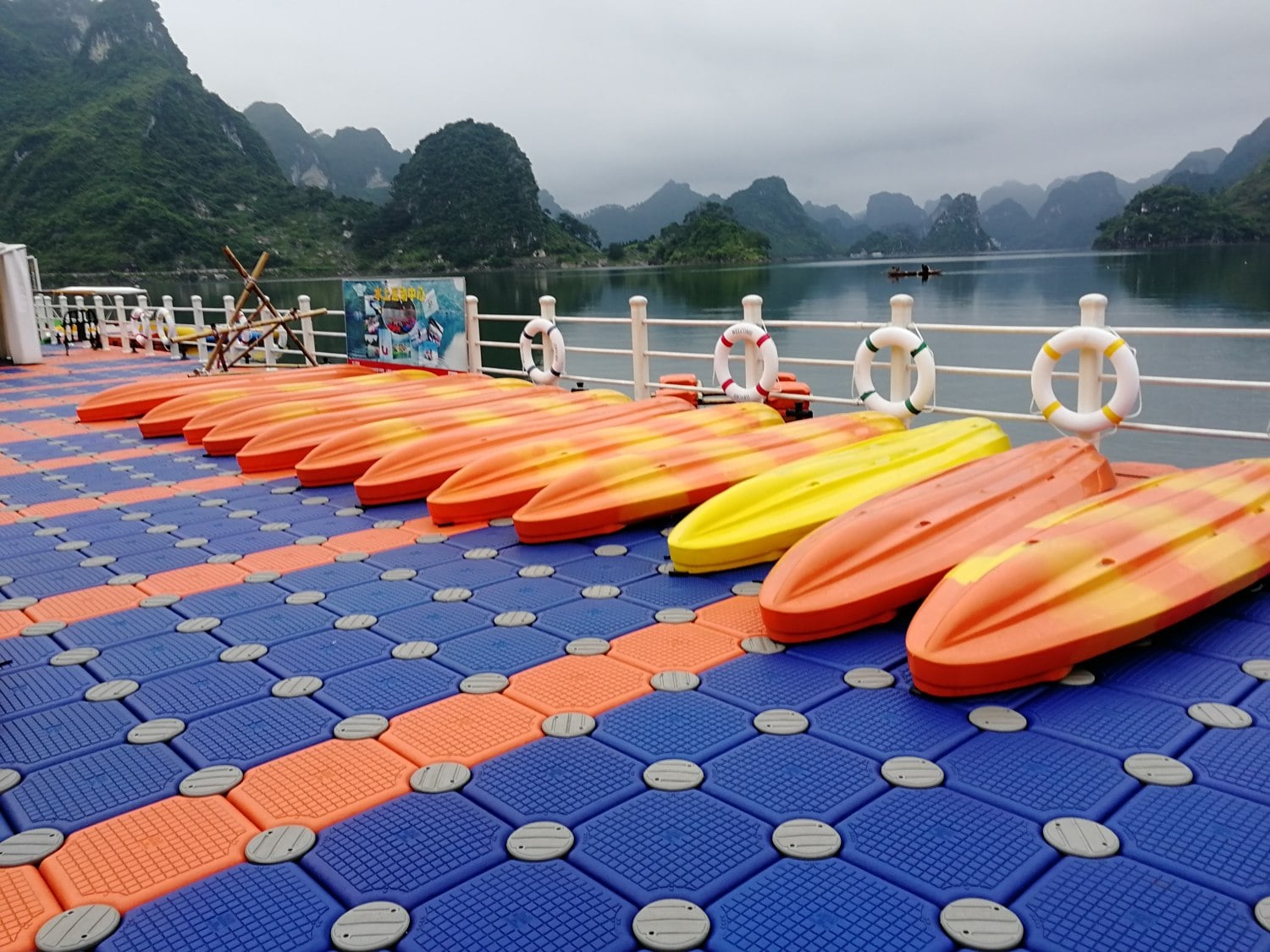
Will the loaded cart make the turn?
Suppose that same cart measures 1,600 mm long when loaded. The drawing allows a square turning area of 1,800 × 1,800 mm. Both cart dimensions fit inside the square when parked. As the cart pivots about its center, however, one corner crosses the boundary before the cart has turned 45 degrees.
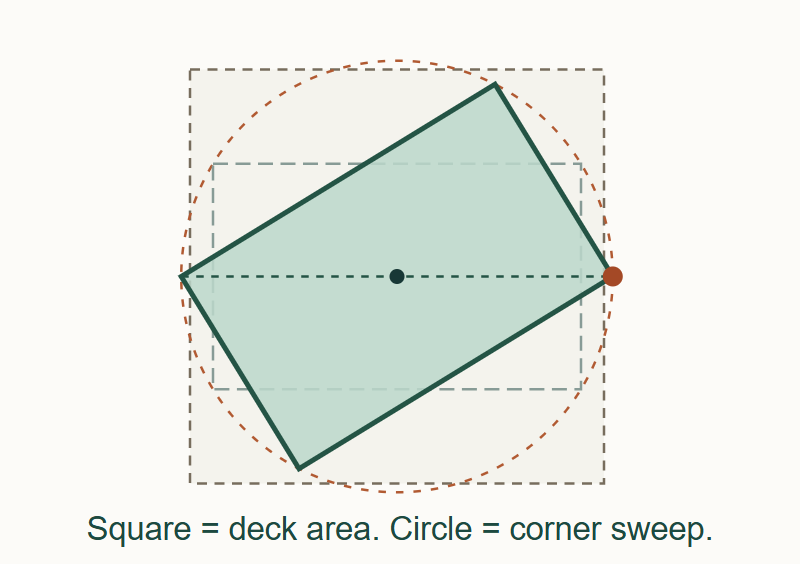
An end opening may give the cart a straight approach. A side opening may need a wider turning area. Try both layouts on shore. For a fixed axle, a long drawbar or an offset load, trace the path about the actual pivot and leave room for the operator. The 1,876 mm sweep shown here covers the rectangular load alone.
A lift-out section or a hinged gate?
For a seasonal equipment move, consider a lift-out section. Ask for its assembled weight, lifting points, crew requirement and the height of any socket left above deck. Mark a storage spot on the plan. If the only place to put the rail is across the gangway, the crew loses its route back to shore.
For repeated launches throughout the day, compare a hinged gate. It stays attached, but the leaf needs somewhere to swing. Plot it fully open alongside the gangway, rescue equipment and cart. Specify how the operator holds it open during a move and confirms that the latch has engaged afterward.
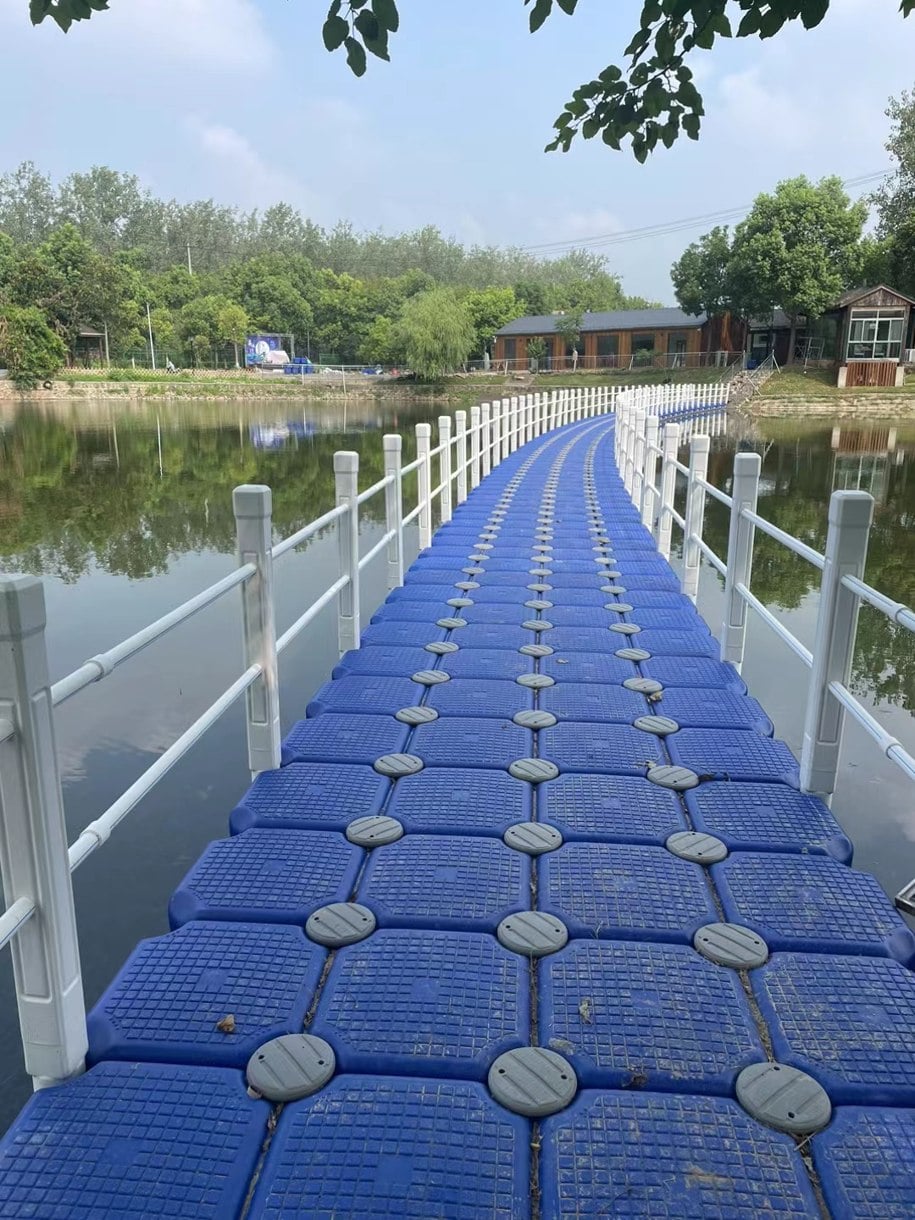
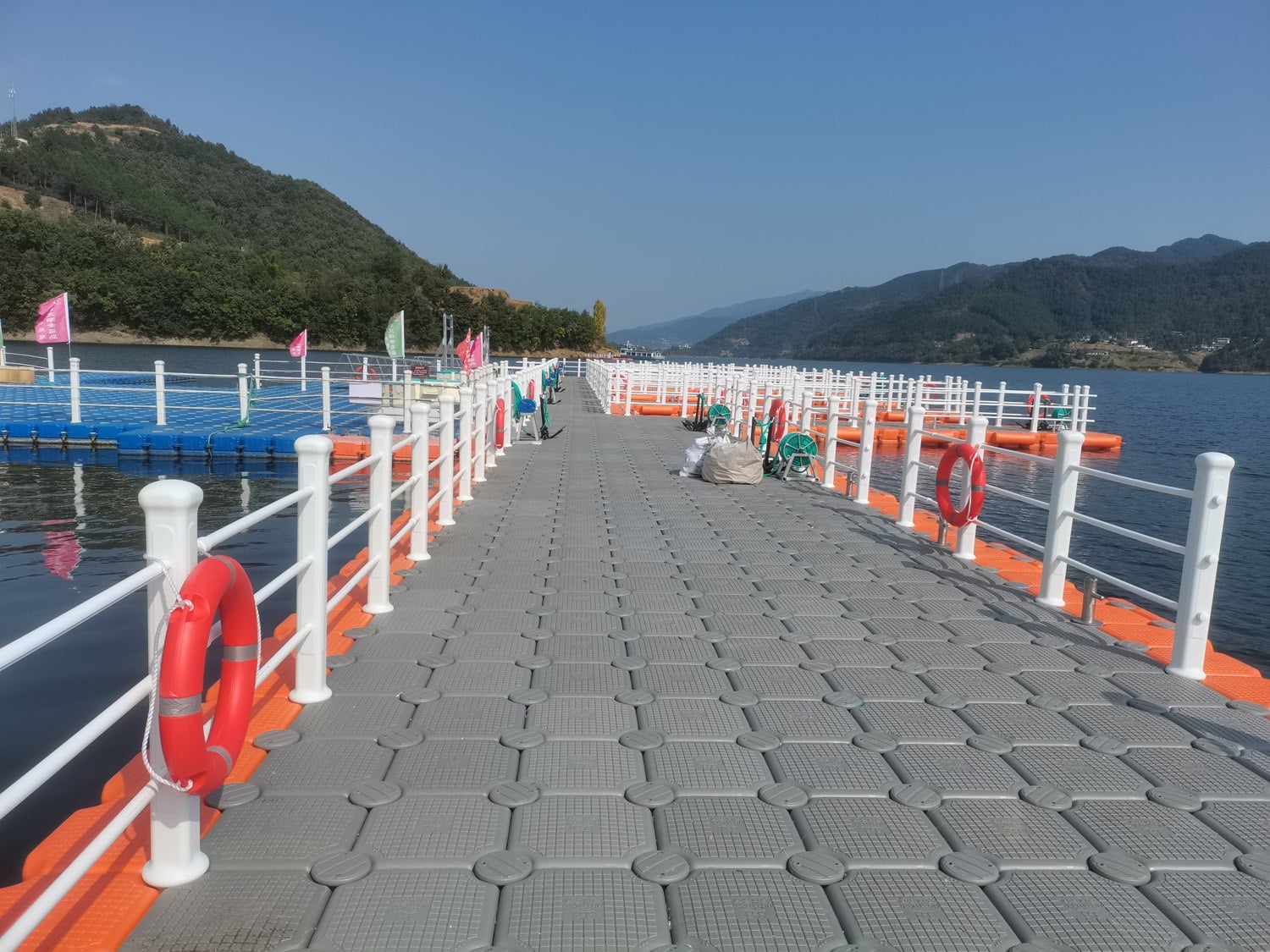
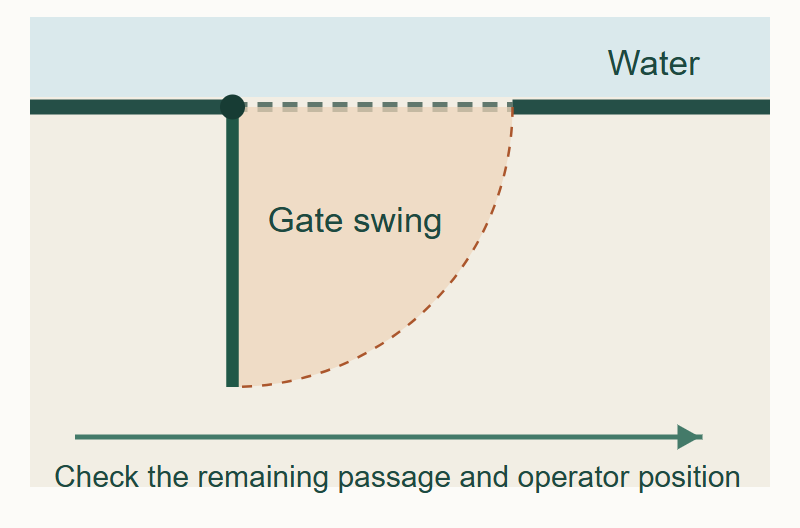
Try the hinges on each end of the opening in the plan. Reversing the swing may keep the lifebuoy within reach. If either arrangement blocks the only passage, revisit the location or the lift-out option. Have the crew point to where they will stand to release, hold and close the gate.
What supports the rails on either side?
Removing a bay creates two rail ends. With a rope threaded through several posts, releasing one end could slacken the line along adjacent bays. Ask for a detail tracing the rail or rope termination through the end post and base into the supporting structure. Have the supplier show how each adjoining bay carries its specified load with the opening in use.
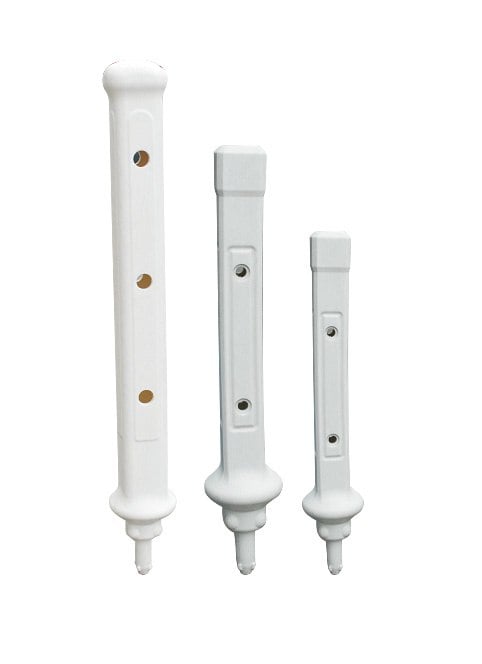
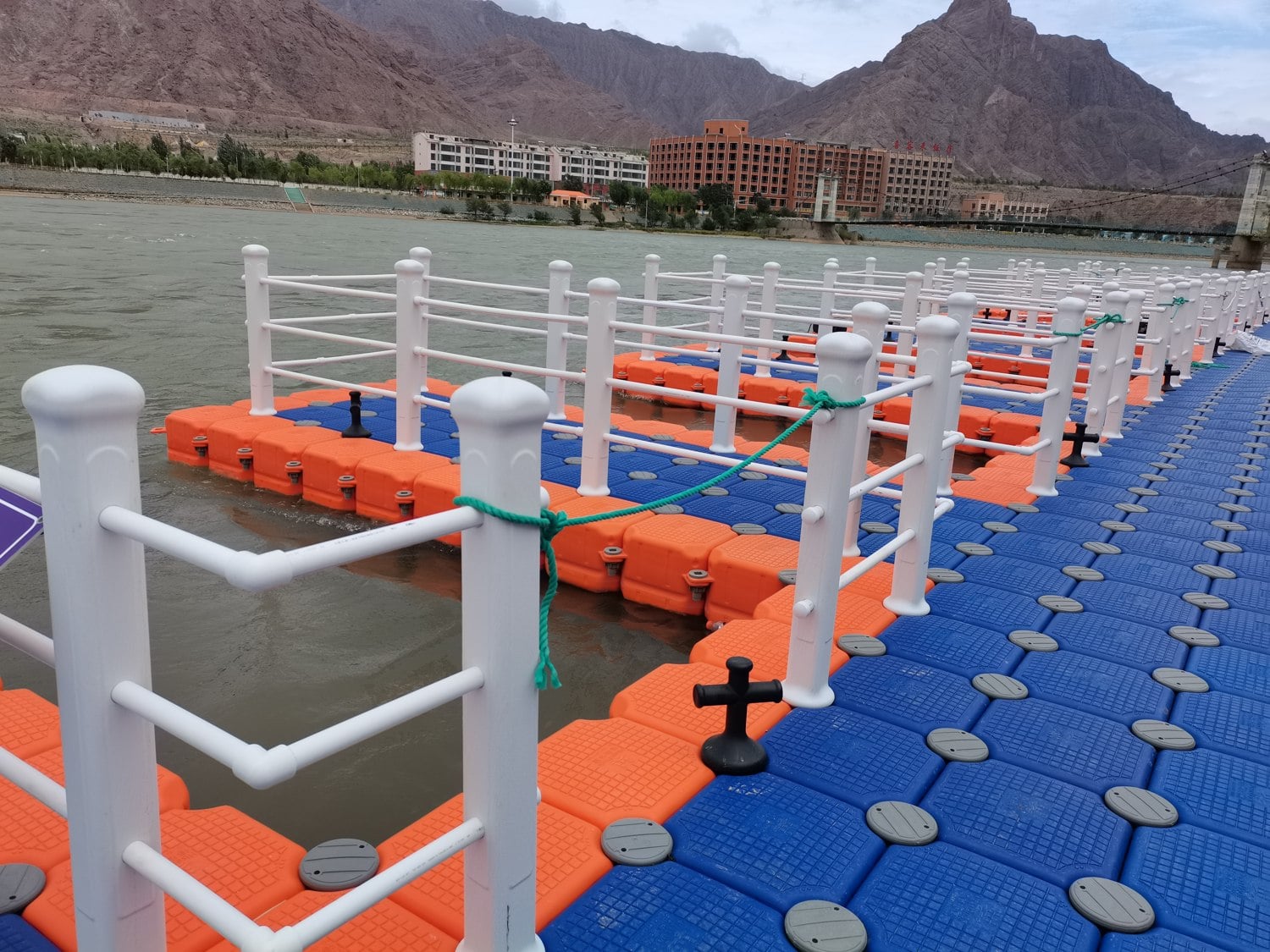
Hisea lists posts for rope handrails and side-mounted posts. For a retrofit, send the float model, available mounting space and photographs of the post foot and side connection. If a hinge or latch requires a different mounting arrangement, obtain a connection detail for that float model before specifying hardware. Hisea Dock accessories
Check the module joint beneath the opening. If the hinges sit on one float module and the latch on another, relative motion can pull them out of alignment as a crew or cart moves toward the edge. Ask the supplier to compare the expected movement with the latch tolerance and state the operating conditions for the closure check.
Commission the opening through a full operating cycle
Before opening the bay, assign one person to control access and keep pedestrians clear of the exposed edge. Provide a stowage point for rails, pins and tools. Where lifting equipment or a loaded cart will work near the edge, have the project designer check wheel loads, outrigger reactions where applicable, and platform stability under the off-center load.
| Stage | What to verify |
|---|---|
| Before quotation | Provide the loaded equipment envelope, mass, wheel spacing, route, turns, proposed bay and site photos. |
| Before ordering | Obtain open and closed plans, end-post and base details, hardware and spares lists, and evidence for the project’s required barrier performance. |
| At handover | Measure the narrowest opening and any raised sockets. Walk a full-size template through the route. Operate the assembly and check the adjacent rails, pins and latch. |
| After each use | Refit the section or close the gate. Check each retainer and each rail or rope end before reopening the walkway. |
What to put in the request for quotation
We need an equipment launch opening in an existing HDPE floating dock. The attached plan shows the loaded equipment dimensions, wheel type, approach route, float joints and proposed bay. Please price a lift-out section and a hinged gate separately. Include open and closed plans, end-post and base details, the minimum clear opening, projections above deck and latch location. Itemize hardware, replacement parts, site alterations and acceptance checks.
When the quotes arrive, follow the clear-width dimension arrows to the two surfaces that actually limit passage. Then locate the end-post fixings with the bay open and the storage position for the removed rail. Those three details give the buyer and the receiving crew the same basis for comparing and checking the offer.

 English
 Thai
 Spanish
 French
 German
 Dutch
 Italian
 Arabic
 Indonesian
 Portuguese
 Turkish