
Introduction
To the owner of a waterfront property, the autumn that is turning into the crystalline silence of winter is a bitter season. Although the frozen landscape is a beautiful sight, it poses a serious threat to any coastal infrastructure: your boat dock. Investing in a new dock is not just a piece of wood, metal, or plastic that is bought, but it is an investment in a lifestyle and a major addition to the value of the property.
Nevertheless, the physics of freezing temperatures is peculiar to this asset and puts its structural integrity to the test every year. To select the right dock that will survive harsh winter conditions, you need more than an aesthetic choice; you need to know something about engineering, material science and the particular limnology of your lake. This guide will discuss the dynamics of ice damage and the most resistant types of docks in the north, namely how the winter survival has been redefined by modern modular systems.
The Destructive Power of Ice: Why Do Ordinary Docks Fail?
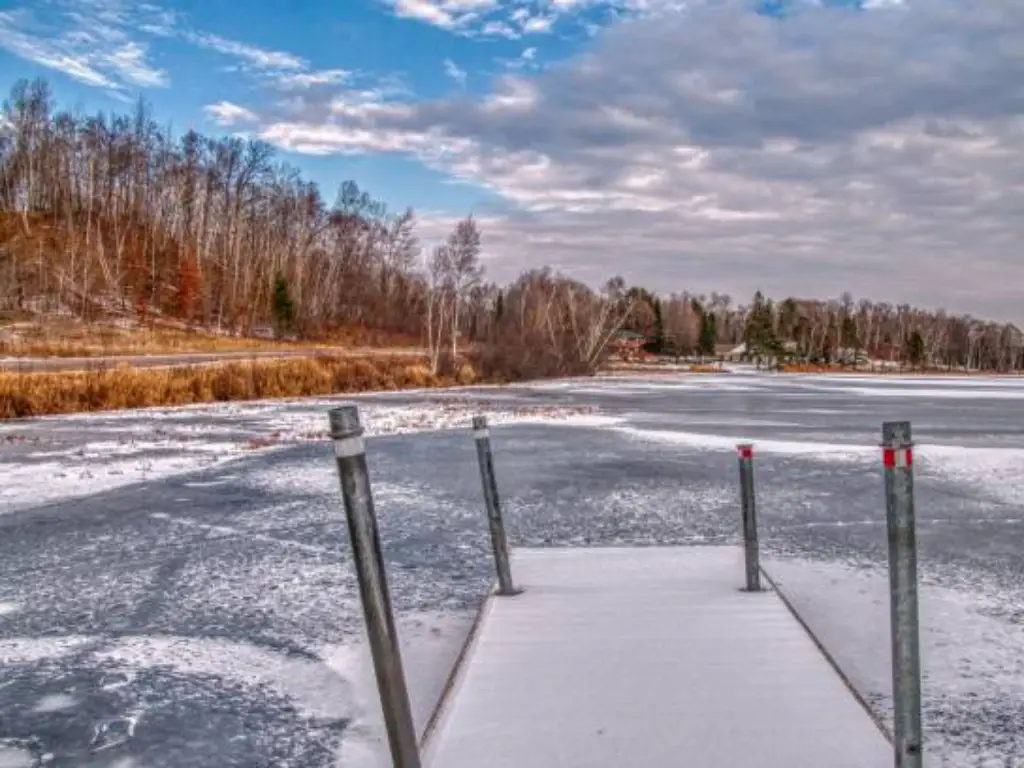
In order to value a strong dock, one has to know the enemy. Ice is not a fixed weight, but a moving force. As water is frozen by cold temperatures, it increases in volume by about 9 percent. This expansion causes a lateral pressure in a small or semi-small area such as a lake basin which can squeeze thin-walled metal pipes or splinter treated lumber.
Ice can destroy a dock in three main ways:
- Ice Jacking: This is the freezing of ice around the vertical pilings or legs of a dock. When the water level rises or falls, or the ice sheet becomes thicker, it literally jacks the poles upwards, dragging them out of the lake bed and destroying the level of the deck.
- Ice Heaving (Ice Shoving): Large masses of ice may move to the shore due to the influence of wind and temperature variations. Ice is a hydraulic press that moves slowly, but with the ability to bend steel beams and break wooden supports like matchsticks.
- Expansion Pressure: In smaller, completely enclosed lakes, the overall expansion of the entire ice sheet exerts a tremendous pressure on any fixed structure trapped in the middle.
The failure of most traditional docks is due to the fact that they are built to support vertical loads (people walking on them) instead of the huge horizontal and upward forces encountered during the winter season.
What Kind of Dock is the Best in Lakes that Freeze Over?
The choice of architecture is a risk management calculated choice. Different types of docks have varying physical strategies to endure the winter cycle and it is important to know the difference between them in order to achieve long-term ROI.
Pipe Docks
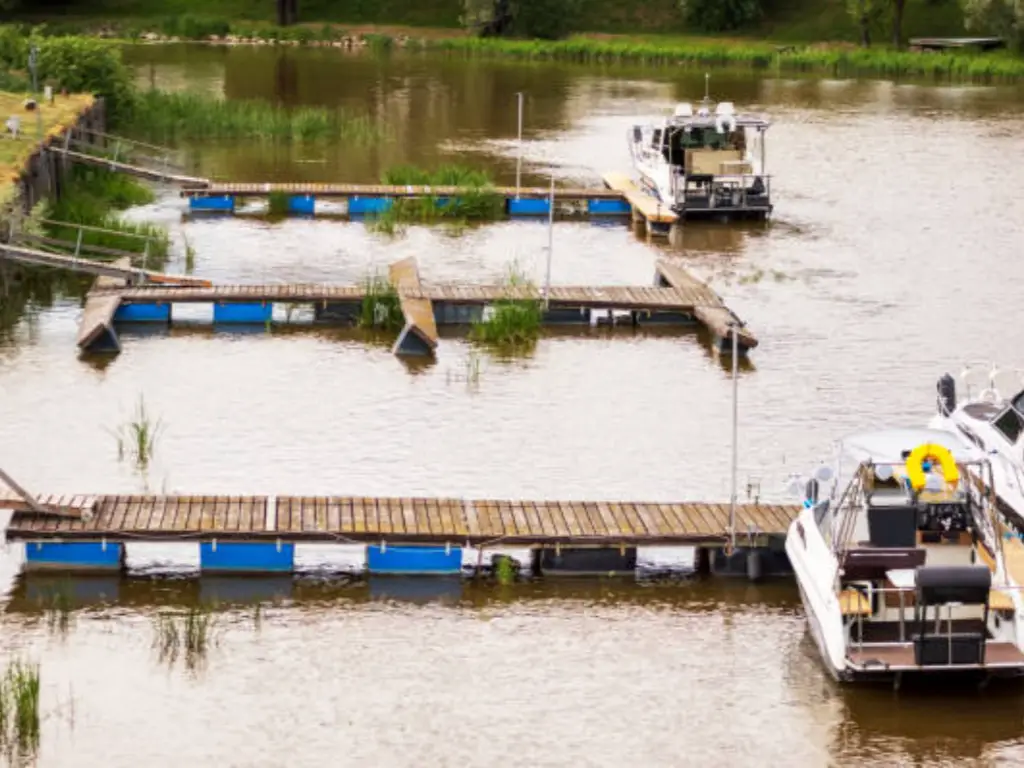
Pipe docks are defined by a frame that is held by legs resting on the bottom of the lake. Although they are preferred due to their low cost and easy installation, they are basically fair-weather structures. The vertical pipes are very thin and offer the ideal surface to the ice in the freezing climates. Due to the ability of the metal to conduct cold, ice develops a close attachment around the leg. The ice draws the pipe upwards when the lake level changes by a few inches.
Total seasonal extraction is the only possible method of protecting a pipe dock. They suit best shallow, quiet water, where the lake bottom is uniform, and the owner is determined to the yearly trouble of getting the frames on shore before the first frost. Without removing it, the frame will certainly bend under the disproportionate pressure of the freezing surface.
Roll-in Docks
A roll-in dock is essentially a pipe dock mounted on wheels, designed for easy transportation on gradual slopes. Its best quality is that it is easy to take away, which is necessary because it is not a “leave-in” solution for harsh winters. Wheels and axles are the main points of failure in case a roll-in dock is left in the lake. The wheel assembly is covered with ice and the growth of water in the hollow parts may break metal parts.
Moreover, the wheels serve as anchors, which give the ice a huge surface to grab. The roll-in dock is a migratory bird; it must not be where it is when winter comes. It is a great option when the owner has firm lake beds and wants a 15-minute removal process, but it is not a leave-in solution.
Floating Modular Docks
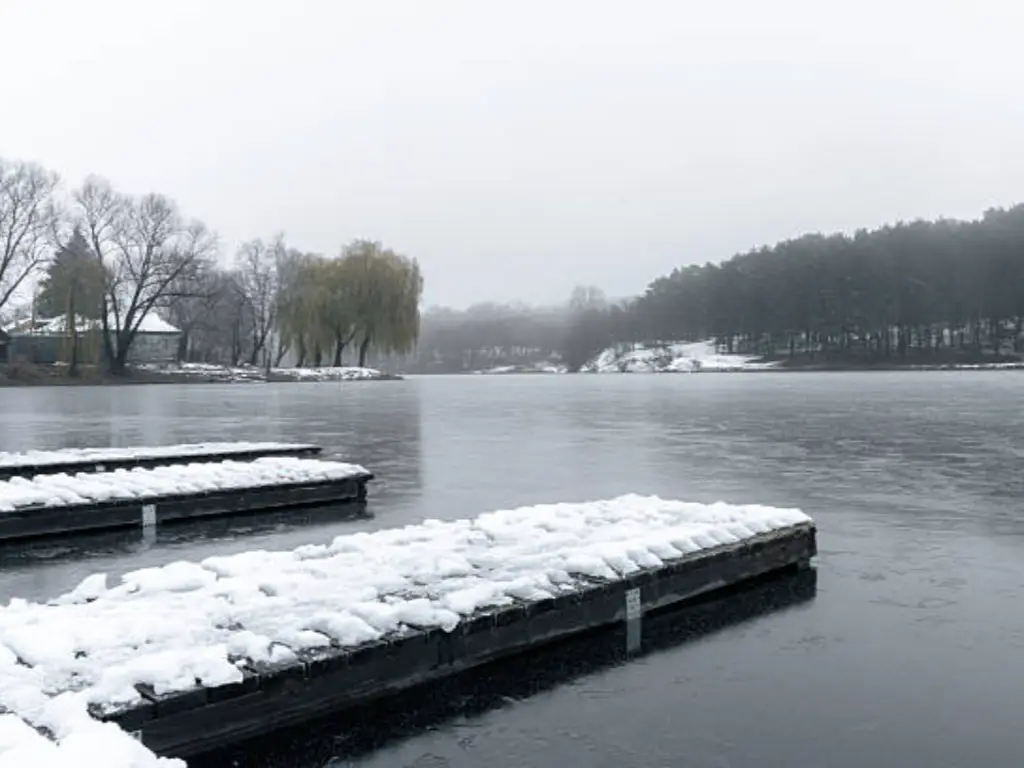
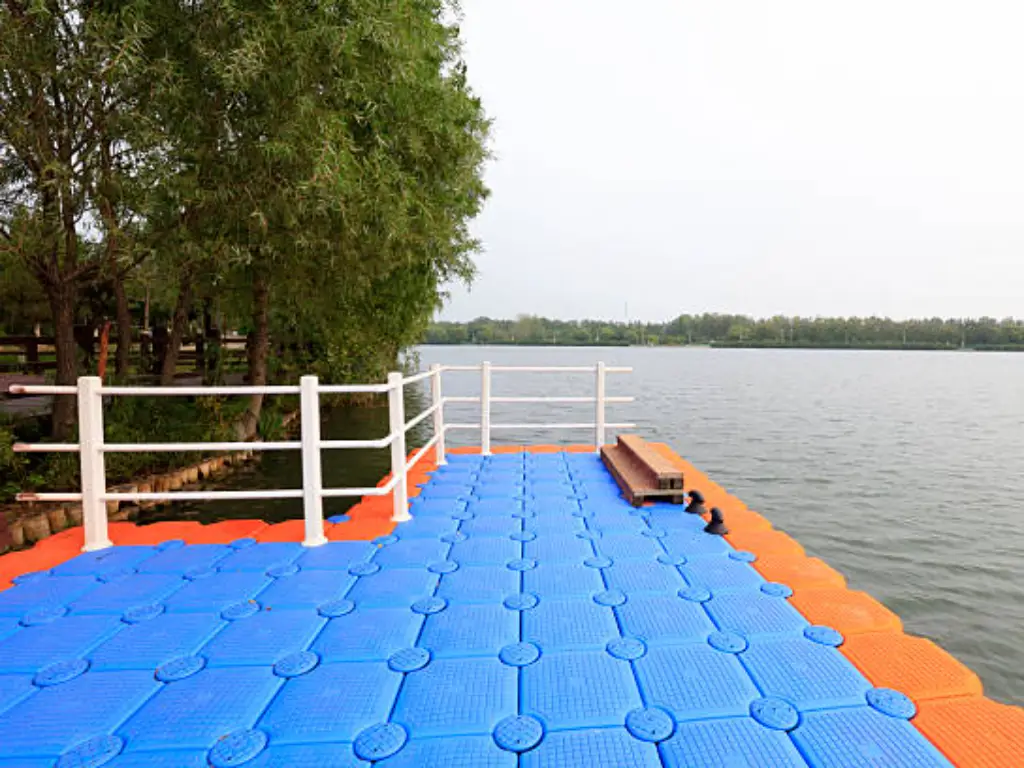
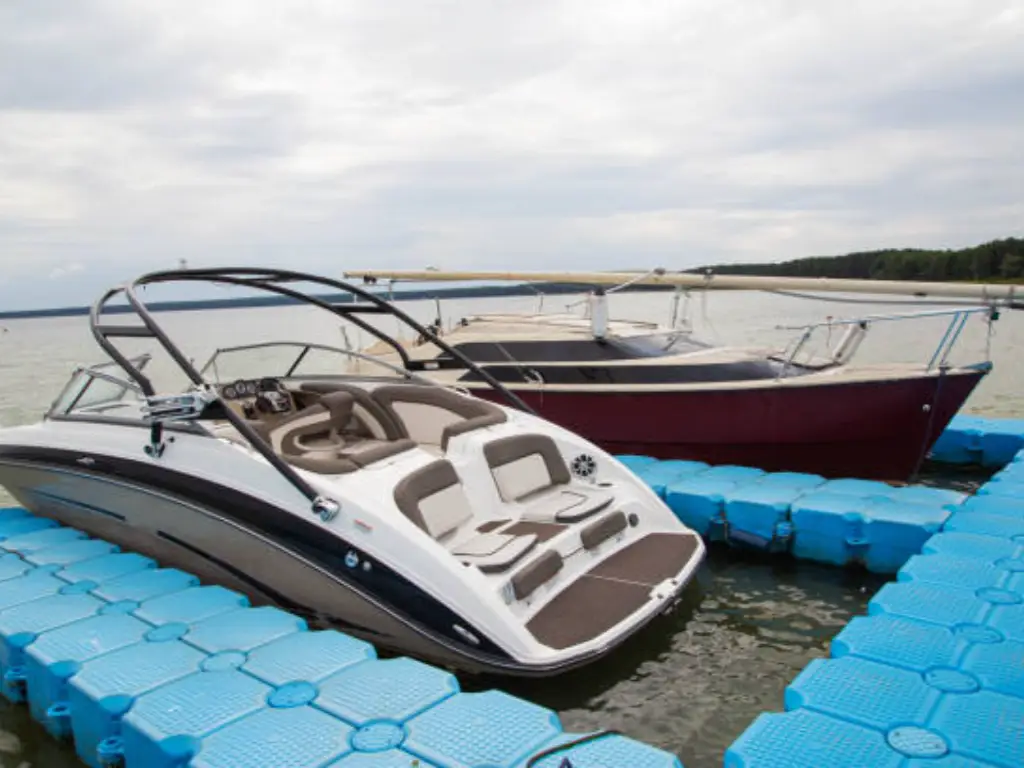
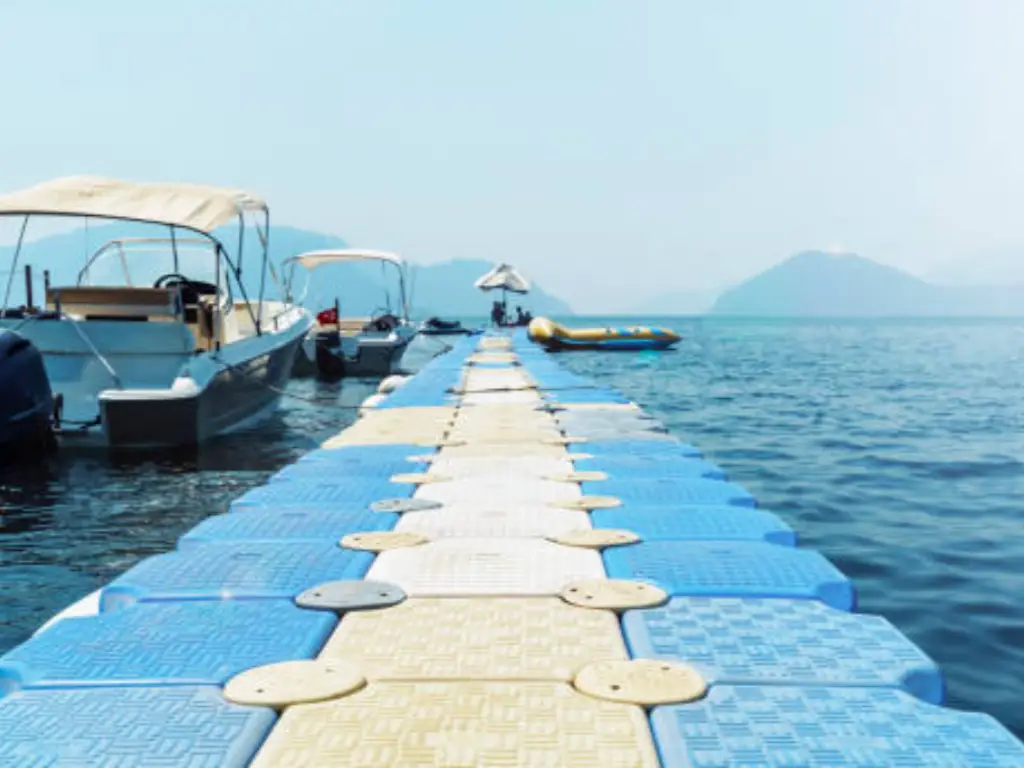
Floating modular systems are a radical change in the way we think about winter docking. These dock sections use displacement and flexibility instead of combating the ice. High-quality systems, such as EZ Dock products or PolyDock products, utilize modular cubes made of High-Density Polyethylene (HDPE). When the lake is frozen, the tapered shape of the modules makes the ice squeeze the dock upwards. This pop-up effect makes the dock not to be crushed or jacked.
The modularity enables the system to vibrate with the movement of the ice. The dock system is the ribcage of the waterfront, bending and taking the impact instead of breaking. This renders them the best option in deep water, muddy bottoms or any area where the owner would like to have a set it and forget it year round. They are not dependent on the lake bed to support them, so they are not subject to the jacking forces that destroy fixed docks.
Permanent Piling Docks
These are massive constructions in which piles of timber or steel are drilled deep into the substrate. They are the most house-like stable in the summer, but when the ice starts to move they are targets in a shooting gallery. They are immobile, and thus they have to withstand the entire kinetic energy of a moving ice sheet.
Permanent docks nearly always need a running de-icing system, like a bubbler or circulator, to survive in the north. This introduces an element of mechanical complexity and continued electrical expenses. In the absence of these systems, the piles will ultimately be forced out of position or sheared off by ice shove. They suit best commercial marinas where high-energy maintenance can be afforded.
Important Materials of Freeze-Resistant Docks
The choice of the material to use in a freezing lake is a big game. It is the distinction between a dock which stands the inexorable growth of ice and one which bends, breaks, or jacks out of the lake bottom after only one season. A material to survive a northern winter must have three important properties: Flexibility (to take up ice pressure), Ductility (to avoid cold-weather brittleness), and Corrosion Resistance.
The technical comparison below assesses the response of common dock material to the special mechanical stresses of frozen water conditions:
| Dock Type | Pipe Docks | Roll-in Docks | Floating Modular Docks | Permanent Piling Docks |
| Key Material | Marine-Grade Aluminum / Steel | Aluminum Frame | HDPE (High-Density Polyethylene) | Steel Piles / Treated Wood |
| Response to Freezing (Ice Pressure) | Poor: Ice can bend legs or “jack” (lift) them out of the lake bed. | Poor: Must be pulled out; ice movement will destroy the wheel/axle system. | Excellent: Naturally “pops up” above ice as it expands; avoids crushing. | Dangerous: High risk of “Ice Jacking” (ice pulls piles out of the ground). |
| Low-Temp Impact Resistance | High: Strong, but rigid frames may snap under extreme stress. | High: Metal frame is durable for seasonal hauling. | Superior: Remains flexible and ductile down to -40°C. | Very High: Structural strength is the highest of all types. |
| Thermal Expansion & Contraction | Moderate | Moderate | High (Requires flexible connector pins) | Low |
| Maintenance Requirement | High: Must be removed before the first hard freeze. | Moderate: Requires shore space for winter storage. | Low: Can stay in water in calm ice or be easily dismantled. | Critical: Requires Bubblers or De-icers to prevent ice formation. |
| Weight & Portability | Moderate: Frame is light, but legs must be adjusted manually. | Heavy but Mobile: Wheels make it easy to move for one person. | Lightweight: Modular pieces are easy for one person to carry. | Extreme: Non-portable; requires professional installation. |
| Surface Traction (Safety) | High: Usually features non-slip aluminum or wood decking. | High: Professional decking options available. | High: Molded-in textures provide grip even when wet/icy. | Variable: Wood can become very slippery when frozen. |
| Best For… | Shallow water, firm lake bottoms, and budget-conscious owners. | Shorelines with firm beds and flat space for winter storage. | Deep lakes, fluctuating water levels, and low-maintenance needs. | Commercial use, very large boats, or areas with no ice movement. |
The statistics indicate a definite rule: Rigidity is a vice in ice. Wood and steel are traditional materials that are powerful but rigid. As ice expands, these rigid structures are unable to release the energy, and this causes the bending of frames or ice jacking.
Objectively, HDPE (High-Density Polyethylene) is the most resilient. In contrast to metals which become brittle, HDPE is ductile to -60 C. Rather than struggling with the ice, the natural buoyancy and low-friction surface of the dock enable it to bend and slide over the ice sheet. High-grade polymers provide the most optimal combination of durability and zero-maintenance reliability in long-term performance in freezing climates.
What is the Best Dock to use on Your Frozen Lake?
Choosing a dock system in a northern climate is not only a matter of beauty, but a war between engineering and physics. To make sure that your investment will not be washed away in the winter, you need to consider your shoreline in the prism of a worst-case scenario. The following is the way to maneuver through the most critical decision factors.
Seasonal Water Level Fluctuations and Water Depth
In case you happen to be on a regulated reservoir or a lake which experiences a winter drawdown, the water levels may fall 3 to 10 feet prior to the hard freeze. A fixed pipe dock is a liability in such environments. When the water subsides, a fixed dock is left perched or cantilevered, and the frame is exposed to bending under its weight or being broken by ice driven by the wind snatching at the bare legs.
In the case of floating waters, a floating modular system is the most rational option. It is in a fixed relation with the water surface, and as the level falls it descends with it. Although the lake may dry up or freeze to the surface, high quality HDPE modules are made to lie flat on the frozen lake bed without the structural strain that would bend a metal frame. Moreover, to make the transition between the land safe in case of a considerable drop, use hinged ramps with roller kits. These enable the bridge to change its angle and slide easily on the dock surface, avoiding the connection points to snap under the torque of a steep incline. In regions where there is slight variation, the pipe docks can have adjustable telescoping legs, which can be adjusted manually to correct the height without necessarily having to take the whole unit apart.
Lake Bed Geography and Composition
The stability of your walking surface depends on the floor of your lake. When your lake bed is composed of deep muck or loose silt, the legs of a conventional dock will settle out of level, and must be brought into level by hand. Moreover, the suction of deep mud makes the extraction of those legs in the autumn a hazardous, back-breaking job. On the other hand, hard rock bottoms render driving piles or stable feet almost impossible.
In such difficult geological conditions, you ought to abandon compression-based supports (legs) and adopt tension-anchored floating systems. With weights and cables instead of legs, you can have the stability of your dock independent of the consistency of the lake bed. When a leg dock is necessary on soft silt, it may be padded with so-called mud pads, which are large base plates, to spread the load and avoid sinking. In the cases of extremely deep silt where compression aids are still needed, helical piles (steel shafts with screw-like blades) may be driven deep into the stable substrate. This gives it a locked-in hold that is much more resistant to the upward forces of ice than normal smooth pipes. In hard rock bottoms where anchoring is not possible, heavy-duty rock cribs (timber frames stuffed with stone) may be used to give a permanent, immovable base, but they are very labor-intensive to install.
Thickness of Ice and Climate Intensity
In places where the ice is more than 24 inches deep, or where there are ice shoves caused by the wind, the lateral pressure is your chief foe. Extreme cold may cause a rigged metal frame to reach a brittle point; as the ice expands, the frame is unable to absorb the energy, and the welds are broken or the wood is broken.
Tensile strength and flexibility are the most important when dealing with extreme ice. Search systems with a pin-and-lug connection design. This enables the dock to bend a little and take the energy of moving ice sheets instead of struggling with them. The proactive defense measure is the installation of a Bubbler or De-icer system. These units are propelled by propellers or compressed air to push warmer water to the surface at the bottom of the circle of open water around the dock so that ice never puts pressure on the structure. When active de-icing is not possible, a very efficient passive measure to fixed piles is the installation of low-friction piling sleeves or wraps. These are smooth PVC or HDPE covers that enable the ice sheet to slide up and down the pile as it swells and contracts so that the ice does not grab the structure and drag it out of the ground. When you are in an area where ice is moving and you have no power to run bubblers, you need a modular design, which means that you can take it to pieces and drag the most vulnerable parts to the shore in less than 30 minutes.
Beach Geography and Winter Storage Capacity
The logistics of the off-season is usually not taken into consideration until the first snow falls. An average 40-foot aluminum or wood dock takes up an enormous storage area on your lawn, which usually kills the grass beneath. Moreover, when your beach is steeply embanking, carrying 200-lb metal pieces up a slippery hill is a significant safety risk.
In the case of gradual slopes, “Rolling Docks” with massive, poly-wheels enable an individual to drag the whole structure out of the lake in the form of a trailer. But when you have a small yard area or a steep slope, modular HDPE sections will be of great benefit. These modules are light and are stacked vertically to minimize their storage space by more than 80 percent of the conventional sections. In the case of individuals who have no storage space whatsoever, some high-grade polymers are designed to remain in the ice throughout the year, so that a storage plan is not required at all.
Maintenance Preferences and ROI in the Long-Term
In computing the cost of a dock, you have to consider the Annual Labor Tax. When you pay someone to install and take out a pipe dock twice a year, you are spending between 500 and 1000 dollars a year. In ten years, that is a ten thousand dollars of labor- usually more than the dock cost.
To achieve the highest Return on Investment (ROI) in the long term, take into account the set-and-forget character of the materials. Another middle-ground product is high-density polymers, which do not rot, rust, or need seasonal painting, but do not have the buoyancy of HDPE. In addition to the decking, take special care with the metal hardware; the use of 316-grade stainless steel fasteners instead of the usual galvanized steel will eliminate the micro-cracking and quick corrosion of freeze-thaw cycles. When you intend to hold the property over five years the initial high cost of a modular, low-maintenance system will be recovered in the form of saved labor expenses and a much greater resale value in the second market.
Hurdles and Permit Requirements
Local environmental regulations tend to differentiate between permanent and temporary buildings. Permanent piling docks typically take months of agency approval such as the DNR (Department of Natural Resources) or EPA since they disrupt the lake bed ecosystem. Such permits are usually expensive and have rigid construction timeframes.
Temporary or removable systems are often the way to avoid this red tape. In the majority of jurisdictions, modular floating docks are treated as seasonal water furniture, similar to a patio chair or a buoy. Also, seek out Light-Penetrating dock surfaces; in some local jurisdictions the dock surface must be grated or perforated to permit the sunlight to reach the aquatic vegetation below, which can greatly accelerate the approval process in sensitive ecological areas. This category usually enables you to escape complicated environmental impact research and permanent structure permits.
Docking Requirements of the Great Lakes Region and Tranquil Small Lakes
In order to close the gap between theoretical and practical engineering, we need to consider how geography and climate determine the right decision.
- The Great Lakes Region: Wind fetch is the main danger in these large high-energy areas, where the wind moves across open water. This wind is a kinetic engine, which moves miles of ice sheets toward the shore in a bulldozer-like motion called an ice shove. Since the pressure of a moving ice field is practically impossible to resist, hard metal frames or permanent piling docks tend to be used as dams and eventually break at the welds. To the homeowners of Great Lakes, tactical portability is the sole rational defense. We suggest a lightweight modular system that can be detached into small parts and winched to higher ground within less than 30 minutes so that you can clear the shoreline before a large storm surge turns the lake into a death zone.
- Tranquil Small Lakes: The majority of inland lakes are in the state of still ice, with a solid lid that is stationary and moves very slowly. Most of these lakes are, however, controlled reservoirs, in which the water level is deliberately reduced during the fall, a practice called a winter drawdown. When you have a fixed-leg dock, the ice will hold on to the supports, and when the water level falls, the mere weight of the ice sheet will tear the dock asunder or bend the frame into the mud. To these calm yet unsteady waters, the freeze-in method is better. A floating modular dock tracks the water level down and ultimately freezes safely into the surface. This plan will remove the Annual Labor Tax of seasonal removal and will offer a stable year-round platform of winter recreation such as ice fishing or skating right off your shore.
Winter Ice Damage on Docks: How to Prevent It
Insuring your investment is not a universal undertaking. The modern waterfront owner has a wide variety of methodologies at his disposal, yet the right decision is a delicate calculation. The kinetic energy of the immediate surroundings should be weighed against the personal maintenance capacity and most importantly the local legal frameworks that govern the structures along the shoreline. The decision to use a protection strategy is one of deciding whether to retreat tactically or adapt structurally.
The Zero-Risk Strategy: Seasonal Removal
In places afflicted by Moving Ice, where the currents or the high winds make the whole ice cover move across the lake, the only way that can give a 100 percent assurance of structural damage is complete removal. No stationary engineering can resist the kinetic energy when a piece of ice, a continent, starts moving.
But the Zero-Risk course has its own burdens. The seasonal removal is labor intensive; it takes a specific period of time and physical effort to winch or drag frames out of the water before the initial freeze. Moreover, this plan requires a large storage area on dry land, which may be a logistical problem on smaller lakefront parcels. The most neglected risk is perhaps the possibility of damage during the process of transitioning between water and land. The loss of a frame on a rocky slope or the stressing of a weld in the extraction process usually does more harm than the winter itself.
The Stay-in-Place Strategy: Are You Going to Leave Your Dock in the Ice?
In Static Ice conditions, where the sheet is a stable lid on the water and there is no serious drift, it is a possible and appealing alternative to leave the dock in place. The purpose of this strategy is to remove the Annual Labor Tax and the risks of the extraction process.
- Tapping the Passive Resilience of the HDPE Freeze-in Approach: The HDPE freeze-in approach is a cost-efficient winter management approach that makes use of the inherent characteristics of High-Density Polyethylene to withstand ice-induced damage. The HDPE has a low-friction surface that allows ice sheets to not effectively grip the dock, reducing the vertical jacking forces that tend to undermine the traditional dock structures. This is further facilitated by the chamfered shape of the modular cubes; as the ice expands, it puts upward pressure on the dock which does not crush it but lifts it a little. These modular systems are structurally cohesive when constructed with reinforced connection points, and the platform can be left in the water during the winter without electricity or active maintenance.
- Active Defense using Auxiliary De-icing Equipment: Active Defense is based on mechanical intervention to sustain liquid water by a number of major technologies. Bubblers use on-shore compressors to force air through weighted perforated tubing to form an upward current of warmer water. Circulators, also known as water thrusters, are submerged propellers that push large masses of water horizontally across the surface. Dedicated de-icing heaters deliver specific thermal power to delicate elements, but are mostly found in industrial applications. The overall effect of these systems is to ensure that the ice never touches the structure, but it is expensive in terms of electricity and there is always a danger that a mechanical failure or power outage during a blizzard will cause instant and devastating damage as the water “shock freezes” around the pilings.
- The Unseen Costs of Active De-icing (Legal, Financial, and Ecological): Active de-icing presents legal liabilities. Bubblers form the so-called thin ice that poses a significant risk to snowmobilers and native wildlife. In most jurisdictions, de-icers need special permits and safety lighting. These devices may interfere with the natural thermal stratification of the lake ecologically. As a result, the Passive Resilience of an HDPE floating dock can be the more sustainable and less risky option.
Checklist Winter Dock Protection Strategies
| Comparison Dimension | Seasonal Removal | Passive Resilience (HDPE) | Active De-icing |
| Core Philosophy | Tactical Retreat: Move the dock to dry land. | Structural Adaptation: Flex and float with the ice. | Mechanical Intervention: Keep water liquid with power. |
| Best Environment | High-risk areas with Moving Ice (ice shoves). | Static Ice (stable freezing) in lakes/ponds. | Permanent pilings or high-value fixed docks. |
| Risk of Damage | Zero from ice; risk during hauling/moving. | Very Low; designed to pop up under pressure. | Moderate; high risk if power fails (shock freeze). |
| Cost Factors | High Annual Labor: Professional crews/heavy lifting. | Upfront Investment: No annual maintenance fees. | Recurring Expenses: High electricity and repair bills. |
| Primary Pros | 100% safety from massive drifting ice floes. | Set-and-forget; no electricity or labor needed. | No removal required; protects fixed structures. |
| Primary Cons | Requires storage space; physically demanding. | Not for environments with massive ice migration. | High risk of failure; requires constant monitoring. |
| Legal/Eco Impact | Eco-Friendly: No impact on water or wildlife. | Compliant: No energy used; safe for habitats. | High Liability: Creates thin ice; may need permits. |
Critical Pre-Freeze Pre-Maintenance and Safety Checklist
You may remove or freeze-in, but a pre-winter ritual is a must to the life of the dock.
- Structural Integrity and Anchor Management: It is important to ensure that all the bolts and connection pins of the dock are tightened before the initial hard frost. The growth of ice causes vibration and stress which can take advantage of loose hardware causing structural separation. Moreover, you should make sure that the dock is well anchored so that it does not drift. When leaving the dock in, loosen the anchor chains a little to allow them to expand, but leave enough tension in them that a thaw in mid-winter or a high wind will not give your platform an uncontrolled tour of the lake.
- Load Management, Electrical Readiness, and Emergency Preparedness: Snow load management is essential; too much may cause a floating dock to sink to the extent that it is submerged and then frozen into the ice, which will impair its ability to float. All furniture and ladders should be removed off the deck. The most important thing is electrical safety, disconnect all shore power, pull back cables to the land and close all conduits. Lastly, have an emergency kit on-shore with additional pins and heavy-duty ropes, so that you can react promptly in case of an unforeseen ice movement.
Post-Winter Recovery and Financial Protection
Although the ice sheet receding is an invitation to go back to leisure, it is also the time when the latent structural strains or minor changes in anchoring can manifest themselves. A disciplined stewardship plan will make sure that your waterfront transition is as smooth as the change of the season itself, and that your asset is physically and financially intact.
- Spring Recovery and Post-Thaw Inspection: After the thaw, carefully inspect the system to make sure that it has come out of its dormant state without any damage. You must check the integrity of all connection pins and ears, which are the main points of load during the expansion of ice. Care must be taken to make sure that no sediment, stones or organic debris has been lodged into the modular joints during the freeze-thaw cycles, since trapped material may disrupt the natural flexibility of the dock during the spring waves.
- Insurance Preparation and Pre-Winter Paperwork: Before the first hard frost, prepare a complete visual report by making dated high-resolution photographs of all your dock equipment and anchoring system. Winter maintenance is a game of chess with nature and it is important to have a record of your preventative measures, such as tightening hardware and cable placement, in case you have to make an insurance claim due to an unusual amount of ice. This paper gives undeniable information that all the reasonable preventive measures were observed.
Modular HDPE Floating Dock: Ideal in Lakes that Freeze
The modular HDPE system is a technical requirement by synthesizing the environmental issues of the northern shoreline, which include the changing water levels, ice sheets, and extreme thermal contraction. It solves the root causes of failure of conventional docking by a special blend of geometry and material science.
- Stress Dissipation by Modular Flexibility: These docks do not struggle with the ice using a rigid and brittle frame, but instead use a pin-and-lug connection that makes the platform a flexible matrix. The dock system is the ribcage of the waterfront, which bends and undulates to absorb the energy of the ice sheets that shift. The system also eliminates the disastrous snapping and weld failures associated with stationary wood or metal docks by spreading the stress over hundreds of modular joints.
- Hydrostatic Lift to Prevent Ice Jacking: The conventional pilings do not work because ice clings to their vertical sides and jack them out of the lakebed as the water levels rise and fall. This is addressed by modular HDPE cubes with their tapered, chamfered geometry. The sloping sides push the ice to squeeze the dock upwards as the lateral ice pressure increases. This pop-up effect enables the dock to yield the sub-surface space and safely ride on the ice sheet, entirely avoiding the vertical forces that destroy fixed legs.
- Molecular Resilience in Extreme Cold: The strength of HDPE in the Deep Freeze is based on its non-porous molecular structure. In contrast to wood, which absorbs moisture, which then breaks its fibers when it freezes, HDPE is totally resistant to water penetration. Moreover, most plastics turn glassy and brittle in cold, but high-grade HDPE is ductile at -60 o C. This makes the dock maintain its impact resistance and structural integrity during the most severe winter cycles.
It is essential to know how a dock is supposed to act in the ice, but Hisea Dock provides the design expertise that would make these theoretical advantages work perfectly in the most severe real-life situations.
Deep-Freeze Engineered: Why Hisea Dock is the Gold Standard of Winter Resilience
To make sure that your dock does not merely survive the winter but learns to master it, Hisea Dock takes these engineering principles to the next level by almost 20 years of specialized manufacturing experience (since 2006). To the owners of waterfront in the freezing climates, the real worth is the combination of precision engineering and certified reliability.
Our systems are designed with a new breed of High-Density Polyethylene (HDPE) with superior UV stabilizers that eliminate the thermal degradation and fading that occurs in extreme northern latitudes. Our modules are designed to resist the crushing forces of the growing ice which are enormous and thus we design our modules with reinforced connection ears of 19mm thick and a special four-sided grooved design. This forms a stabilized matrix which retains its structural backbone at the time when the lateral pressure is greatest, enabling the system to yield the sub-surface space and safely ride on the ice sheet.
All modules are supported with ISO-9001, CE, SGS, and TUV certifications, which is undeniable evidence of quality that is not just a marketing statement. This strict attention to detail leads to a service life that is 20-30% higher than the industry average. When you invest in Hisea Dock, you are investing in a system that has been shown to perform well in the “Deep Freeze” with a 5-year warranty and the experience of engineers who have perfected the art of operating in the most hostile waterfront conditions in the world.

Insurance/Claims: Protecting Your Financial Investment
Ice damage is a gray area in insurance policies in the northern climates. The majority of standard plans do not cover damage due to the pressure or weight of ice unless you can demonstrate that the damage was due to an extraordinary event and you have met your Duty of Care.
3 Insurance Denials and How to Prevent them
| Denial Scenario | The Adjuster’s “Trap” | Policy Keywords to Watch | Critical Evidence Required | Your Defense Strategy |
| Wear & Tear | Claims the dock was already old, rusted, or structurally compromised. | “Gradual Deterioration,” “Lack of Maintenance” | Time-stamped photos of hardware (pins/bolts) from before the freeze. | Maintenance Log: Keep a signed annual log of hardware checks and replacements. |
| Negligence | Claims you failed to protect the dock (e.g., you didn’t remove weight or adjust cables). | “Failure to Mitigate,” “Duty of Care” | Photos showing a clear, furniture-free deck and “winter-slack” in cables. | Winterization Audit: Document that all seasonal accessories were removed to maintain buoyancy. |
| Excluded Perils | Categorizing damage as “Ice Pressure” rather than a “Storm Event.” | “Weight of Ice,” “Ice Heaving,” “Ice Shoves” | Local weather/storm data and manufacturer technical certifications. | Policy Endorsement: Specifically add an “Ice and Snow Pressure” rider to your existing policy. |
The 5-Stepped Evidence Chain to Successful Claims
nsurance companies are more concerned with documentation rather than verbal claims. The following checklist will give undeniable evidence of appropriate maintenance:
- The Pre-Freeze Audit: Photograph all connection pins, brackets, and structural bolts in high-resolution in late autumn. This demonstrates that there was no structural fatigue in place.
- Anchor Calibration: Take a picture of your anchor chains or cables. Demonstrate that they possess the necessary “winter slack” to accommodate water level changes.
- Clear Deck Proof: Document that all furniture, ladders and accessories were cleared. This shows that you reduced the weight load to ensure maximum buoyancy.
- Metadata Check: Make sure that your GPS and Timestamps are on your smartphone. Photos that have location and date information embedded in them are legally-defensible evidence.
- Technical Certification: Add the official manufacturer certifications (ISO/SGS/TUV) to your claim. By demonstrating that you used high-grade equipment that was rated to work in extreme cold, the insurer cannot argue that you used poor materials.
With a careful evidence trail, you will turn your regular maintenance into a potent legal defense, and any unexpected ice damage will be considered an insured loss, not negligence on the part of the owner.
Conclusion
The fact that a lake is frozen is a wonderful show of the power of nature, but it should not cause panic to the owner of the property. You can save your investment over decades by abandoning the inflexible, fixed forms and adopting the modularity of high-grade HDPE.
A Hisea Dock system is the assurance of high quality engineering. You can either go with the Zero-Risk approach of dock removal or the Passive Resilience of freezing your dock in place, but our modular systems will offer the durability, safety, and value to endure the worst winters.
FAQS
Q: What docks do not have to be pulled out in winter?
A: A permanent dock, like a piling, crib, or concrete dock, gives the structural strength required to stay in the water throughout the year, and specialty engineering designs such as lift docks and suspension docks safeguard the structure by keeping it completely above the ice level.
Q: What to do to construct a permanent dock on a freezing lake?
A: To construct a permanent dock in frozen water, it is necessary to drill heavy-duty pilings into the lakebed below the frost line, use ice-resistant materials such as galvanized steel or Ipe wood, and install a de-icing system to counteract the effects of ice expansion and jacking.
Q: What can be done to prevent the freezing of water around a dock?
A: A de-icing system, like a dock bubbler or water circulator, is used to stop the formation of ice by constantly drawing warmer water to the surface and creating a continuous flow of water that interferes with the freezing process.

 English
  Thai
Thai  Spanish
  French
  German
  Dutch
Dutch  Italian