
Introduction
Buying waterfront is not a mere real estate purchase, but it is the purchase of a particular waterfront lifestyle. For most waterfront property owners, this lifestyle is pegged on the infrastructure that connects the land and the water. Whether to install a floating dock system or a fixed structure is not just a matter of taste, but a complex engineering and financial decision. Choosing the right dock based on various factors will decide whether your shoreline will be useful in the next few decades.
In this discussion we will deconstruct the mechanical, fiscal and regulatory nuances of each type of dock to determine which type of dock is the most appropriate to your specific body of water.
What is a Floating Dock?
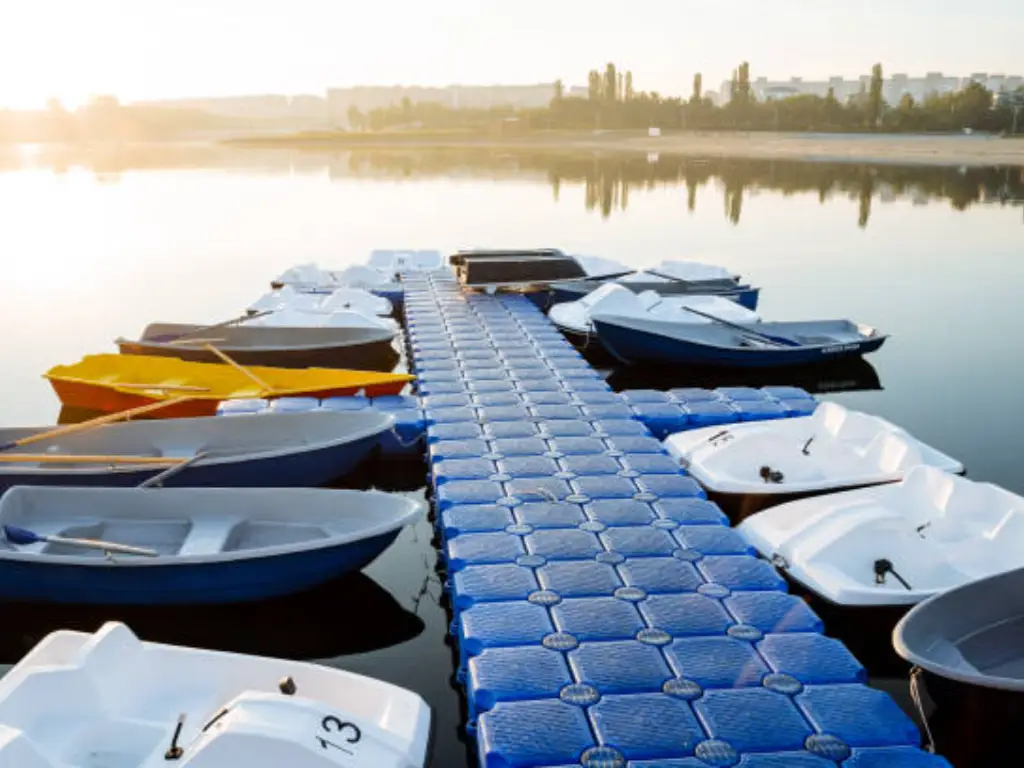
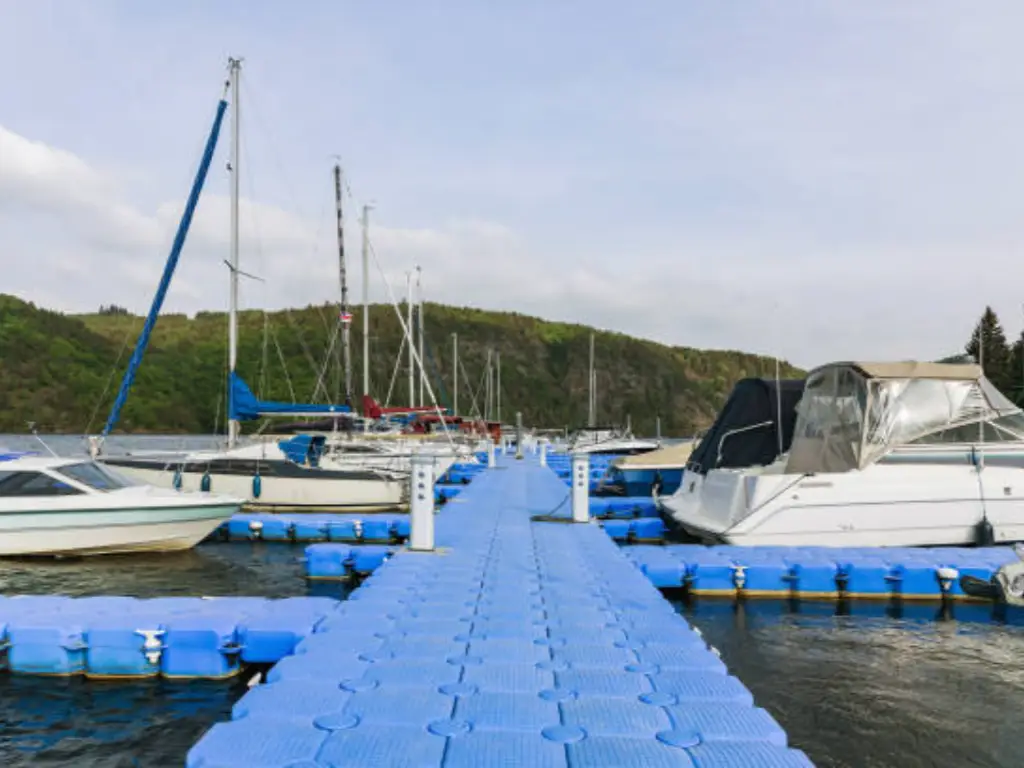
A floating dock is a self-adjusting, flexible dock system that is laid directly on the surface of the water, and is supported by airtight modular floats or pontoons, enabling it to be on the surface of the water at all times, no matter how deep the water is. The entire mechanism is based on the principle of hydrostatic displacement, according to which the entire mechanism rises and falls in perfect harmony with the tides and the rising and falling water level. This provides a uniform freeboard, or height of the deck above the water, which provides safe and easy access to vessels at any time. The contemporary floating docks are normally constructed with high-strength HDPE and are characterized as being modular in nature and having a low environmental impact hence the best choice when deep-water installation is necessary or when there is a wide range of water level and permanent structures are not possible.
What is a Fixed Dock?
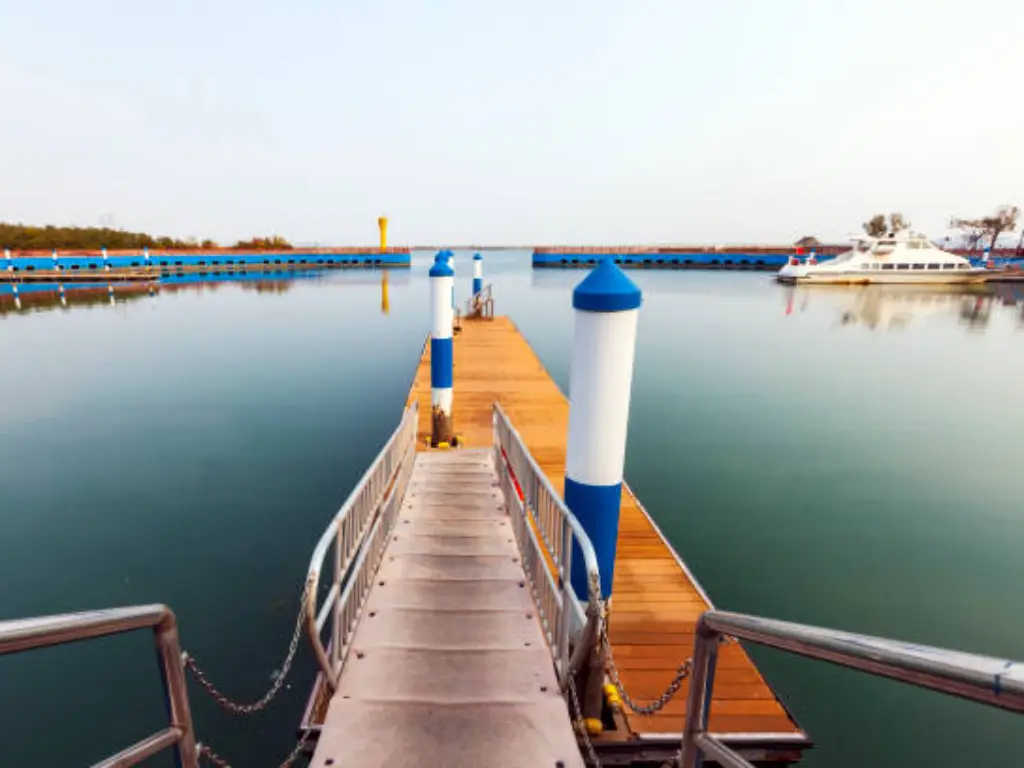
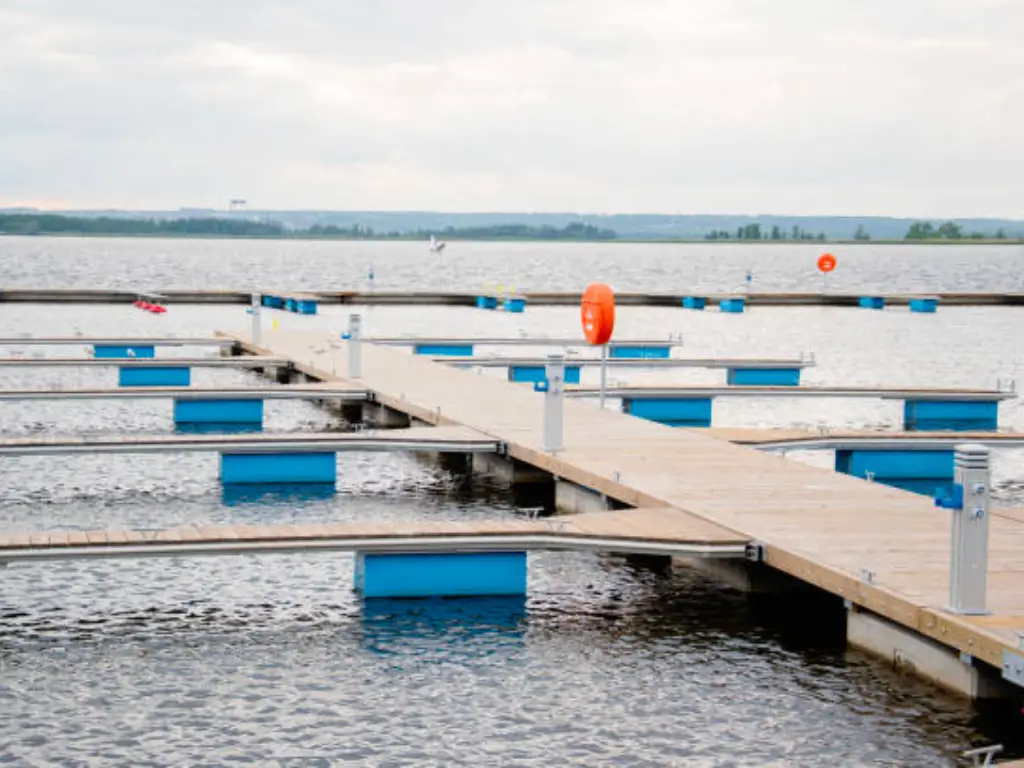
A fixed dock, or permanent dock, or stationary dock, is a hard surface that is mounted on heavy pilings that are driven deep into the underlying ground. Its engineering philosophy is based on structural mass and stability where the weight of the dock and all external loads are transferred directly through the pilings to the lakebed or seabed. The deck height being constant at the time of construction gives a very stable, terrestrial experience with no foot movement. Though this will be more durable in heavy load applications, the accessibility of the dock will not change i.e. its connection with the water surface will be completely dependent on the conditions of the environment and the frequency of the tide.
Comparison of Floating Dock and Fixed Dock
To make a good choice, one has to look beyond the superficial observations and examine these structures within the entire lifecycle of ownership.
Quick Comparison Table
| Comparison Dimension | Floating Dock (Modular HDPE) | Fixed Dock (Piling Supported) |
| Core Material | High-Density Polyethylene (HDPE) | Treated Wood / Aluminum / Steel |
| Water Level Adaptability | Perfect; automatically stays level with boat deck. | Poor; can be submerged or too high to access. |
| Stability & Experience | Good; flexible energy dissipation; closer to water. | Excellent; motionless; feels like solid ground. |
| Weather & Ice Resilience | High; undulates with surges; floats atop ice. | Low; rigid structure snaps under surge or ice heaving. |
| Installation Complexity | Simple; modular “LEGO-like” assembly; no heavy gear. | High; requires barge-mounted pile drivers and divers. |
| Maintenance | Minimal: Chemically inert; requires only periodic rinsing. | High: Requires annual staining, washing, and board replacement. |
| Durability & Lifespan | 30+ Years: Resistant to UV, salt, rot, and marine borers. | 15–25 Years: Highly dependent on the frequency of maintenance. |
| Environmental Impact | Low; negligible disturbance to the waterbed. | High; piling driving disrupts benthic ecosystems. |
| Regulatory Permits | Usually easier; classified as a temporary structure. | Difficult; rigorous “permanent building” codes. |
| Spatial Flexibility | Excellent; modular units can be reshaped or expanded. | Poor; permanent footprint; costly to modify. |
| Cost Analysis | Lower initial cost; high resale value as an asset. | High initial investment; value tied to real estate. |
Material Choice and Best Practices
The first factor that determines the performance of your dock is the material you use. The following is the alignment of wood, aluminum and HDPE with various dock systems:
- Pressure-Treated Wood: Ideal in the traditional fixed docks in stable, freshwater lakes. It offers a traditional land-extension look, but needs intensive maintenance every year to avoid rot.
- Aluminum: This is used in the structural frames of high-end fixed docks or in the gangways (ramps) of floating systems. It is light and powerful but may get very hot in direct sun which is dangerous.
- HDPE (High-Density Polyethylene): The standard of modular floating docks and PWC ports. Its lightness and chemical neutrality make it the sole rational option when it comes to saltwater, changing tides, and modularity that is easy to build.
| Feature | Wood (Timber) | Aluminum | HDPE (Hisea Dock) |
| Best Dock Type | Traditional Fixed | Fixed Frames / Ramps | Modular Floating |
| Saltwater Resilience | Poor (Rot/Borers) | Excellent | Superior (Inert) |
| Maintenance | High (Annual) | Very Low | Virtually Zero |
| Surface Temp | Low | Very High (Hot) | Consistent (Cool) |
| Lifespan | 10–20 Years | 30+ Years | 30+ Years |
Adaptability to Water Level Fluctuations
The best advantage of a floating system is that it is inherently in harmony with the water. A fixed dock can be a liability in places where there is a high tide, seasonal flooding or water level managed by a dam. During high water conditions, a fixed dock may be totally submerged and rendered useless and may be damaged structurally by upward hydrostatic pressure. Conversely, in case of a drought, the drop between the deck and the boat may be quite hazardous.
A floating dock eliminates this distinction. It is always easy and safe to board, as it is always at the same level as the deck of the boat. In addition, this flexibility protects your ship. On a fixed dock the mooring lines must be loose, so that the rising tide may cause the boat to toss and bang against the pilings. The boat and the dock are moving on a floating dock, which can be moored nearer and more safely.
User Experience and Stability
A fixed dock provides a feeling of total motionlessness which is ideal in the case of large groups or individuals who are susceptible to motion sickness. It is a fixed extension of the land by being fixed directly into the underwater ground.
Conversely, the unsteadiness of the past has been overcome by the modern modular HDPE systems that are strengthened with interlocking connectors and broad-footprint designs that offer a stable and continuous surface. The true value of this design lies in the dynamic conditions; a fixed structure that is rigid must absorb the entire force of the wakes and waves that can lead to structural fatigue but a floating dock is flexible in nature and therefore it can absorb the energy by moving with the water. This is a natural strength that is more effective in protecting structural damages during storms or heavy traffic.
Ice Strength and Severe Weather
Ice heaving is the silent murderer of fixed docks in the north. The ice surrounds pilings and when it becomes large, it exerts massive pressure upwards, literally lifting the posts out of the ground. The owners of many fixed docks are forced to carry out a costly annual ritual of replacing the so-called popped pilings.
Floating docks, especially HDPE docks, are designed to be resistant to such conditions. Their tapered or rounded bottoms allow them to rise and sit on the ice rather than be trampled by it. A fixed dock is employed as a dam during a hurricane or a severe storm surge that will confine the full force of the water until it breaks. A floating dock is a floating shield that is undulating with the surge and absorbing energy, and is modular. Even modular docks can be broken down and shipped to dry land in a few hours in case the situation is truly disastrous.
Installation Complexity
The fixed dock installation is an industrial activity. It includes barge-mounted pile drivers, special divers and significant access to the site. On a distant island or in deep water, the cost of transporting this gear can be prohibitive.
Floating docks represent a new installation paradigm. A modular system is a puzzle of high performance in a way. An average residential dock is a product that can be assembled by two people without the help of a professional. The parts are light before they are assembled and therefore can be transported to areas where heavy machines cannot reach.
Maintenance Requirement and Durability
The marine environment is unfriendly to construction materials and this is always a challenge to the structural life. The traditional fixed docks, usually of timber or steel, are very susceptible to decay; wood decays and is attacked by marine borers, and steel rusts and corrodes in seawater. In addition to material deterioration, fixed docks may need to be re-drived with pilings every 1520 years and internal shipworm damage checked. Besides these problems, there is also the possibility of seabed erosion and scouring around the pilings which may cause serious structural instability in the long run. As a result, such systems must be maintained in a strict manner on an annual basis, such as power washing, chemical staining, and replacement of warped or splintered boards.
On the other hand, High-Density Polyethylene (HDPE) floating docks provide a viable alternative that is practically maintenance free. HDPE is non-reactive to saltwater, acids, or high UV radiation, and is chemically neutral, so the structure will not wear out by chipped paint or internal corrosion. Although the primary structure is robust, the long-term maintenance of floating systems is mainly associated with monitoring and the replacement of single floats or modular units to maintain the necessary buoyancy. The main maintenance concern of modular docks is the observation of connector pin wear – the most frequent failure mode due to the continuous tidal friction. Replacing heavy-duty repairs with a simple periodical rinse will dramatically extend the service life of the dock and dramatically lower the long-run labor costs.
Pro Tip: Floating Dock Annual Maintenance Checklist.
- Check Fasteners: Make sure that all pins and nuts are tightened.
- Check Anchors: Check that cables or stiff arms are not frayed or damaged.
- Clean Surface: Clean up algae or bird droppings to keep slip resistant.
- Bumper Check: Make sure that there are edge protectors to cushion the hull of the boat appropriately.
Waterbed Conditions and Environmental Impact
When you have solid rock as your waterbed then drilling a piling to install a fixed dock is a nightmare in terms of finances since it entails underwater drilling. The bed may be 20 feet of soft “muck” and you may need very long and expensive pilings to find solid ground.
Floating docks do not depend on the floor composition. They are worried about the superficial. In addition, ecologically, fixed docks confuse the benthic habitat (bottom-dwelling life). Floating structures are gaining popularity among most environmental agencies because they do not require the seabed to be destroyed permanently and therefore the process of authorizing them is very quick.
Regulatory Permits and Approvals
The dock permitting process is very sensitive to the classification of the dock as a permanent improvement or a temporary installation. Fixed docks are nearly universally regarded as permanent structures, and consist of the driving of pilings into the subaqueous land. This classification triggers a rigorous regulatory process, possibly involving environmental agencies like EPA or local port authorities to determine the impact on the seabed and the ecosystems inhabiting it.
Conversely, modular floating systems are commonly termed as removable or temporary structures. They have a small ecological footprint since they do not require dredging or piling and this may result in a faster and less complex approval process. In most jurisdictions where the waterbed is a taboo to construction, floating docks are the only legal means of accessing water in a limited natural environment.
Before you begin your project, you should consult Local Shoreline Management Regulations. In a case where the property is in a sensitive area environment, the removable feature of a floating system may be the only option to take so as to be able to abide by the law.
Space Flexibility and Reconfigurability
Fixed dock is a final decision. To change its shape or make it longer, you have to begin a new construction project.
The ease of building Lego bricks is offered by a floating dock in the form of a module. You simply purchase additional modules and connect them to the one you already have when you purchase a larger boat next year. You unpin the modules and move them in case you want to have an L shape instead of a straight line. This is an important future-proofing value proposition of growing families or evolving businesses.
Cost Analysis
In 2026, a typical fixed dock initial investment (CapEx) is between 25 and 45 per sq. ft. and modular HDPE floating systems cost between 35 and 65 per sq. ft. (hardware included). Nevertheless, fixed dock expenses tend to be unstable; deep-water piling or challenging sea beds may increase labor costs by 200 percent because of the need to use heavy machinery. On the other hand, floating docks are priced transparently because they are assembled in a modular fashion, which does not require costly industrial contractors.
The economic benefit changes at the operation stage (OpEx). An average 400 sq. ft. fixed dock costs $250-900/year to seal and 120-450/piling to maintain underwater, and 250-1400 every few years to repair the structure. Conversely, HDPE modules need periodic rinsing only (~$0), which means that the system will break even financially in 35 years due to the almost zero maintenance.
In addition to direct costs, asset liquidity determines the long-term value. A fixed dock is a sunk cost, which is associated with real estate, whereas a floating dock is a mobile capital. It is relocatable in nature and modular, which guarantees high resale value in the secondary market. This liquidity gives it a way out of the financial system and flexibility which permanent and fixed structures can never match.
How to Select a Dock: A User-Friendly Guide to Docking
Step 1: The Water & Bed Audit
This audit is all about finding out what physical constraints there are on your location and eliminating options that are technically impossible or prohibitively costly.
- How large are your water level variations? A fixed dock is a liability when your waterbody is tidal, seasonally flooded, or dam controlled by more than 1 meter (3.3 feet). To check your particular “Vertical Range” you should use the NOAA Tides and Currents site (coastal) or the USGS Water Data (inland lakes) and enter in the name of the waterbody followed by water level history. A floating system maintains the same relationship with the surface such that your freeboard is always the same.
- What is the average depth of the point of installation? Once the water depth goes beyond 4-5 meters (13-16 feet) the price of pushing pilings skyrockets. Manual depth check: Check the depth of your installation point by a weighted plumb line (string and weight) at high tide. Floating docks are not depth-dependent and hence the most cost-effective in deep water where conventional piling is technically difficult.
- What is your bottom made of? A solid rock bed will not permit conventional piling except by drilling at high cost, and deep silt will demand expensive friction piles. To determine what type of bed you are in, consult local bathymetric maps or search [City] bathymetric map. The only option that may be available in rock or soft silt is a modular floating system, which does not cause any disturbance of the bed practically.
Step 2: The Usage & Vessel Audit
Determine the needs of your dock based on the types of vessels you possess and the events you wish to host.
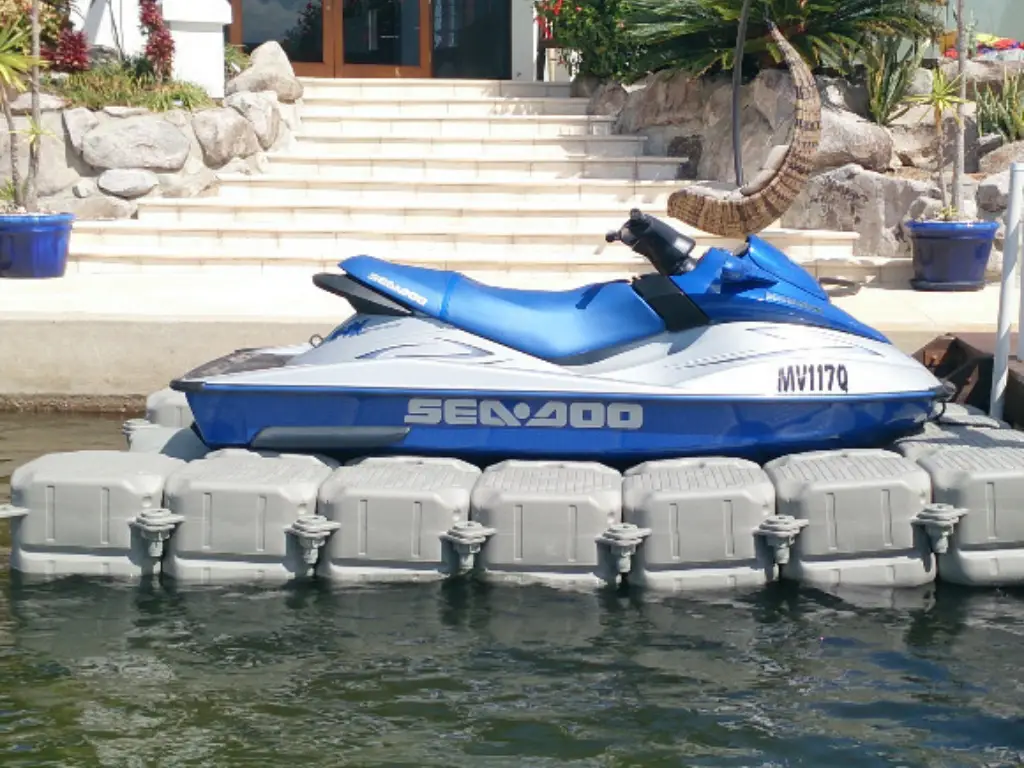
- What is your vessel profile and weight? High-tensile anchoring is required in heavy cruisers, whereas PWCs such as Jet Skis have modular drive-on ports. The Owner’s Manual of your vessel will have the definition of Dry weight and Beam Width, so that you can be sure that the dock has the same buoyancy rating as your craft. These ports enable you to park completely out of the water without incurring the expense of mechanical lifts.
- What is the primary purpose of the dock? In formal social occasions where stability is the most important factor, the hardness of a fixed dock is the criterion. However, when the dock is to be used in swimming or kayaking, a floating dock is better because it is nearer to the water. Determine your main mission, which is stability to parties or proximity to water sports to decide on a rigid or modular surface.
- Who are the regular users? Think about the elderly, children or pets and their traction and temperature requirements. Conduct a Thermal Test on sunny days; metal docks may reach over 60 C (140 F) and burn. HDPE and treated wood are less thermal conductive and are cooler to the foot, which is required to have slip resistance needed by bare feet and paws.
Step 3: The Environmental Stress Test
Choose a structure that will stand against your environmental threats in order to be long lasting.
- How aggressive is the wind, wake, and fetch? In high-energy environments where the distance covered by the wind is long (called the fetch), fixed pilings have to absorb 100 percent of the energy, which causes fatigue. Measure distance in open water facing your shore using an online Fetch Calculator. Modular docks dissipate energy through movement with the water but must have strong anchoring in high-wake areas.
- Does it freeze in winter? Freezing leads to Ice Jacking whereby ice pulls fixed pilings out of the ground. Find lean pilings on adjacent properties- a good indication of ice jacking in your neighborhood. HDPE floating docks are not crushed by the ice, but rather rise above it, and modular systems can be easily disassembled and stored on land until spring.
- Freshwater or saltwater habitat? Saltwater does not naturally mix with wood and steel because of rot and rust. Enter the query [Local Waterbody] borer resistance to determine whether shipworms are common. HDPE is chemically inert and UV-stabilized, which means that it will not react to salinity or radiation, and it will not need any toxic chemical treatments.
Step 4: The Regulatory and Compliance Check
Before your project is even constructed, the permitting and environmental laws can determine the viability of your project.
- How is it classified in your local authority? Permanent buildings are often fixed docks, which provokes a rigorous procedure of permits, lasting several months. To inquire: Call your local Building Department or the Army Corps of Engineers (USACE): Ask: Is a modular floating dock a Temporary Structure? Floating docks can be used to avoid complex building regulations and can be easily approved.
- Do you reside in a guarded water area? Disturbance of the seabed (piling) to conserve benthic ecosystems may be unlawful in safe places. See the Department of Environmental Protection (DEP) on your zone Shoreline Management Plans. The ecological footprint of floating docks is low and in many cases, they are the sole legal path to water in sensitive locations.
Step 5: The Lifecycle and Scalability Strategy
Analyze the Total Cost of Ownership (TCO) in 15-20 years.
- What is your maintenance philosophy? Docks made of wood and metal need to be stained and sealed. Prepare a 10-year TCO spreadsheet comparing the recurring labor costs of fixed docks with the near zero maintenance of HDPE. HDPE is the more prudent choice in case you want an install and forget solution.
- Do you have any future needs? A fixed dock is fixed, whereas modular systems are similar to LEGO sets. Enter the search query modular dock expansion kits to find out how you can re-assemble shapes or add buoyancy as your boat size or needs vary.
- Is the dock an asset or permanent attachment? There is a fixed dock that is left with the house, and a floating dock is a liquid, movable property. To confirm the high demand in the secondary market, check Facebook Marketplace or eBay with used floating dock cubes. It is very durable and you can either sell it to a new house or resell it in future.
Floating Dock or Fixed Dock: How to Decide
It is not about which one is superior but which one will be effective in your specific setting. The alignment of your needs to the appropriate type of dock is as follows according to the five-step audit.
Best Uses for Floating Docks
A floating dock must be specified when the key project drivers are flexibility, environmental compliance, and long-term asset flexibility.
- When your water level is not constant (Tides, Reservoirs, or Floods): A fixed dock is a liability when your water level fluctuates more than 1 meter (3.3 feet). In this case a floating dock is required. It is designed to be buoyant in order to ensure that it is always perfectly aligned with the waterline and the height of the freeboard is always constant. This will ensure that the distance between the deck and your boat will always remain the same and safe to reach during high and low cycles.
- Deep water or solid rock: A fixed dock is often prohibitively costly in water over 5 meters deep or in a bed too hard to be piled using conventional techniques. Floating docks are not depth-dependent; they require only a secure anchoring or mooring system and not expensive underwater drilling or ultra-long pilings, and thus are most economically viable in challenging terrain.
- Within a safe ecological site: In case your property is situated in a sensitive site, the Regulatory Audit would favour floating systems. They do not require dredging or piling and hence occupy a small area on the benthic (bottom-dwelling) ecosystem. This normally makes them the only legal route to pass through in areas where interference with the seabed is highly prohibited by the government like EPA.
- Requirement built-in PWC storage (Jet Skis/Small Boats): Floating docks possess a unique functional advantage: in-built “Drive-on” ports. These modular ramps will allow you to park your craft completely out of the water to prevent hull fouling and this will provide you with some level of convenience that you cannot have with fixed docks without expensive mechanical lifts.
- In high-corrosion or freezing environment: HDPE floating docks are superior in saltwater, where wood decays and steel rusts, because they are chemically inert and UV-stabilized. In winter, their design allows them to come out of growing ice without the Ice Jacking effect that can pull fixed pilings right out of the ground.
- When you require scalability and resale in the future: In case you anticipate upgrading your boat or moving to a new house, a modular system is the solution. Its LEGO-like flexibility allows you to re-model the shape or add modules anytime you desire. In addition, it is a portable property; you can dismantle it and take it to your new home or sell the modules in the second hand market, where they are still selling at high prices.
Best Uses for Fixed Docks
The fixed dock is best adapted in the instance of a fixed water level, and where the absolute stability is required, which is land-like.
- In water that is at a fixed level (Spring-fed Ponds or Stable Lakes): In small bodies of water where the water level does not change, the self-regulating nature of a floating dock is not needed. A fixed dock is a permanent, fixed extension of the land at a pre-determined height, which is very appropriate in the non-portable environment and does not need to be buoyant.
- When the mission requires utter stillness (Public Piers or Formal Events): When you are hosting large social gatherings (30 or more people) or when you are hosting individuals who are likely to develop motion sickness, the rigidity of a fixed structure is the gold standard. It also eliminates the natural flow of a floating system by being embedded in the subaqueous land directly, which provides the rock-solid feel required in heavy furniture and high foot traffic.
- In very shallow water or where the water is liable to mudflats: In very shallow water where the water may entirely recede on the low tide, a floating dock may sink unevenly in the mud, and this may cause structural stress. A fixed dock supports the decking at a fixed height above the muck, such that when the water is not present the platform will be level and clean.
- Permanent, heavy structures (Boathouses): You require the high-tensile rigidity of a fixed foundation in the event that you are planning to build a permanent roof, a boathouse, or a two-story storage building. Fixed docks are intended to place enormous fixed loads directly on the seabed, which would have required far more complex and costly buoyancy calculations in a floating system.
Floating Solutions to Break the Fixed Dock Limitations
Traditional fixed docks are typically limited by rigidity. They cannot move and therefore they must absorb the entire impact of waves and wakes, leading to structural fatigue and expensive repairs. Their fixed height is also an issue of accessibility- the deck is either under water at high tide or it is too high to access at low tide.
These liabilities are turned into benefits by the current floating solutions. They ensure that they are never in danger and they are always available by aligning themselves vertically with the water regardless of the environmental changes. A modular floating system uses the natural flexibility of the system to absorb the wave energy instead of opposing energy with sheer mass, which results in long-term superior durability.
The wobble of the past has been eliminated by the advanced engineering to the stability minded. Special interlocking designs are used to create one high-tension surface with high-grade HDPE systems. This provides a safe, deadweight, feel that will compete with a fixed pier, but without the rot, rust or maintenance.
Such resilience requires a high level of balance between material science and modular physics. Hisea Dock has mastered this engineering equilibrium, offering precisely engineered floating systems that convert the traditional limitations of waterfront infrastructure into sustainable competitive advantages.
Hisea Dock Benefit: Engineering Excellence
Since 2006, Hisea Dock has mastered the engineering to help bridge the gap between floating flexibility and fixed-dock stability. Having over 80 countries as its client, we use a new generation of UV-stabilized HDPE to contain the rot, corrosion and fading that normally plague the traditional stationary structures.
Even though movement is a significant issue to fixed-dock users, Hisea has made a long way to eradicate this problem by ensuring that its products are designed with accuracy. Our modules are reinforced connection ear 19mm thick and four-sided grooved design, creating a high-tension surface that is efficient in dissipating the wave energy. This structural integrity is verified with tests of diagonal tension up to 14,389 N, which gives a safe and stable feel without the fatigue that fixed pilings bring.
Hisea Dock is constructed to be winter strong, unlike rigid piles, which are subject to ice jacking, and has a special shape, which allows it to be supported on ice. This is backed by ISO, CE and TUV certification and ensures that our systems last 20-30 percent longer than most standard systems. Hisea Dock is a high-performance and low-maintenance asset with a 5-year warranty and professional consultation that can withstand the elements.
Conclusion
The floating or fixed docks debate is ultimately a matter of inflexibility or strength. A fixed dock attempts to oppose the water, but a floating dock attempts to collaborate with the water.
As the uncertainty of the world weather conditions increases and the cost of heavy construction continues to rise, the modular floating dock has proven to be the most economically viable and operationally flexible alternative to the modern waterfront. It is an investment that grows with your needs, protects your ship, and respects the environment in which it resides.

 English
  Thai
Thai  Spanish
  French
  German
  Dutch
Dutch  Italian