
How to Build a Floating Dock That Lasts 20+ Years: The Ultimate Blueprint
Building a floating dock requires more than just hammering lumber. Whether constructing a commercial floating boat dock or a private platform, success depends on physics and material science. In this guide, we strip away amateur advice to provide your ultimate 20-year engineering blueprint.
The Physics of Flotation: Calculating Buoyancy Before You Build
The most fatal mistake in marine construction is assuming that simply strapping wood together will yield a stable platform. Before looking at plans for building a floating dock, you must understand the battle between gravity and displacement. Your primary goal is maintaining proper “freeboard”—the distance between the water level and the top of your deck.
Understanding Dead Load vs. Live Load Calculations
To calculate how much flotation you need, you first have to weigh your dock. The dead load is the absolute weight of your lumber, hardware, and the floats themselves. The live load is the variable weight: people, furniture, and equipment.
The Buoyancy Formula: Required Submerged Volume = (Dead Load + Live Load) ÷ 62.4 lbs (weight of 1 cubic foot of freshwater)
Example for an 8×12 ft dock (96 sq ft): If your wood frame and decking weigh 1,000 lbs (Dead Load), and you want to support 30 lbs/sq ft of people/gear (2,880 lbs Live Load), your total is 3,880 lbs. You will need floats capable of displacing at least 62.2 cubic feet of water just to keep the deck barely above the surface. Factor in a safety margin to maintain a 12-16 inch freeboard.
→ Hate math? Skip calculations and view our heavy-duty float configurations ↓
| Decking Material | Estimated Weight (lbs/sq.ft) | Impact on Flotation Needs |
|---|---|---|
| Cedar / Treated Pine | 3.0 – 4.5 lbs | Moderate; requires standard float distribution. |
| Composite Decking | 4.5 – 5.5+ lbs | Heavy; requires 20-30% more buoyancy capacity. |
Choosing the Right Flotation: Barrels vs. Engineered Floats
The internet is flooded with tutorials on building a floating dock with 55 gallon drums. While plans for building a floating dock with barrels might look like a great way to save money, it is a catastrophic trap. Building a floating dock with plastic barrels ignores a crucial reality: standard blue drums are not engineered for winter waters.
When assessing failure risks, you must distinguish between ice pressure (the external crushing force of frozen lake surfaces acting on the barrel walls) and internal freezing expansion (when microscopic cracks allow water to seep into the barrel, freezing and bursting it from within). Furthermore, building a floating dock with plastic drums or even building a floating dock with styrofoam is increasingly banned by environmental agencies due to microplastic shedding and structural unreliability.
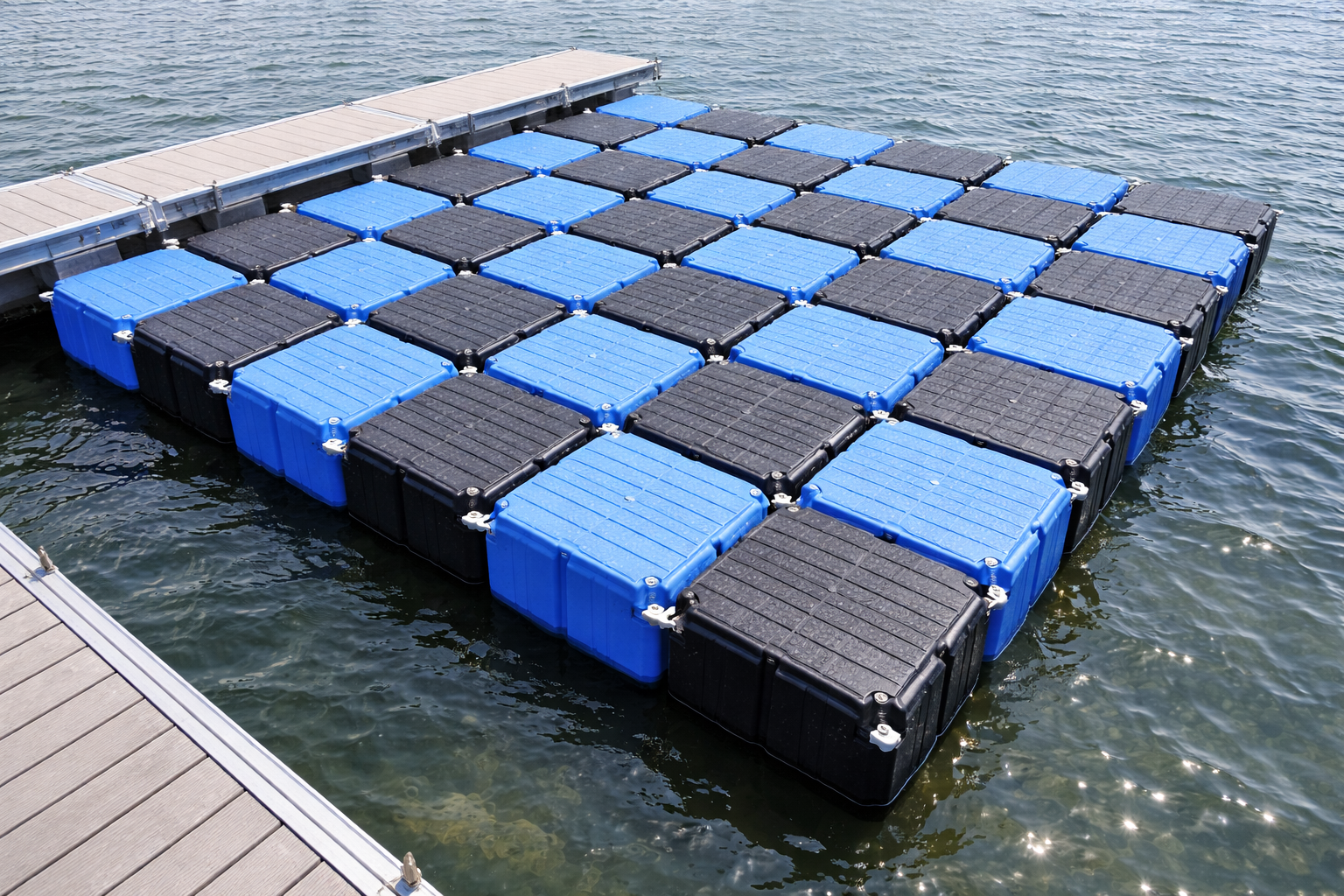
The engineering upgrade is High Molecular Weight HDPE floats. These are blow-molded to eliminate seams and stress points, offering immense bearing capacities (up to 350 kg/㎡). When upgrading, you must understand the industry’s core difference: Hollow vs. Foam-Filled floats. While high-quality hollow HDPE floats are excellent for controlled environments, EPS (Expanded Polystyrene) foam-filled floats are the ultimate fail-safe. Even in the extreme event of a severe puncture from submerged debris or propeller strikes, a foam-filled float will not lose its buoyancy or sink.
Material Selection: Why Marine Grade Hardware is Non-Negotiable
Whether you are building a floating dock on a lake or building a floating dock on a river, water is nature’s ultimate solvent. Using standard zinc-plated hardware from a local hardware store is a guaranteed death sentence for your structure.
| Water Environment | Recommended Hardware Spec | Lifespan Expectancy |
|---|---|---|
| Freshwater (Lakes/Ponds) | Hot-Dipped Galvanized (ASTM A153) | 15 – 20 Years |
| Brackish / River with current | Heavy-Duty Hot-Dipped Galvanized | 10 – 15 Years |
| Saltwater (Coastal) | 316 Marine Grade Stainless Steel | 20+ Years |
Structural Framework: Engineering a Rigid Substructure
A dock that squeaks and twists when a boat wakes hits it is a dock that is actively failing. Even if you are just building a small floating dock, torsional rigidity is paramount.
The Double-Joist Technique for Perimeter Strength
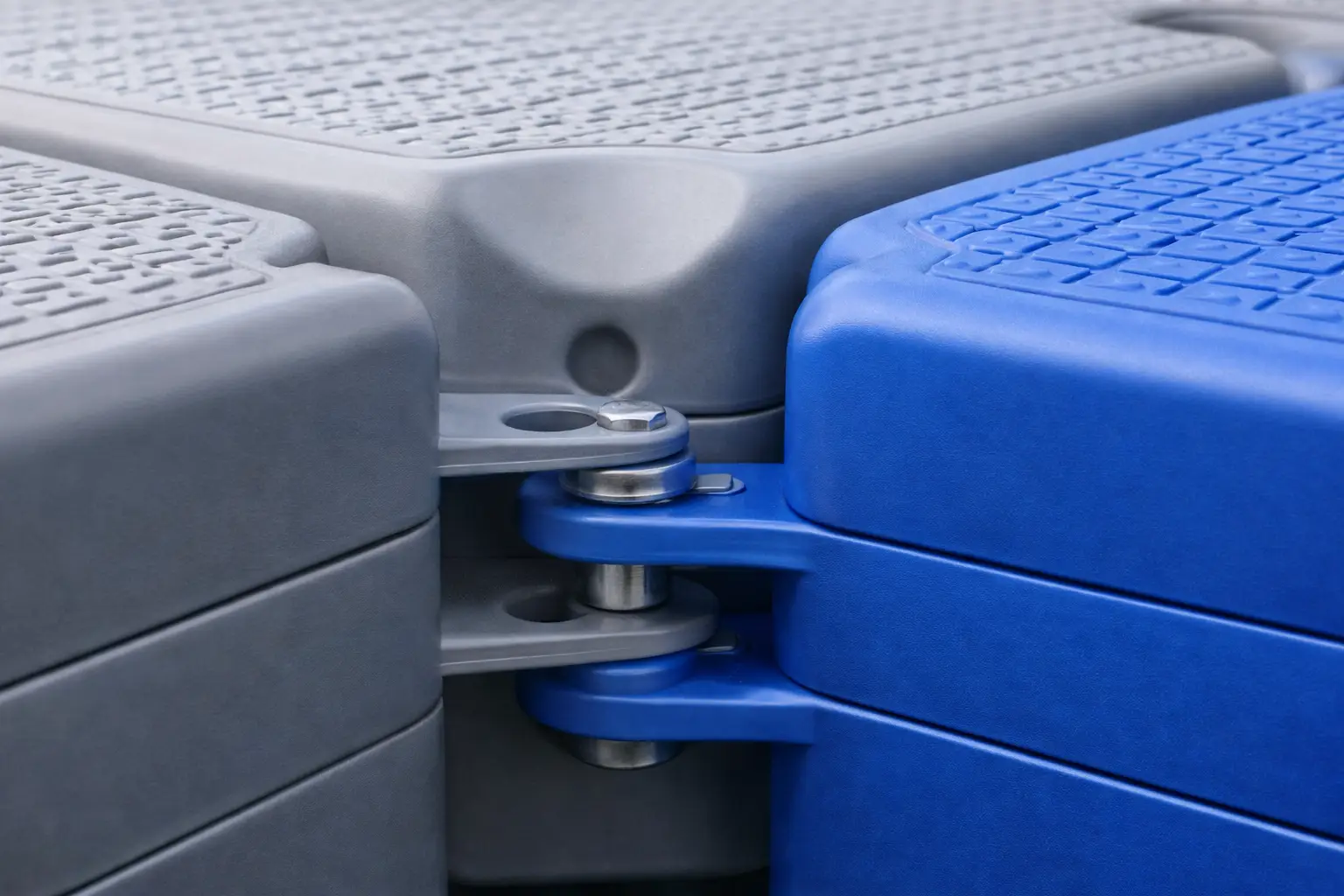
A professional frame acts like a torsion box. Never rely on a single 2×8 for your outer perimeter. Doubling up the perimeter joists and bolting them together with marine-standard 1/2″ carriage bolts with heavy-duty washers drastically reduces twisting without compromising the timber’s integrity. You must also implement heavy-duty outside corner brackets.
Stringer Spacing and Float Attachment Patterns
Internal stringers should be spaced 16″ OC (On Center) for traditional wood decking. However, if you are using heavier composite decking, the stringer spacing must be strictly reduced to 12″ OC to prevent the boards from sagging under the summer sun.
When attaching floats, never cluster them in the middle. Use marine-grade through-bolts with Nyloc nuts and oversized heavy-duty washers. Never use lag screws for floats; cyclic wave action will eventually strip the wood threads and cause the floats to rip out completely.
Step-by-Step Assembly: From Shoreline to Water
Moving a 600-pound wooden structure into the water requires strategy. Building a floating dock with floats demands careful sequencing.
- Measurement and Framing: Precisely cut your perimeter boards and internal stringers. Lay them out upside down on a flat shoreline. Position the stringers accurately (16″ or 12″ OC), and square every corner before bolting.
- Attach the Flotation: Secure your engineered floats to the stringers using your through-bolts and Nyloc nuts while the frame is upside down.
- The Flip and Roll: Using at least three capable helpers (or a winch), carefully flip the dock right-side up. Use heavy-duty PVC pipes as rollers under the dock.
- Decking on the Water: Float the bare frame out, anchor it temporarily, and screw down the decking boards while it sits in the water.
Anchoring Systems: Keeping Your Investment in Place
If you are building a floating dock on a pond, a simple deadweight might suffice. But on open lakes or rivers, anchoring is a complex engineering task.
Pile Sleeves vs. Concrete Deadweight Anchors
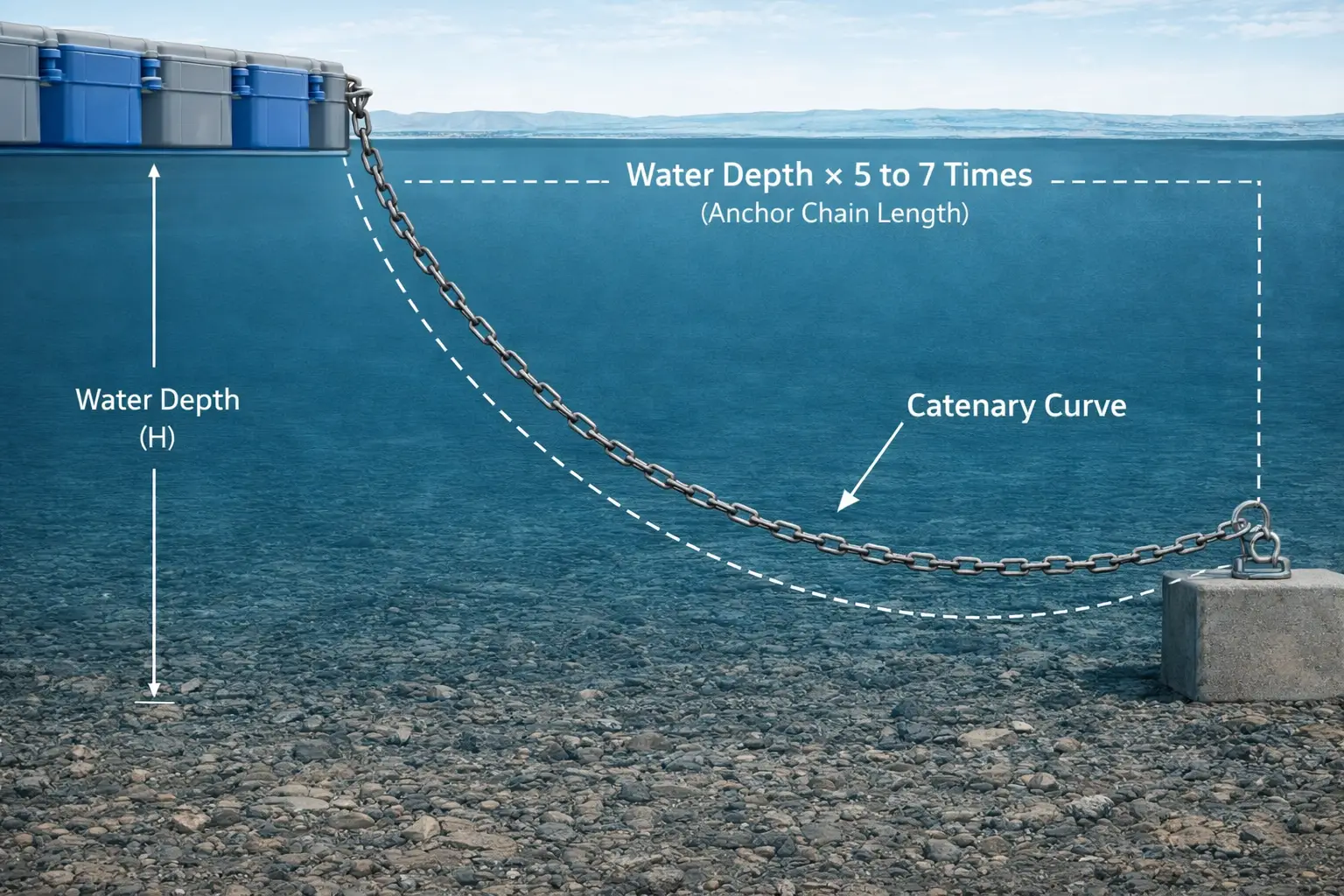
If driving pilings is impossible, concrete deadweights must be used. However, you must account for buoyancy: concrete loses about 45% of its effective weight when submerged underwater. An engineering rule of thumb is to calculate a minimum of 4-5 lbs of dry concrete deadweight per square foot of dock surface. Furthermore, you must calculate the anchor chain catenary correctly: the chain length must be 5 to 7 times the maximum water depth to act as a shock absorber.
Shore Connections: Gangways and Stiff Arms
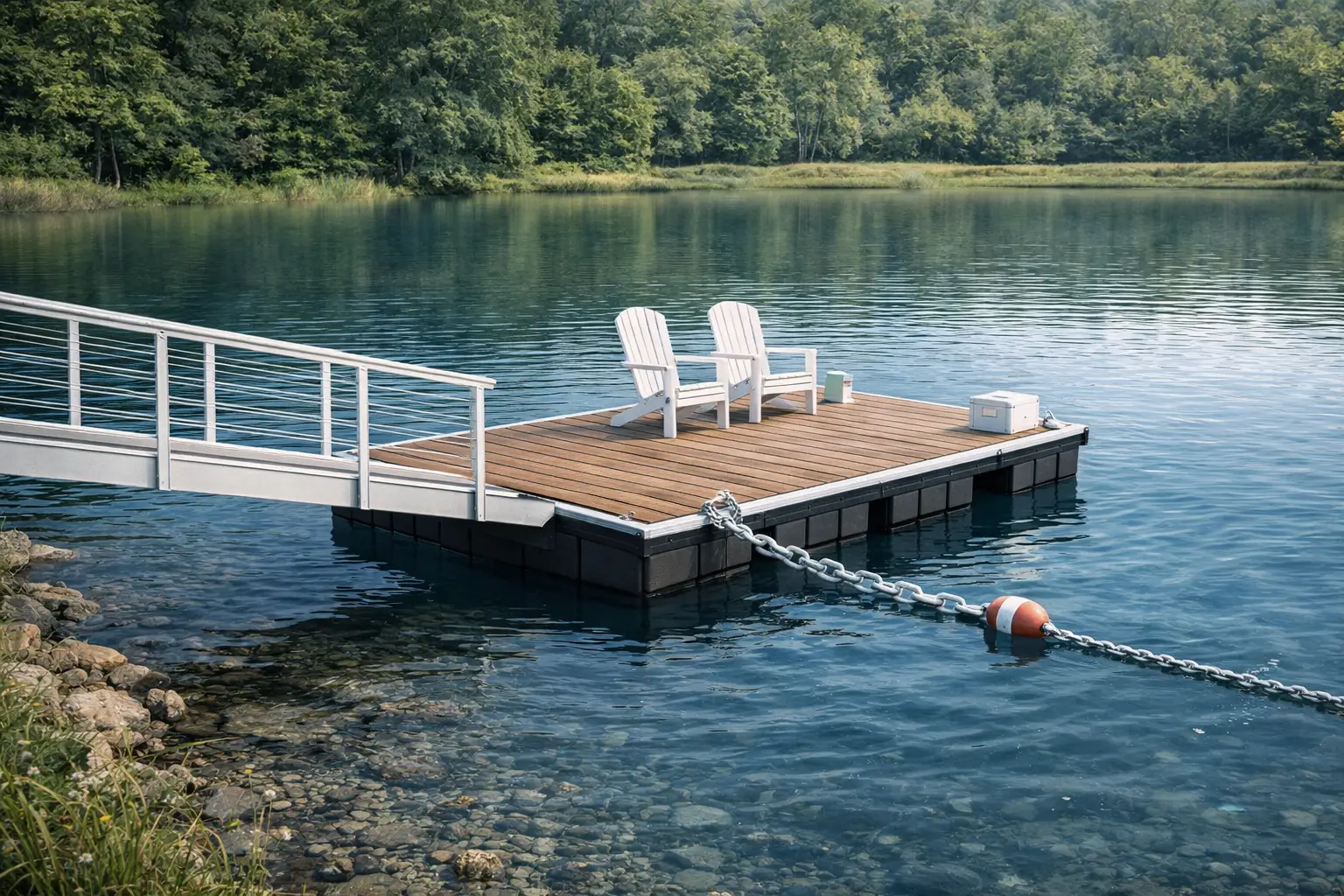
Your floating platform must be safely tethered to land. This requires a Gangway (a rigid, hinged ramp) equipped with heavy-duty shore hinges at the landward side and polyurethane rollers on the floating dock side. This mechanical loop accommodates extreme water level fluctuations, allowing the dock to rise and fall smoothly without applying destructive shear stress to the wooden framework.
10-Year Lifecycle Costs: Traditional Maintenance vs. Zero-Maintenance Innovations
The real cost of a wooden dock isn’t the upfront building phase—it’s the relentless decades of maintenance.
The Annual Maintenance Trap for Wood Docks
Every year, you must apply semi-transparent penetrating stains, replace rusted hardware, and manually scrape aquatic biofouling off the underside.
| Cost Factor (Est. for 8x12ft) | Traditional Wood Dock DIY | HDPE Modular System |
|---|---|---|
| Year 1: Initial Build & Materials | ~$1,800 – $2,500 | ~$2,800 – $3,500 (One-time premium) |
| Year 5: Cumulative Cost (Stains, Labor, Parts) | ~$3,000 – $4,200 | ~$2,800 – $3,500 (Zero Maintenance) |
| Year 10: Cumulative Cost (Major Rebuild/Rot) | ~$5,500+ | ~$2,800 – $3,500 |
| Financial Break-Even Point | Continues bleeding money | Hits at Year 3 to 4 |
*Cost estimates are based on average retail prices for UC4B marine-grade treated lumber, 316 stainless hardware, and DIY labor exclusion.
The Commercial Escape Route: Modular HDPE Systems
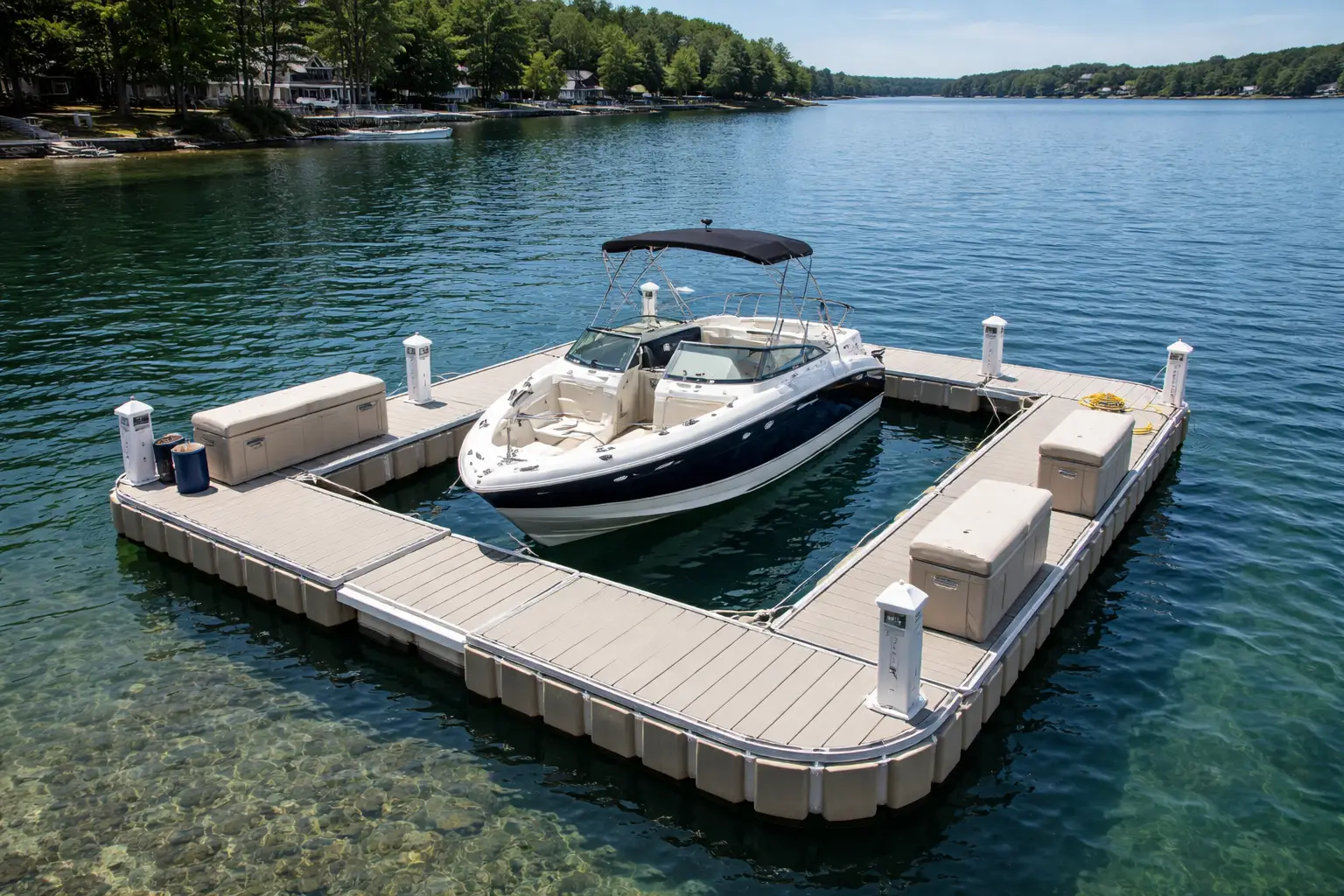
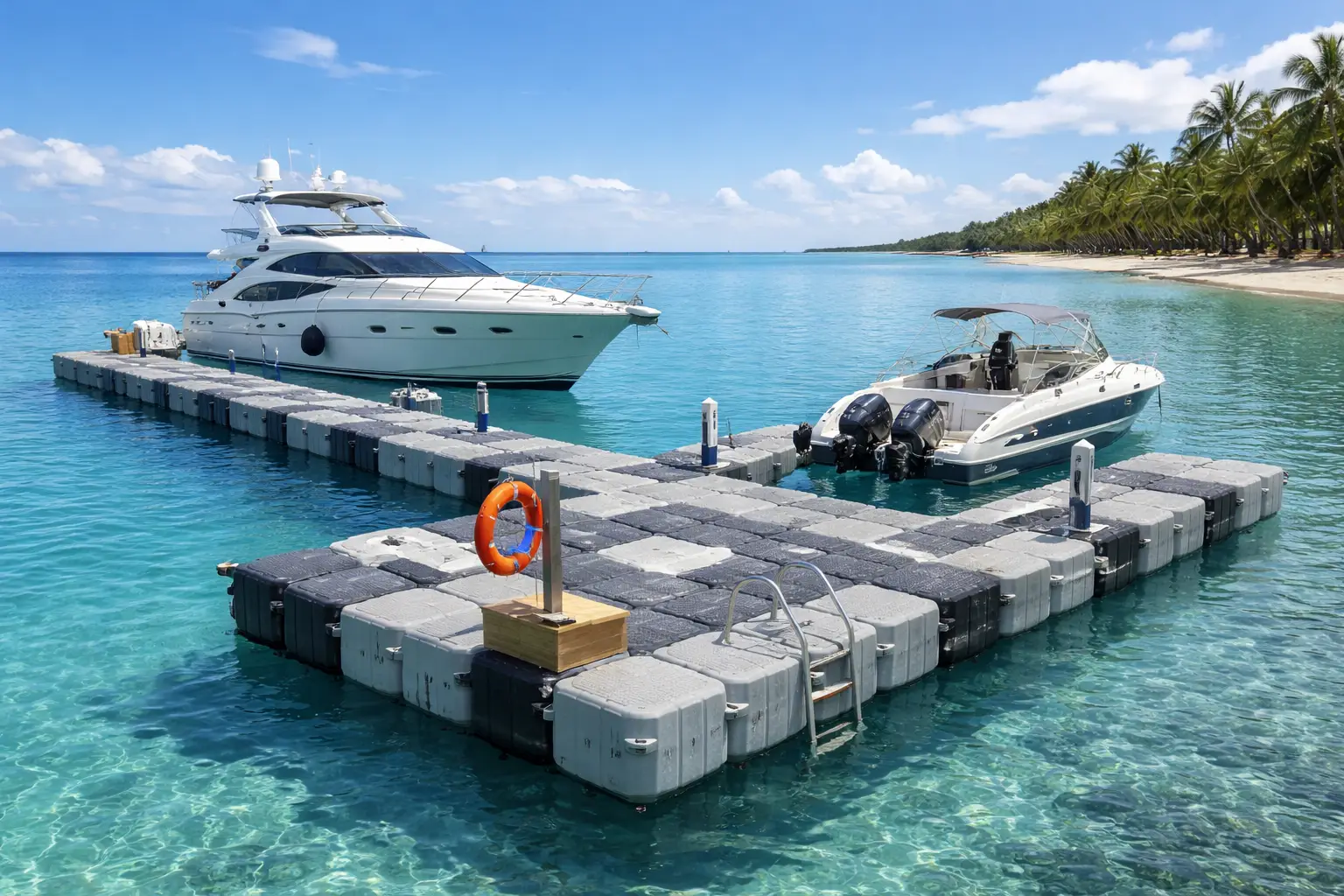
For those who value their time, the smart commercial money is on High Molecular Weight HDPE modular systems. Tested in high-wave environments and capable of withstanding severe side-winds and ice pressure without structural deformation, Hiseadock delivers an entirely different paradigm.
Certified by ISO-9001, CE, SGS, and TUV, these eco-friendly platforms are highly resistant to severe climate change (-60°C to 80°C). Assembly requires no power tools—it connects like giant interlocking bricks. Backed by a 5-year warranty and shipped compactly in days, it is the ultimate “set it and forget it” solution.
Ready to Start Your Project? Choose Your Path
Whether you are a master carpenter building from scratch or someone who wants to hit the water this weekend, we have the professional-grade materials you need.
Path A: The DIY Builder
Keep your wooden frame, but upgrade to commercial-grade buoyancy. Ditch the barrels and build on a solid foundation.
Shop Heavy-Duty FloatsPath B: The Smart Investor
Skip the woodworking entirely. Get a 100% modular, zero-maintenance system deployed in hours.
Explore Modular Systems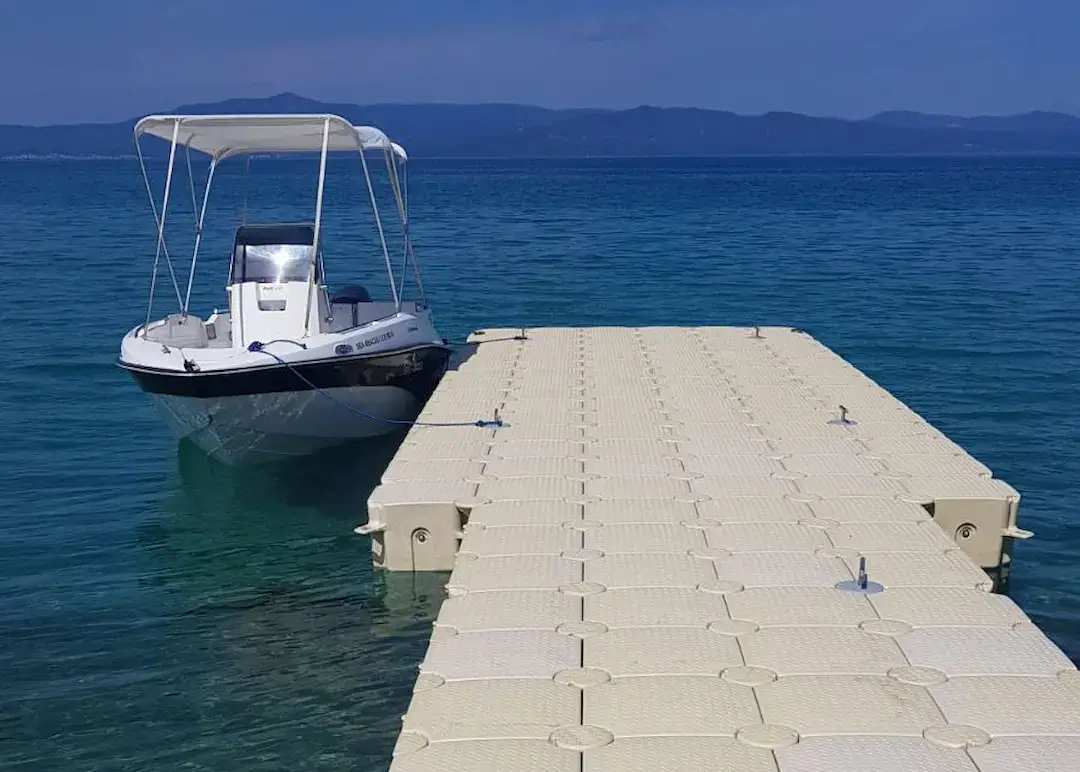

 English
  Thai
Thai  Spanish
  French
  German
  Dutch
Dutch  Italian