
Introduction
The pontoon boat is the ultimate symbol of water recreation to most boaters, a floating living room that is meant to be used as a social and relaxation space. But the calmness of a day on the lake is easily lost as soon as the captain comes to the marina. For new boaters, the most stressful part of owning a pontoon boat is often mentioned as docking. Even for beginners taking the wheel for the first time, it is important to realize a pontoon boat works on different physical principles as opposed to a conventional V-hull fiberglass boat which cuts through the water and sits deep in the water.
Learning how to dock is not just a question of not getting embarrassing bumps or scratches, but it is a question of safety, preservation of assets and confidence in the sea. This manual is a detailed technical explanation of the way to deal with these special ships, starting with the physics of the hull and going all the way to the sophisticated maneuvers needed in unfavorable circumstances. We will also discuss how the infrastructure you prefer to dock against, namely modular floating systems, can radically change the challenge of this task.
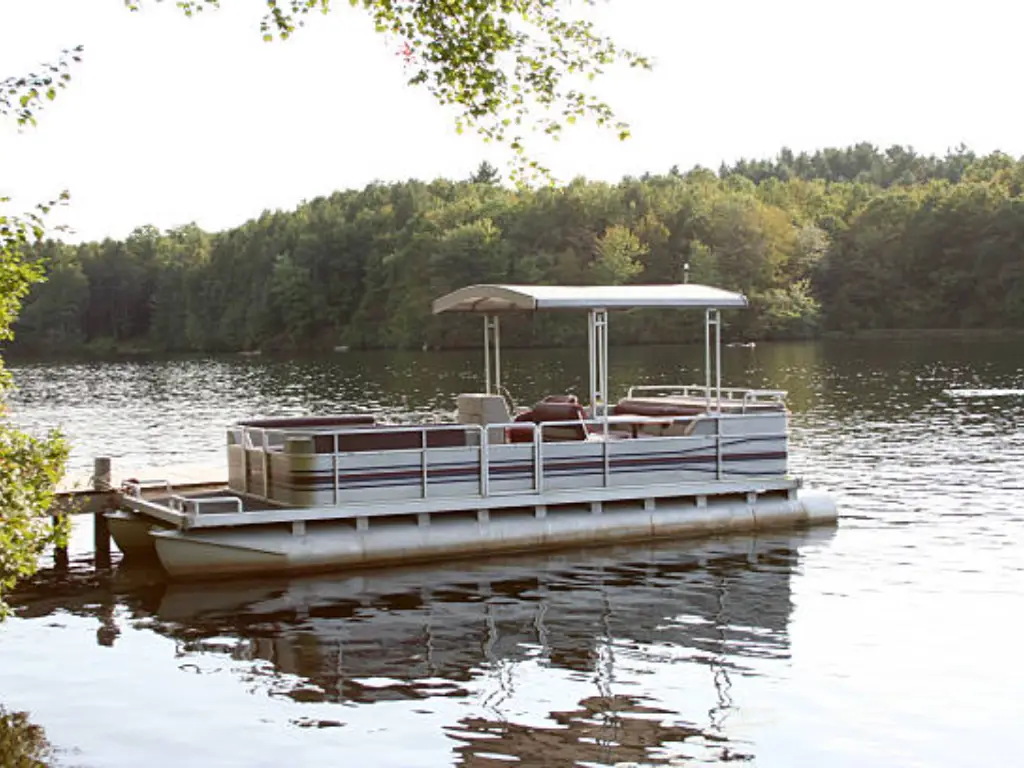
Why is It Harder to Dock a Pontoon Boat than It is to Dock a Regular Boat?
It is also natural that docking a pontoon is more difficult thanother types of boats due to the fact that the design is much more responsive to the elements. In contrast to a conventional boat that rests in the water to maintain its stability, the physics of a pontoon on any body of water create three distinct obstacles:
- Huge Windage Area: The largest problem is the sail effect. A pontoon boat has high aluminum railings and will have a large Bimini top. Together with a deck that is well above the waterline, the boat serves as a gigantic sail, which picks up even the tiniest breeze. A V-hull boat is affected more by water currents, whereas a pontoon is nearly completely at the mercy of the wind.
- Shallow Draft and Steering Lag: Pontoons are placed on the water instead of being in it. The aluminum tubes (logs) are buoyant and shallow, and therefore they do not have the grip that a deep keel would give. When moving at low speeds, it can be observed that there is a delay between the steering wheel being turned and the boat actually turning. This involves the captain predicting the movements several seconds before they are required.
- Momentum Management: A pontoon boat is a massive platform that has minimal underwater friction. This forms a paradox: it is hard to start the boat when it is standing still, but when it has gained momentum, it is hard to stop it as well. It does not glide to a stop like a car; it glides. To handle this inertia, without the aid of brakes, a strict control of the thrust of the engine is necessary.
Preparations Before Docking
The dock is decided five minutes before you get there. The main reason of accidents is rushing the approach; a professional landing involves analyzing the surrounding environment and preparing your hardware long before landing.
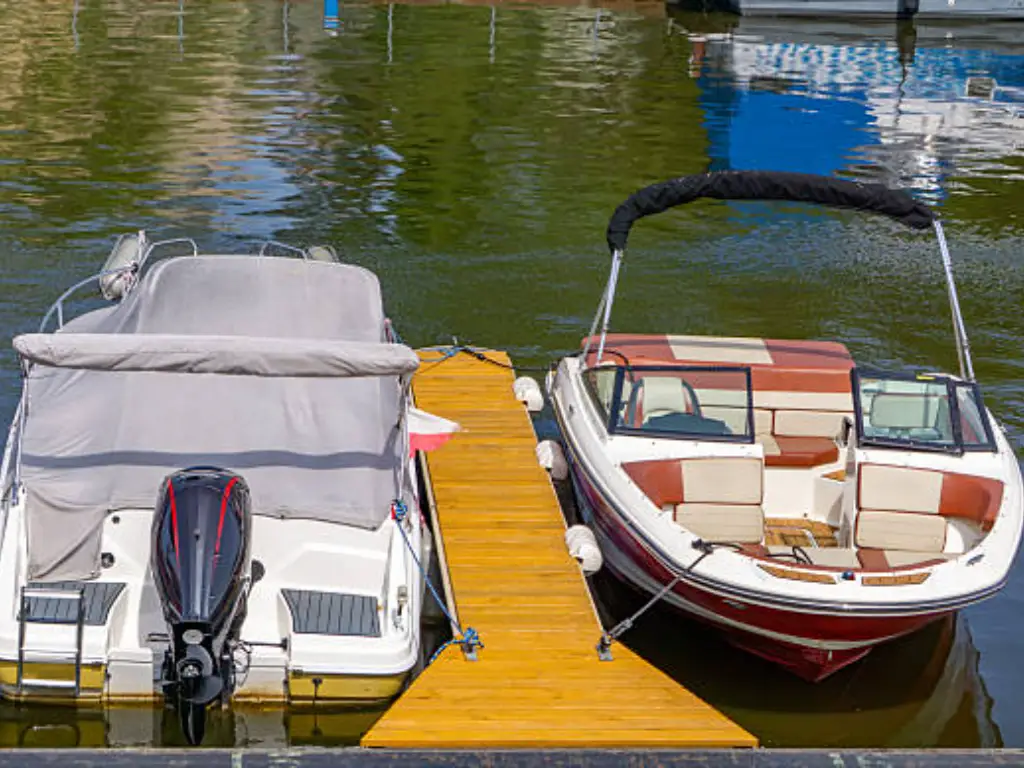
- Evaluating Environment and Approach: Before you move, see the direction and strength of the wind by looking at flags, ripples of water, or the inclination of moored boats. When the wind is blowing you towards the dock ( Wind-On ), go at a shallow, nearly parallel angle and allow the wind to blow the boat into position. When the wind is blowing you away ( Wind-Off ), you have to come at a steeper angle of 30-45 degrees with sufficient momentum to overcome the drift. In this case, you have to first of all get the bow line in place so that you can use it as a pivot point.
- Strategic Fender Placement: Fenders should be placed at the broadest section of the boat rub rail and should be adjusted to the type of dock. In the case of floating docks, suspend fenders at a low level such that they almost touch the waterline to ensure that the boat does not ride up over the dock surface. On pontoons, have at least three fenders to the main railing support posts, at the bow, center, and stern, never to the light-duty mesh, so as to be fully covered in length.
- Line and Crew Preparation: Before you get into the marina channel, all lines must be untied, all knots must be cleared, and all lines must be pre-attached to cleats. Take the lead of the lines beyond the railings and across the side, so that they can be thrown or jumped off with, without catching on the hardware. In the meantime, brief your crew and passengers to remain seated and specifically tell them never to use their hands or feet to pad the impact between the boat and the dock.
Pre-Docking Checklist
| Category | Action Item | Priority |
| Engine | Trim the motor fully down for maximum thrust and steering control. | Critical |
| Fenders | Align height with the dock’s rub rail; set low for floating docks. | Critical |
| Lines | Clear all knots and lead lines outside of the railings for deployment. | High |
| Safety | Ensure passengers stay seated and keep limbs inside the boat. | High |
| Depth | Monitor sonar for shallow spots or debris near the dock edge. | Medium |
Core Principle: “Slow is Good”
The golden rule of docking is never to go near a pier or floating dock faster than you want to strike it. The main cause of hull damage and docking accidents is high-speed approaches. Professional docking is based on the control of momentum and calculated bursts of force instead of continuous propulsion.
- Learning to use Pulse Power: The most frequent error is to leave the boat in gear too long and develop an uncontrollable inertia. Rather, a click-in, click-out rhythm. Gear the engine on, just one second, to provide the boat with a slight impulse of direction and velocity, and then instantly back to neutral. This enables the ship to sail on its own momentum with the engine being used to make short corrections to keep you on course.
- Reverse as a Brake: Boats do not have conventional brakes, so you have to use reverse thrust to counteract forward energy. You can stop the boat in a dead stop at the point you want by going into reverse and giving it a short, sharp puff of throttle just before you reach your target. This method will make sure that the boat will rest on the fenders instead of hitting the dock to hold the boat.
- Driving Posture and Visibility: Visibility is the most important in the last approach and therefore it is strongly advised to stand up when steering. This high stand will enable you to look over the fencing and determine the narrowing distance between your pontoons and the dock edge correctly. Also, make sure the bow is entirely empty of passengers; anyone standing at the front will cause a serious blind spot that will not allow you to see the point of contact.
How to Dock a Pontoon Boat in 7 Standard Steps
In order to make a controlled and professional landing, use this seven-step systematic procedure that will help you to control the momentum and position of your boat.
- The Approach: Start your approach with the boat at 30 to 45 degrees to the dock. This particular angle will enable you to point the bow directly to your landing point of choice and still have the stern and propeller in open water. This is a critical positioning because it gives the required clearance to swing the back of the boat in during the last phase of the maneuver.
- Steering Adjustment: A pontoon can only have steering authority at low docking speeds when the propeller is actually rotating. To keep the speed under control without accelerating too fast, use the Steer, then Gear technique: turn the steering wheel to the direction you want, and then change to a gear to give a moment of one-second acceleration. This makes the boat turn as soon as you engage it instead of going forward as you continue to turn the wheel.
- Pulse Power Micro-Adjustments: When you are in the 10-foot zone (dock) the engine must be in neutral 90 percent of the time. Apply pulse power, one-second clicks forward gear, to keep your heading straight and fight wind drift. This point and shoot technique does not allow the boat to gain inertia, which is the most frequent cause of hard hits against the dock or pilings.
- The Reverse Brake: When the bow is 2 to 3 feet off the dock, turn the steering wheel sharply away off the dock and put it in reverse. This maneuver is your brake to counteract any left over forward energy. At the same time, the reverse propulsion draws the stern to the dock, pancaking the boat in effect to land it perfectly parallel to the landing surface.
- Final Alignment: When the boat is parallel and the forward motion is terminated, make a last pulse of forward or reverse gear with the wheel in the center to move the vessel to its final position. The idea is to have the side gates of the boat perfectly in line with the cleats of the dock so that your passengers can pass without any danger and your mooring lines can be at the best angles.
- Tying the Lines: It is always best to tie the upwind or up-current line first. When the wind is blowing you off the dock, it is important to tie the bow line or a mid-ship spring line on the spot to avoid the boat returning out to sea. When the up wind side is anchored, the pressure of the wind will assist in holding the boat against your fenders as you tie off the remaining lines.
- Final Check: Once the lines are tight, close the engine. Finally, make a final walk-through to ensure that your fenders are properly placed at the broadest section of the rub rail and pressed against the dock. Make sure that they have not risen up on the surface of the piers because when a fender is placed in the wrong position, the aluminum pontoons are exposed to direct contact and may be damaged.
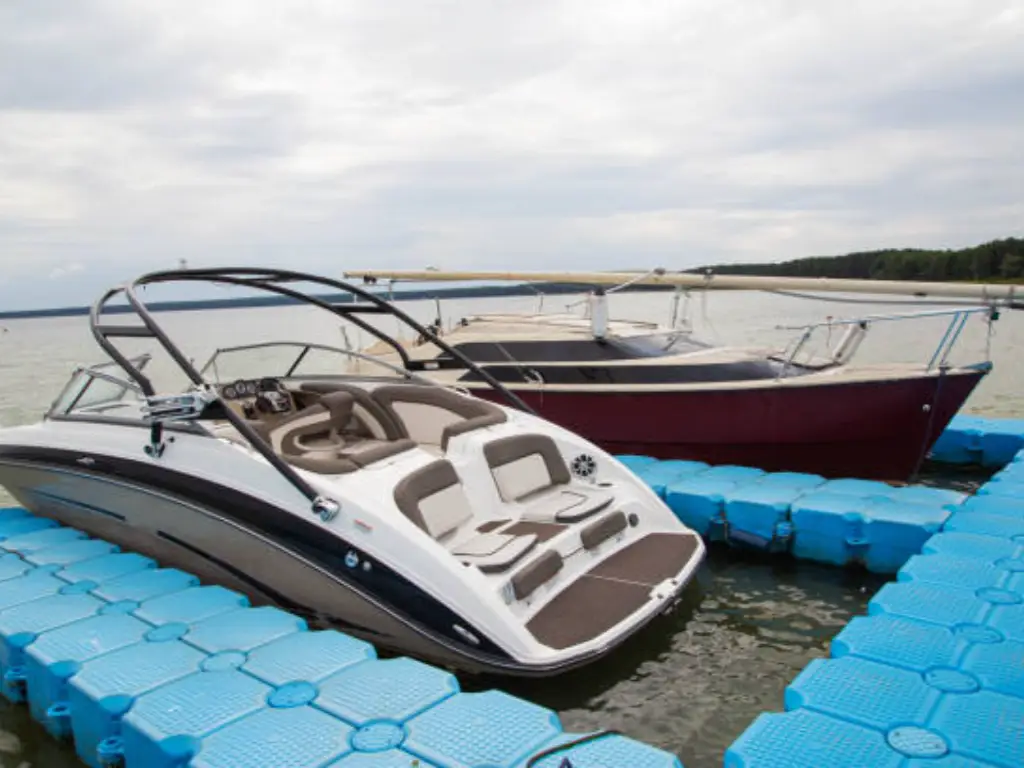
The Sophisticated Docking Methods in Special Situations
In more complex docking situations, professional control is based on the adaptation to certain environmental and mechanical variables. The polished methods of handling these complicated situations are given below.
Secrets of Solo Docking
The most important tool when docking without a crew is the mid-ship spring line. Rather than attempting to control the bow and the stern at the same time, attempt to tie one line in the middle of the boat to a dock cleat first. When this line is snubbed you may leave the engine in an idle forward gear with the steering wheel turned towards the dock; this will hold the boat against the fenders and you will have plenty of time to walk the deck and get the rest of the lines in place without the boat drifting off.
Strong Winds and Countercurrents Strategies
The way you do it will have to vary depending on the wind in relation to the dock. When the wind is on (blowing you toward the dock) keep out farther than normal and come nearly parallel to the pier and have the wind do the work and use reverse pulses to soften the impact. When there is a Wind-Off (wind blowing you away) you have to fight the drift with a steep 45-degree angle and more aggressive pulse power. The priority here is to get a spring line on a cleat as quickly as possible to serve as an anchor.
Tritoon Boats vs. Pontoons
Tritoons, which have three logs, have better buoyancy and tracking but have varying physics. They have much more momentum than normal two-log pontoons since they are heavier and have more mass. This implies that you have to start your reverse braking sooner to halt the vessel. On the positive side, tritoons will not be easily slipped or slide sideways during a cross wind, and their course is more predictable in a narrow channel.
Sailing through Narrow Boat Slips
In narrow slips, the comfort of a 45-degree approach is lost. Before you get to the mouth of the slip you must get the boat straight as straight as you can. Apply the aim small, miss small philosophy: pick one spot at the back of the slip and make sure your pontoons are concentrated on that spot. When the alignment is not correct, then do not make a sharp turn within the slip, back out, re-align and make another attempt at a straight entry.
Night Docking and Low-Light Maneuvering
Loss of depth perception is the main problem of night docking. Do not turn on bright docking lights until the last minute, which will blind other boaters and ruin your own night vision. Trust to the principle of Slow is Pro still further, and make use of a flashlight, but only in short pings to find cleats or the edge of the dock. When you are in the dark, you cannot see anything and therefore you should drive as slowly as possible to steer.
Challenges and Mitigation in Pontoon Boat Docking
To manage the special difficulties of docking a pontoon, you should pay attention to the correction of minor mistakes before they develop into effects. These plans deal with typical handling challenges in a technical manner.
- Over-Correction and Throttle Surges: The most common mistake is to use heavy throttle to salvage a missed approach and this can easily cause the boat to swing out of control. When you are not at the right angle or the landing momentum seems to be too much, do not press the landing. Turn into reverse, pull out into open water, and restart. Short, one-second bursts of power are used to make sure your corrections are minimal and the boat is kept in check.
- Bow Drift of the Sail Effect: Pontoon boats are high-fenced, so the wind is able to blow them like a sail, and the light bow is blown off course in a short time. To avoid this, you should always turn your steering wheel into the wind when in neutral before you apply power. This active steering involves the propeller thrust to pin the bow against the pressure of the wind to hold your line instead of struggling with a drift that has already begun.
- Steering Response Lag: At low speeds, it takes a visible amount of time before the boat actually moves in response to turning the wheel. Most captains over-steer due to the lack of immediate response and end up taking a sharp and unwanted turn as soon as the power is activated. To prevent this, make your steering motions when in neutral, wait till the mechanical alignment is attained, and then give a momentary impulse of gear, to cause the boat to go precisely where you have pointed it.
- Heavy Loads in the management of Inertia: The common challenge here is the incorrect estimation of stopping distance when the boat is full of people. The additional weight greatly raises the inertia of the vessel, and the reverse brake is less efficient. When overloaded, start your reverse pulse much sooner than normal. A quick, sharp reverse throttle is much more efficient in killing momentum than a drag at low power.
Beyond Skills: How Your Dock Choice can Make Everything Easy?
Although piloting skill is crucial, the physical aspect of your docking infrastructure can be the real test of error. A good captain may find it difficult to use the old wooden or concrete docks, which are rigid in nature and are at a fixed height. These fixed models do not take into consideration the special physics of a pontoon boat, namely its high windage and low buoyancy, which frequently causes a small error of calculation to result in an expensive crash. You can do away with the most irritating technical obstacles of the docking process by selecting a dock that harmonizes with the movement of the water.
The trick to docking without any effort is to stop thinking about how to control the vessel, but to think about how to control the environment. A docking system that follows the tides and waves will keep your boat, fenders and landing surface perfectly in line, no matter what the water level is. This synergy makes the work of the captain easier as he has a predictable, consistent target that absorbs the impact energy instead of opposing it. Once your infrastructure is set to match the movements of your boat, you no longer have to struggle with the elements, but rather allow the dock to do the heavy lifting on your behalf.
To have this kind of smooth coordination, you must have a system that is designed to be flexible, and that is where the modular design of Hisea Dock comes in, which is specifically designed to be flexible.
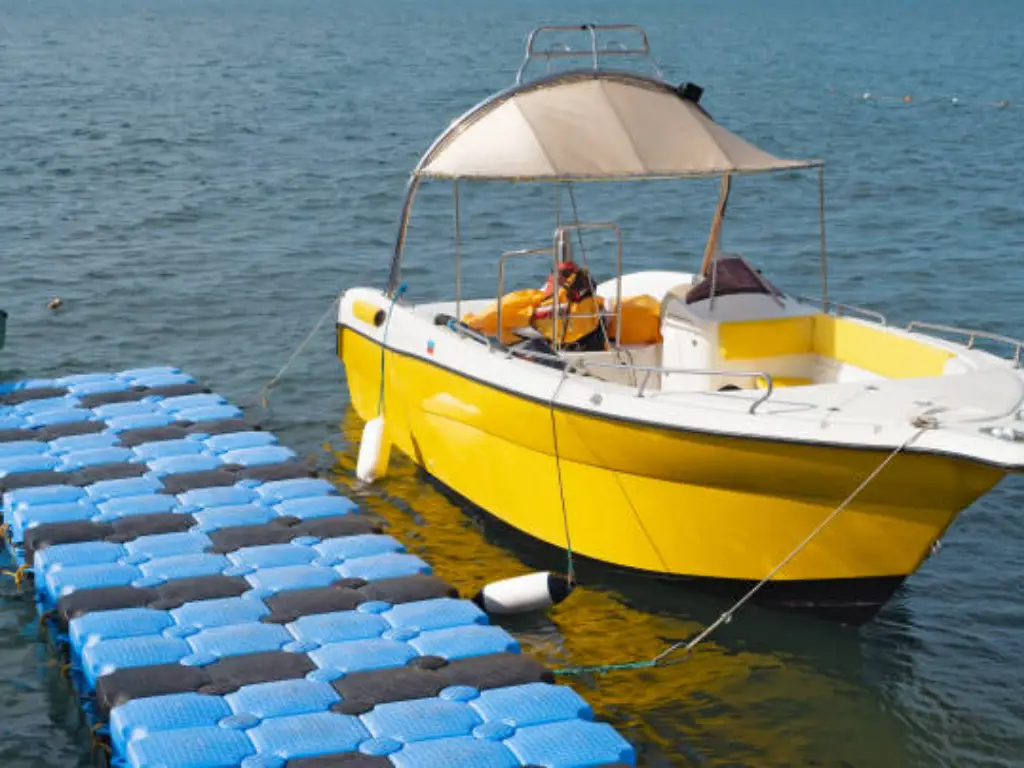
The Reason Why Floating Systems by Hisea Dock are The Ideal Fit with Pontoon Boats
In order to be a master docker, your infrastructure should be as good as your piloting skills. Hisea Dock has more than ten years of experience in manufacturing, and it offers modular floating systems that are specially designed to address the special needs of pontoon docking.
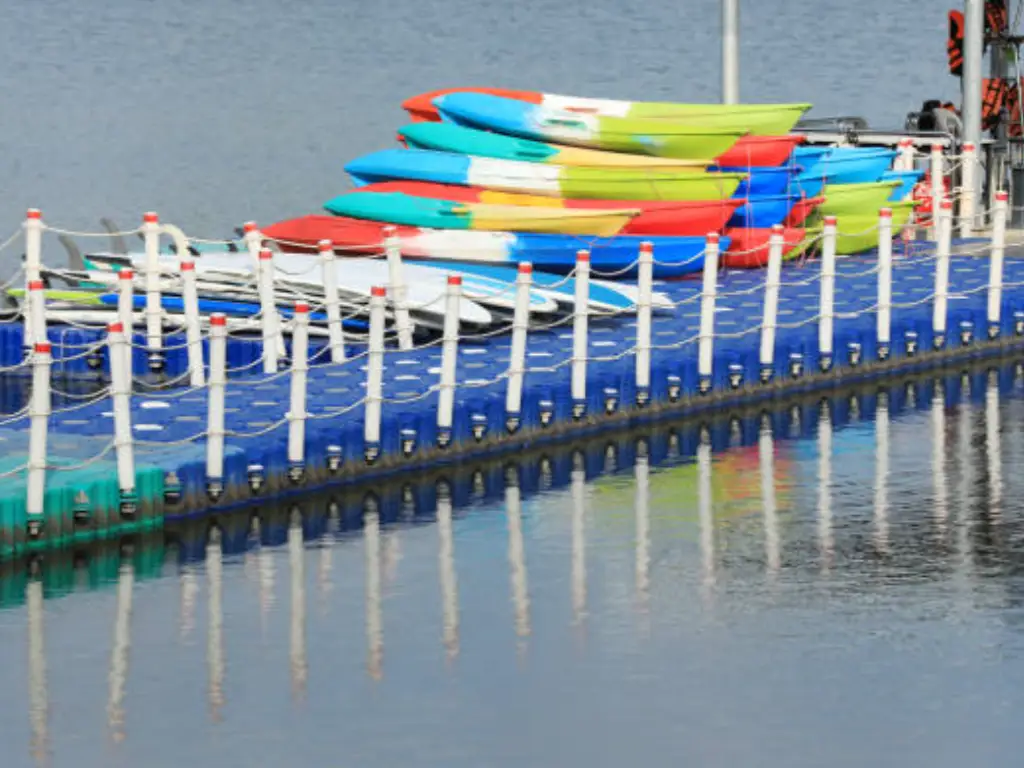
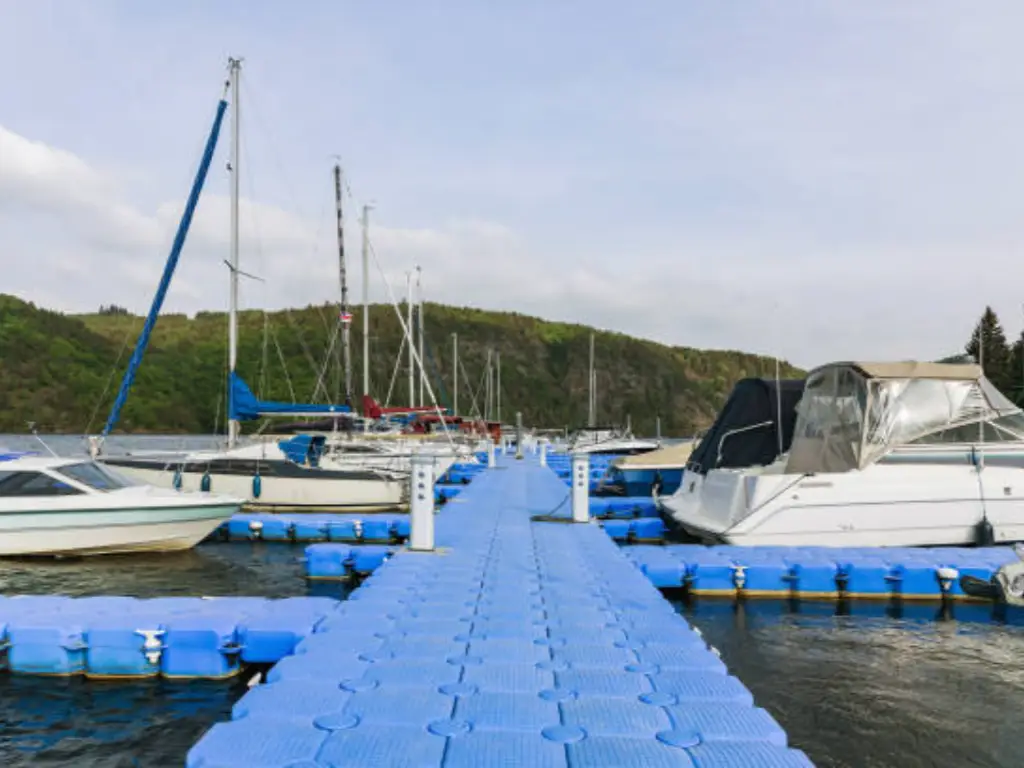
Our system is based on a new generation of HDPE (High-Density Polyethylene) that is combined with UV-resistant agents. This material is also soft-touch resilient, unlike abrasive wood or concrete, which prevents scratches and impact damage to sensitive aluminum hulls. In addition to material science, our docks are constructed to be technically tough; with 19mm reinforced connection ears and a diagonal tensile strength of 14,389 N, they can stand even in the most extreme conditions.
Most importantly to the owners of pontoons, these docks move in sync with the water, and they do not oppose the waves but absorb them. This helps to avoid the boat hitting a hard edge in the approach. To the crew, stability is the most important thing–we have made our platforms at least three pontoons in breadth, so that we have a rock-solid walking surface that is like land. Hisea Dock is fully certified by ISO, CE, and TUV and is supported by a 5-year warranty, providing a customizable, professional grade solution that has a 20-30% longer lifespan than the competition.
Conclusion
Learning to dock a pontoon boat is a process of learning physics, the subtle interplay of windage, momentum and engine thrust. With a philosophy of Slow is Good and the use of precision methods such as Pulse Power and calculated steering, any captain can sail through even a busy marina with grace and confidence.
But your ability is not the whole thing; the world itself is the ultimate goal. The forgiving, stable and well-aligned floating dock system gives the required infrastructure to absorb the impact and the special buoyancy of a pontoon. With professional handling and a docking surface that is made to work with the movement of the water, you will turn what could be a stressful maneuver into a smooth, professional end to every day on the lake.
FAQS
Q: How to dock a boat on your own?
A: Docking alone involves pre-preparation of fenders and lines, approaching the dock at a slow and steady pace, steering with short bursts of engine power, and focusing on the use of a spring line to quickly stabilize the boat.
Q: What is the way to dock a pontoon boat when it is windy?
A: To dock successfully on a windy day, one should approach the dock with the wind to keep the steerage, apply a little more throttle to overcome the wind drift, and aim to the upwind side of the slip so the wind will blow the boat toward the pier.
Q: What is the correct way to anchor a pontoon boat?
A: To anchor correctly, bow into the wind or current, lower the anchor until it reaches the bottom, release sufficient line to give the scope ratio of 5:1 or 7:1, and reverse the engine at low RPMs to make sure the anchor takes hold in the seabed.
Q: Which is the right sequence of anchoring a boat?
A: The proper procedure is to sail the boat into the wind, stop it, drop the anchor to the bottom, pay out the anchor line as you drift, and lastly, hook the line to a bow cleat when the anchor has taken hold of the bottom.

 English
  Thai
Thai  Spanish
  French
  German
  Dutch
Dutch  Italian