
The size of a vessel is not just a fixed number on a specification sheet, but the basic limitation that determines the usefulness of the vessel, its storage logistics, and its legal status on the highway. When potential owners pose the question, How wide is a pontoon boat? they are technically asking about the size of the deck, but implicitly, for larger groups seeking pontoon adventures, they are asking about a complicated series of trade-offs between stability, drag, and compatibility with infrastructure. Finding the right choice is the most important factor in defining the boating experience.
The beam, or the nautical term of width, is the variable that serves as the main variable in the ownership equation. It defines whether the ship is a recreational base or a logistical liability that needs special permits to carry. This discussion gives a stringent study of the standard pontoon widths, the regulatory climate of towing, and the structural consequences of beam width on performance and storage.
How wide is the average pontoon boat?
In order to manoeuvre in the market, it is important to define the parameters first. The beam in naval architecture is the width of the boat at its broadest point. In the case of pontoon boats, this dimension usually does not include temporary extensions such as fenders but the structural deck and in many cases the rub rail (the protective bumper around the deck).
The pontoon market has traditionally been divided, but contemporary production has been brought to a set of standards to fit road regulations and material efficiencies. Although the length of the pontoon boat is quite variable (15 to 30 feet) and tube diameter (often measured in cm) varies, width has been standardized into three levels to suit the number of people onboard:
- The Narrow Standard (8 feet / 96 inches): This is typical of a small boat and entry-level compact boats.
- The Modern Standard (8 feet 6 inches / 102 inches): The present industry standard of recreational vessels, which maximizes space within highway boundaries.
- The Wide-Body (10 to 12 feet): Commercial ships or luxury larger boats, typically necessitating special transport logistics.
These differences are important to understand because a difference of six inches can change the legal aspects of towing and the possibility of storing a garage.

Comparison of Beam Widths of Major Brands
In the analysis of the specifications of large manufacturers, we find a high level of standardization. The United States Department of Transportation (DOT) regulations and NMMA (National Marine Manufacturers Association) guidelines are a major driver of this isomorphism. The majority of the large brands have streamlined their core product lines to reach the 8-foot-6-inch mark precisely.
When researching options, engaging with a local dealer is crucial. Whether you are looking for Avalon pontoon boats or other major brands, verifying the warranty and dealer’s service reputation is key. Using online contact forms is a great way to start, but ensure you reach the correct people in customer service to avoid sending duplicate emails regarding specs or the need of service.
The following table shows the beam specifications of popular models:
| Brand | Model Series | Beam Width | Classification |
| Bennington | S Series / L Series | 8′ 6″ | Luxury / Performance |
| Sun Tracker | Party Barge 18 DLX | 8′ 2″ | Standard Recreation |
| Sun Tracker | Party Barge 22 RF XP3 | 8′ 6″ | Performance |
| Sylvan | Mirage 8520 | 8′ 6″ | Cruising |
| Godfrey | Sweetwater | 8′ 6″ | General Purpose |
| Harris | Crowne Series | 8′ 6″ (10′ option) | Ultra-Luxury |
The 8’6″ beam is the most common equilibrium in the market as the data shows. It is the largest dimensions that can be used without the transaction costs of wide-load permitting.
Effects of Beam Width on Stability and Performance
The hydrostatic stability of a pontoon boat is directly proportional to its beam. However, the width also dictates the internal floorplan and versatility.
Static Stability
The broader the beam, the greater the distance between the center of buoyancy and the center of gravity. This forms a longer lever arm which opposes heeling (tipping to the side). The list (tilt) can be observed when passengers are concentrated on one side of an 8-foot-wide boat. The same weight distribution on a 10-foot-wide platform causes insignificant displacement. In stationary operations like fishing or amusements, width is a stabilizer, as the broad base of a tripod is a guarantee that it will not fall over.
Dynamic Performance and Drag
But width brings about hydrodynamic and aerodynamic penalties.
- Drag: A broader vessel is one with a greater frontal surface area. This adds air resistance (windage) and, depending on the hull design, water resistance.
- Handling: Smaller boats (8 feet) tend to be more maneuverable, with a smaller turning radius. Wide-body boats may be slow in maneuvering, and it takes more horsepower to reach the same speed.
The Tritoon Factor
A common modern performance pontoon design is the so-called Tritoon (three logs rather than two). Although Tritoons do not always need a broader beam than 8.5 feet, the third central log offers extra buoyancy. This design enables the boat to turn into corners instead of gliding on a flat plane, replicating the performance of a V-hull runabout. In this case, the beam width helps in the structural integrity needed to support high-horsepower engines, which in most cases are more than 300 HP.
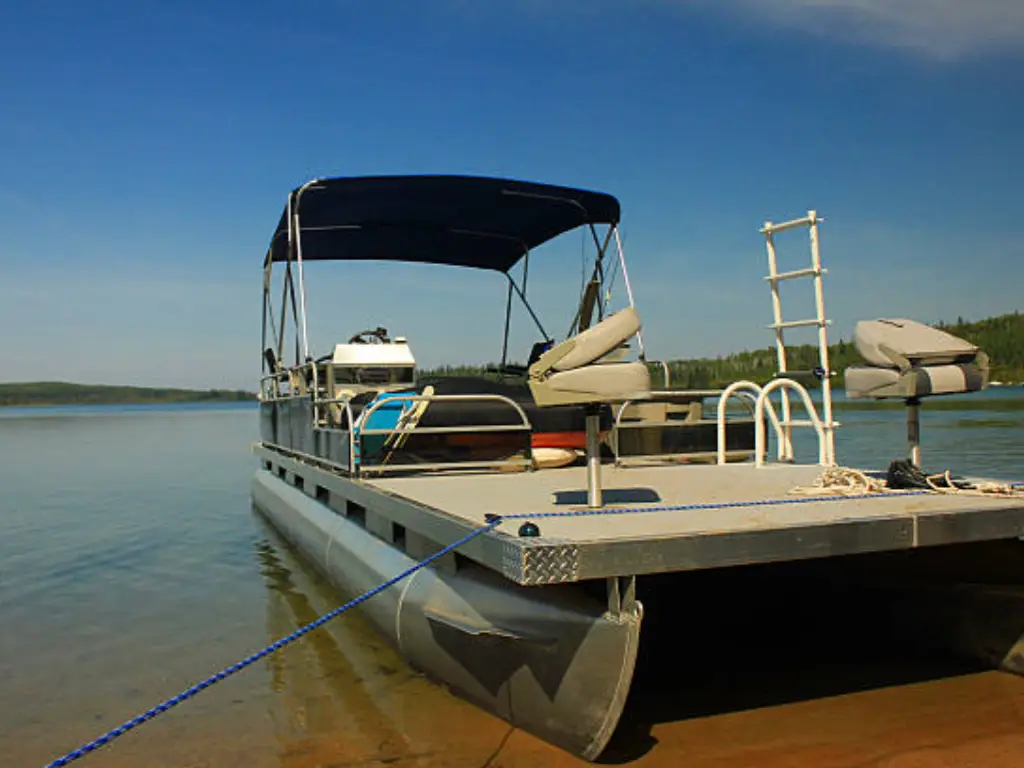
Towing Laws: Wide Pontoon Boat Legal Limits
The towing of a pontoon boat is characterized by a strict set of dimensional parameters that are imposed by highway authorities. In most of the United States, the maximum width of a trailer load without a special permit is 8 feet, 6 inches (102 inches). This measure serves as a clear boundary condition to transport; staying within it guarantees free movement, and going beyond it creates a complicated layer of regulatory drag. Once the beam of a pontoon exceeds this threshold, the ship is re-categorized as an oversize load, which instantly initiates the issuance of state-specific permits, compliance with limited travel hours, and the use of mandatory safety signs, including flags or banners.
Nevertheless, this regulatory environment is not unilateral. Although federal guidelines provide a minimum, there is a high level of heterogeneity at the state level in terms of the stringency of enforcement and permit fee structures. These variable transaction costs should be included in the total cost of ownership by prospective owners. The comparative analysis below outlines the regulatory limits and financial implication of the key jurisdictions:
| State | Legal Limit (No Permit) | Strictness of Enforcement | Wide Load Permit Trigger | Estimated Permit Cost (Single Trip / Annual) | Notes on Regulatory Environment |
| California | 8′ 6″ (102″) | High | > 102″ | ~$16 / ~$90 | California Department of Transportation (Caltrans) enforces strict lane width compliance. Escort vehicles are often required for loads exceeding 12 feet. |
| Florida | 8′ 6″ (102″) | Moderate | > 102″ | ~$15 / ~$500 (Blanket) | While a boating hub, FL adheres to the 102″ limit. However, the state offers “Blanket Permits” for frequent haulers, reducing administrative friction for owners. |
| Texas | 8′ 6″ (102″) | Moderate | > 102″ | ~$60 / ~$270 | Texas DOT requires specific route surveys for significantly wide loads. Enforcement is consistent on major transit corridors. |
| North Carolina | 10′ 0″ (120″)* | Low (Conditional) | > 120″ | ~$12 / ~$100 | Outlier: NC General Statute § 20-116 allows boats up to 10 feet wide to be towed without a permit during daylight hours. This significantly lowers the logistical burden for wide-body owners. |
| New York | 8′ 0″ / 8′ 6″ | Very High | > 102″ | ~$40 / ~$360 | Constraint: Older infrastructure (parkways) often have lower limits (8’0″). NYSDOT is rigorous regarding route adherence; specific bridges and tunnels are strictly off-limits to wide loads. |
| Minnesota | 8′ 6″ (102″) | High | > 102″ | ~$15 / Annual Varies | Strict adherence to “travel time” restrictions (no travel during rush hours in metro areas or weekends during summer holidays). |
In addition to the administrative load, over width causes a physical safety deficit on the road. A broad pontoon is used as a visual barrier, which essentially cuts the rearward line of sight of the driver and forms significant blind spots. Normal side-view mirrors are hardly designed to cover the width of a modern, wide-body pontoon, and the driver has to work with incomplete information about the traffic behind him. To reduce this informational gap, the installation of long towing mirrors is not only an accessory but a functional need to restore the field of view. Moreover, the strict compliance with these width limits is a vital calculation in the liability management. Working beyond the law or not obtaining the required permits puts the owner in dire legal jeopardy. Regulatory compliance is the main tool of insulating oneself against financial risk in the event of an accident, as non-compliance can prove negligence and give insurance providers a reason to refuse to cover the accident.
Selecting the Right Trailer by Pontoon Boat Width
A trailer choice is not just a buying choice but an optimization problem in which the objective is to match structural capacity to the geometry of the particular vessel. The main limitation is the width of the pontoon boat, which determines the type of suspension mechanism to be used, either Bunk or Scissor. Whether you are looking at a package deal or a standalone trailer purchase, be aware that wider trailers may incur an additional freight charge.
Structural Mechanisms: Bunk vs. Scissor Trailers
Bunk trailers are based on a concept of static support, which is a floating dock on wheels. They offer a broad, fixed footprint on which the pontoons are supported on carpeted rails. This design is better in terms of lateral stability and is therefore the best design in wide beam vessels that need constant support to reduce hull stress. On the other hand, scissor (center-lift) trailers have a variable geometry that lifts the boat off the underside of the deck. Although they provide utility in shallow water launches, their reduced stance may cause instability in boats with extraordinary widths, which have a higher center of gravity that is not as clearly adapted to long-haul highway travel.
Geometric Alignment and Calibration
The vessel-trailer interface must be carefully calibrated. The width of the trailer should be matched well with the beam of the boat; otherwise, there will be mechanical inefficiency. When the trailer frame is not wide enough compared to the boat, it increases the chances of sway, which destabilizes the load. This is alleviated in modern trailers by the use of adjustable bunks and brackets, which enable the owner to adjust the fit. This modification serves as a calibration device, making sure that the weight is evenly spread over the frame instead of focusing the stress on certain chassis points.
To ensure quality engineering that can fit various width requirements, the market leaders like Load Rite, ShoreLand’r and Yacht Club provide strong platforms. The risk of uncertainty about structural integrity and long-term durability is minimized by investing in these proven brands.
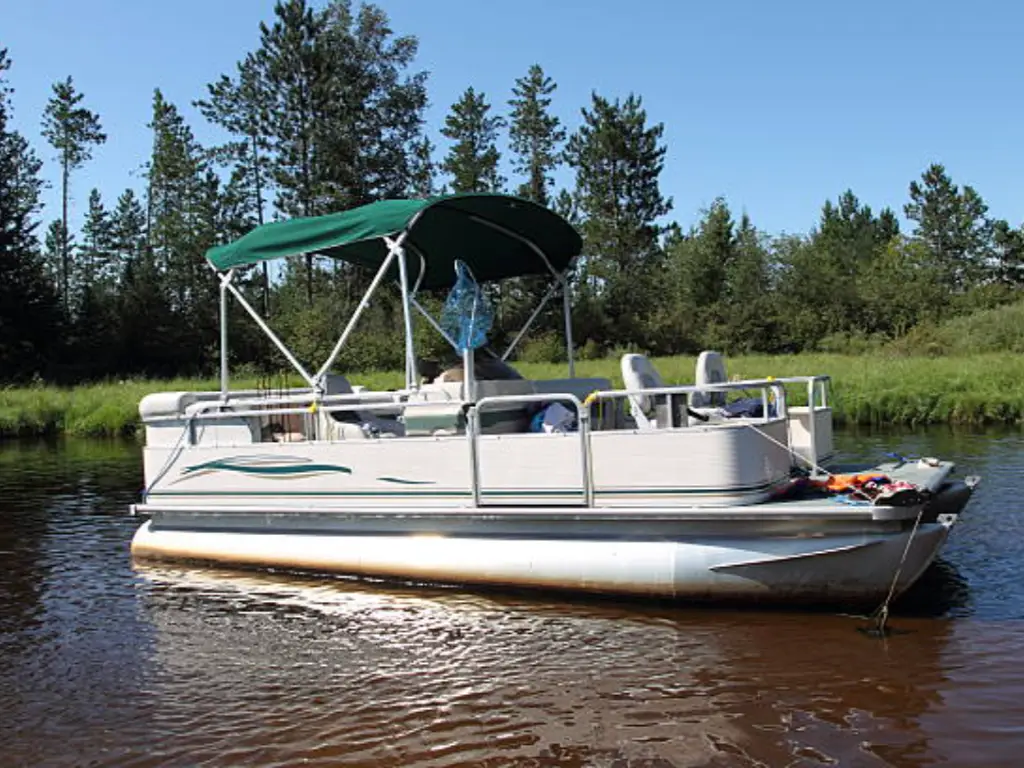
Garage Storage Guide: Does Your Pontoon Boat Fit?
Winter storage is a major logistical problem of pontoon owners, which turns the garage into a rigid geometric constraint. In order to find out whether indoor storage is a feasible approach, it is necessary to go beyond the beam that is advertised in the vessel and one must consider the trailer width and accessories like a genuine mooring cover, which can add bulk.
To compute the Cumulative Width
One of the most frequent mistakes in storage planning is to use the beam specification of the boat only. The width of the hull is not the critical measure of garage entry, but the largest transverse dimension of the trailer. The fenders, wheel wells or side guide-ons of the trailer in most designs are several inches longer than the pontoon tubes.
The widest point of the trailer should be measured in order to determine compatibility. This is the measure of the hard width of the unit. In the case of a typical pontoon, 8 feet, 6 inches beam, the trailer is usually the same size or a little larger, which makes the overall width 102 inches or more. This is the absolute minimum clearance that is needed; any estimation that is less than this precise value creates a risk of structural damage to the facility and the equipment.
The Garage Door Aperture Test
After determining the overall towing width, it should be matched with the garage door opening. In residential buildings, the common single-bay doors are 8 feet (96 inches) or 9 feet (108 inches) wide.
- The 8-Foot Constraint: A typical 8-foot door serves as an unpassable bottleneck to almost all modern pontoon boats. It has a maximum width of 96 inches, which is mathematically inadequate to support a 102-inch trailer arrangement.
- The 9-Foot Threshold: A 9-foot door provides a theoretical clearance of 108 inches. Assuming that the trailer is 102 inches, then there is a remaining margin of 6 inches, which is about 3 inches on each side.
Although a 9-foot hole is technically possible, it demands a high level of accuracy when performing the backing maneuver. This small margin is a stress test on the ability of the driver. To homeowners who are planning new storage or altering the existing structures, the standard door width of 10 feet is the best choice to minimize the chances of collision and enable a smooth passage between the driveway and the storage.
Marina and Boat Slips: Width Restrictions
The Nominal and Actual Width Discrepancy
In evaluating marina infrastructure, it is necessary to go beyond the specifications that are advertised. Marinas normally categorize slips based on nominal dimensions, which are administrative and not functional. A slip that is said to be ten feet wide does not necessarily give ten feet of usable water. The theoretical space is invaded by structural realities, including aging pilings that lean inwards, protruding dock cleats, or utility pedestals.
The major constraint in this equation is the beam of the vessel (the widest point). The buyer has to physically measure the particular slip at its narrowest point, typically between the outer pilings, and not by the schematic of the marina. Failure to do this creates a great risk of incompatibility, in which the vessel is just unable to physically fit into the space allocated to it.
Computing the Operational Buffer
The mere mathematical correspondence between the beam of the boat and the opening of the slip is not practical. It is not about mere physical entry but safe and repeatable docking. It is necessary to compute an operational envelope, which takes into consideration three variables:
- Static Width: This is the width of the beam of the boat and the required width of fenders (bumpers) which usually increases the width of the boat by six to ten inches on each side.
- Dynamic Clearance: The margin of error needed to manoeuvre. The environmental conditions like cross winds or tidal currents require additional space to adjust the approach angle without hitting the dock.
- Structural Preservation: An overly tight fit is a constant point of friction, which increases the rate of wear on the rub rail of the vessel and the dock infrastructure.
The purchase of a ship must be done in strict order after the verification of the berth. The logistical stalemate of having a boat that technically has no parking space is avoided by getting a slip with sufficient clearance.
Beyond Fixed Dimensions: Dock Width to Your Pontoon Boat
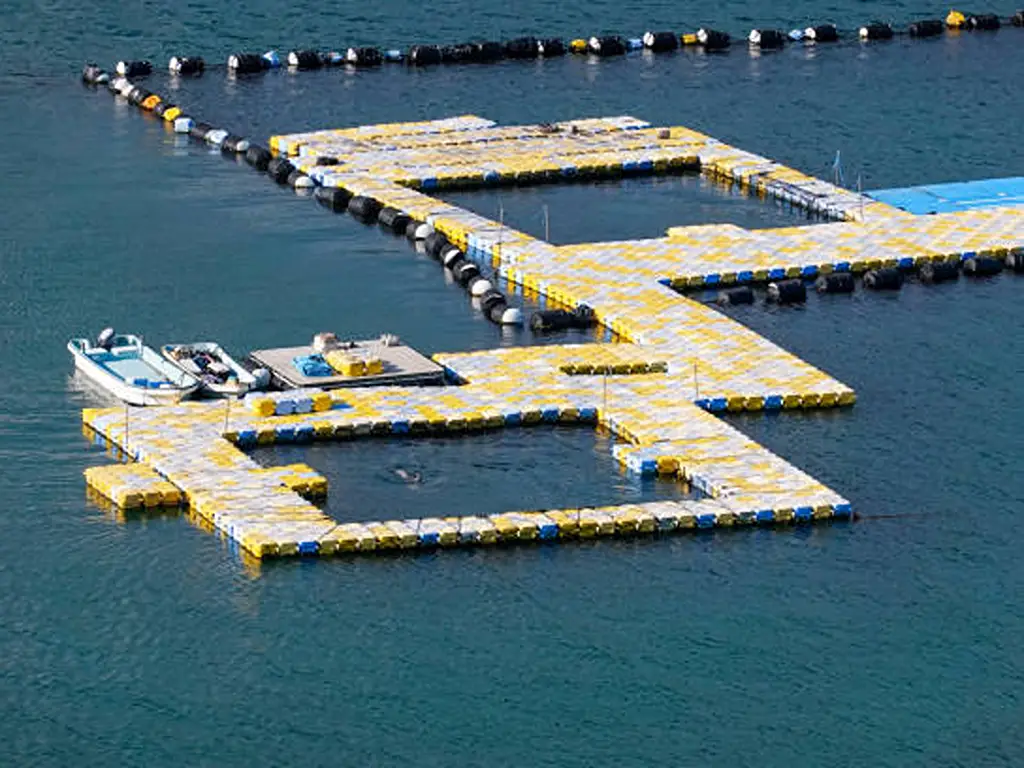
The inherent limitation of conventional marine infrastructure is inflexibility. Wooden wharves or concrete pontoons are usually built to fixed plans; when built, their size is absolute. Modular plastic pontoons overcome this restriction by not considering the dock as a single structure, but as a system of separate, interlocking units. This methodology changes the emphasis of permanent construction to flexible configuration.
Scalability of Structure vs. Hard Constraints
The utility difference is stark. Expansion of a conventional timber dock is a capital-intensive reconstruction project that requires heavy machinery and a lot of downtime. Conversely, a modular system can be expanded laterally immediately. A narrow walkway can be converted into a stable, wide platform that can support events or heavy equipment by just adding more cubes. It operates similarly to industrial building blocks on the water, enabling operators to modify the footprint of the dock according to seasonal demand or the needs of a particular vessel without incurring the expenses of permanent renovations.
The Hisea Dock Engineering Standard
This flexibility depends on the quality of the relationship. Hisea Dock solves the problem of stability that is common with cheaper alternatives by using a special interlocking design with 19mm thick connecting lugs. This forms a high-tensile unity that is solid underfoot, which essentially dissipates the wave energy instead of combating it.
Moreover, the material science of these modules guarantees economic sustainability in the long run. Hisea Dock is made of raw HDPE reinforced with UV inhibitors, a material that is immune to the brittleness curve that afflicts conventional plastics. This translates to a life span that is 20-30 years above average competitors. To facility managers, this translates to the dock being a long-lasting asset that can withstand the extreme UV radiation and impact, so that a customized, wide-platform setup is safe and maintenance-free in more than ten years.
Conclusion
The pontoon boat width analysis shows that the beam is not a fixed specification, but the main limitation that dictates the lifecycle of the vessel in operation. The standardization of the market to 8-foot-6-inch is an efficient equilibrium, a compromise between the need to have hydrostatic stability and the inflexible regulatory structures of highway transport. Breaking this rule compels the owner to face a complicated system of logistical trade-offs, including the transaction costs of wide-load permitting, to the geometric constraints of residential storage.
As a result, the process of purchasing a particular vessel should be treated as an optimization problem in which the physical footprint of the boat is strictly aligned with the existing infrastructure. It is necessary to measure accurately whether it is the tightness of a garage door aperture or the dynamic clearance of a marina slip to reduce financial and legal liability. Finally, the examples of innovations like high-tensile modular docking systems demonstrate how adaptive engineering can address the structural conflict between fixed marine architecture and the changing size of contemporary recreational vessels.
FAQ
Q: How wide is a 28 ft pontoon boat?
A: The width of most 28-foot pontoon boats is approximately 8 to 8.5 feet, which has become the industry standard of full-size pontoons. A few of the premium or specialty tri-toons can be slightly larger in size, but most are kept within the legal towing width limits to make them convenient and easy to transport.
Q: What is the width of a 16 foot pontoon boat?
A: The width of a 16-foot pontoon boat is typically 7 to 8 feet, depending on the manufacturer and design. Compact pontoons are designed to give a balance between deck space and portability, which is easier to trailer, store, and maneuver than larger sizes and still offer comfortable passenger capacity.
Q: What is the size of the garage door that I require to fit a pontoon boat?
A: The majority of pontoon boats, particularly those measuring 20 to 28 feet, need a garage door that is at least 10 feet wide to enable safe clearance when placed on a trailer. In taller pontoons with Bimini tops or other added accessories, a door height of 9 feet or higher is usually suggested to allow easy access without the need to take hardware off.
Q: What is the width of a pontoon boat on a trailer?
A: A pontoon boat is usually 8.5 to 9 feet wide at the widest point when loaded on a trailer. This total width incorporates the trailer frame and safety margin, ensuring that the setup does not exceed the normal legal towing width in most areas, but still provides stable transport performance.



 English
  Thai
Thai  Spanish
  French
  German
  Dutch
Dutch  Italian
  Arabic
  Indonesian
  Portuguese
  Turkish