
Introduction
The move between the open water and the marina is usually the most challenging part of any journey. Whereas the open sea is a luxury of space, the dock requires precision, foresight and a command of physics. The core of this change is boating knots knowledge, a basic skill that distinguishes the experienced mariner and the inexperienced one: the skill of tying a safe mooring knot. Mastering key boating knots is not just about aesthetics; it is about ensuring a secure hold on any body of water.
To have a vessel is not simply the process of attaching something to a pier; it is a rational reaction to the unforgiving laws of nature. The wind, the current, and the weather conditions are the variables which are always present and which strive to move your boat. One line failure or knot failure can turn a calm afternoon into a salvage mission. This guide is meant to give you a complete insight into mooring, from the selection of replacement options for old lines to the specific sailing lines you need to use in each docking situation. With these tricks, you will have a confident tether, ensuring your ship will be in the same spot as you left it, no matter what the elements will bring.
Why It Matters to Learn the Right Mooring Knot?
The safety of your ship is as important as sailing it. Learning the correct type of knot is not only a maritime custom, but it is a basic safety measure that will keep your investment and your peace of mind safe.
- Avoiding Expensive Destruction: A boat that is not properly secured is an expense. Should a loose end or a knot slip in a sudden squall, or a heavy wake, your boat may be blown into pilings, or other hulls, or navigation channels. The best defense against the unpredictable energy of the marine environment is using a good quality marine rope, which will save you the cost of expensive structural repairs and liability claims.
- Removing Docking Anxiety: A lot of the stress that comes with docking is because of lack of confidence in the final tie-up. With a little practice, the muscle memory to tie a cleat hitch knot or bowline knot instinctively substitutes the hesitation with competence. Learning this last trick will allow you to stay concentrated on the navigation of the ship, transforming a stressful situation into a professional and managed one.
- Securing Hull and Hardware: The right knots keep the fine line between line tension and security. Excessively loose lines result in the boat hitting the dock and breaking the gelcoat. On the other hand, lines that are knotted too firmly, without taking into consideration the changes in the tide, may have sufficient tension to tear a piece of hardware right out of the deck. The right knot is a sort of umbilical cord that allows your boat to be held safely away from the abrasive surfaces and at the same time firmly secured.
Finally, the right knot makes sure that your boat is where you left it: safe, stable, and secure.
Mooring Essentials: Ropes and Gear Science
The Science of Rope Selection: Why Nylon?
Not every rope is the same in the maritime world. In the case of mooring, modern materials like Nylon are the industry standard and rightly so. Nylon has a special molecular structure that enables it to stretch unlike polyester or polyethylene.
This elasticity is critical. When a wave strikes your boat, the energy has to go somewhere. A stiff rope would pass that energy on to the cleats, causing a shocking jolt that can destroy the structure of the boat. Nylon is a shock absorber, which stretches up to 15-20 percent of its length to absorb the force of the surge. Moreover, nylon is very resistant to UV degradation and abrasion, which makes it a reliable material even after several months of salt-air and sun exposure.
Choosing the Right Diameter
A rope that is too thin will be prematurely destroyed, and a rope that is too thick will be hard to manage and may not pass through the chocks of your vessel or over its cleats. The following table can be used as a general guide to the appropriate nylon rope diameter depending on the length of the boat.
| Boat Length (Feet) | Boat Weight (Approx. Lbs) | Recommended Rope Diameter (Inches) |
| Under 20′ | Up to 2,500 | 3/8″ |
| 20′ – 27′ | 2,500 – 6,000 | 1/2″ |
| 28′ – 35′ | 6,000 – 15,000 | 5/8″ |
| 36′ – 45′ | 15,000 – 30,000 | 3/4″ |
| 46′ – 55′ | 30,000 – 50,000 | 1″ |
Essential Hardware
A good rope is not enough to ensure that you have a secure vessel. The hardware that makes the critical interface between your boat and the dock consists of the following:
- Marine Cleats: These are your main anchor points. They offer a heavy, T-shaped base on which to loop and tie off dock lines, so that the boat remains in the same place you desire.
- Pilings: These are vertical posts that serve as heavy-duty mooring points in addition to the structural support of the dock. They are particularly effective in maintaining the stability of larger vessels with the changing tide and high currents.
- Mooring Rings: These rings are usually recessed or side-mounted and provide a more flexible alternative to cleats. They can be used in fast attachments with carabiners or special mooring clips, which are typical of traditional or space-constrained quay designs.
- Bumpers (Fenders): The initial defense of your boat. These cushions are inflatable, and they serve as shock absorbers to eliminate the effects of waves and wind to ensure that the hull does not grind on the hard surfaces of the dock.

Common Marine Mooring Knots
The Bowline
The Bowline, also called the King of Knots, is a mythical knot of the sea, which is used to create a fixed, non-slipping loop at the end of a rope. Its main advantage is that it is reliable and easy to use; it will not get stuck or slip when it is loaded with heavy loads, but it is surprisingly easy to undo even when it has been under enormous tension.
- Scenarios: It is the one that is used when you have to tie a mooring line to a fixed ring or when you have to pass a secure loop over a piling.
- How to Tie: To begin with, make a small loop (the hole) in the standing section of the rope. Take the working end (the “rabbit”) up through the hole, round the back of the standing part (the “tree”), and then the rabbit down through the original hole. Pull up the standing part and the head of the rabbit to tighten.
The Cleat Hitch
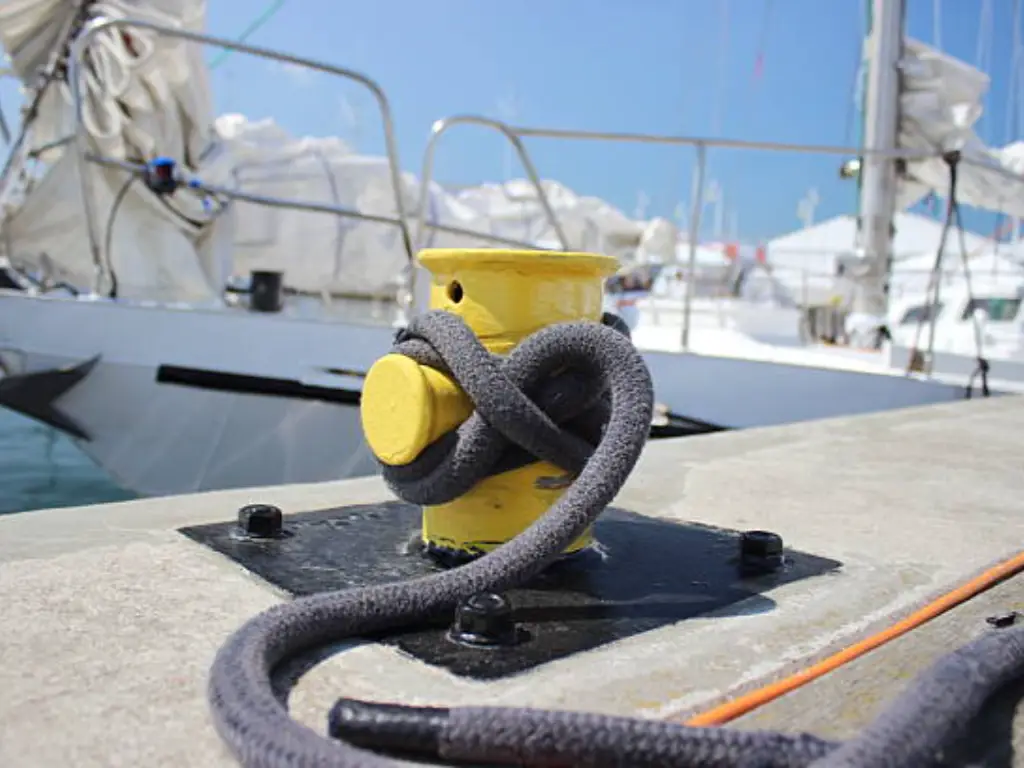
The Cleat Hitch is the standard in the industry to tie a boat to a dock cleat, which serves as a crown of reliability. It is based on friction instead of a complicated mechanical knot, which is extremely quick to knot and simple to adjust. Its design is such that the more the boat pulls the tighter the wraps are on the cleat.
- Scenarios: Necessary in any docking case where there is a T-shaped cleat.
- Tying: Wrap the line around the cleat base once all the way around. Move the line over the top and under the other horn and cross over the top again to the other horn to form a figure of eight. Complete by wrapping the working end under the final wrap (a half-hitch) such that the tail is facing the boat.
The Clove Hitch
It is a fast and efficient hitch knot that is used to fix a line to a railing or a vertical post. It is very effective in temporary stops as it can be tied within a few seconds with one hand. It is however a tension-dependent knot, which implies that it is best knotted when the line is maintained at a constant tension.
- Scenarios: Scenarios are best applied in temporary mooring to a piling or hanging fenders to a boat rail.
- How to Tie: Wrap the rope around the piling. Cross the rope with itself to create an X and go around the piling a second time. Lastly, bring the working end under the second wrap and pull both ends to tighten it around the post.
Two Half-Hitches
A basic and strong knot that is used to fasten the end of a rope to a stationary object. It is beautiful because it is simple and it gets tight as strain is increased. It is a round turn and two consecutive hitches, which give a set and forget security that is hard to loosen.
- Scenarios: Ideal to tie to a ring or a rail when you need the boat to remain in one place over a long time.
- How to Tie: Wrap the rope over the post or ring. Take the working end and cross over and under the standing part to form the first hitch. Do the same in the opposite direction to form the second half-hitch, and then pull the end to hold the knot against the post.
Figure-Eight Knot
The Figure-Eight is a specialty knot, unlike the other knots, which is a stopper knot. Its main purpose is to ensure that a rope does not slide through a pulley, chock or fairlead. It is huge, cumbersome, and gives a clear visual signal that the line is safe, thus it is a critical safety element of line management.
- Scenarios: This is used to ensure that your mooring lines do not slip back through the bow chock and into the water.
- How to Tie: Form a loop with the working end of the rope. Take the end round the standing part (behind it), and then back through the original loop. Pull to create a clear shape of 8 at the end of the line.
Situational Mooring: The Best Knot to Use
The physics of the knot should be matched with the structure of the dock to achieve efficiency in mooring.
Finding Your Knot to the Dock Hardware
The most secure method of attachment depends on the physical form of the dock hardware:
- When you meet Cleats: Cleat Hitch. It is the sole knot that is meant to take advantage of the mechanical advantage of the horn structure. It offers a safe grip with friction and is assured not to jam, thus it is easy to release even after carrying a heavy load.
- When you meet Pilings: Clove Hitch or Two Half Hitch. The Clove Hitch is ideal in a temporary tie-up since it is very fast to set up. Two Half Hitches are preferable to longer stays, as they will not slip or walk up and down the post when the line is slackened by the action of the waves.
- When you meet Rings: Bowline. A Bowline forms a non-cinching loop. This enables the rope to swing freely with the movement of the boat and this greatly minimizes localized abrasion and the rope does not wear out against the metal ring.
Modification of Duration and Environment
Depending on the external conditions, you need to focus on speed or maximum security:
- Temporary vs. Long-term Berthing: When you are making a quick stop (such as refueling), speed and the ability to make and break are your friends–simple hitches are the best. When mooring long-term or unattended, you require knots that tighten as tension rises so that the boat does not move as the tide levels vary.
- Overnight or Storm Warnings: The Round Turn and Two Half Hitches are to be used when there is an expectation of heavy winds or surges. The round turn (two times round the post) is essential as it takes most of the pulling force of the boat by friction. This helps to prevent over-tightening or breaking of the actual knot when it is subjected to extreme pressure.
Troubleshooting: Mooring Common Mistakes
Even seasoned sailors are prone to bad habits. The first step to professional-grade boat safety is to understand the logic behind correct mooring.
- Over-wrapping the Cleat (The “Birds Nest”): The most common beginner error is to make a Birds Nest by wrapping too many wraps around a dock cleat. This is typically due to the misconception that the larger the rope, the greater the security, but a large, over-wrapped cleat does not allow the final locking hitch to bite. This tangle of rope may be impossible to undo in a hurry in case of an emergency, say a sudden fire, or a sudden change of weather, and your ship may be trapped. To correct this, always remember the rule of the “Standard Three” which is one complete wrap around the base, one clean figure-eight over the horns, and one locking half-hitch to complete.
- High-Modulus, Non-Stretching Ropes: The most frequent mistake is to use high-performance, low-stretch ropes (such as Kevlar or high-modulus polyethylene) to moor, which can cause serious hardware damage. Since these lines are intended to be used in sailing rigging where rigidity is an advantage, they provide zero shock at the dock. There is no give, and all the energy of all the waves or gusts of wind is applied directly to the fiberglass and cleats of your boat, which frequently leads to broken hulls or broken hardware. The answer is to install Nylon or special Polyester dock lines, which are designed to stretch and cushion the shock, and keep your boat intact.
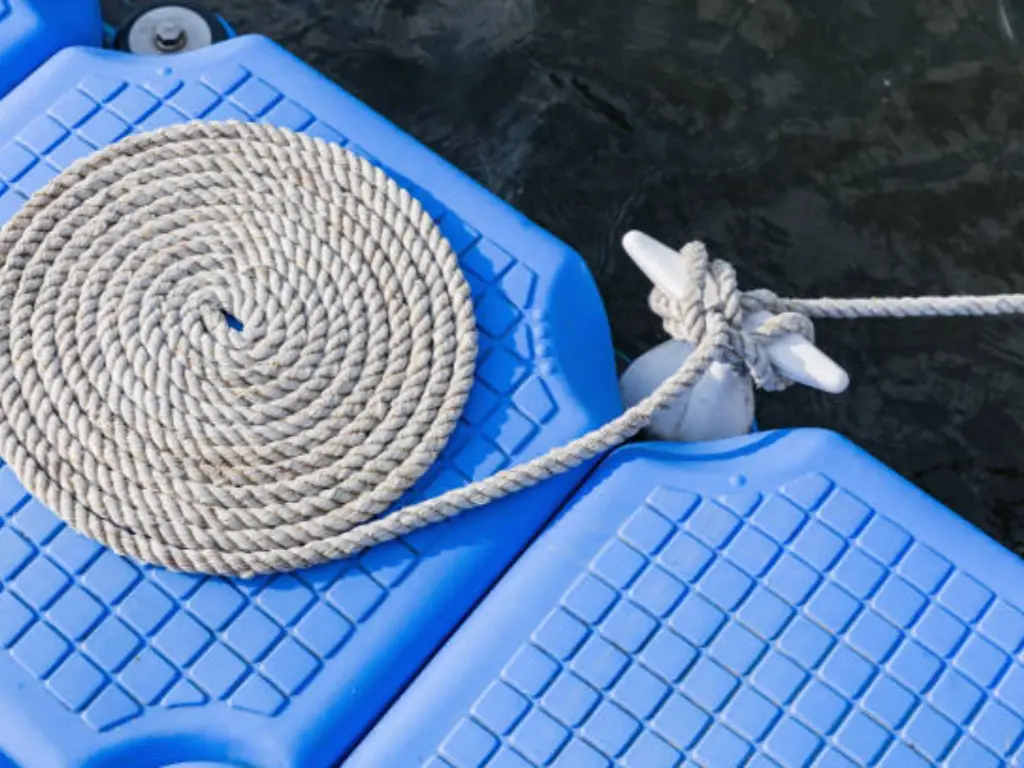
- Forgetting the Tail and Line Management: It is a major safety risk to leave the working end or tail of your knot tangled up on the dock or hanging in the water. A loose line in the water is a silent predator which can be sucked into a propeller within seconds and the engine will stop. Messy lines on the dock pose a risk of tripping to the guests and the staff of the marina. In order to provide a safe environment, it is always advisable to coil the remaining line in a nice pile on the dock surface or to hang the coiled tail on a piling hook, leaving the walkway clear and the water safe.
The Unseen Dilemma: Tides and Water Levels
To boaters who use traditional wooden or concrete docks, the tide is not merely a natural rhythm, but a physical enemy. Since these buildings are permanently set at a fixed height, they are obstinately immobile as your boat goes up and down, forming a hazardous “vertical gap” that makes each docking experience a life-threatening game of chance. When you tie your lines too tight at high tide, the receding water will literally suspend the boat by its own ropes as the water falls. This places thousands of pounds of stress on small cleats and hull segments, which frequently result in snapped lines, ripped-out hardware or even the boat tipping and taking on water. On the other hand, excess slack to prevent this “hanging” effect results in its own havoc; the uncontrolled boat will act as a guided missile, banging against the hard sides of the dock again and again, leaving deep cracks in the gelcoat and expensive structural fatigue.
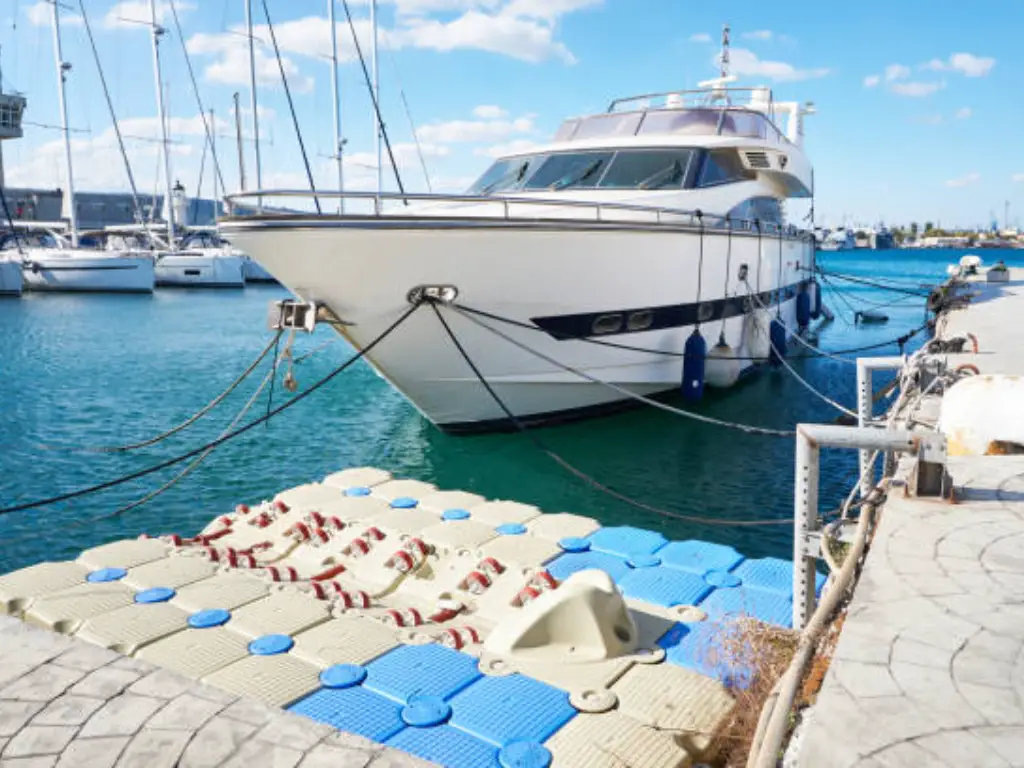
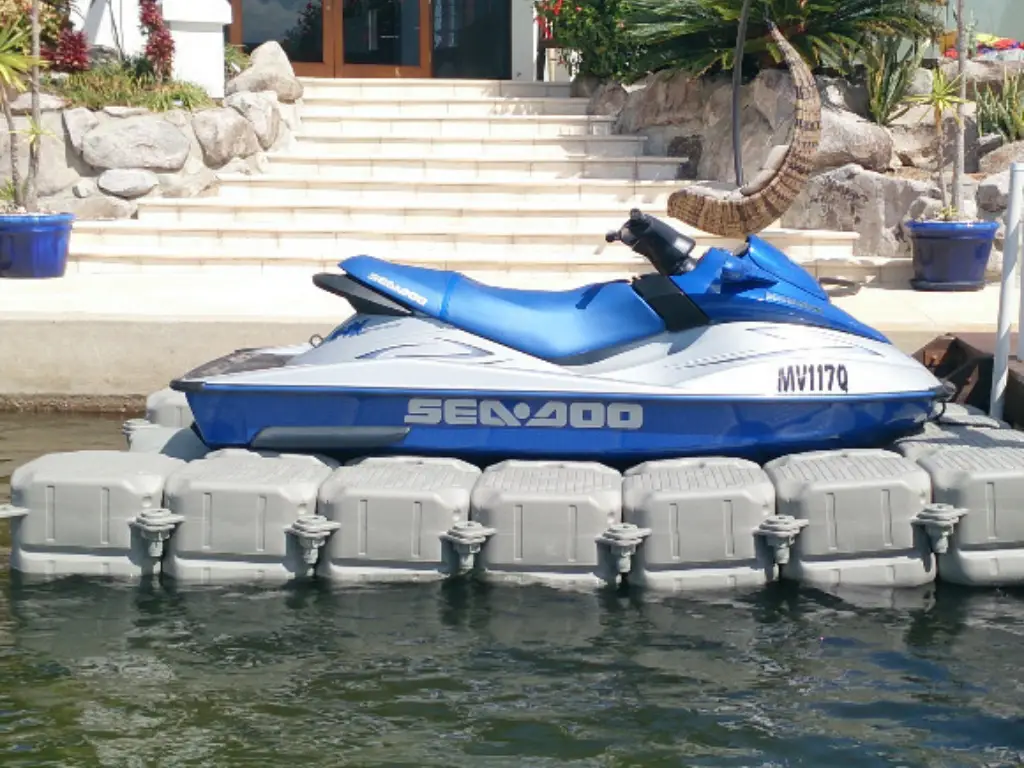
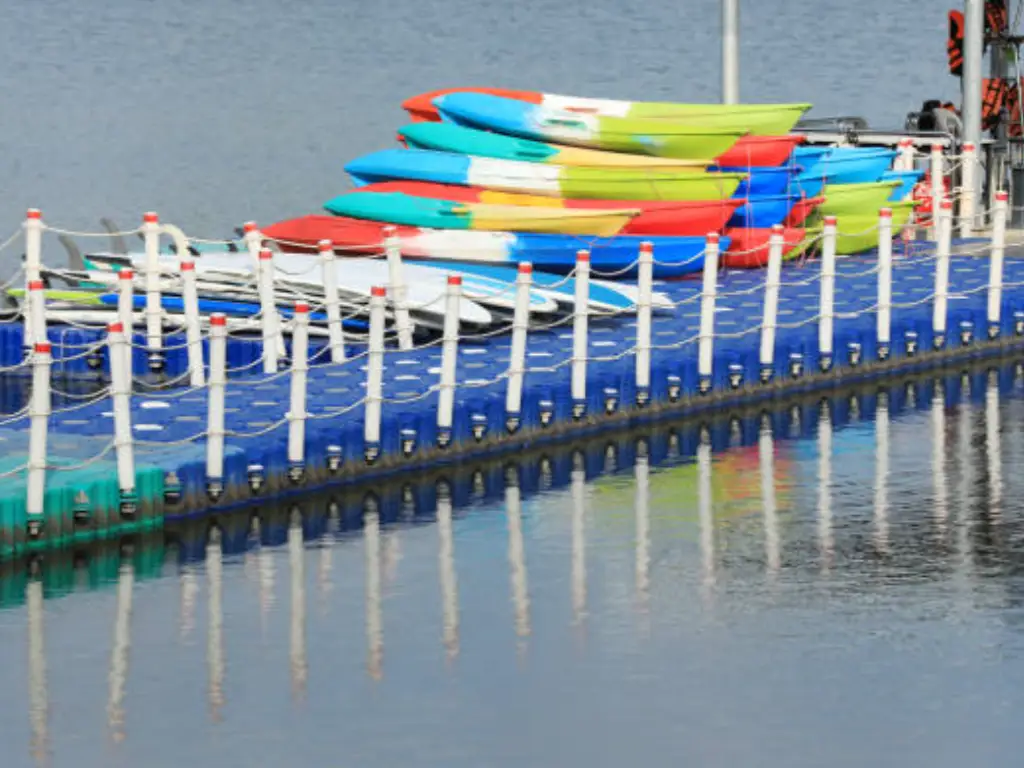
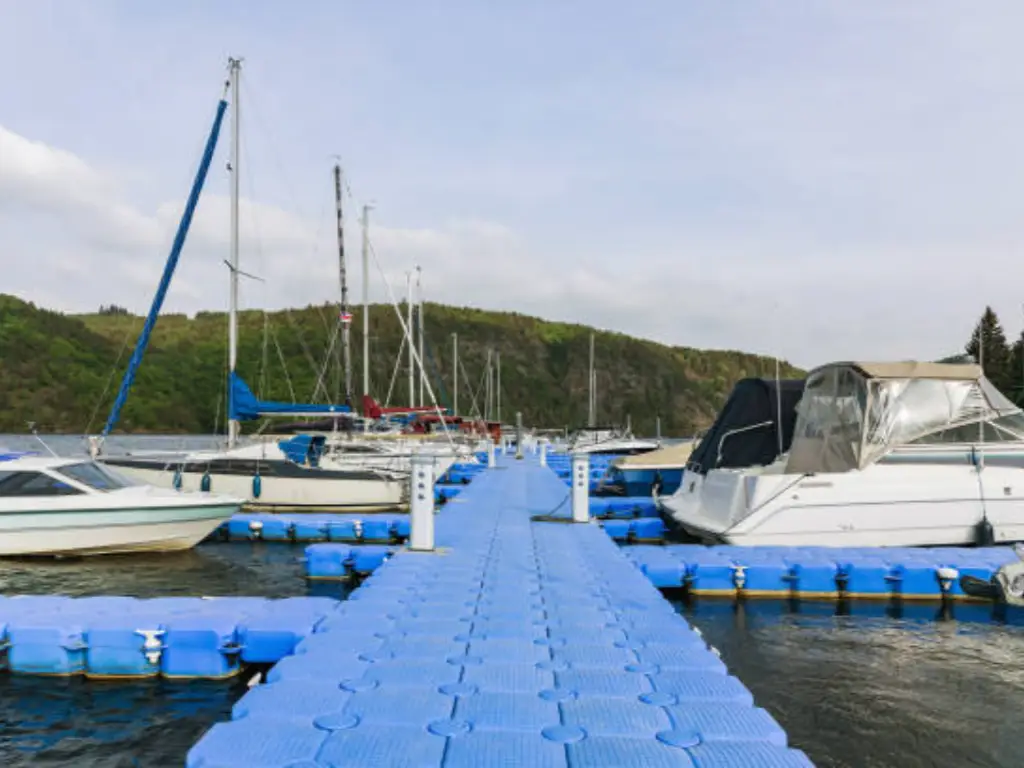
Previously, the only means of surviving this cycle was by manual intervention always, learning how to use complicated slack-management methods and going back to the dock at any hour to re-adjust the ropes. Nevertheless, the real answer lies in a change of the vessel management to the infrastructure improvement. A floating dock system resolves this dilemma by floating in an ideal 1:1 synchrony with the surface of the water. The conversion of the dock into an active continuation of the sea, so that your boat and the dock are kept at the same level, so that your lines are always in perfect tension, no matter what the tide.
Although the move to a floating system is the initial step to complete peace of mind, the true security is the selection of a platform that is designed to withstand the most extreme aquatic conditions- a standard of excellence that Hisea Dock has taken ten years to perfect in the eyes of boat owners all over the world.
Why Your Dock Choice Makes It So Easy?
Switching to Hisea Dock system will see your mooring policy change to not managing tension but using strength. Having more than ten years of manufacturing experience, we have designed a solution that can manage the physical strain of docking so that you do not need to. Our systems are based on the new generation of HDPE with anti-UV agents, which makes the structure strong against aging and corrosion by salt-water. To the boater, the actual calmness of mind is our 19mm thick connection ears and a proven diagonal tensile strength of 14,389 N. These characteristics make sure that your mooring points are rock-solid even when the wind and current exert the utmost strain on your lines.
The wave energy is naturally dissipated by the modular design, which enables the dock to rise and fall in perfect harmony with your vessel. This maintains your lines at an optimal, constant tension, and the so-called perfect knot is actually irrelevant to the mere reliability of the infrastructure. The safety is incorporated in all the details such as the anti-slip surfaces and the rounded corner design that keeps your hull and your hands safe. Supported by ISO, CE, and TUV certifications, Hisea Dock has a 20-30% extended life over the competition- it offers a professional grade base that makes everything about your time on the water easier.
Maintenance and Safety
Learning the correct knots is just the beginning, the real safety on the water lies in the quality of the equipment the knots are tied to. When you make it a habit to check your equipment during docking, you will make sure that an otherwise well-tied hitch is not ruined by a broken line or a lost fender.
- Internal Rope Health and Maintenance: Check your nylon lines to see whether they are glazed- hard melted spots due to friction heat that weaken the fibers. Occasionally un-twist the strands to examine the interior white powder; these are crystals of salt that are abrasive and grind the rope inside out. Washing your lines with freshwater after being exposed to salt will dissolve these crystals and maintain the necessary elasticity of the rope so that the line does not become brittle and break.
- Strategic Fender Positioning and Security: To be well-protected, it is important to place your main fenders at the widest point of the boat (the beam) so that they can act as a solid pivot. Make sure that every fender is suspended in a vertical position so that half of it is above and half below the edge of the dock to ensure that the boat does not ride up the dock during a surge. To securely hold your fenders, tie them with a Clove Hitch with two Half Hitches to hold the height in place when in constant motion.
- Shock Absorption and Chafe Prevention: A perfectly knotted knot can be broken by a sudden shock load when a heavy swell occurs. To add the required stretch to your lines, add rubber mooring snubbers to your lines to absorb the energy of a surge before it gets to your knots or deck cleats. Moreover, guard your lines at the points of chafe–wherever the rope touches the dock or fairlead–by means of protective sleeves to prevent the friction which leads to the fraying and separation of lines at the weakest points.
Conclusion
Vessel securing is a science, and it is a science that has its foundations in the strictest science, and that is the choice of high-stretch nylon, and the mastery of the necessary marine knots. Managing the elements of nature, particularly the unstoppable force of the tides, is the mark of an experienced sailor who realizes that no one can be safe.
Finally, the synergy between the modern infrastructure and pilot skill results in the highest level of safety. Although the conventional fixed docks need constant attention and manual adjustments to reflect the fluctuating water levels, the shift to a dynamic floating system provides the synchronization that will remove the docking anxiety. With the combination of your technical knowledge and trusted hardware, you are sure that your vessel will be where you left it. This knowledge and infrastructure balance will enable you to enjoy the ride, and not to be concerned about the destination.
FAQS
Q: What knot do you tie to tie a boat to a dock?
A: The standard knot is a cleat hitch, which is a reliable knot to use in order to securely fasten, whereas a clove hitch or a bowline is a reliable knot to use temporarily to fasten to pilings or vertical posts.
Q: What do you tie boats to on a dock?
A: Boats are commonly attached to metal dock cleats, vertical wooden or concrete pilings, heavy-duty bollards, or recessed dock rings built into the pier structure.
Q: How to tie a boat to a dock without cleats?
A: To tie a boat without cleats, wrap lines around structural pilings in a clove hitch, or run lines through dock rings, or loop ropes around cross-beams of the stable in the dock frame.
Q: How to tie a knot to anchor a boat?
A: An anchor bend (also called a fisherman’s bend) is a permanent, non-slip connection to the anchor shackle, whereas a bowline is a strong, fixed loop that is simple to undo even after being heavily strained.

 English
  Thai
Thai  Spanish
  French
  German
  Dutch
Dutch  Italian