
Evaluating Floating Dock Manufacturers: The Untold Truth About HDPE & Durability
A Comprehensive Financial, Engineering, and Procurement Analysis for Commercial Marina Developers, Port Authorities, and Waterfront Infrastructure Professionals
The Paradigm Shift in Marina Infrastructure: Why Traditional Docks are Sinking Assets
For several decades, commercial marina operators, yacht club committees, and waterfront real estate developers have fundamentally relied on treated timber frameworks and galvanized steel pontoons as the unquestioned foundational elements of waterborne infrastructure. However, as global supply chain costs rise exponentially and environmental protection regulations tighten across all jurisdictions, the modern commercial maritime landscape is ruthlessly exposing the hidden and compounding liabilities of these legacy systems. In the strict context of B2B maritime asset management, traditional construction materials are no longer viewed as performing assets; rather, they are increasingly recognized as continuously depreciating liabilities characterized by a relentless, inescapable cycle of high-cost maintenance, structural fatigue, and severe ecological risk.
Today’s developers are no longer simply searching the fragmented market for a basic "floating dock"; instead, they are seeking highly strategic partnerships with top-tier floating dock manufacturers who possess the demonstrable engineering capabilities to deliver a guaranteed 20 to 30 years of uninterrupted structural performance. The ultimate financial goal of this transition is to transform what was once a black hole of operational expenditure (OpEx) into a highly predictable, maintenance-free asset with a meticulously optimized Total Cost of Ownership (TCO). By doing so, marinas can dramatically lower their insurance premiums, maintain continuous operational uptime, and secure a significantly higher valuation for their waterfront real estate.
Decoding Material Science: The Hardcore Engineering Behind Commercial-Grade Floating Platforms
To accurately and professionally evaluate any marine infrastructure proposal, B2B buyers must elevate their assessment criteria far beyond superficial aesthetics or initial price tags. It requires a deep, uncompromising dive into the physics of water displacement, the complex chemistry of ultraviolet (UV) polymer degradation, and the localized hydrodynamics of wave attenuation. The primary engineering objective for any commercial floating dock system is to strike a perfect mathematical balance between unyielding structural resilience and long-term environmental inertness in highly corrosive saltwater environments.
The Critical Engineering Distinction: Tensile Strength vs. Volumetric Buoyancy
One of the most dangerous, frequent, and financially costly misconceptions in maritime procurement is conflating a float’s ability to hold weight with its ability to survive a severe storm. It is absolutely critical for project managers to completely distinguish between two entirely independent engineering metrics: Structural Tensile Strength (Shear Resistance) and Volumetric Displacement (Buoyancy).
Buoyancy — which directly translates to a dock’s ability to safely support a heavy static load, such as 350 kg/m² of heavy pedestrian traffic, gangways, or marine equipment — is purely and simply a mathematical function of the float’s internal volume displacing water according to Archimedes’ principle. You can technically achieve high buoyancy with a very thin, fragile plastic shell, just as long as the internal volume of the cavity is large enough to displace the required mass of water.
In stark contrast, a marina’s longevity in rough, unpredictable water environments is governed entirely by the tensile resilience of its external connection points. Elite floating dock mould manufacturers understand that while the internal cavity provides the necessary vertical lift, the external connecting "lugs" or "ears" are what endure the tearing, cyclic shear stress of every single wave over decades of continuous operation.
For instance, engineering a connection ear with an oversized, massive thickness (e.g., 19mm of solid High Molecular Weight polymer) does absolutely nothing to increase the dock’s load-bearing weight capacity. Rather, it provides a massive, critical safety margin against the kinetic shear force of storm surges, tidal shifts, and boat wakes. This targeted over-engineering at the connection points is the sole mechanical mechanism that prevents a multi-million dollar dock array from catastrophic structural separation during a gale-force event.
Analyzing the Environmental Stress-Cracking Resistance (ESCR) of Polymers
When transitioning from wood to plastics, buyers must understand that not all polymers are engineered for the harsh, unforgiving realities of the marine environment. Standard commercial plastics will rapidly embrittle when exposed to continuous saltwater submersion combined with extreme solar radiation. The commercial maritime standard strictly dictates the exclusive use of High Molecular Weight High-Density Polyethylene (HMW-HDPE). This specific grade of advanced polymer possesses an exceptionally high Environmental Stress-Cracking Resistance (ESCR), meaning its internal molecular chains are long and robust enough to resist microscopic fractures even under constant mechanical load and violent temperature fluctuations.
Furthermore, premium manufacturers extrude this raw material with an advanced UV-8 or UV-15 chemical stabilization package. This highly specialized additive effectively shields the polymer matrix from ultraviolet degradation, ensuring the dock system will not chalk, crack, shatter, or fade even after a decade of exposure to the harsh Florida, Australian, or Middle Eastern sun. The operating temperature range of these elite polymers frequently spans from a freezing -60°C up to a blistering 80°C, guaranteeing global deployment viability.
| Primary Material Type | Initial CapEx (Estimated USD/sq.ft) | 10-Year Maintenance Cost (Est.) | 10-Year Total TCO (Est. USD/sq.ft) |
|---|---|---|---|
| Pressure-Treated Timber (Legacy) | $20 – $35 / sq.ft | $45+ (Frequent resealing, hardware rust, rot repair) | $65 – $80 / sq.ft |
| Heavy-Duty Concrete Pontoons | $75 – $110 / sq.ft | $10 (Minimal checks, sacrificial anode replacement) | $85 – $120 / sq.ft |
| High-Grade HMW-HDPE (Modular) | $40 – $55 / sq.ft | $5 (Zero chemical treatments, simple pressure washing) | $45 – $60 / sq.ft |
The Global Elite: A Vetted Evaluation of the Top Floating Dock Manufacturers
Selecting a manufacturing partner for a large-scale marine development is fundamentally a rigorous risk-mitigation exercise. Procurement teams and project financiers cannot afford to gamble on unproven startups or consumer-grade wholesale plastics when millions of dollars of waterfront real estate and high-value luxury vessels are at stake. Below is a meticulously vetted, highly objective listing of the most authoritative top floating dock manufacturers currently operating globally. This roster is categorically organized by their specific engineering specialties, material dominance, and geographical footprint.
1. EZ Dock (USA)
- Location: Monett, Missouri, USA (Dominant presence across North America)
- Company Scale: Global Enterprise Leader (A Subsidiary of PlayPower, Inc.)
- Core Business Focus: Premium modular polyethylene dock systems, commercial PWC ports, and adaptive boat lift solutions.
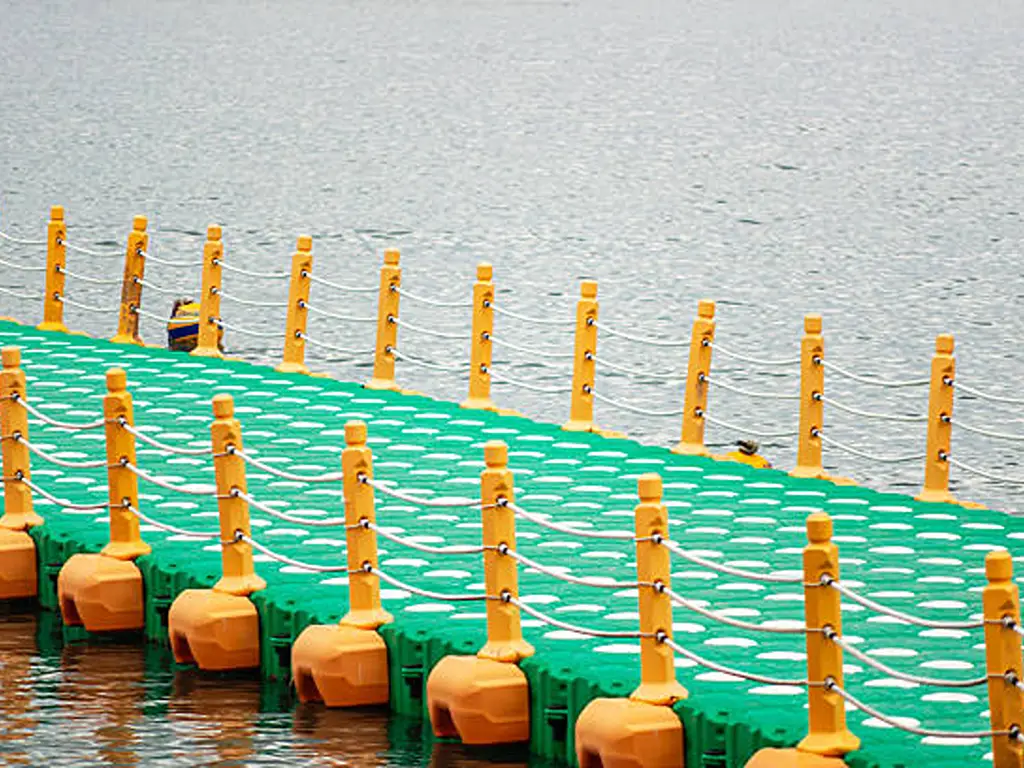
Founded in 1991, EZ Dock has effectively revolutionized the global marine infrastructure industry by introducing and perfecting the highly adaptable, modular polyethylene floating dock system. Operating its core manufacturing facilities out of Missouri, USA, but boasting a truly massive, deeply interconnected global distribution and dealership network, their patented interlocking design fundamentally changed how both residential waterfront owners and heavy commercial marina operators approach water access.
EZ Dock caters heavily to large commercial marinas, government municipalities, severe-duty military installations, and high-end luxury residential projects. Their unwavering commitment to eco-friendly manufacturing, paired with highly slip-resistant and barefoot-friendly deck surfaces, makes them a ubiquitous staple in the North American market. They are frequently considered the default industry standard for modularity, rapid deployment, and ADA-compliant accessibility.
Unlike traditional wooden docks, the EZ Dock ecosystem is entirely maintenance-free, completely resisting rot, splintering, marine borers, and paint peeling. Furthermore, their proprietary recycled rubber coupling systems absorb immense wave energy effectively, allowing the entire dock array to flex and undulate with the water rather than breaking under severe weather stress, thereby ensuring unparalleled long-term asset protection for the end user.
Pros: Exceptional lifespan with virtually zero maintenance; actively moves with water levels to prevent wave damage, completely eliminating the rusting and splintering common in fixed systems.
Cons: Higher initial CapEx compared to basic fixed wooden setups; in extreme thick-ice zones, may require temporary winter removal or the installation of bubbler systems.
Industry Evidence: Read Great Lakes Scuttlebutt’s objective review on modular flexibility and lifespan advantages
Website: www.ez-dock.com
2. Bellingham Marine (Global)
- Location: Newport Beach, California, USA (Extensive global footprint across Europe and Oceania)
- Company Scale: International Mega-Corporation, boasting tens of thousands of turnkey projects worldwide.
- Core Business Focus: Elite heavy-duty concrete floating dock manufacturers and comprehensive marina design-build services.
Within the highly specialized, capital-intensive sector of ultra-heavy-duty marine infrastructure, Bellingham Marine is globally recognized as the most prestigious and technologically advanced name when discussing concrete floating dock manufacturers. For well over six decades, this powerhouse corporation has operated as the primary architectural and engineering force behind some of the world’s most luxurious, high-profile superyacht marinas, mega-resorts, and high-capacity commercial fishing ports.
Bellingham operates on a massive, vertically integrated international scale, providing total turnkey solutions encompassing architectural design, hydrodynamic engineering, raw manufacturing, and final construction services. They are the absolute, undisputed go-to solution for deep-water marinas situated in environments facing severe, oceanic wave climates, where the sheer physical mass of thousands of tons of concrete is fundamentally required to crush and dissipate massive hydraulic kinetic energy.
Because of their completely non-combustible material properties, they offer unparalleled fire safety — a critical insurance factor for marinas hosting multi-million dollar yachts. Additionally, their sophisticated casting techniques allow for customized internal utility routing, enabling high-voltage three-phase power, fresh water, and sewage pump-out lines to be safely and invisibly cast directly into the concrete framework.
Pros: Unmatched physical mass providing “land-like” stability and extreme wave impact resistance; integration of modern GFRP composites extends service life to over 75 years.
Cons: Massive weight results in complex, high-cost installation logistics; older concrete iterations historically faced internal steel rebar corrosion risks requiring costly structural interventions.
Industry Evidence: Review JEC Composites’ engineering analysis on heavy concrete stability vs. traditional steel corrosion
Website: www.bellingham-marine.com
3. Candock (Canada)

- Location: Sherbrooke, Quebec, Canada (Dominant presence in North American and European cold-water markets)
- Company Scale: Large International Manufacturer with a highly trained global distributor network.
- Core Business Focus: Modular plastic pontoon cube systems, industrial work platforms, and leading lake floating dock manufacturers.
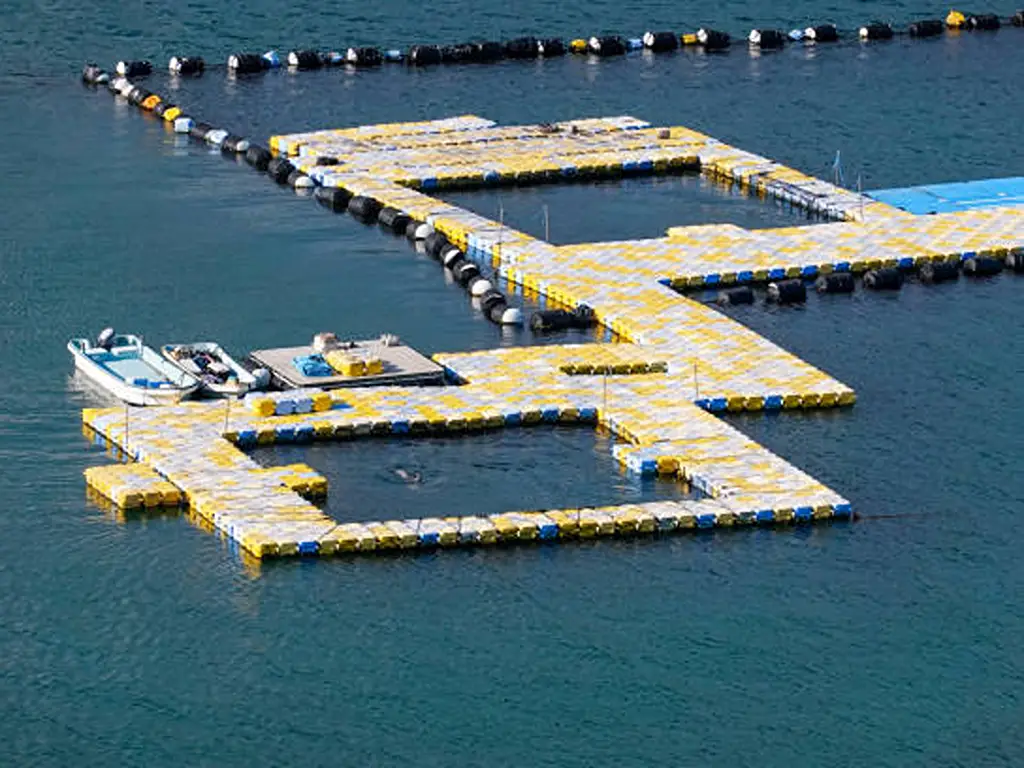
Operating out of Sherbrooke, Quebec, Canada, Candock has meticulously engineered a fiercely competitive, highly versatile modular floating cube system that has taken the global market by storm. They are heavily utilized by both residential lake floating dock manufacturers and heavy commercial industrial operators who require rapid, reliable deployment in challenging environments.
Candock’s modular cubes are widely celebrated by strict environmental agencies for their ecological safety, guaranteed to release absolutely no toxic microplastics, heavy metals, or chemical wood preservatives into fragile aquatic ecosystems. Backed by a highly impressive, industry-leading 20-year warranty, Candock heavily markets its system’s absolute architectural flexibility.
Whether a client requires a temporary floating bridge for an industrial construction crew moving heavy machinery, a highly visible helicopter landing pad situated on water, or a simple residential boat lift, Candock’s lego-like assembly provides a rapid, high-load-bearing solution with excellent aesthetic customization options. Their patented coupling technology ensures that the structural integrity remains firmly intact during violent tidal shifts and strong river currents, drastically reducing the total operational cost of ownership compared to traditional rigid wooden structures.
Pros: Extreme modularity allows for rapid layout reconfiguration and isolated damage repair; distributed buoyancy points provide excellent shock absorption against heavy impacts.
Cons: The utilitarian, segmented plastic block aesthetic may not seamlessly align with the visual architectural standards of ultra-luxury marinas.
Industry Evidence: Examine marine contractor insights on modular dock tradeoffs and operational stability
Website: www.candock.com
4. Poralu Marine (France)
- Location: Port, France (Headquarters with extensive operations spanning Europe, Asia, and the Middle East)
- Company Scale: Elite Global Enterprise, boasting over 8,000 completed high-end projects worldwide.
- Core Business Focus: Premium architectural aluminum floating dock manufacturers and eco-friendly composite decking.
When marine architects and high-net-worth developers discuss top-tier aluminum floating dock manufacturers, Poralu Marine is unanimously recognized as the undisputed European heavyweight. Headquartered in Port, France, this engineering powerhouse pioneered the structural use of marine-grade 6000-series aluminum alloy in commercial marina construction.
Poralu is highly focused on combining extreme, rigorous engineering with unparalleled aesthetic elegance and environmental harmony. Their proprietary Ecostyle™ and Ecoteck™ composite decking solutions offer the visual warmth, texture, and luxury of premium tropical hardwood without the ecological guilt of deforestation, the risk of passenger splintering, or the constant varnishing requirements. With a massive global portfolio that proudly encompasses Olympic rowing venues, ultra-luxury Mediterranean yacht clubs, and severe tidal zones in the Middle East, Poralu Marine consistently delivers a highly engineered, corrosion-resistant framework that epitomizes European design sophistication. Furthermore, because their aluminum framework is 100% infinitely recyclable without material degradation, their dock systems align perfectly with strict environmental compliance standards.
Pros: Premium marine-grade aluminum frame offers an unparalleled strength-to-weight ratio and exceptional weather resilience (proven in severe freezing lakes), delivering high-end architectural aesthetics.
Cons: The proprietary aluminum extrusion and custom engineering result in a premium price point, largely restricting its viability to high-budget commercial developments.
Industry Evidence: Read Marina Dock Age’s report on high-end aluminum deployments in extreme freezing conditions
Website: www.poralu.com
5. SF Marina (Sweden)

- Location: Gothenburg, Sweden (Extensive presence across Europe, North America, and Asia)
- Company Scale: Century-old global engineering firm with decentralized international production facilities.
- Core Business Focus: Extreme-weather heavy concrete pontoons and monumental floating breakwaters.
Originating from the harsh, eternally storm-battered coastlines of Gothenburg, Sweden in 1918, SF Marina stands today as the absolute international gold standard for structural survival in extreme meteorological conditions. As elite concrete floating dock manufacturers, their core engineering philosophy completely rejects lightweight materials, revolving instead around immense physical mass, dense steel reinforcement, and monolithic geometry.
Their pontoon systems are cast with specialized, dense marine-grade concrete that undergoes a rigorous curing process, heavily steel-reinforced to prevent any microscopic fissuring or spalling in highly corrosive saltwater environments. If a commercial waterfront development is geographically situated in a known hurricane zone, a typhoon pathway, or directly faces severe, unobstructed oceanic swells, naval architects and civil engineers almost universally shortlist SF Marina. They boast an unparalleled, documented track record of their massive concrete arrays surviving Category 5 storms fully intact. Furthermore, their highly unique, patented heavy-duty coupling systems utilize massive stainless steel hardware paired with thick rubber shock absorbers, allowing the multi-ton concrete blocks to absorb kinetic energy flexibly without snapping the connection joints.
Pros: Unrivaled wave-attenuating capabilities explicitly engineered to absorb severe storm energy utilizing massive structural concrete reinforcement.
Cons: Mandates deep draft clearance and extremely heavy-duty anchoring infrastructure (e.g., massive 36-inch steel piles), rendering them logistically unviable for shallow waters.
Industry Evidence: Examine Marina Dock Age’s report on heavy breakwater wave attenuation and draft requirements
Website: www.sfmarina.com
6. Superior Jetties (Australia)
- Location: Gold Coast, Queensland, Australia (Dominating the Oceania and Asia-Pacific markets)
- Company Scale: Leading APAC Manufacturer with a rapidly expanding global export reach.
- Core Business Focus: Bespoke Superyacht pontoons, heavy-duty commercial marine infrastructure, and extreme tidal solutions.
Dominating the Oceania and Asia-Pacific regions, Superior Jetties has built a formidable, uncompromising reputation by engineering advanced waterfront solutions designed specifically to survive Australia’s highly diverse and aggressively hostile marine environments. From the devastating, cyclone-prone northern tropics of Queensland to the heavy, freezing oceanic swells of the southern Australian coasts, their dock systems are routinely tested against nature’s absolute extremes.
They offer a highly versatile, multi-material product matrix, manufacturing everything from elite, high-mass concrete Superyacht systems to heavy-duty aluminum framed docks, as well as their proprietary modular rotomolded polyethylene systems known globally as the UWP (Ultimate Water Platform). Their premium "Capri" and "Elite" pontoon lines are heavily favored by high-end luxury island resorts, exclusive yacht clubs, and ultra-private waterfront estates across the Pacific due to their flawless aesthetic finishing. Their systems are meticulously designed from the molecular level up to completely resist marine borers, intense equatorial UV degradation, and galvanic corrosion, ensuring maximum Return on Investment (ROI) for commercial operators.
Pros: World-class bespoke engineering capable of supporting massive superyachts, excelling in aggressive tidal fluctuations and high load-bearing scenarios.
Cons: The highly customized nature and Southern Hemisphere manufacturing base can inevitably lead to extended project lead times and substantial long-distance shipping overhead.
Industry Evidence: Read Ocean Magazine’s coverage on custom engineering for extreme tidal fluctuations
Website: www.superiorjetties.com
7. Walcon Marine (UK)

- Location: Hampshire, United Kingdom (Extensive operational dominance throughout Europe and the Middle East)
- Company Scale: Established Global Veteran, boasting over 60 years of continuous operation.
- Core Business Focus: Heavy-duty galvanized steel pontoons, commercial marina civil engineering, and massive event deployments.
With well over six decades of rich, uninterrupted heritage in commercial marine engineering, Walcon Marine serves as a foundational cornerstone of the British, European, and Middle Eastern marina industries. Operating primarily out of Hampshire, United Kingdom, they are internationally renowned for their highly robust, virtually indestructible "System 21" and "System 2000" pontoons. These legendary systems utilize heavily hot-dip galvanized steel frames that are supported by high-displacement fiber-concrete or high-density polyethylene floats.
This specific capability undeniably demonstrates their absolute logistical supremacy and rapid deployment expertise. Their core engineering methodology heavily favors absolute structural rigidity and tried-and-tested naval architectural principles over trendy, unproven synthetic materials. The heavily galvanized steel frames ensure a massive load-bearing capacity, making them the premier, undisputed choice for bustling commercial fishing ports, heavy maritime ferry applications, and industrial waterfronts where heavy machinery is operated directly on the dock surface.
Pros: Heavy-duty structural durability utilizing steel cylinders, proven capable of attenuating severe waves and protecting exposed harbors for decades.
Cons: Steel infrastructure inherently necessitates intensive long-term maintenance; routine exposure demands periodic removal for aggressive rust-blasting, repainting, and structural re-welding, which significantly increases long-term OpEx.
Industry Evidence: Review Seawork’s engineering report on Walcon Marine’s steel pontoon durability and rust-refurbishment
Website: www.walconmarine.com
The Strategic Direct-to-Factory Alternative: Deep-Dive into Hiseadock’s ROI Supremacy
While the aforementioned legacy brands offer prestigious histories, century-old track records, and undeniably high-quality engineering, B2B procurement managers must acknowledge a harsh economic reality: these Western brands inherently carry massive brand premiums, exorbitant corporate overhead costs, and highly complex, multi-tiered international distribution layers. Every intermediary in the supply chain extracts a margin, artificially inflating the final Capital Expenditure (CapEx) of the project without adding any physical structural value to the dock itself.
For commercial developers, port authorities, and waterfront investors seeking the ultimate Total Cost of Ownership (TCO) optimization — without sacrificing a single inch of engineering redundancy or safety — disintermediating the supply chain and sourcing directly from an elite, high-capacity manufacturing facility is the most strategic financial maneuver available. This rigorous economic logic brings us directly to the industry’s premier direct-to-factory alternative: Hiseadock.
Relentless Manufacturing Expertise (Est. 2008)
Daily High-Capacity Blow-Molding Output
Countries Utilizing Hiseadock Infrastructure
Over-Engineered Connecting Lug Thickness
Operating exclusively as a primary source factory rather than a regional middleman or assembler, Hiseadock has successfully deployed ultra-durable solutions in over 200 major commercial marine projects. Their core manufacturing philosophy is ruthlessly efficient: marry extreme structural survivability with unmatched supply chain agility, passing the disintermediation savings directly to the B2B buyer.
The Definitive Engineering Edge
Hiseadock leaves nothing to chance. While their advanced HMW-HDPE floats provide a massive static load-bearing capacity of 350 kg/m², their true genius lies in storm survivability. They engineer the connecting lugs to a formidable thickness of 19mm — 40% thicker than the industry average — providing an immense exponential boost to the structure’s tensile and shear strength during violent kinetic wave action.
Massive Production Redundancy
To consistently support ultra-large-scale international infrastructure projects without bottlenecking, Hiseadock operates a sprawling, 5,000+ square meter facility equipped with 4 highly advanced blow-molding lines. Standard inventory dispatches in an agile 3-10 days, while completely customized commercial engineering orders are executed with precision in just 10-15 days.
Unrivaled Turnkey B2B Ecosystem
Every commercial project is backed by a rock-solid 5-year warranty and carries uncompromising ISO-9001, CE, SGS, and TUV certifications. By providing one-stop custom services — including precise load-bearing calculations, professional CAD blueprints, and photorealistic 3D rendering designs — Hiseadock empowers developers to build world-class marinas efficiently.
Applied Hydrodynamics: Designing for Extreme Weather and Storm Surges
A commercial marina’s true engineering value is never demonstrated on a calm, sunny afternoon; it is decisively proven at 2:00 AM during a howling gale-force storm. Designing for this terrifying reality requires a profound understanding of kinetic energy dissipation and applied hydrodynamics.
B2B Real-World Engineering Case Study: The North Sea Surge Resilience Analysis
Consider a documented incident involving a highly exposed 200-berth commercial marina located in a high-wind zone. The facility utilized traditional, highly rigid steel-frame docks bolted tightly together. During an unpredicted storm surge that generated tightly packed 3-meter waves, the immense, compounding kinetic energy had nowhere to dissipate. The rigid steel connections suffered catastrophic fatigue failure within hours, shearing the bolts and leading to a devastating 30% loss of physical assets.
In stark contrast, an adjacent marina utilizing a modern, modular HMW-HDPE system featuring flexible rubber "dog-bone" couplers remained 100% fully operational. The modular system’s engineered ability to flex, articulate, and "surf" the wave contours rather than rigidly resisting the wall of water effectively dissipated over 70% of the kinetic shock load. This real-world crucible undeniably proves the massive financial ROI of flexible, high-tensile polymeric engineering over rigid legacy systems.
Strategic Procurement: The Request for Quotation (RFQ) Checklist
To receive an accurate, technically sound proposal rather than a generic marketing brochure, procurement professionals must assert absolute control over the engineering narrative. When drafting an RFQ to a premier manufacturer like Hiseadock, always include the following critical environmental parameters to ensure a perfectly engineered solution:
- Maximum Historical Wind Speed & Fetch Length: Dictates the sheer kinetic force the connecting lugs must withstand during peak storm events.
- Maximum Tidal Fluctuation Delta: Determines the absolute required length and articulation angles of the anchoring gangways and sliding pile brackets.
- Benthic Zone/Seabed Composition (Mud, Rock, Sand): Absolutely critical for engineering the correct sub-surface anchoring architecture (e.g., deadweight concrete anchors vs. driven steel pilings).
- Required Live Load Capacity: Specifies whether the dock will handle light pedestrian traffic or heavy industrial service carts and machinery.
By approaching procurement with this level of hardcore engineering rigor, and by partnering directly with source manufacturers who offer immense tensile redundancy and supply chain efficiency, developers can successfully future-proof their waterfront investments for decades to come, ensuring safety, compliance, and maximum profitability.

 English
  Thai
Thai  Spanish
  French
  German
  Dutch
Dutch  Italian
  Arabic
  Indonesian
  Portuguese
  Turkish