
Modular vs. Edge Dock Floats: The Ultimate Engineering Selection & TCO Guide
Selecting a floatation system requires balancing extreme environmental demands, structural physics, and long-term financial viability. This guide analyzes the technical trade-offs between modular and edge-based systems to maximize your engineering ROI.
Environmental Variables: Why Site-Specific Engineering Dictates Selection
In the professional maritime sector, the concept of a “one size fits all” infrastructure is a mathematical recipe for catastrophic failure. Before committing capital to any specific marine layout, engineers must conduct a rigorous evaluation of the site’s unique hydrodynamic and benthic profiles. Are you navigating the high-energy wave fetch and surge of coastal marinas, or are you managing the highly controlled, albeit freezing, environment of a northern private lakefront? The answer to these foundational questions determines the fundamental structural and mechanical requirements of your buoyancy modules.
When assessing boat dock types across different topographies, water depth (bathymetry) and tidal fluctuation are the primary governing metrics. In regions characterized by extreme tidal ranges exceeding three feet, traditional fixed docks frequently create operational bottlenecks, access hazards, and structural liabilities. Conversely, modern floating systems provide a dynamic, continuous response to sudden water level fluctuations caused by lunar tides or seasonal storm run-offs. Project stakeholders must heavily weigh the trade-offs between historical permanence and modern adaptability.
For decades, developers relied on the heavy permanence of a crib dock in deep-water scenarios. However, while these stone-and-timber structures offer immense mass, they are increasingly outlawed by environmental protection agencies due to their severe disruption of benthic habitats and natural water flow. Today, exploring the types of docks for lakes and coastal zones requires strict adherence to ecological compliance, rendering massive permanent sub-surface footprints obsolete. Furthermore, in northern climates, the phenomenon of “ice jacking”—where expanding surface ice grips pilings and literally rips them from the seabed as water levels rise—makes removable or ice-resistant floating systems the only viable engineering solution.
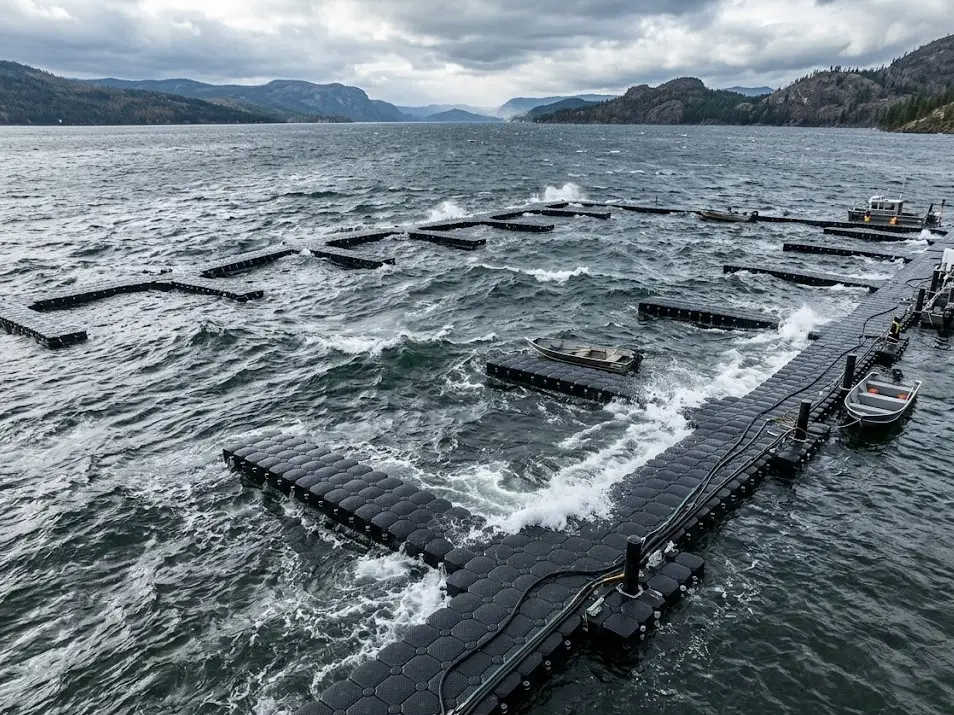
Technical Comparison: Modular Modules vs. Edge-Based Buoyancy
When surveying the broad spectrum of different types of docks, the decision frequently narrows down to two primary buoyancy strategies for floating platforms: Modular High-Density Polyethylene (HDPE) blocks and Edge-Integrated floatation devices. Choosing between these two is a highly strategic structural decision. Modular modules offer unmatched scalability and monolithic structural homogeneity, whereas edge floats provide specific architectural advantages for hybrid designs that necessitate a traditional timber or aluminum framework.
| Engineering Metric | Modular HDPE Modules | Edge-Integrated Floats |
|---|---|---|
| Structural Integrity | Self-supporting; multi-point interlock. | Strictly relies on external timber/metal frame. |
| Load Distribution | Uniform omnidirectional support. | Perimeter-weighted; creates center-dip potential. |
| Aesthetic Integration | Modern, industrial, low-profile. | Superior for timber-clad luxury finishes. |
| Ecological Footprint | 100% Recyclable; inert water contact. | Best for concealed installs in sensitive areas. |
| Maintenance Profile | Inert surface; UV & Salt resistant. | Constant inspection of joists and fasteners required. |
The Edge Float Use Case: Aesthetic and Ecological Balance
Despite the functional dominance of modularity, Edge Floats remain a highly preferred choice for eco-sensitive luxury developments and residential applications. In environments where local municipal regulations or Homeowner Associations mandate a “natural wood” appearance to blend with forested shorelines, edge floats serve as the invisible engine. They allow for heavy timber decking and joists to completely conceal the buoyancy units from sight, maintaining the traditional aesthetic profile required for high-end waterfronts. However, engineers must account for the accelerated degradation of the submerged infrastructure. Specifically, timber frames face severe biological decay from marine borers and fungi, while the requisite structural fasteners are highly susceptible to chloride and galvanic corrosion, necessitating the use of marine-grade stainless steel or heavily galvanized hardware.
The Modular Float Use Case: High Dynamic Load Resilience
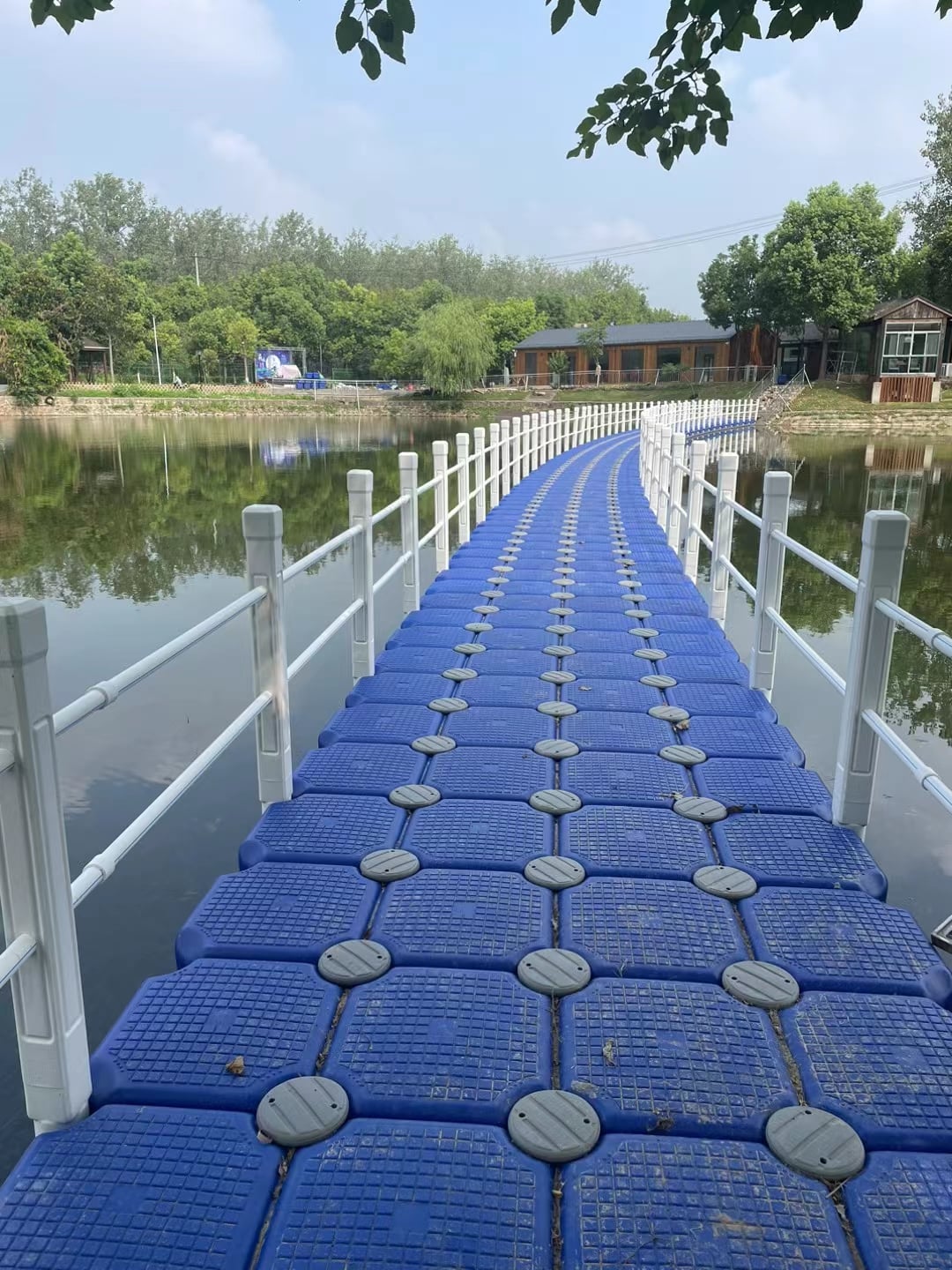
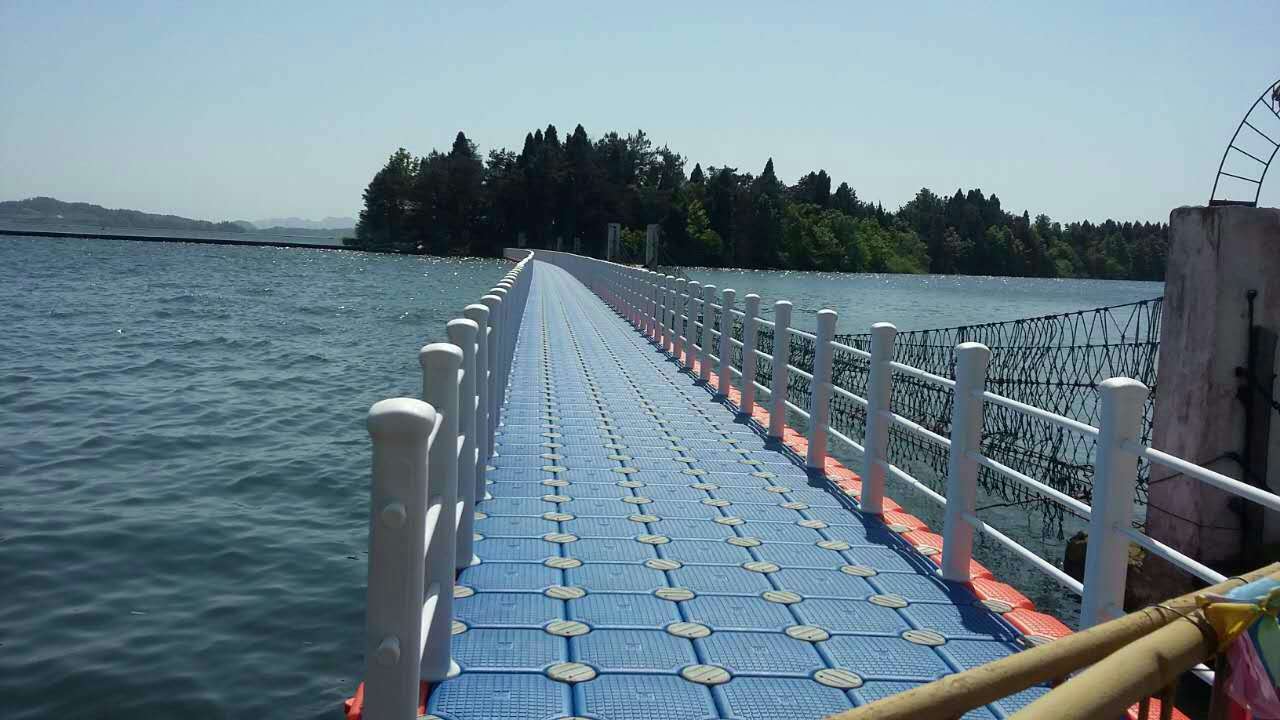
Conversely, Modular systems excel unconditionally in high-frequency commercial environments and heavy-duty berthing scenarios. When subjected to the high dynamic loads of catamaran wave-making boats, commercial fishing vessels, or high-traffic pedestrian flow, the multi-point interlocking mechanism of modular HDPE creates a rigid, yet slightly flexible, monolithic structure. This distributed load-bearing geometry effectively absorbs and dissipates kinetic wave energy across thousands of connection points, preventing localized structural fatigue. It ensures absolute stability under intense cyclic loading—such as heavy storm surges or constant wake impacts—that would inevitably loosen the bolts and compromise the rigid framed edge systems over time.
Material Science: The Physics of Commercial-Grade HDPE
The core determinant of a floatation system’s longevity lies not in its shape, but deeply within its polymer chemistry and manufacturing process. When evaluating floating dock material, standard recycled plastics and basic polyurethane foams are highly susceptible to ultra-violet degradation, embrittlement, and water-logging. To achieve commercial-grade resilience, industry leaders like Hiseadock utilize virgin High Molecular Weight High-Density Polyethylene (HMW-HDPE).
The manufacturing methodology is equally critical. Many low-tier alternatives employ rotational molding (rotomolding), a process that frequently results in uneven wall thickness, particularly creating fatal weak points at the 90-degree corners and connection lugs. Hiseadock counters this physical vulnerability by utilizing advanced, large-scale automated blow-molding technology. This process aligns the polymer chains during inflation, generating exceptional high-molecular stretching toughness. The result is a seamless float with mathematically consistent wall density capable of withstanding extreme temperature differentials ranging from -60℃ to 80℃ without molecular breakdown.
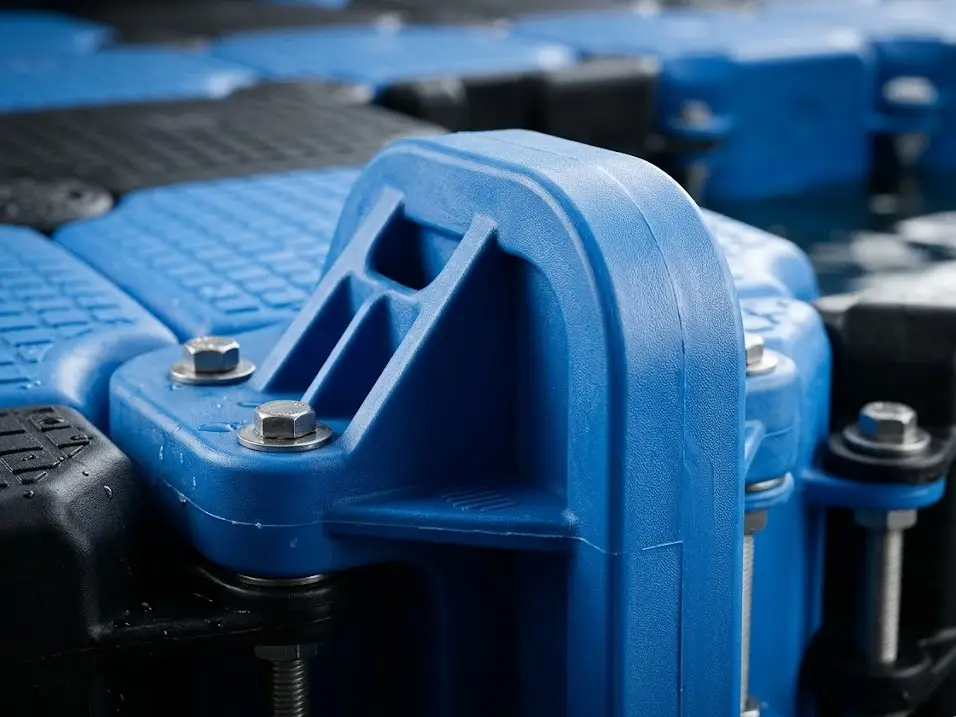
The ultimate proof of material science manifests in the connection points. The “lug” or “ear” of a floating block is where shear and tensile forces concentrate during a storm. While the industry average lug thickness hovers dangerously around 12mm to 14mm, Hiseadock engineered a massive 19mm thick connection ear—a 40% structural increase. This over-engineering is not hypothetical; it is strictly validated. Our modules undergo the grueling SGS Diagonal Tensile Test and SGS UV-Aging Test, providing undeniable, certified proof that the lugs will not tear out, and the surface will not crack, even after thousands of hours of intense solar radiation and mechanical twisting.
Supply Chain Security: Mitigating Procurement Risk in Global Projects
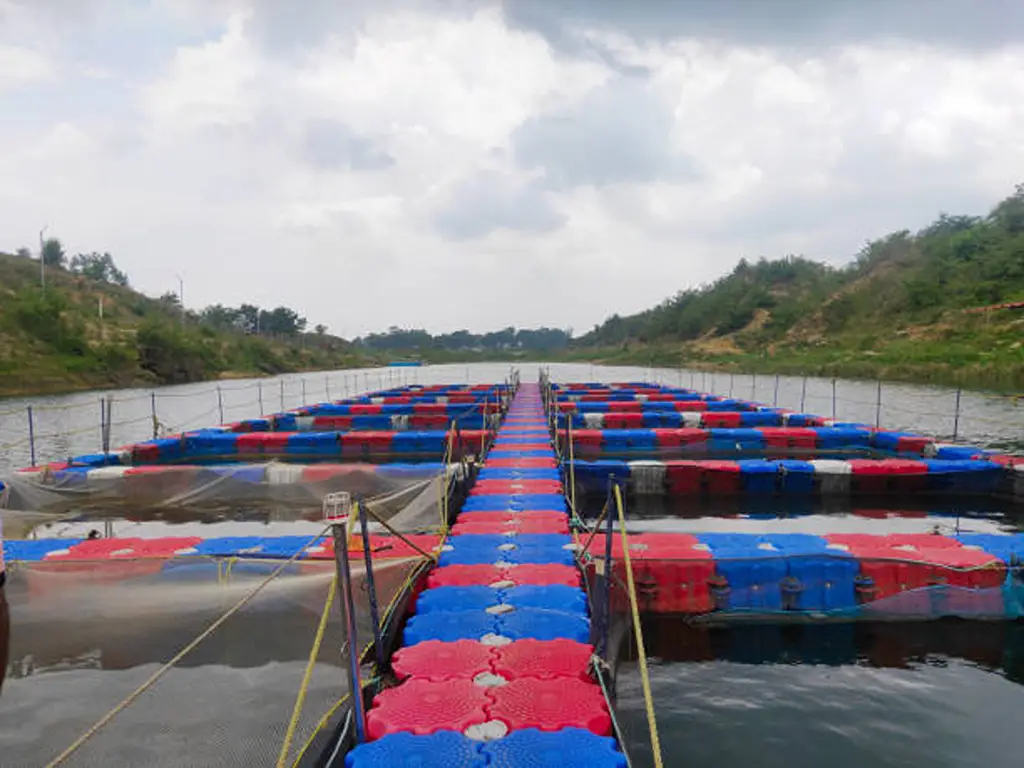
For B2B procurement officers and international contractors, product quality is only half of the commercial equation; supply chain reliability and logistics optimization form the other critical half. In large-scale marine infrastructure developments, such as the deployment of massive double c docks or municipal marinas, a manufacturer’s inability to meet production deadlines can result in cascading project delays, massive idle-labor costs, and significant commercial losses. Professional project auditors now view manufacturing capacity as a primary risk-mitigation metric.
A manufacturer operating with limited output introduces a dangerous “single-point-of-failure” risk into the procurement cycle. At Hiseadock, our operational framework is specifically designed to eliminate this bottleneck for global clients. Operating out of a state-of-the-art 5,000㎡ facility equipped with four massive automated blow-molding lines, we maintain an unwavering production baseline of 1,120 pieces per day. This high-volume capability ensures that even the most massive commercial orders are fulfilled with consistent lead times, typically guaranteeing custom production runs within 10 to 15 days.
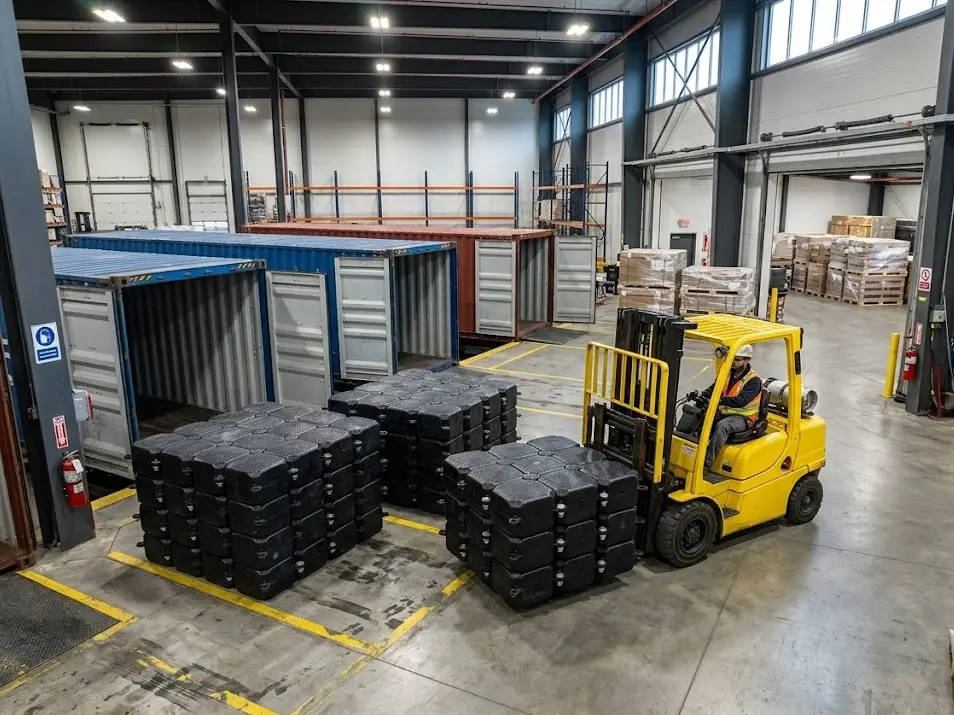
Beyond raw manufacturing speed, international logistics often dictate the financial feasibility of an import project. Shipping “empty air” inside bulky plastic floats is notoriously expensive. To combat exorbitant ocean freight rates, Hiseadock engineers pioneered a specific dimensioning algorithm that allows exactly four individual float units to perfectly interlock into a consolidated one-square-meter block for shipping. This tightly packed configuration maximizes standard shipping container volume, drastically slashing the per-unit freight cost for clients operating across our 80-country export network.
Mooring Dynamics: Integrating Hardware to the Structure
A dock is only as functional as its ability to safely secure the vessels it serves. The interaction between the floatation platform, the mooring hardware, and the vessel’s kinetic energy is a complex physics problem. Integrating proper hardware into different kinds of docks requires an understanding of how force is transferred from the boat to the anchor system.
When selecting the appropriate hardware, engineers must carefully match the types of boat cleats to the structural capacity of the dock. For edge-float systems with timber decking, cleats are often bolted directly through the wood joists. However, over time, the constant jerking of a moored boat can widen the bolt holes, leading to wood rot and eventual hardware failure. In stark contrast, modular HDPE systems utilize specially designed locking pins and heavy-duty, marine-grade cleats that anchor directly into the reinforced 19mm interlocking nodes. This design ensures that the immense pulling force of a 10-ton yacht is dispersed equally across multiple adjacent floats rather than isolating the stress on a single piece of timber.
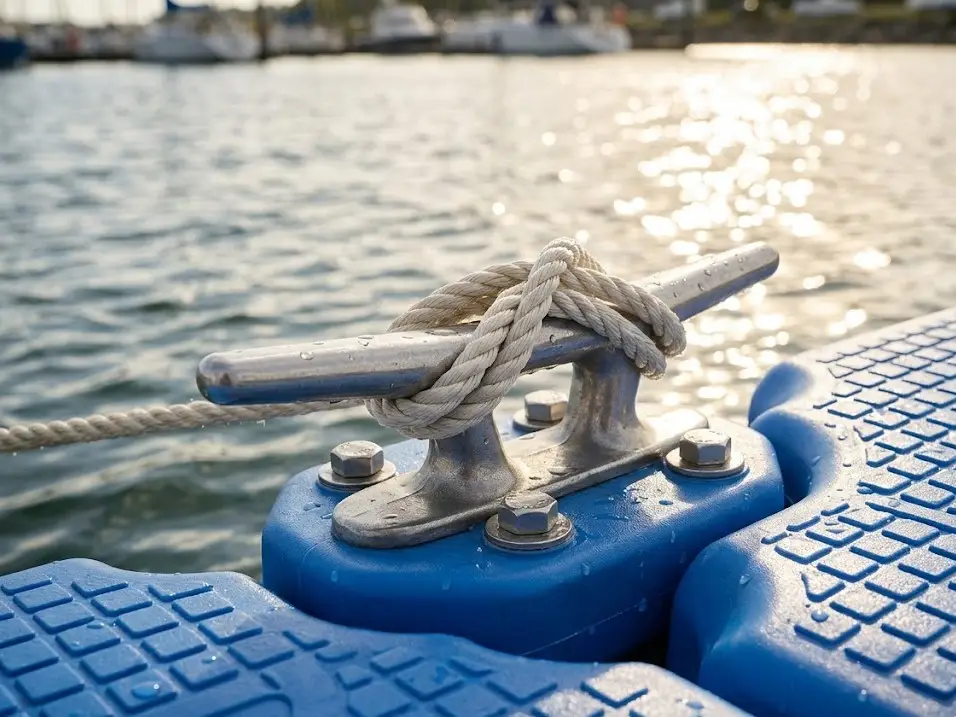
Furthermore, utilizing the correct types of dock lines—such as high-stretch nylon—is essential to act as a shock absorber. When a high-quality nylon line is paired with the inherent shock-absorbing flex of a modular HDPE platform, the kinetic energy of boat wakes is effectively neutralized. This synergy between advanced mooring hardware and engineered floatation prevents the violent snatch-loading that frequently tears cleats off of rigid, traditional structures, providing ultimate peace of mind for commercial operators and private owners alike.
The Financial Reality: Total Cost of Ownership (TCO) Analysis
Relying solely on initial Capital Expenditure (CAPEX) is the most common and financially devastating pitfall in maritime procurement. A seemingly “low-cost” dock system built with inferior materials inevitably conceals high Operating Expenditures (OPEX) and severe early-failure risks. To make an informed executive decision, buyers must map out the financial trajectory over a 10 to 15-year horizon. The following table illustrates the 5-year financial trajectory of a commercial-grade virgin HDPE system versus standard hollow recycled plastics.
| Cost Element | Standard Recycled Hollow Plastic | Hiseadock 19mm Virgin HDPE System |
|---|---|---|
| Initial Procurement Estimate | $80 – $110 / sqm | $120 – $150 / sqm (Commercial Premium) |
| Annual Maintenance Labor | 12-15 hours/year (tightening bolts, structural patching) | < 2 hours/year (pressure washing for biofouling) |
| 5-Year Material Replacement Rate | 18% – 25% (UV stress cracks & ear tear-outs) | < 1% (19mm Lug Integrity) |
| Certifications & Compliance | Basic Local Compliance | ISO-9001, CE, SGS UV & Tensile Certified |
| Commercial Downtime Risk | 2-3 operational days lost per major storm event | Negligible |
Financial Conclusion: Based on rigorous operational data models and feedback from global marina developers, the initial capital expenditure premium of the Hiseadock virgin HDPE system is typically fully offset within 36 months. This rapid Return on Investment (ROI) is achieved primarily through the drastic reduction in highly paid maintenance labor, the elimination of storm-related component replacements, and the avoidance of commercial downtime. From the fourth year of operation onwards, the Hiseadock system transitions from a capital asset into a pure cost-saving mechanism, ensuring a radically lower cumulative Total Cost of Ownership over its 15-to-20-year lifespan.
Optimize Your Project’s Technical Performance
Do not leave your multi-million dollar marine infrastructure to chance. Leverage our 16 years of specialized manufacturing expertise, daily high-volume production capacity, and SGS-certified materials to secure your waterfront investment.
Request Free Preliminary CAD Design & Stress Analysis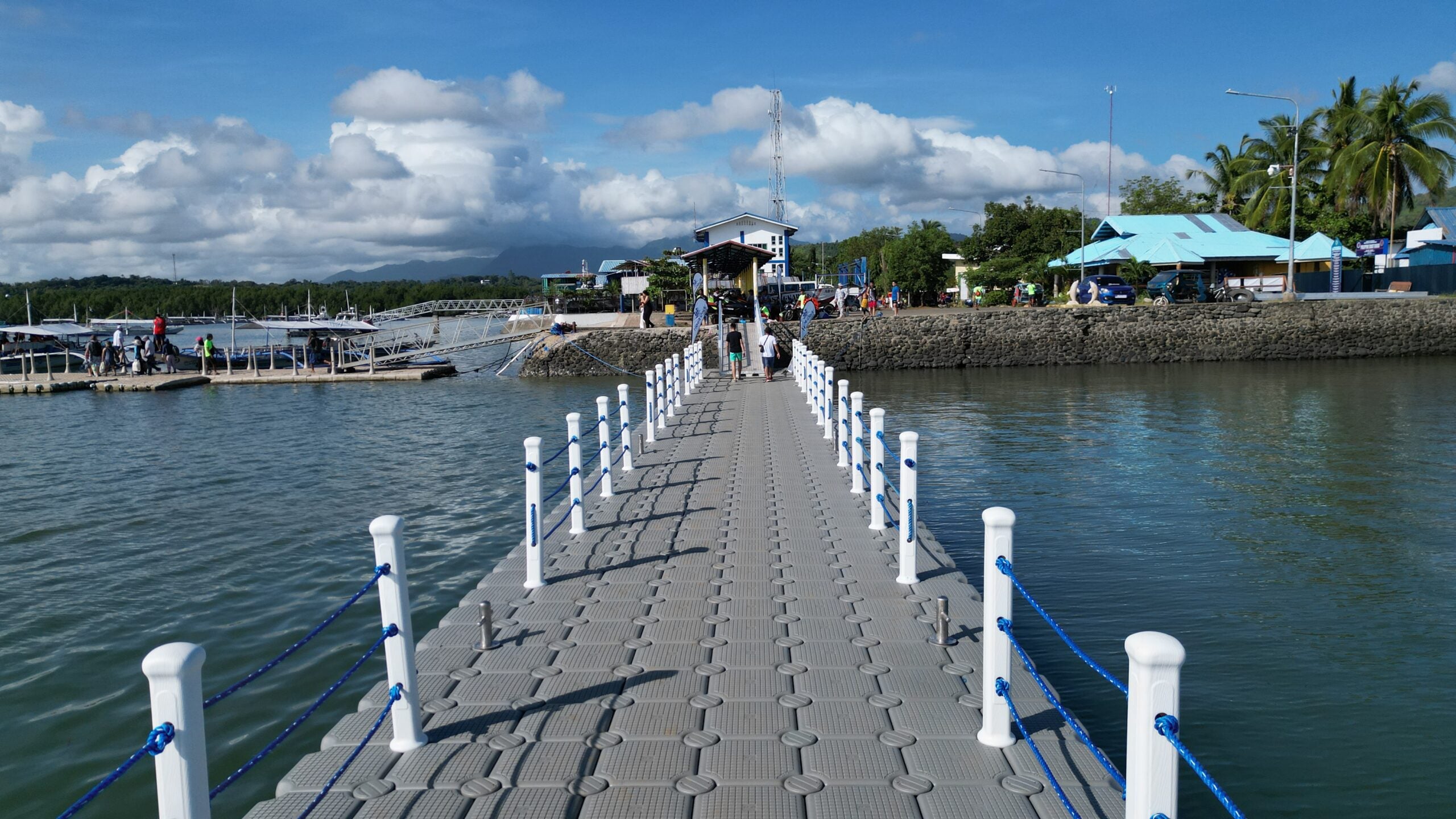

 English
  Thai
Thai  Spanish
  French
  German
  Dutch
Dutch  Italian
  Arabic
  Indonesian
  Portuguese
  Turkish