
HISEA DOCK / BUYER’S GUIDE 10
Ask a manufacturer to explain one comparable project: the products used, the site challenges addressed and the work it actually delivered.
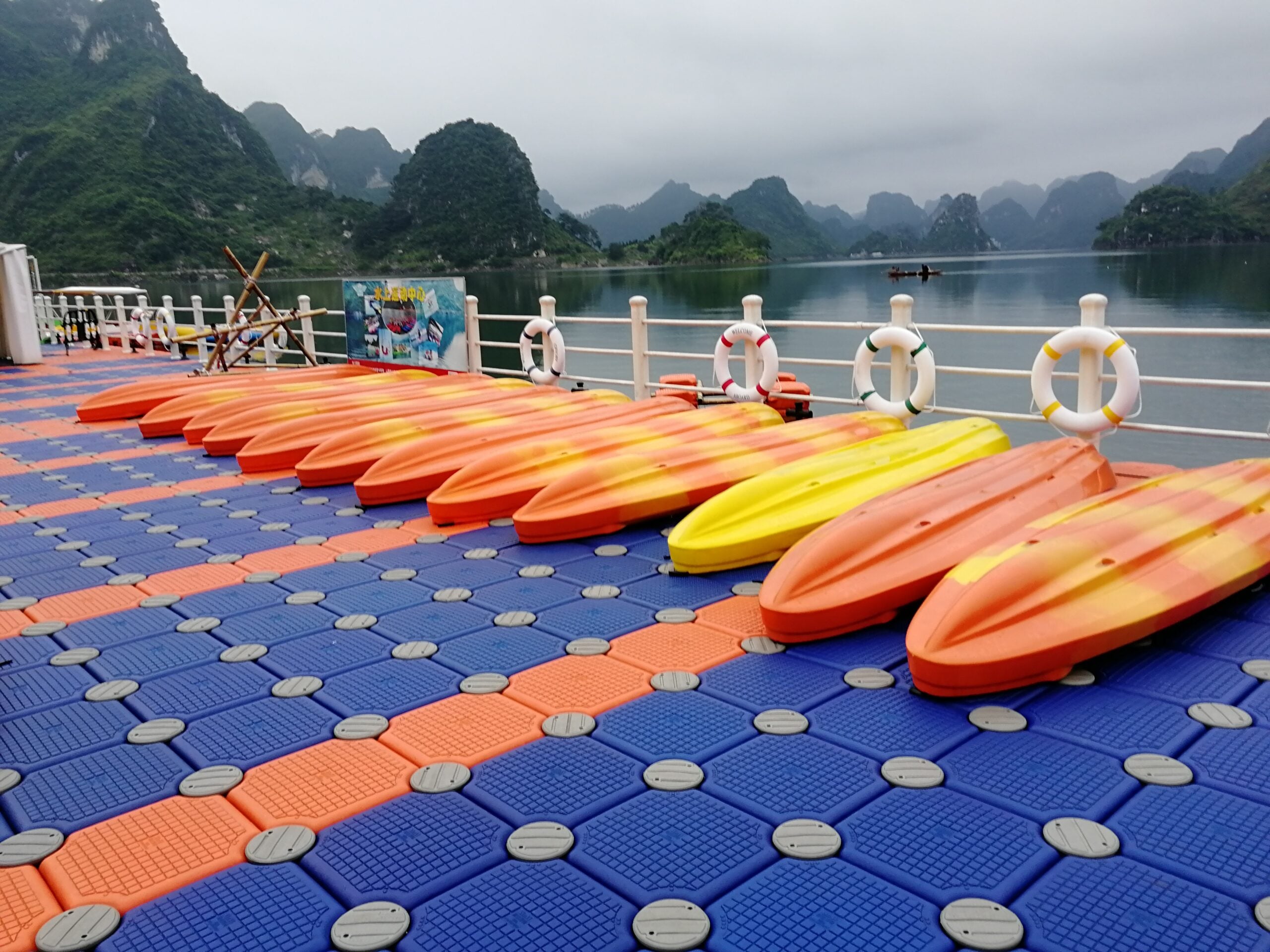
Start with three sources, then examine one project
Whether you are planning a fishing platform, a tour-boat dock or a leisure facility, search by application first. On a manufacturer’s website, review products, production and projects together. Product pages explain the modules and accessories available; production pages describe manufacturing stages; project pages help identify comparable applications.
Hisea’s modular float range, production process and case studies provide starting points for this review.[1][2][3] Follow up with questions about specific models and individual projects.
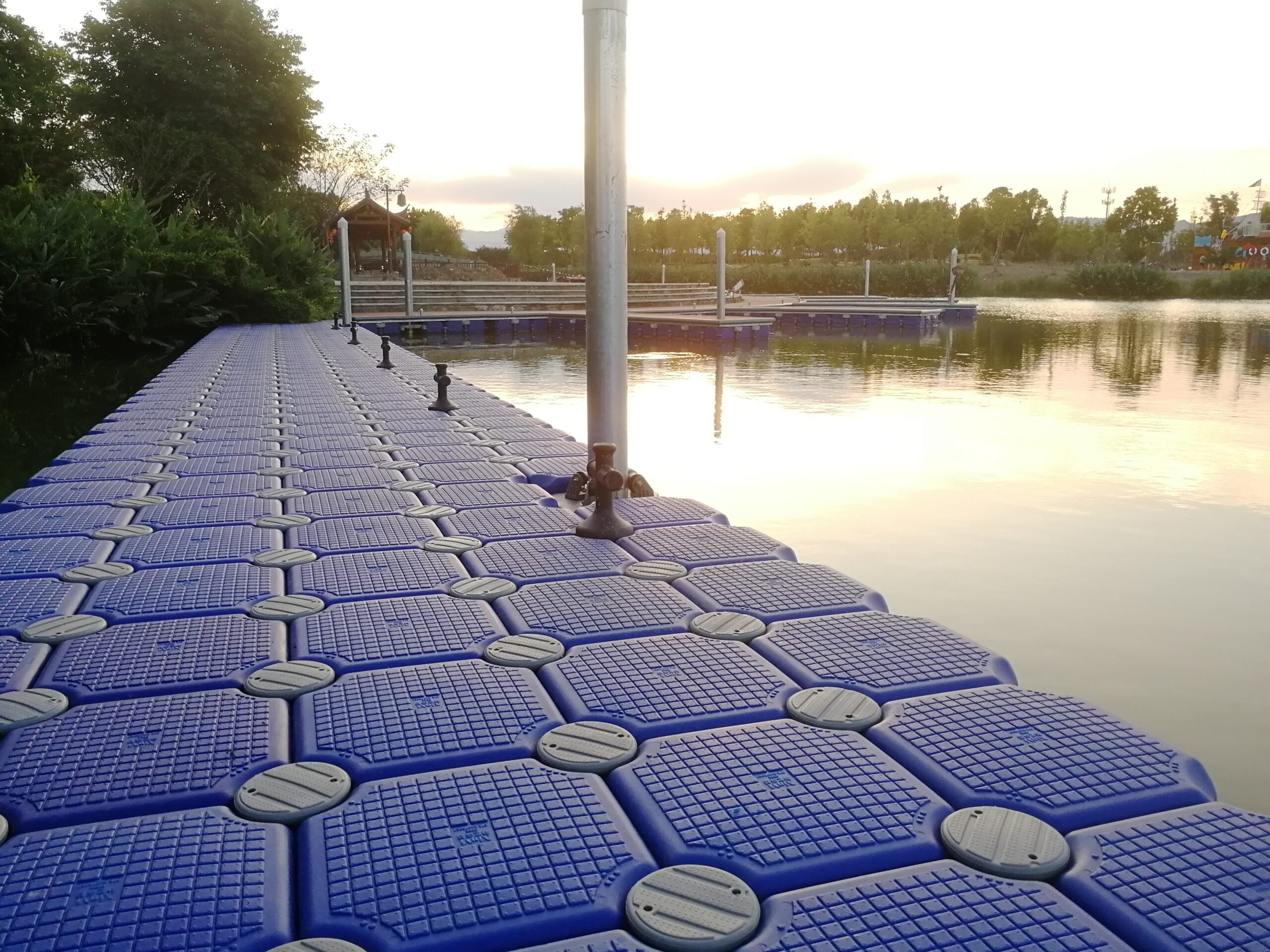
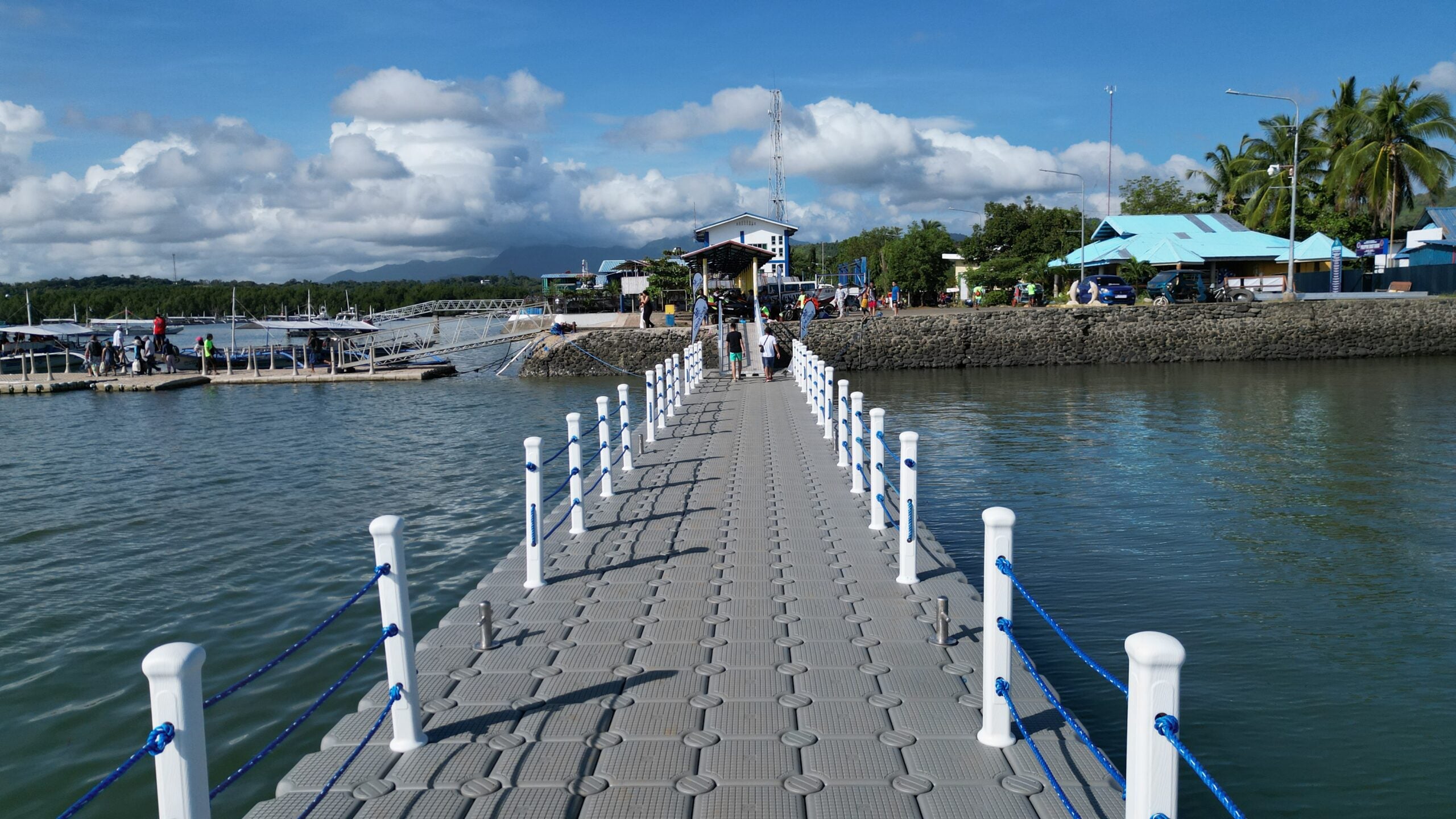
For a reservoir tour-boat dock, for example, ask about a project with comparable vessels, water-level changes and shore access. Find out how berthing, boarding and restraint were addressed. The platform area can differ; the conditions that drive the design need to be comparable.
Connect manufacturing capability to the model you are buying
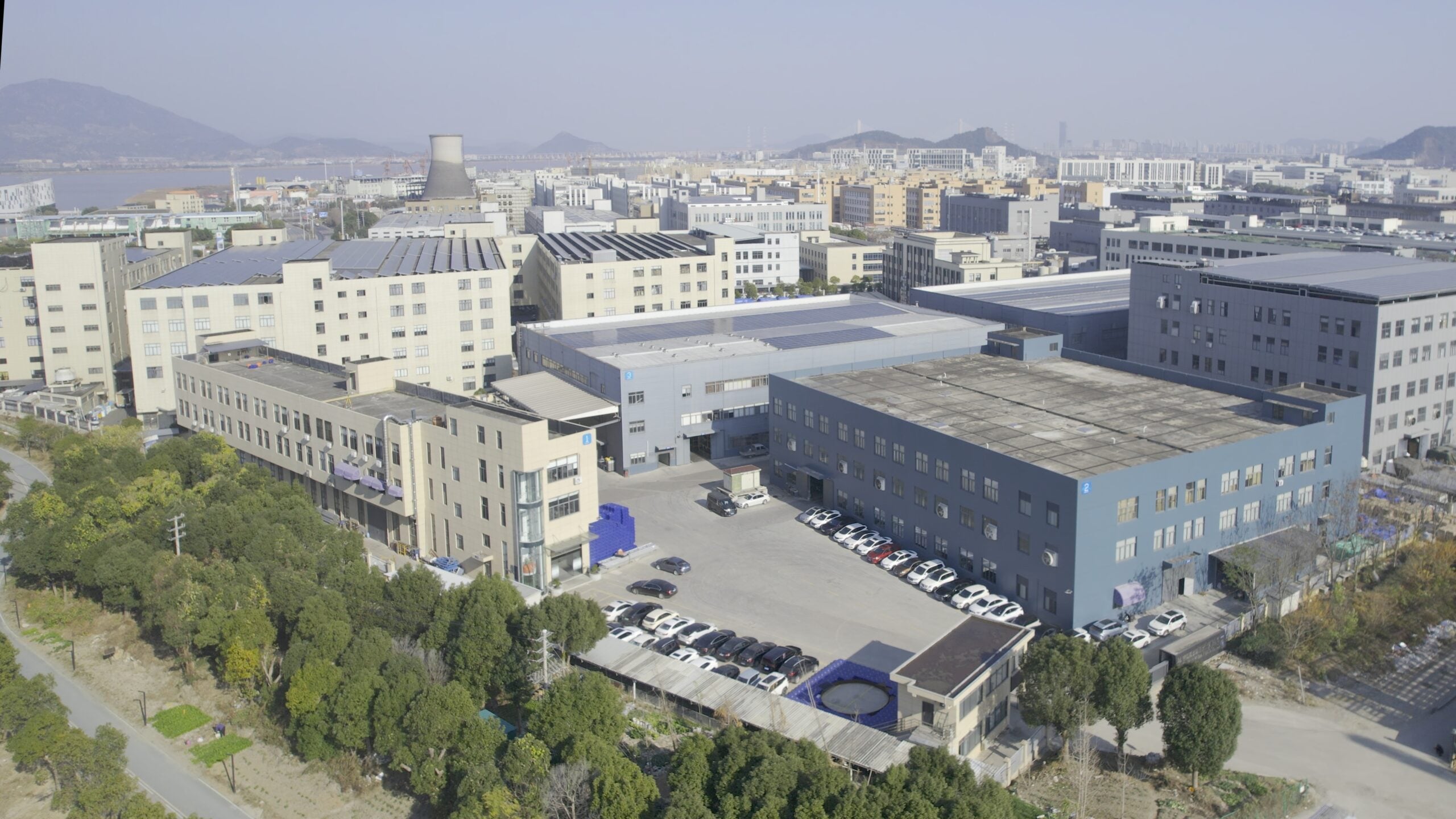
A factory overview introduces the production site. Further discussions should establish the manufacturing entity, production address and arrangements for the proposed product. Clarify which operations are performed in-house, which are supplied by partners and who is responsible for the quotation and contract.
During a visit or video tour, follow the proposed model through tooling, forming, trimming, connection-feature preparation, inspection and packing. Hisea’s published process includes HDPE selection, UV-resistant additives, blow moulding and quality testing.[2] Ask how those stages are recorded against an order or production batch.

Product data should explain the conditions behind a rating
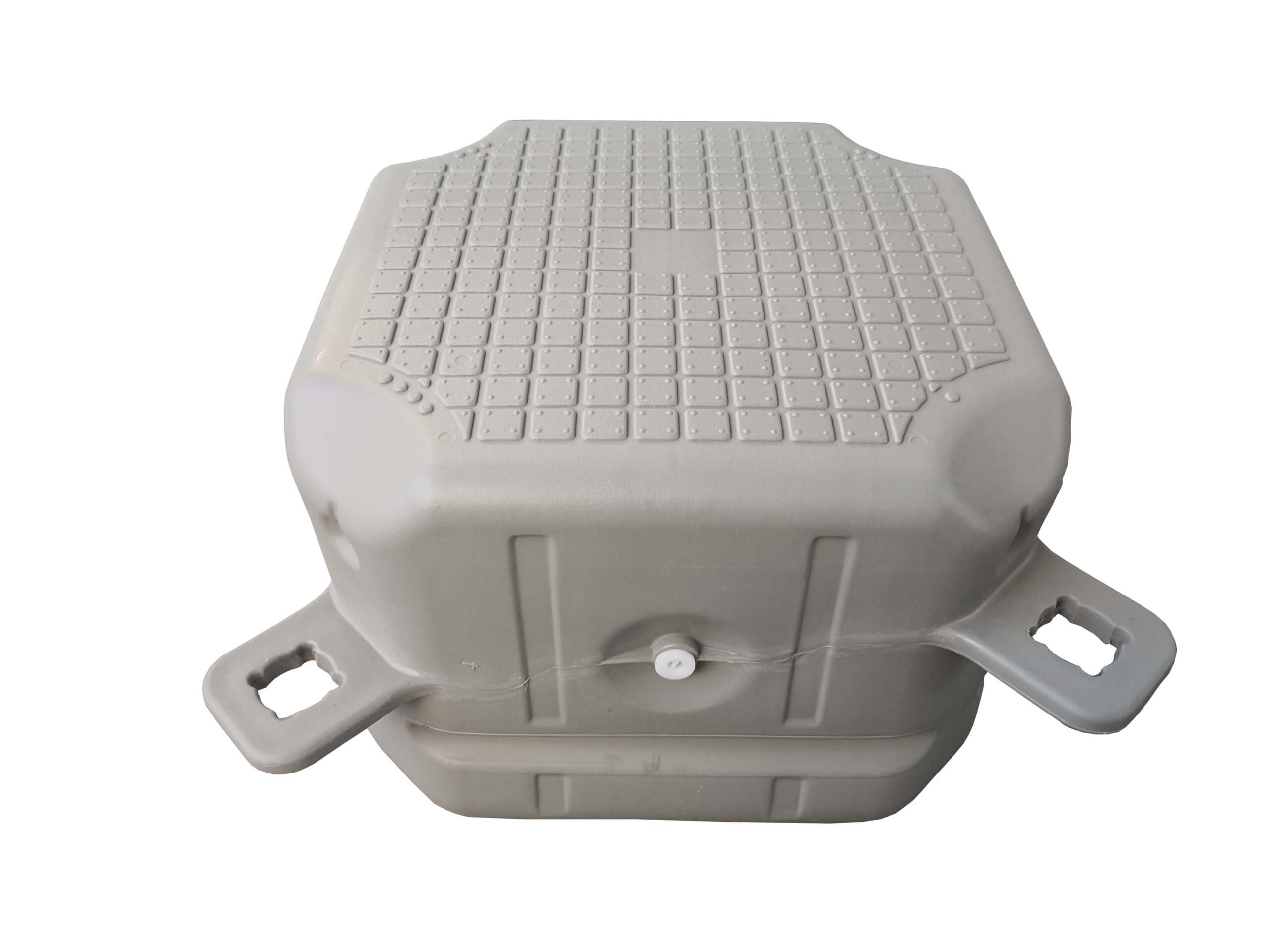
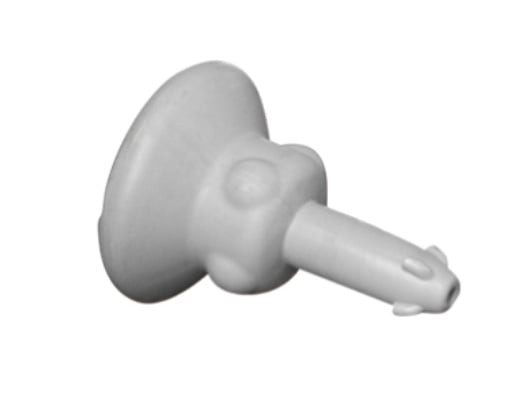
Useful selection documents identify the model, dimensions, unit weight and tolerances, material specification, connection method and compatible fittings. Floats with similar weights and material descriptions can still differ in their connections, permitted configurations and test conditions.
For a capacity figure, establish whether it describes buoyancy, a test load or an allowable working load. Then check the loading arrangement, freeboard conditions and applicable model. For weathering data, review the method, exposure conditions and evaluation criteria. Those details create a basis for comparison.
Hisea uses imported high-molecular-weight, high-density polyethylene resin to manufacture floats. For the model being purchased, review the material documents together with the finished float, connectors and platform layout to define the complete configuration.
Review a real project through its conditions, configuration and scope
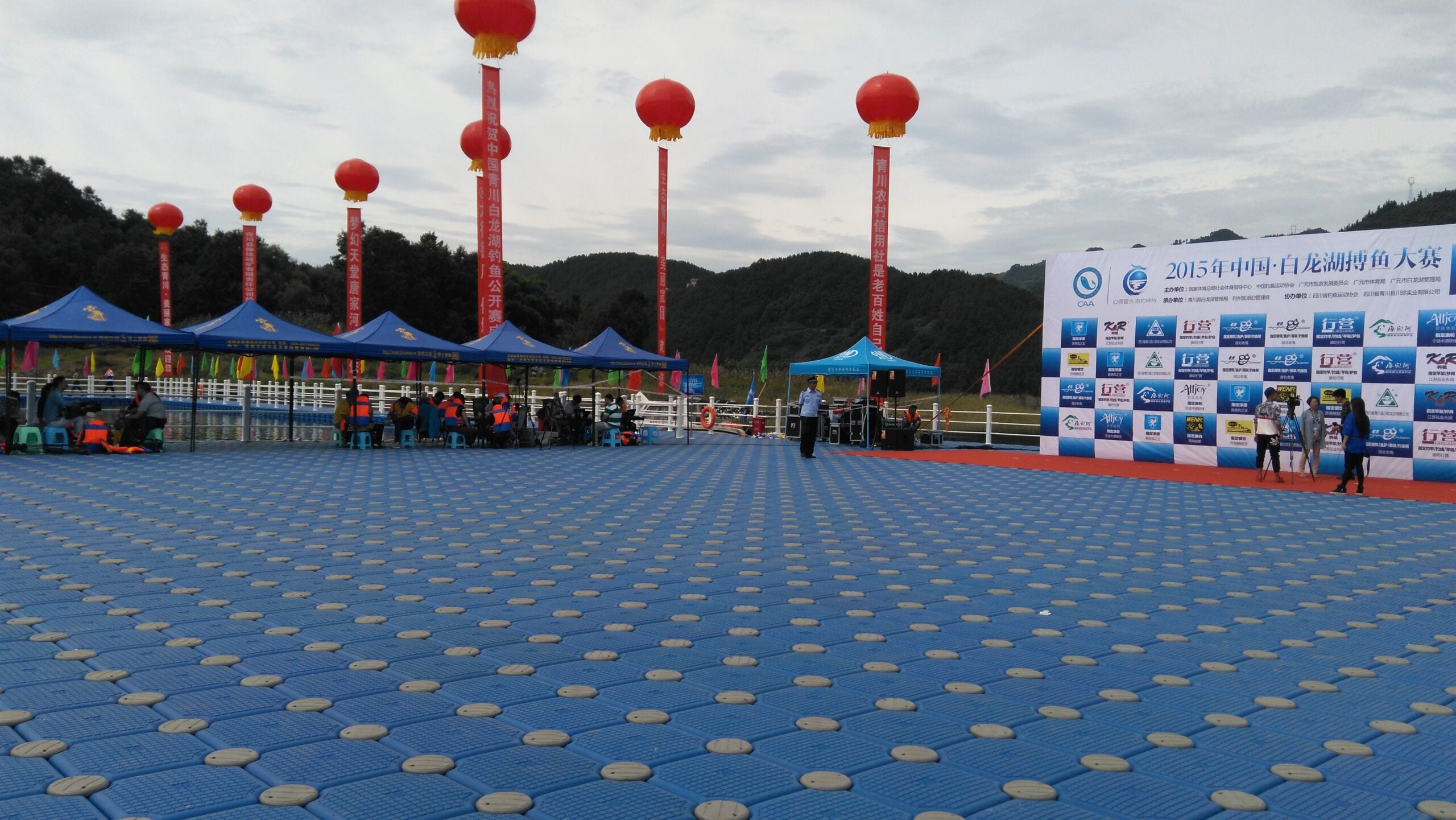
Ask the manufacturer to select its closest comparable project and explain these three aspects. This usually tells you more than browsing dozens of overview photographs.
| Review item | Information to request | What it establishes |
|---|---|---|
| Project conditions | Intended use, construction date, a location that can be disclosed, water conditions and levels, and how people or vessels use the facility. | How closely the experience relates to your site. |
| Products and configuration | Modules, connectors, shore access and restraints, supported by overview and connection-detail photographs. | Whether the installed system corresponds to the proposed products and arrangement. |
| Actual scope | The manufacturer’s role in supply, layout advice, technical coordination, installation or other work, with available delivery records. | Which parts of the project the manufacturer actually handled. |
Where available, review records before installation, after completion and during operation. These can help explain site adjustments and maintenance. Confidential customer names, orders or acceptance documents can be redacted; customer references should be arranged with permission.
A photograph showing a pile, gangway or railing establishes its visible presence. Supporting records are needed to identify who designed or supplied it and the conditions for which it was intended.
Check the scope of test reports and certificates
Request complete documents relevant to the proposed model. Review the sample identification, model, applicant, test method, results and issue date; verify the report with its issuer where appropriate. Hisea’s quality information page is an entry point for requesting the corresponding documents.[4]
Management-system certification, a product test and project acceptance address different questions. ISO explains that certification is performed by external certification bodies and that its status can be checked with the relevant organizations.[5] China’s certification and accreditation authority also publishes entry points for certification and certain inspection and testing information.[6]
When applying a result to a project, check whether the tested sample matches the supplied product and how the test conditions relate to actual use. A connector tensile-test result alone does not establish the wind-and-wave capability of an entire platform.
Align supply scopes before comparing prices
Platforms of the same area can have different module arrangements, fittings, railings, gangways, restraints and transport or installation scopes. Give suppliers the same application and site brief. Request a product schedule and configuration drawing, with inclusions and separately priced items.
- Products and fittings: float models and quantities, connectors, edge components and other accessories.
- Site interfaces: responsibility for shore foundations, gangways, piles or anchors, site measurements and technical checks.
- Delivery and acceptance: drawings, installation instructions, inspection records, packing lists, lead times and agreed acceptance requirements.
- Operation and maintenance: inspections, spare parts, module replacement, expansion compatibility and after-sales support. Record warranty coverage and exclusions in the agreement.
A practical first enquiry
We are planning a floating platform for [intended use] at [location and waterbody]. The proposed dimensions are [length × width], with a water-level range of approximately [range]. It will be used for [people or vessels]. Please provide a comparable project, identifying the products used, site arrangements and your scope of work, together with product data, a proposed configuration, a supply schedule, and installation and after-sales information.
A manufacturer’s ability to answer these questions with specific, consistent records is useful evidence of its capability. Establish the conditions and responsibilities before settling the configuration and price.
To explore Hisea’s floating platform products and applications, review the product range, production process and project portfolio. Send site photographs, dimensions and your intended use to discuss a suitable configuration.
www.hiseadock.com
WhatsApp: +86 17369861101
Sources and image notes
Hisea supplied the factory, product and project photographs, which show different applications. Photographs alone do not establish engineering parameters, supply responsibilities or acceptance results; refer to the records for the individual project.

 English
 Thai
 Spanish
 French
 German
 Dutch
 Italian
 Arabic
 Indonesian
 Portuguese
 Turkish