
HISEA DOCK / APPLICATION GUIDE 08
Put the seats, tackle boxes, rod bags and open umbrellas on the drawing before deciding how much walkway remains.
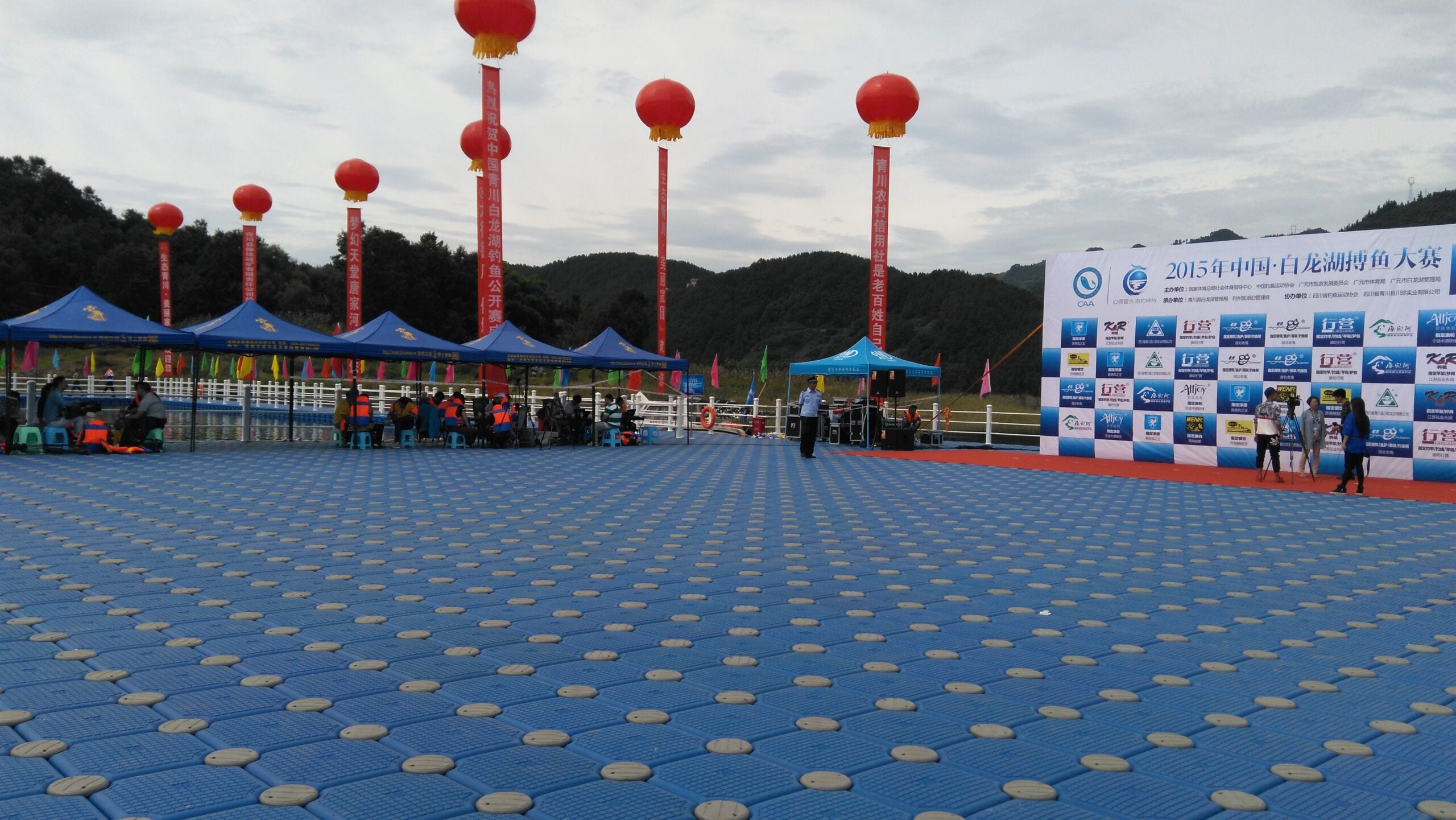
A fishing station takes more space than a chair
A seated angler may have a tackle box beside the chair, spare rods behind it and a landing net within reach. Standing up to land a fish changes that working space. A layout based only on seat width quickly pushes equipment into the walkway.
Identify the main fishing method first. Pole fishing, casting and lure fishing create different movements. Trial the intended seats, boxes and rods ashore: sit down, stand up, retrieve a rod, use a net and carry equipment past the station. Use that exercise to inform station spacing and the front-to-back deck dimension. There is no universal spacing that suits every method and site.
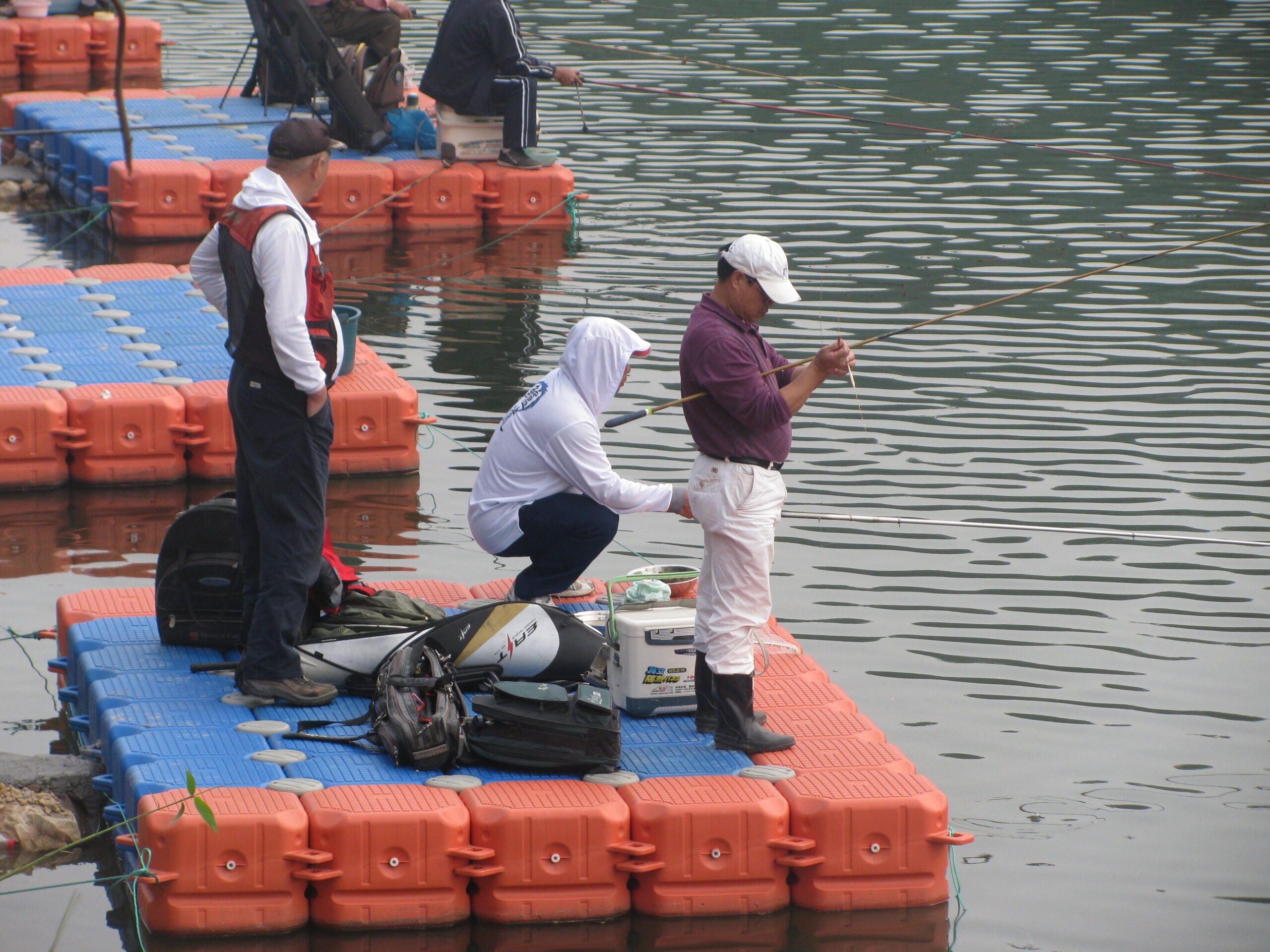
Keep a route clear while fishing is underway
Carrying a long rod bag past seated anglers is different from walking across an empty platform. Draw a continuous rear route, then check whether bags, buckets, umbrella bases and open boxes intrude into it.
Allow for turning, passing and equipment handling at entrances and junctions. Give waiting, viewing and tackle collection their own locations. This follows the broader planning principle of considering circulation, casting, equipment and spectators together.[1]
Check the route against backward rod movement, casting and landing-net movements, as well as stored tackle. If they overlap, adjust station orientation, the front-to-back deck dimension or the permitted fishing method.
Draw the whole fishing station before sizing the route
Concept for a one-sided arrangement. Not to scale; no dimensions. Not a project drawing or construction detail.
A one-sided layout needs a usable rear route and room at the ends. With stations on both sides of a central walkway, check the remaining clear space after equipment extends backwards. T-shaped, L-shaped and branched layouts need particular attention at junctions and dead ends.
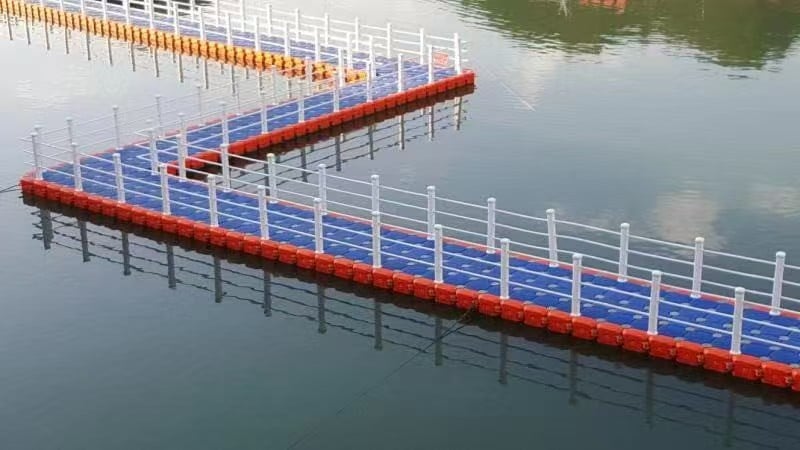
Assess where the load acts, as well as its total
Account for the floats, connectors, railings and any additional decking, as well as anglers, boxes, bait, water containers and equipment in transit. A canopy adds weight, local support loads and wind actions. Include the gangway reaction at the floating support. Floating-facility design guidance likewise distinguishes dead loads, live loads and uneven loading.[2]
Buoyancy, local structural strength and overall stability are separate checks. Spare buoyancy does not establish acceptable heel when people gather on one side. A modest average load does not establish the capacity beneath a chair leg, umbrella base or canopy support.
| Use condition | What to review |
|---|---|
| Empty platform with fixed fittings | Actual self-weight, fixed equipment, initial draft and weight distribution. |
| Normal use at the stations | Draft, freeboard and circulation with people and tackle present. Freeboard is the deck height above water. |
| People gathering to land or watch a fish | Local loads, heel and remaining edge freeboard, together with connection and restraint forces. |
| Equipment handling at the entrance | Support and local loads at the gangway landing, storage points and junctions. |
Do not divide a product’s kg/m² figure by an assumed body weight to declare a permitted headcount. Establish what the figure means, its loading and freeboard conditions, and the applicable model. Set operating limits for the complete platform arrangement.
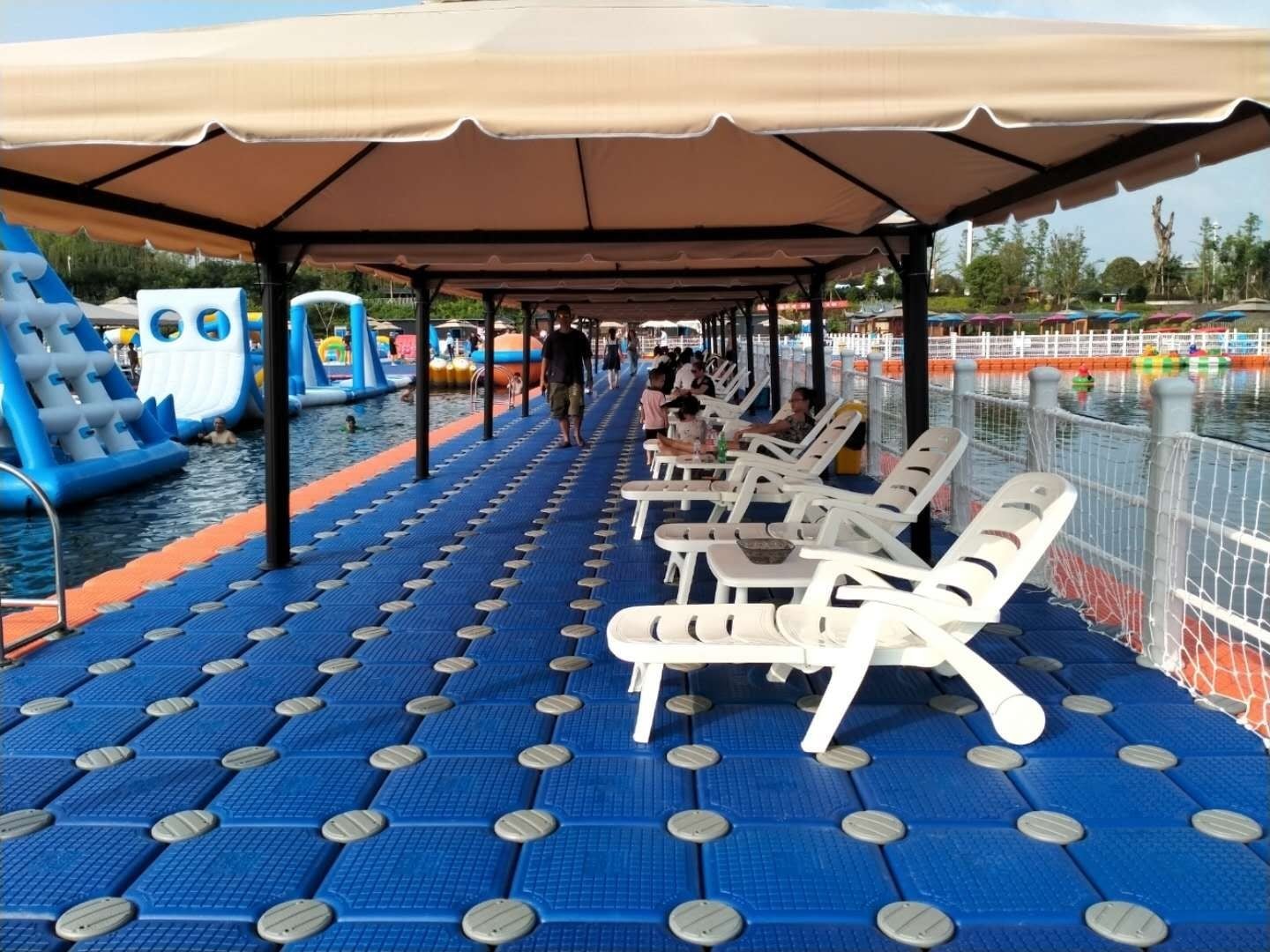
Review shore access and restraints across the water-level range
Record high and low water levels and how quickly they change. Establish water depth, bank profile, bottom conditions, wind, waves, wake and current. At low water, check possible grounding of the floats and components that move with them. At high water, check the available travel of gangways, guides and moorings. Confirm that the restraint system remains effective across the full range.
Review gangway slopes, level transitions, supports and moving interfaces over that range. Coordinate restraint locations with fishing lines, keepnets and landing nets. Keep projecting fittings and lines out of routinely used working areas. If boats also use the facility, coordinate boarding traffic and berthing with the fishing layout.
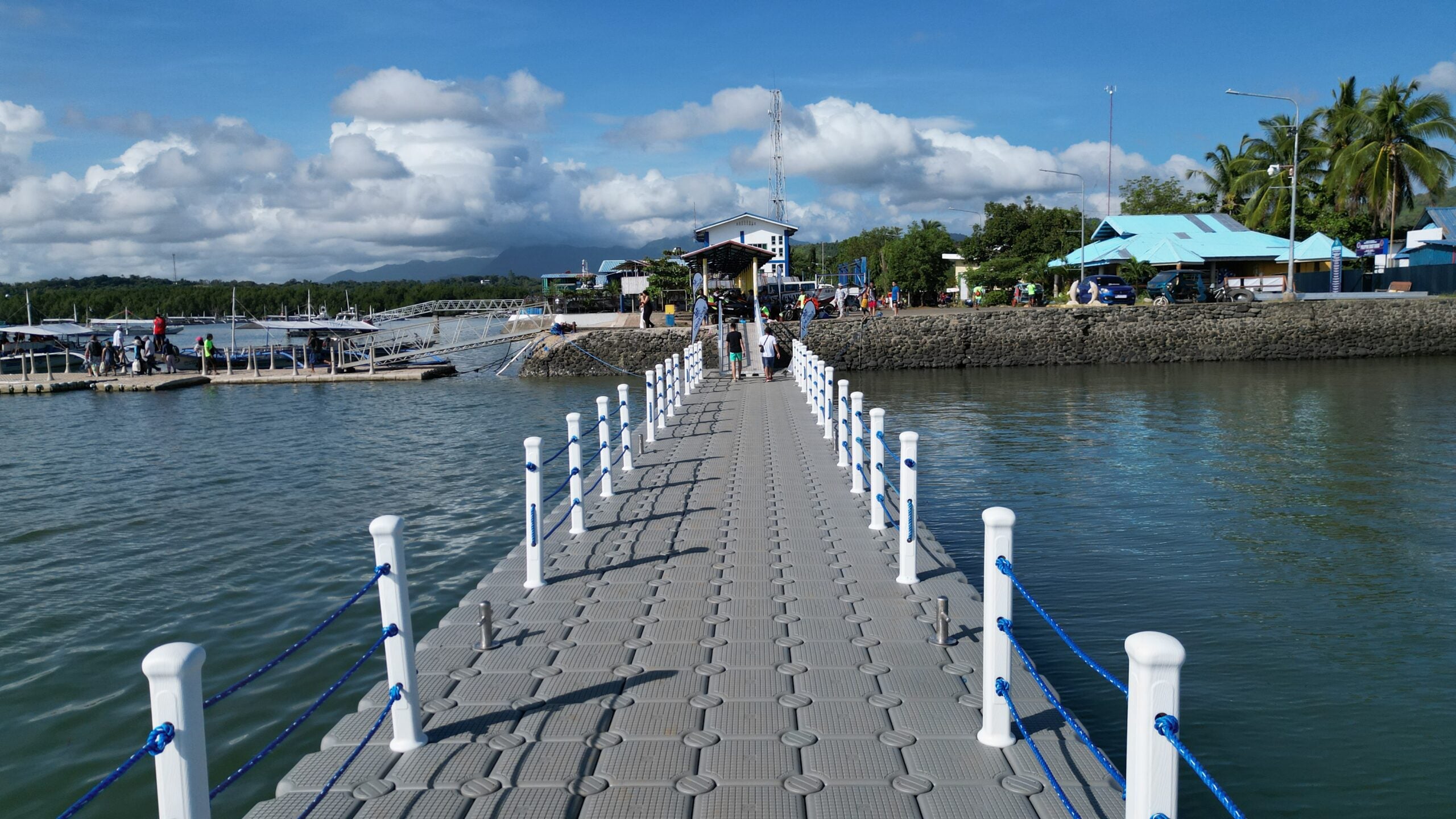
Plan protection and access with the fishing stations
Fishing requires access to the water edge. Railings should not be removed informally to make room for rods or nets. Coordinate protection, working positions and any required openings or lower working sections as part of the project design, under applicable local requirements.
For wheelchair users and others with limited mobility, consider the whole journey: shore approach, gangway, turning space, clear fishing position and edge protection. A marked space on the deck does not create a usable route to it. The U.S. accessibility guide considers routes and fishing positions together; local requirements govern each project.[3]
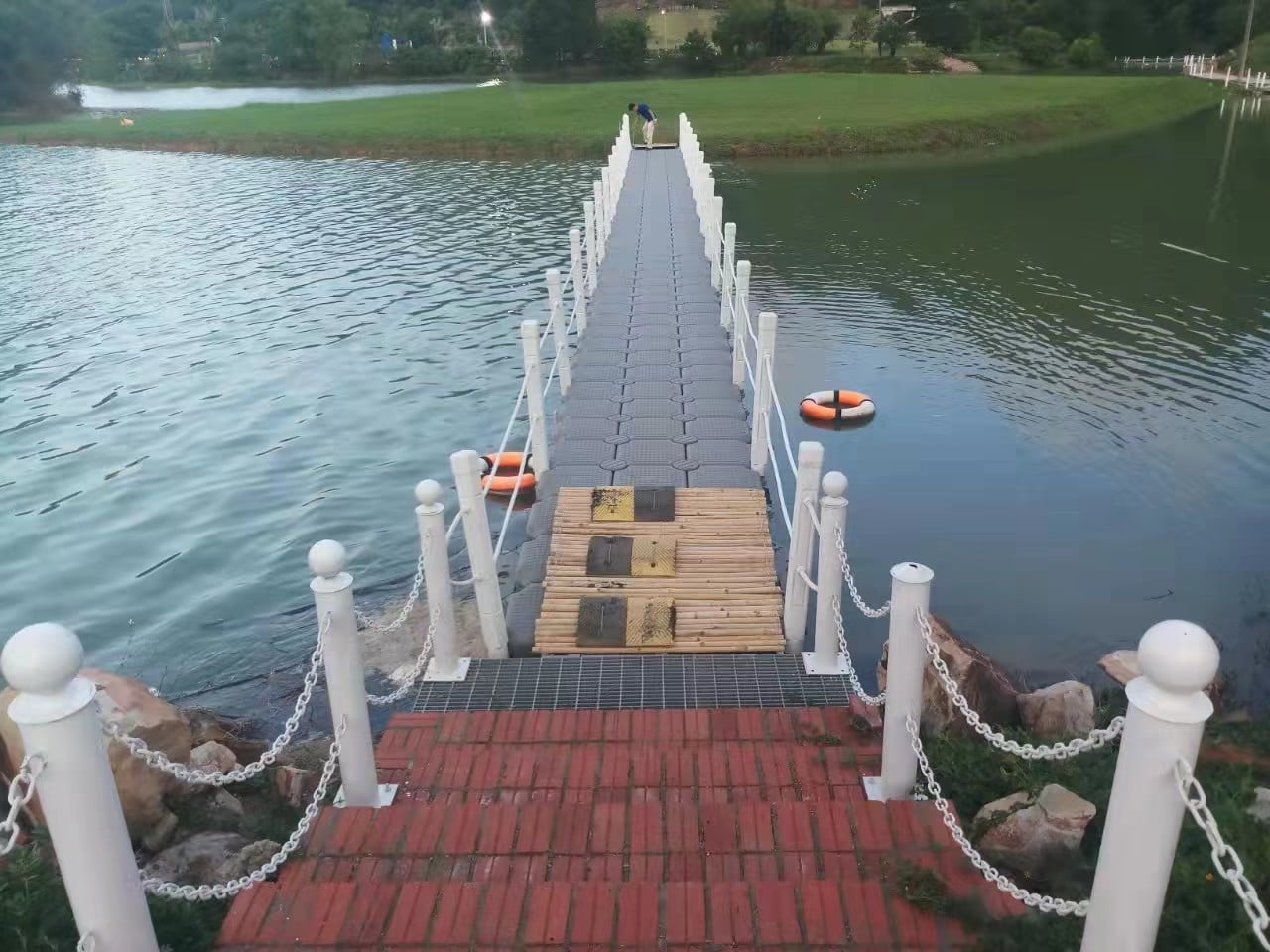
Before opening, establish cleaning and inspection, rescue equipment, adverse-weather closure and user guidance arrangements. Assign storage for umbrellas, lines and long rods so entrances and routes remain usable.
Prepare these details before requesting a proposal
- Use and fishing method.Leisure, events or commercial operation; intended methods, proposed stations, companions and spectators.
- Site and water conditions.Available dimensions, bank photographs, water-level range, depth, exposure, current and boat activity.
- Equipment and fittings.Layouts and weight information for seats, tackle, containers, railings, decking, shade structures and other equipment.
- Access and future operation.Shore arrival, accessibility needs, equipment handling, management and possible expansion.
Hisea offers floating fishing-platform applications and customization of dimensions and shape.[4] These details support an initial discussion about module layouts and fittings, followed by project checks for loads, stability, restraints and protection.
Start with the fishing stations and the equipment
Send Hisea photographs of the bank, the proposed footprint and the main fishing method. A useful proposal keeps the route working while anglers are fishing and accounts for the equipment they actually bring.
www.hiseadock.com
WhatsApp: +86 17369861101
References and image notes
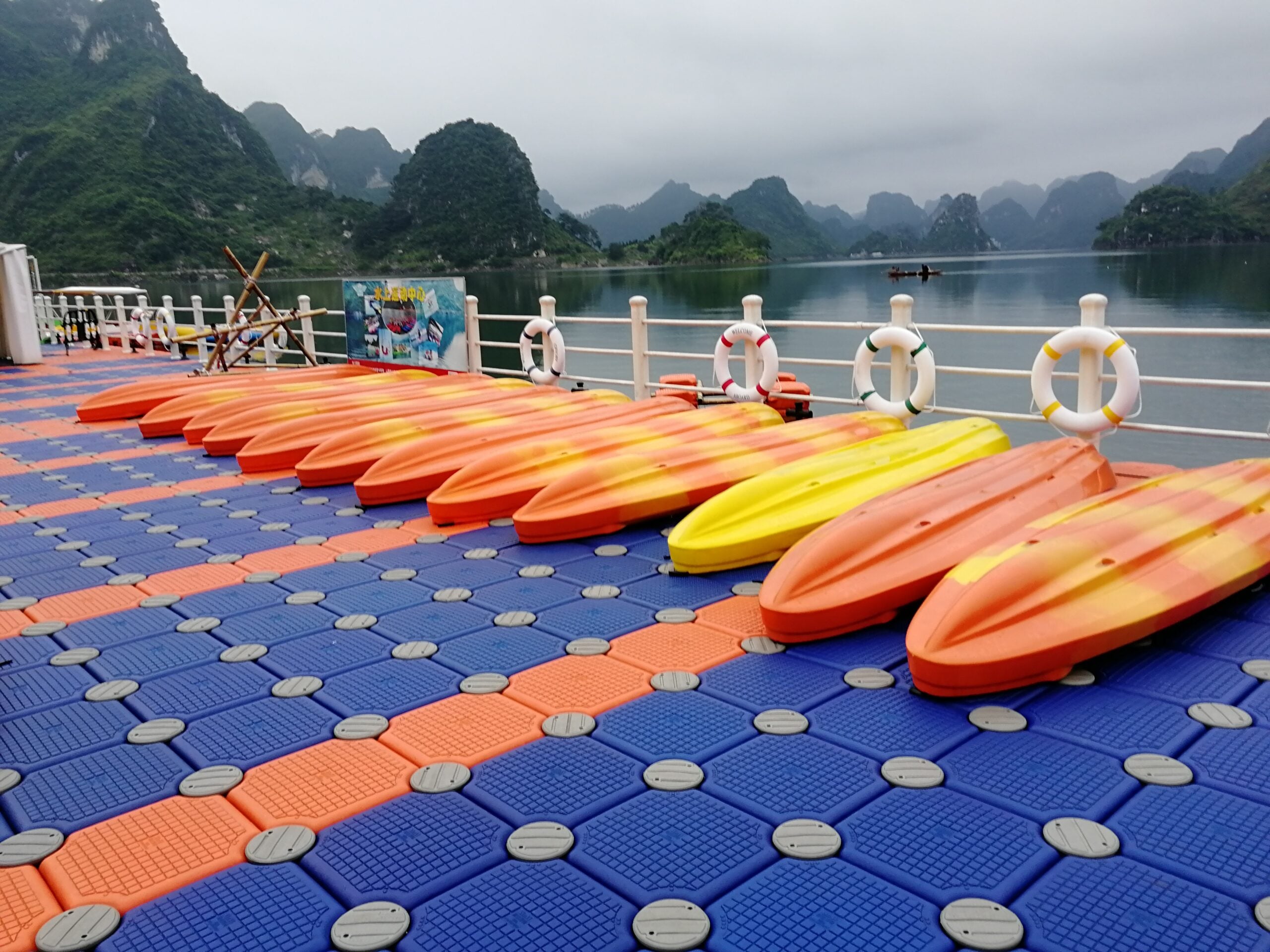
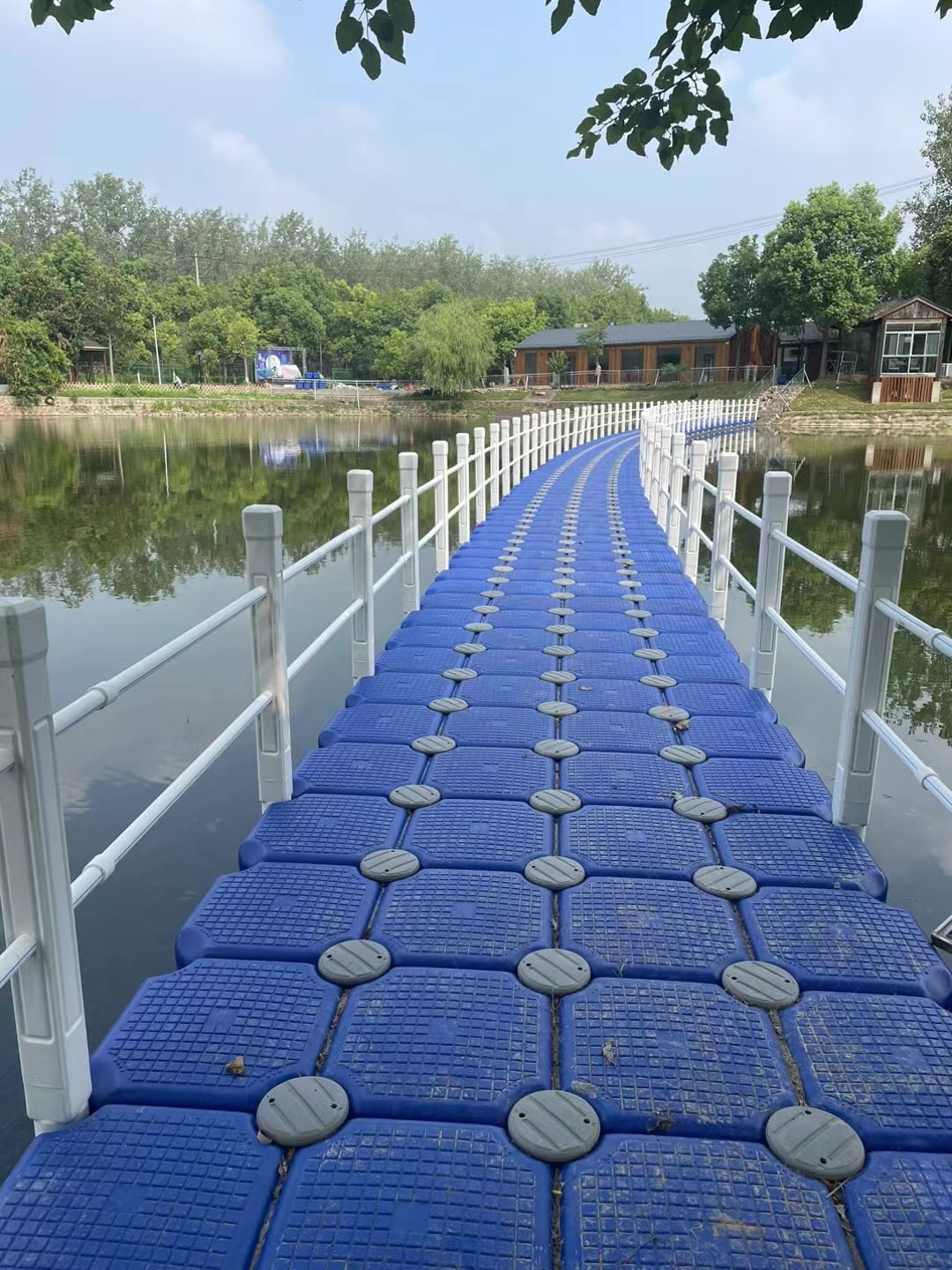
This planning guide does not specify universal dimensions or a permitted headcount. U.S. references inform general principles, not local legal compliance. The USDA source is a 2002 technical report, not a standard or regulation. Project images from Hisea’s existing website media illustrate applications and connections. They do not establish dimensions, capacity, compliance or a shared project identity. The references do not certify Hisea products.
- Columbus Recreation and Parks: Park Design Guidelines (2022), §5.4 Piers, printed p. 21
- USDA Forest Service: Floating Trail Bridges and Docks (2002), design loads, stability and shore access
- U.S. Access Board: Chapter 10, Fishing Piers and Platforms
- Hisea Dock: Floating Platform applications and customization

 English
 Thai
 Spanish
 French
 German
 Dutch
 Italian
 Arabic
 Indonesian
 Portuguese
 Turkish